
 Save 15% on your 1st Autoship learn more

 Email us
 Live Chat
 FAQs
FAQs





Introduction
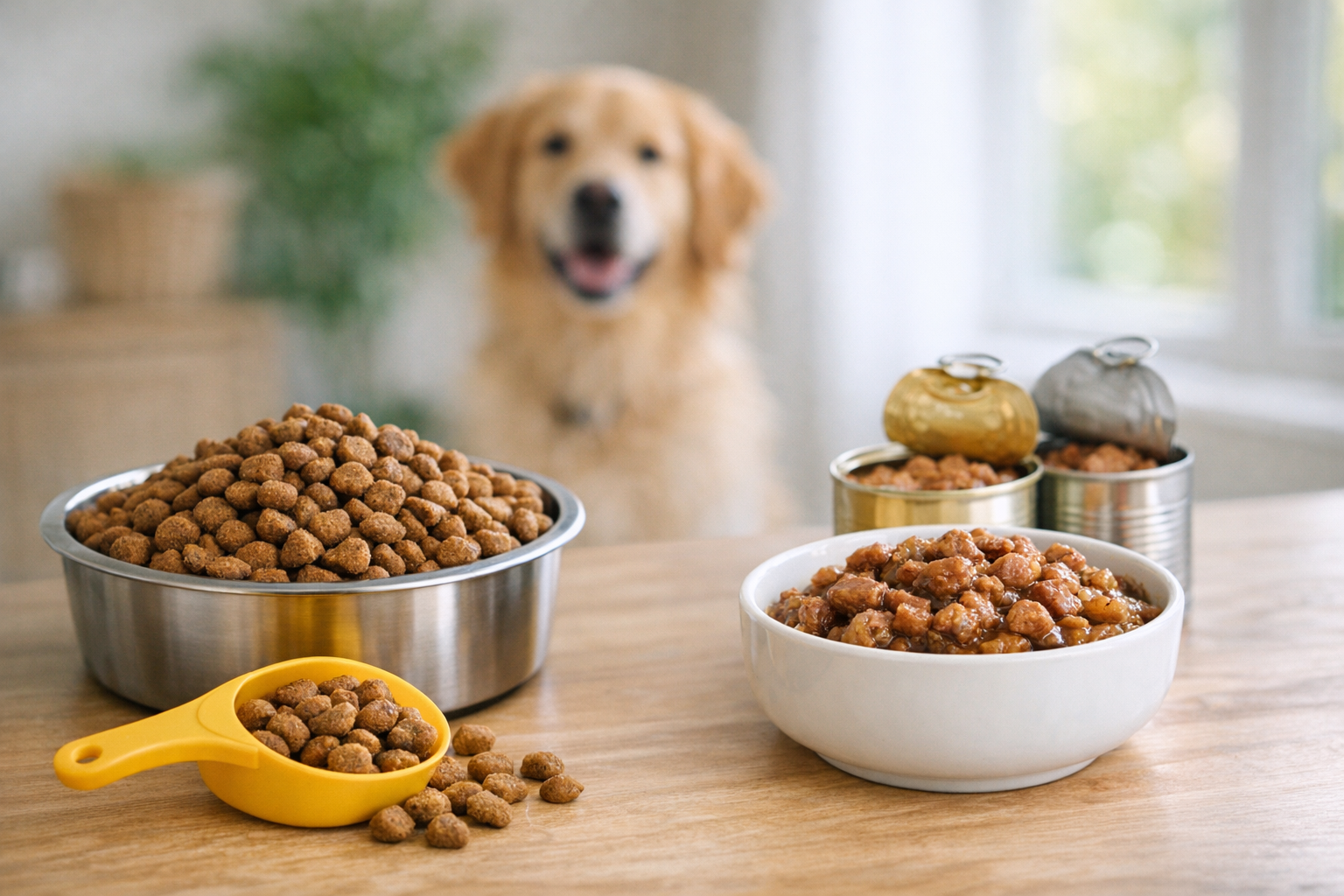
You are standing in the pet food aisle or scrolling through endless pages of options, holding a bag of kibble in one hand and a can of stew in the other. Your dog might be a picky eater who turns their nose up at dry biscuits, or perhaps you are managing a senior dog with sensitive teeth. Choosing the right format for your dog's daily nutrition is one of the most frequent decisions you face as a pet owner. At BaxterBoo, we see this debate daily among our customers. There is no single winner that fits every dog, but there are clear differences in how these foods support health, hydration, and your household budget. This article covers the pros and cons of both formats to help you decide which bowl filler is right for your dog.
The Core Differences in Processing
The main difference between dry and wet dog food starts with how they are made. This process determines the texture, the shelf life, and the moisture content.
How Dry Food Is Made
Kibble starts as a dough made from ground meats, grains, or legumes, along with vitamins and minerals. This dough is cooked under high pressure and pushed through a machine called an extruder. The extruder cuts the dough into specific shapes. After that, the pieces are dried to remove almost all moisture. Finally, they are often sprayed with fats or oils to make them smell and taste better to your dog.
How Canned Food Is Made
Canned food follows a different path. The ingredients are ground and mixed with a liquid, like water or gravy, that contains essential nutrients. This mixture is sealed inside a can or pouch. The entire container is then heated to high temperatures to sterilize the food and kill any bacteria. This process keeps the food fresh without needing the same types of preservatives used in dry food.
Quick Answer: Neither dry nor canned food is objectively better for every dog. Dry food offers convenience and value, while canned food provides superior hydration and scent. Most dogs thrive on a high quality version of either, or a combination of both.
The Case for Dry Dog Food
Dry food is the most popular choice for many US households. It is generally the foundation of the dog food industry for several practical reasons.
Convenience and Storage
Dry food is incredibly easy to manage. You can buy a large bag and store it for several weeks. It does not require refrigeration after you open it, as long as you keep the bag sealed in a cool, dry place. This makes it the best choice for dogs that prefer to graze throughout the day. You can leave a portion of kibble in the bowl without worrying about it spoiling within the hour.
Cost and Value
When you look at the price per serving, dry food is almost always more affordable. Because it is concentrated and lacks water, you are paying for actual nutrients rather than moisture. For owners of large breeds like Great Danes or Labradors, feeding exclusively canned food can become very expensive. Kibble allows you to provide high quality nutrition from trusted brands like our selection of NutriSource products while keeping your monthly costs manageable.
Dental Health Benefits
While kibble is not a replacement for brushing, the mechanical action of chewing hard pieces can help. The friction helps scrape away some plaque before it hardens into tartar. Some specialized dry diets are even shaped specifically to maximize this cleaning effect. However, if your dog swallows their kibble whole, they will not get these benefits.
Enrichment Opportunities
Dry food is perfect for mental stimulation. You can hide kibble in snuffle mats, load it into puzzle toys, or use individual pieces as training rewards. Canned food is much harder to use in these ways without making a mess.
Key Takeaway: Dry food is the winner for budget-conscious owners and dogs that like to snack throughout the day. It provides a dense source of calories and works perfectly with interactive toys.
The Case for Canned Dog Food
Canned food is often seen as a treat, but it is a complete nutritional option that offers unique health advantages.
Superior Hydration
The most significant benefit of canned food is its moisture content. While kibble is usually only 10 percent water, canned food is often 75 percent or higher. This extra moisture is vital for dogs that do not drink enough water on their own. It helps flush the urinary system and supports kidney function.
High Palatability
Dogs rely heavily on their sense of smell to decide if something is edible. Canned food has a much stronger aroma than dry food. This makes it a lifesaver for picky eaters, senior dogs with a fading sense of smell, or dogs that are feeling unwell and have lost their appetite. Many owners find that brands like Tiki Cat or Caru offer stews that look and smell like human food, which can entice even the most stubborn dog to eat.
Texture for Sensitive Mouths
Puppies with tiny baby teeth and senior dogs with dental disease often struggle with hard kibble. Canned food is soft and easy to swallow. If your dog has had teeth removed or suffers from gum sensitivity, the soft texture of a pâté or a stew in gravy is much more comfortable.
Weight Management
Because canned food is mostly water, it is less calorie-dense than kibble. This means your dog can eat a larger volume of food while consuming fewer calories. This helps them feel full and satisfied, which is useful for dogs that are prone to obesity.
Vet Tip: If your dog has a history of urinary crystals or kidney disease, the high moisture in canned food can be a critical part of their health management. Always consult your veterinarian to see if a prescription wet diet is necessary for these conditions.
Comparing Nutritional Profiles
When comparing the two, you cannot just look at the percentages on the labels. The high water content in cans makes the protein and fat numbers look lower than they actually are. To get a real comparison, you have to look at the "dry matter basis."
| Feature | Dry Dog Food | Canned Dog Food |
|---|---|---|
| Moisture Content | 10% to 12% | 75% to 80% |
| Shelf Life (Opened) | 4 to 6 weeks | 2 to 3 days (Refrigerated) |
| Caloric Density | High | Low |
| Typical Ingredients | Meat, grains/legumes, fats | Meat, gravy/broth, vitamins |
| Price per Calorie | Lower | Higher |
Protein and Carbohydrates
Generally, canned food contains more meat protein and fewer carbohydrates than dry food. Kibble needs starches and grains to hold its shape and create that crunchy texture. If you are looking for a diet that is very low in carbohydrates, canned food or air-dried options like Ziwi Peak are often the better route.
Preservatives
Because the canning process uses heat to sterilize the food, it does not require many chemical preservatives. Dry food requires antioxidants to keep the fats from turning rancid once the bag is opened and exposed to air. If you prefer a diet with fewer synthetic additives, high quality canned food is a strong contender.
When Health Dictates the Choice
Sometimes the choice between wet and dry is not about preference, but about a medical requirement. Specific life stages and health conditions often point toward one format over the other.
Support for Senior Dogs
Seniors often experience a "double whammy" of health changes. They may develop dental issues that make chewing painful, and their kidneys may begin to function less efficiently. Canned food addresses both by being soft and hydrating. For dogs experiencing cognitive decline, we carry brands like Senilife to support brain health, which can be paired with a highly palatable wet food to ensure they keep eating.
Prescription Diets and Our Pharmacy
Many dogs require specialized diets for health conditions like food allergies, diabetes, or heart disease. These are often available in both wet and dry formats from brands like Royal Canin or Farmina Vet Life. Our pet pharmacy carries prescription diets and vet-directed nutrition options. If your vet has prescribed a specific food to manage a condition, you can often find both the dry and canned versions to see which your dog prefers.
Bottom line: Medical needs like kidney health or dental pain often make canned food the superior choice, despite the higher cost.
The Best of Both Worlds: Mixed Feeding
You do not have to choose just one. Many pet owners find that a "topper" approach works best. This involves using dry kibble as the main calorie source and adding a spoonful of canned food on top.
Benefits of Mixing
- Variety: It keeps mealtime interesting with different textures and smells.
- Cost Control: You get the hydration of wet food without the high cost of a 100 percent canned diet.
- Hydration Boost: Adding a bit of wet food or a savory topper is an easy way to get more water into your dog's day.
How to Mix Safely
If you decide to mix, you must adjust the portions. Adding canned food on top of a full serving of kibble will quickly lead to weight gain. Ask your vet to help you calculate the calories. A common ratio is 75 percent calories from dry food and 25 percent from wet.
Transitioning Slowly
Any change in your dog's diet should happen over 7 to 10 days. Their digestive systems are sensitive to new protein levels and moisture changes.
- Days 1-3: 75% old food, 25% new food.
- Days 4-6: 50% old food, 50% new food.
- Days 7-9: 25% old food, 75% new food.
- Day 10: 100% new food.
Storage and Safety Tips
The way you handle the food is just as important as which one you buy. Mishandling can lead to bacteria growth or nutrient loss.
Managing Dry Food
The biggest mistake owners make is dumping kibble out of the bag into a plastic bin. The bags are designed to keep the food fresh and the fats from seeping out. It is much better to put the entire bag inside an airtight container. Use the food within six weeks of opening. If the bag smells "off" or like old paint, the fats may have gone rancid, and you should discard it.
Managing Canned Food
Once a can is open, the clock starts ticking. You must cover it and put it in the refrigerator immediately. It stays safe for about three days. If your dog does not eat their wet food within 30 minutes of it being in the bowl, you should throw the leftovers away. Bacteria grow very quickly in the moist environment of canned food at room temperature.
- Check "best by" dates on every can.
- Wash the top of the can before opening to remove dust.
- Use a silicone lid to seal open cans in the fridge.
- Never leave wet food out all day like you might with kibble.
Making the Final Decision
At BaxterBoo, we carry over 500 brands because we know every dog has different needs. If you have a healthy, active dog that drinks plenty of water, a high quality kibble is a fantastic, cost-effective choice. If you are caring for a senior dog, a picky puppy, or a dog with urinary issues, canned food is likely worth the extra investment.
Many of our customers take advantage of our Autoship programme for their dog's foundation kibble. This ensures you never run out and gives you savings on every order. You can then pick out a few different canned flavors or toppers to keep things exciting. This hybrid approach often provides the best balance of health, happiness, and value.
Key Takeaway: Assess your dog's hydration, dental health, and appetite. Use dry food for value and enrichment, and use canned food for hydration and palatability.
FAQ
Is dry food better for a dog's teeth than canned food?
Dry food can help reduce plaque buildup through the mechanical action of chewing, but it is not a cure-all for dental health. Some dogs swallow kibble whole, which provides no dental benefit at all. Regardless of the food you choose, regular toothbrushing and professional veterinary cleanings are necessary to prevent gum disease.
Can I feed my dog only canned food?
Yes, as long as the canned food is labeled as "complete and balanced" according to AAFCO standards. Some canned foods are labeled only for "supplemental feeding" or as "toppers," which means they lack essential vitamins and minerals. For large dogs, a canned-only diet can be expensive, but it is nutritionally sound if the quality is high.
Why is canned food more expensive than dry food?
Canned food costs more because of the packaging, the higher meat content, and the weight of the water. You are also paying for the sterilization process that allows the food to stay fresh without heavy preservatives. Because canned food is less calorie-dense, you have to buy more of it by weight to meet your dog's daily energy needs.
How long can I leave dry food out for my dog to graze?
Dry food can generally be left out for the day, but it should be discarded and the bowl washed every 24 hours. Once kibble is exposed to air, the fats begin to oxidize and the smell can attract pests. If your dog is a slow eater, only put out what they will finish in one day to ensure the food stays fresh and nutritious.






