
 Save 15% on your 1st Autoship learn more

 Email us
 Live Chat
 FAQs
FAQs





Introduction
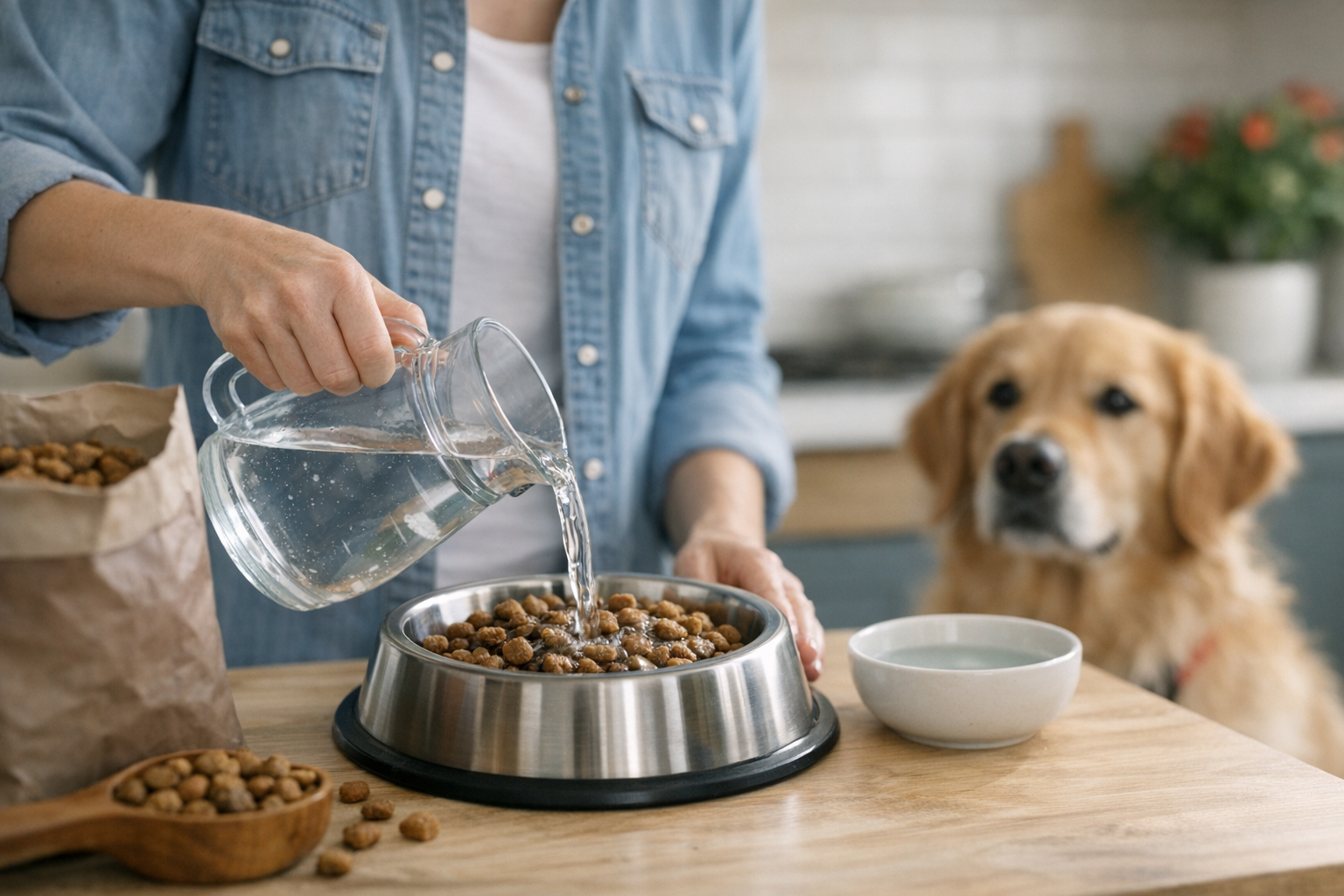
You stand in the kitchen while your dog looks down at a bowl of dry, crunchy kibble. Perhaps they take a few bites and walk away. Or maybe you are worried they are not drinking enough from their water dish during a hot Illinois summer. You might wonder if adding a splash of water to that bowl would make the meal better. At BaxterBoo, we hear this question frequently from pet parents who want to improve their dog's mealtime experience. While dry food is designed to be eaten as is, adding water is a simple way to boost hydration and flavor. This post covers the benefits, the potential risks, and the best ways to moisten your dog's food. Understanding when and how to add liquid can help you support your dog's health at every life stage.
Quick Answer: You can safely mix water with dry dog food to improve hydration and aroma. It is especially helpful for senior dogs with dental issues or picky eaters. However, you must serve it immediately to prevent bacteria growth and spoilage.
The Basic Benefits of Adding Water
Dry kibble typically only contains about 6 to 10 percent moisture. This is very low compared to the natural diet of a canine or even canned wet food. Adding water helps bridge that gap. When you add liquid, you are not just changing the texture. You are helping the body process the nutrients more effectively. Water is the foundation for almost every chemical reaction in your dog's body.
Proper hydration supports kidney function and helps flush out toxins. For dogs that are lazy drinkers, getting extra water through their food is a massive advantage. Many dogs do not feel the "thirst drive" until they are already slightly dehydrated. By mixing water into the bowl, you ensure they get a head start on their daily fluid requirements.
The aroma of the food also changes when it gets wet. Dry kibble has a scent, but adding warm water releases the fats and oils within the pieces. This creates a much stronger smell that can entice a dog who has lost interest in their dinner. This is a common trick we recommend for dogs recovering from a cold or those who are naturally more selective about what they eat.
Hydration and Urinary Health
The kidneys are responsible for filtering waste from the blood. To do this well, they need plenty of fluids. If a dog lives on dry kibble alone and does not drink enough water, the kidneys have to work much harder. Over time, chronic low level dehydration can lead to serious health issues. This includes the development of kidney stones or crystals in the urine.
Increasing the moisture in the diet helps dilute the urine. This makes it easier for the bladder to stay healthy and reduces the risk of urinary tract infections. This is particularly important for small breeds that may be prone to bladder stones. By turning a dry meal into a more hydrated one, you are providing preventative care with every scoop.
Vet Tip: If your dog has a history of urinary issues or kidney disease, consult your veterinarian before making major dietary changes. Our pet pharmacy offers prescription diets designed for these conditions.
Helping Picky Eaters and Senior Dogs
Senior dogs often face challenges that make dry kibble difficult to eat. Dental disease, missing teeth, or sensitive gums can make crunching down on hard pellets painful. When you soak the kibble, it becomes soft and easy to chew. This ensures your senior companion gets the calories they need without the discomfort.
Picky eaters often find the "crunch" of dry food boring. Adding water creates a texture more like a stew or a gravy. This change in mouthfeel can be enough to get a stubborn dog to finish their bowl. It also helps if you are trying to hide a supplement or a medication. The softened food can easily mask the texture of a pill or a powder.
- Softened food is easier for puppies transitioning from milk to solids.
- The enhanced smell encourages dogs with a diminished sense of scent to eat.
- Moisture helps senior dogs stay hydrated even if they have mobility issues that make frequent trips to the water bowl difficult.
- Adding water increases the volume of the food, which can help a hungry dog feel fuller without adding extra calories.
The Science of Digestion and Bloat
There is some discussion among experts regarding how wet kibble affects digestion. When a dog eats dry kibble very quickly, they often swallow a lot of air. This can lead to gas or even a dangerous condition called bloat. Adding water can actually slow down a fast eater. The added weight of the water and the change in texture require the dog to take more deliberate bites or laps.
Softened food may also be easier for the stomach to break down. Instead of the stomach having to provide all the moisture to turn the dry pellets into a digestible mash, the work is already partially done. This can lead to better nutrient absorption. However, every dog is different. Some studies suggest that for certain healthy dogs, dry food is perfectly fine for the gut microbiome.
Key Takeaway: Mixing water with kibble can help slow down fast eaters and assist in the initial stages of digestion. This is a practical step for dogs prone to digestive upset or those who "inhale" their food.
Potential Downsides to Consider
While there are many pros, adding water is not always the best choice for every dog. One of the main concerns is dental health. The friction of chewing dry kibble can help scrape away a small amount of plaque and tartar from the teeth. When the food is softened, this mechanical cleaning action is lost. If you choose to feed wet or softened food, you must be more diligent about brushing your dog's teeth or providing dental chews.
Spoilage is another major factor. Dry kibble is shelf stable and can sit in a bowl for hours without going bad. Once you add water, the clock starts ticking. Moisture and warmth are the perfect environment for bacteria to grow. If your dog is a "grazer" who likes to eat a few bites and come back later, adding water could make them sick.
A study involving Beagle dogs also suggested that consistently softening food might alter the gut bacteria in ways that could be stressful for the animal. While this was a specific study, it reminds us that consistency is key. If you decide to add water, try to keep the routine stable rather than switching back and forth every day.
How to Properly Mix Water and Kibble
If you decide to try this at home, it is important to do it correctly. You do not want to create a bowl of soup where the kibble is just floating on top. You want the water to be absorbed into the pieces.
Step 1: Measure your dog's normal portion of dry kibble into their clean bowl.
Step 2: Add about one quarter cup of filtered water for every one cup of food.
Step 3: Use warm water rather than cold or boiling water. Warm water helps release the aroma but will not burn the dog's mouth or destroy sensitive vitamins.
Step 4: Let the mixture sit for about two to five minutes. This allows the kibble to swell and soften.
Step 5: Serve the meal immediately and pick up any leftovers after 30 minutes.
Bottom line: Preparation matters. Use warm, filtered water and never leave moistened food out for more than an hour to avoid bacterial contamination.
Alternatives to Plain Water
If you want to provide even more nutrition, you can use liquids other than plain water. Many pet owners use bone broth specifically made for dogs. At BaxterBoo, we carry several brands like The Honest Kitchen selection and Brutus Broth selection that offer high quality broths and mixers. These add extra collagen, amino acids, and minerals to the bowl.
Goat milk is another popular option. It is packed with probiotics and is often easier for dogs to digest than cow's milk. Adding a splash of goat milk can turn a standard meal into a nutritional powerhouse. If you are looking for convenience, you can also look into "good gravy" kibble. These are specifically designed to create a thick sauce when you add a little water.
Managing Transitions and Changes
If your dog has always eaten dry food, do not fill the bowl with water all at once. Start by adding just a tablespoon or two. Observe how your dog reacts. Some dogs may be confused by the change in texture and might refuse to eat at first. Gradually increasing the amount of liquid over a week will help them adjust.
This is also the time to watch their digestion. Check their stools for any signs of upset. While adding water usually helps, any change in diet can cause temporary loose stools. If your dog has a sensitive stomach, a slow transition is the safest path forward.
- Week 1: Add 1-2 tablespoons of warm water.
- Week 2: Increase to 1/4 cup of water per cup of food.
- Week 3: Maintain the level that your dog enjoys most.
- Always use a clean bowl for every meal to prevent old, wet crumbs from molding.
When a Vet Consult is Necessary
While mixing water with food is generally safe, it is not a cure for underlying health problems. If your dog has stopped eating because of dental pain, softening the food is only a temporary fix. They still need a professional cleaning or extractions. Similarly, if your dog is suddenly drinking excessive amounts of water, it could be a sign of diabetes or kidney issues.
Before you use food as a way to manage a health condition, talk to your veterinarian. They can help you determine if a prescription diet is necessary. Our pet pharmacy carries many of these specialized foods. These diets are formulated to support specific issues like urinary crystals, obesity, or heart health. We make it easy to get these foods without the hassle of a separate trip to the clinic.
Vet Tip: Always consult your vet if your dog shows a sudden change in appetite or thirst. While adding water can help, it should not replace a professional diagnosis for persistent symptoms.
Impact on Weight Management
If your dog needs to lose a few pounds, adding water to their kibble is a great strategy. Water adds volume and weight to the food without adding a single calorie. This helps the dog feel full faster. It is the same concept as a human drinking a glass of water before a meal.
A full stomach sends signals to the brain that the meal is over. This can reduce begging between meals. We see many customers who use this trick alongside our dog healthcare category supplements to help their dogs reach a healthy body condition. When combined with a consistent exercise routine, this simple change can make a big difference in your dog's quality of life.
Keeping the Bowl Clean
One of the most overlooked parts of mixing water with dry food is hygiene. Dry kibble leaves behind a fine dust that contains fats. When you add water, this dust turns into a sticky film. This film can quickly grow bacteria or mold if the bowl is not washed daily.
Stainless steel or ceramic bowls are the best choices for wet mixtures. They are less porous than plastic and are easier to sanitize in the dishwasher. If you notice a "slimy" feeling on the bottom of the bowl, it is time for a deep scrub. Keeping the feeding area clean is just as important as the quality of the food you put inside it.
Key Takeaway: Hygiene is critical when feeding moistened food. Use non-porous bowls and wash them after every single meal to keep your dog safe from harmful bacteria.
Is it Right for Your Dog?
Deciding whether to mix water with your dog's dry food depends on their specific needs. Most healthy adult dogs do perfectly well on dry kibble alone. However, the benefits of hydration and flavor are hard to ignore. If you have a puppy, a senior dog, or a picky eater, it is worth trying.
At BaxterBoo, we want to make sure you have everything you need for a healthy pet. From our wide selection of 500+ brands to our Autoship programme and Frequent Buyer Program, we are here to support your journey as a pet owner. Whether you are buying standard kibble or looking for specialized mixers, we provide the quality your dog deserves.
Conclusion
Adding water to dry dog food is a simple, low cost way to improve your pet's health. It supports hydration, aids digestion, and makes meals more exciting for picky eaters. Just remember to use warm water, serve the food immediately, and keep the bowl clean. If you are managing a chronic health condition, always reach out to your veterinarian for guidance on the best dietary approach.
- Boosts hydration for better kidney health.
- Enriches aroma to entice picky eaters.
- Softens texture for seniors and puppies.
- Helps with weight management by increasing satiety.
If you are ready to upgrade your dog's diet, consider looking at our selection of bone broths and meal toppers. You can even set up an Autoship order to ensure you never run out of your dog's favorite food or supplements. Our team is always here to help you find the right products for your furry family members.
FAQ
Can I leave watered-down kibble out all day for my dog?
No, you should never leave moistened kibble out for more than 30 to 60 minutes. The moisture combined with the proteins in the food creates an ideal environment for bacteria to grow rapidly. If your dog does not finish the meal within an hour, discard the leftovers and wash the bowl thoroughly.
Does adding water to dry food cause dental problems?
While adding water does not directly cause decay, it removes the mechanical "scrubbing" action that hard kibble provides. This means plaque can build up more easily on the teeth. If you choose to soften your dog's food, it is important to compensate with regular tooth brushing or high quality dental chews.
What is the best ratio of water to dry dog food?
A general rule of thumb is to use one quarter cup of water for every one cup of dry kibble. This provides enough moisture to soften the pieces without turning the meal into a soup. You can adjust this slightly based on your dog's preference for texture and how much hydration they need.
Is it better to use warm or cold water when mixing?
Warm water is generally better because it helps release the natural oils and aromas in the kibble, making it more appetizing. It also tends to soak into the pellets faster than cold water. Avoid using boiling or very hot water, as this can burn your dog's mouth and may degrade some of the heat-sensitive vitamins in the food.






