
 Save 15% on your 1st Autoship learn more

 Email us
 Live Chat
 FAQs
FAQs





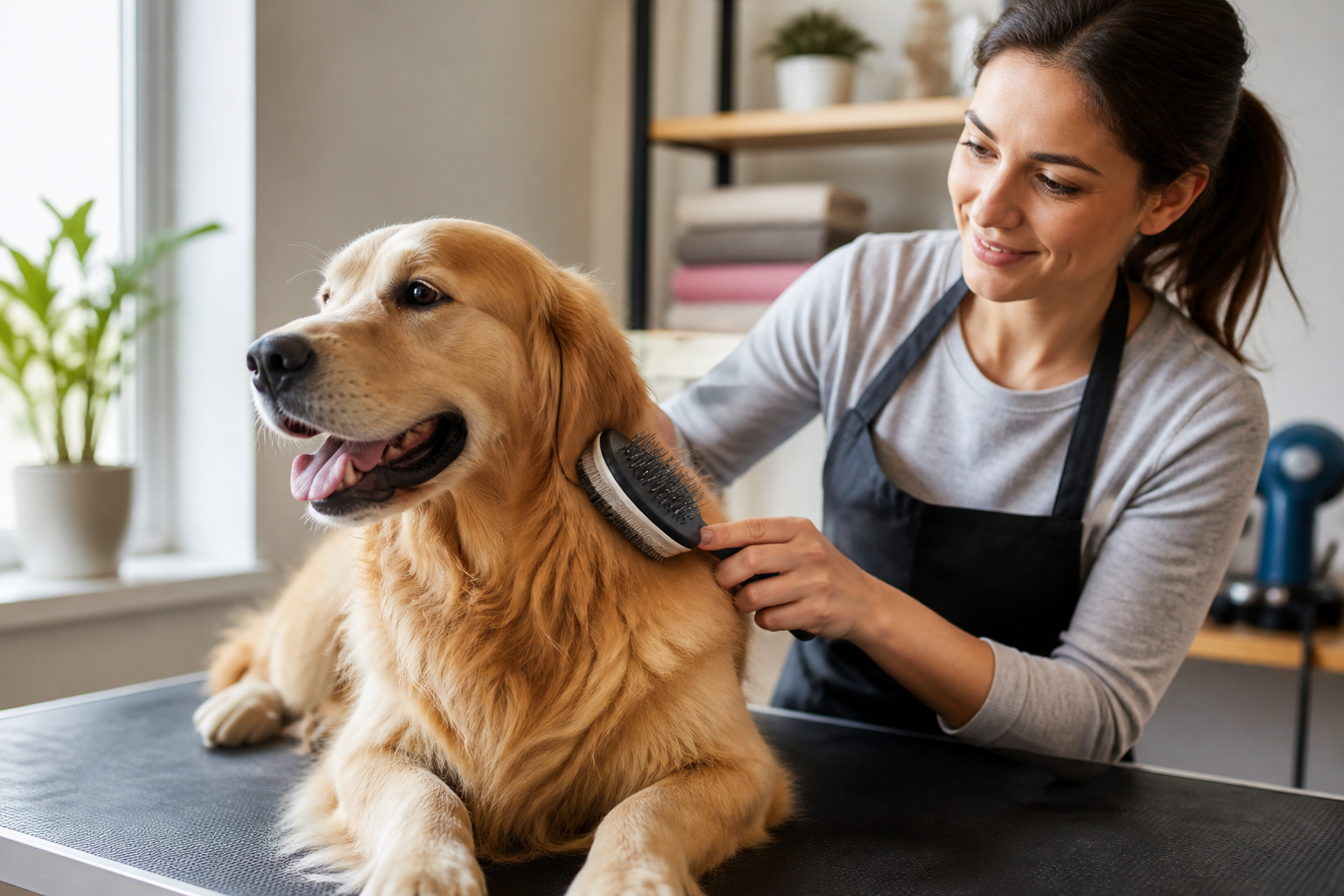
Introduction
You are standing in the bathroom after a long walk in the rain. Your dog is a soggy, muddy mess. You have a brush in one hand and a towel in the other. You might wonder if you should tackle those tangles now or wait until the coat is completely dry. This is a common dilemma for pet owners. At BaxterBoo, we know that proper grooming is about more than just looking good. It is about keeping the skin healthy and the coat strong. This article covers the science of hair bonds, the risks of brushing "naked" fur, and the best techniques for every coat type. You will learn the definitive answer to whether it is better to brush a dog wet or dry for your specific situation.
Quick Answer: It is generally best to brush a dog when the coat is damp and lubricated with a conditioner or grooming spray. Never brush a bone-dry coat because it causes breakage. Never brush a dripping wet coat without product because the hair is at its weakest.
The Science of Your Dog's Hair
To understand the best grooming routine, you have to look at the structure of the hair itself. A dog's coat is made of protein bonds. These bonds give the hair its strength, shape, and elasticity. There are three main types of bonds in every strand.
The first are hydrogen bonds. These are temporary and break easily when they get wet. This is why a dog's hair becomes more elastic and stretchy when it is soaked. The second are disulfide bonds. These are much stronger and provide the actual shape of the hair. The third are salt bonds. These are sensitive to changes in pH levels.
When you saturate your dog's coat with water, the hydrogen bonds break. This makes the hair very fragile. If you pull a brush through dripping wet hair, you might stretch the hair too far. This leads to snapping and permanent damage to the follicle. This is why the "how" matters just as much as the "when."
Why You Should Avoid Brushing a Bone-Dry Coat
Many owners think brushing a dry dog is the safest route. However, brushing a "naked" or bone-dry coat can be quite damaging. When the hair is dry, there is a lot of friction between the brush and the fur. This friction creates static electricity.
Static makes the hair stand on end. It causes individual strands to wrap around each other. This creates new mats and tangles while you are trying to brush out old ones. Dry brushing also causes the hair to become brittle. Over time, this leads to a dull appearance and excessive shedding from breakage rather than natural hair loss.
The Benefits of Lubrication
Think of a ring stuck on a finger. It is hard to pull off when the skin is dry. If you add a little soap, it slides right off. The same logic applies to dog hair. Lubrication is the key to a healthy grooming session.
- It reduces friction between the tool and the hair.
- It closes the hair cuticle to prevent moisture loss.
- It neutralizes static electricity.
- It allows mats to slide apart rather than being ripped out.
Key Takeaway: Always use a grooming spray or leave-in conditioner before touching a brush to your dog's coat. This protects the hair bonds and makes the experience more comfortable for your pet.
When Wet Brushing is the Right Choice
Wet brushing is a technique used by many professional groomers. It is most effective when done during or immediately after a bath. However, you should never do this on a coat that is only wet with water.
The best time for wet brushing is while the dog is saturated with a high-quality conditioner. The conditioner provides the "slip" needed for the brush to glide through. This method is excellent for removing trapped dirt and debris that dry brushing often misses. It also helps distribute the natural oils from the skin down the entire hair shaft.
Steps for Safe Wet Brushing
Step 1: Wash the dog thoroughly. / Use a gentle shampoo to remove surface dirt and oils.
Step 2: Apply a generous amount of conditioner. / Ensure the product reaches all the way to the skin.
Step 3: Use a wide-spaced tool. / A rubber brush like a KONG Zoom Groom Natural Rubber Dog Grooming Brush is perfect for this stage.
Step 4: Rinse and towel dry. / Gently squeeze the water out rather than rubbing the coat vigorously.
Vet Tip: If you notice your dog's skin is red, flaky, or has a strange odor during the bath, consult your veterinarian. These can be signs of underlying allergies or infections. Our pharmacy at BaxterBoo offers a variety of medicated shampoos and allergy treatments through our partnership with Pet's Choice to help manage these conditions.
Dealing with Mats and Tangles
There is one major exception to the wet brushing rule. You should never soak a dog that is severely matted. When mats get wet, they act like a sponge. The hair fibers swell and then shrink as they dry. This causes the mats to tighten and pull closer to the skin.
If your dog has "pelting" or tight knots, you must address them before the bath. Use a detangling spray on the specific area. Work the knot apart with your fingers or the end of a comb. If the mat is too tight to move, it may need to be clipped out by a professional for the safety of the dog.
The Danger of Tight Mats
- Mats trap moisture against the skin, which can lead to "hot spots."
- Tight knots can restrict blood flow to the skin.
- Pests like fleas and ticks often hide underneath matted areas.
For additional bath preparation and mat-care guidance, see our article on dos and don'ts for bathing your dog.
Brushing by Coat Type
Every dog is different. A Golden Retriever has very different needs than a Boxer or a Poodle. Your approach to wet versus dry brushing should change based on the coat your dog wears.
Double-Coated Breeds
Huskies, Shepherds, and Labs have a dense undercoat. For these dogs, dry brushing with a deshedding tool is effective for daily maintenance. However, a "wet" session during their seasonal blow-out can save hours of work. The water and conditioner help the dead undercoat slide out of the guard hairs much faster.
Silky and Long-Coated Breeds
Yorkies and Setters have hair that is very similar to human hair. This coat type is the most prone to breakage. You should almost never brush these dogs bone-dry. A light misting of a grooming spray is a requirement for every single brushing session.
Curly and Wire-Coated Breeds
Poodles and Doodles often benefit from brushing while the coat is damp. If you wait until they are dry, the curls can become "frizzy" and difficult to manage. Brushing while damp helps set the pattern of the coat and prevents the "velcro" effect where hair sticks together.
Maintaining Skin Health Through Grooming
Grooming is the best time to check your dog's overall health. As you move through the coat, look closely at the skin. Healthy skin should be pale pink or pigmented, depending on the breed. It should not be scaly, greasy, or bumpy.
If your dog is constantly itching, the problem might be more than just a stray tangle. Environmental allergies are common in many regions. Sometimes, a specific prescription diet or medication is necessary to calm the skin from the inside out.
We provide access to a full pharmacy for these exact needs. Through our partnership with Pet's Choice, we carry FDA-approved medications for chronic skin conditions and allergies. If your vet prescribes a specific treatment, you can often find it through us to keep your pet comfortable.
Bottom line: Brushing is a health check as much as a beauty routine, so keep an eye out for skin changes.
The Importance of the Right Tools
You cannot get professional results with the wrong equipment. At BaxterBoo, we carry over 500 trusted brands to ensure you have the right tool for your dog's specific coat. Our dog grooming supplies include brushes, shampoos, conditioners, and other coat-care essentials.
For wet brushing, look for tools with rounded pins or rubber teeth. These are gentler on the skin when it is softened by water. For dry brushing with a spray, a high-quality slicker brush is the standard. It helps grab the loose hair while the spray protects the remaining coat.
Grooming Checklist
- A high-quality shampoo and conditioner set.
- A detangling spray for daily use.
- A pin brush or slicker brush suited for your breed.
- A rubber grooming tool for the bathtub.
- Cotton balls to protect ears from water during the bath.
For bathing accessories such as towels, paw washers, and shower supplies, browse our bath and shower supplies.
Consistency Over Intensity
The secret to a great coat is not one long session every month. It is five minutes of care every other day. When you brush frequently, you prevent mats from ever forming. This makes the "wet or dry" debate much easier because you are always working with a manageable coat.
Start grooming your dog when they are young. Even if they do not have much hair yet, the sensation of the brush is important. Use plenty of praise and perhaps a few treats to make it a positive experience. If you have a senior dog with joint stiffness, be extra gentle during the "wet" phase. Wet dogs can be slippery and may feel less secure on their feet.
Our MVP Rewards program is a great way to save on the supplies you need for these regular sessions. You can earn points on every purchase of brushes, sprays, and shampoos. This makes it easier to keep your grooming kit fully stocked without overspending.
Conclusion
Determining whether to brush your dog wet or dry depends on the tools and products you use. While wet brushing with conditioner is great for deep cleaning, brushing a bone-dry coat should be avoided to prevent breakage. The "sweet spot" for most dogs is a damp coat protected by a grooming spray or leave-in treatment.
- Never brush a bone-dry coat; always use a spray.
- Never brush a soaking wet coat without conditioner.
- Tackle mats before the bath to prevent them from tightening.
- Use the right tools for your dog's specific coat type.
Maintaining your dog's coat is a vital part of their wellness journey. If you find that skin issues are making grooming difficult, remember that our pharmacy is here to help with professional-grade solutions. You can also set up an Autoship for grooming supplies to ensure you never run out of your favorite sprays and shampoos. Visit our dog grooming category today to find the perfect tools for your dog's next spa day.
FAQ
Is it okay to brush my dog right after a bath?
It is okay to brush your dog after a bath if you have used a conditioner and the coat is still damp. You should avoid brushing a dog that is dripping wet and "naked" of any product, as the hair is at its weakest. Gently towel dry the dog first, apply a leave-in spray, and then use a wide-toothed comb or soft brush.
Why does my dog's hair seem to break when I brush it dry?
Dry hair is prone to static and friction, which causes the hair shaft to snap. Without the lubrication of a spray or natural oils, the brush pulls against the hair bonds rather than gliding over them. This leads to split ends and a thin, dull-looking coat over time.
Can I brush out mats while the dog is in the tub?
You should only attempt to brush out very light tangles in the tub if the dog is covered in a heavy conditioner. Deep or tight mats should always be addressed before the dog gets wet. Water causes the hair fibers in a mat to swell and then tighten, which can make the knot almost impossible to remove without cutting.
What is the best brush to use on a wet dog?
A rubber brush or a pin brush with rounded, polished tips is the best choice for a wet dog. These tools are designed to be gentle on the skin, which becomes more sensitive when wet. Avoid using harsh metal deshedding tools on wet skin, as they can cause "brush burn" or irritation much more easily than on dry skin.






