
 Save 15% on your 1st Autoship learn more

 Email us
 Live Chat
 FAQs
FAQs





Introduction
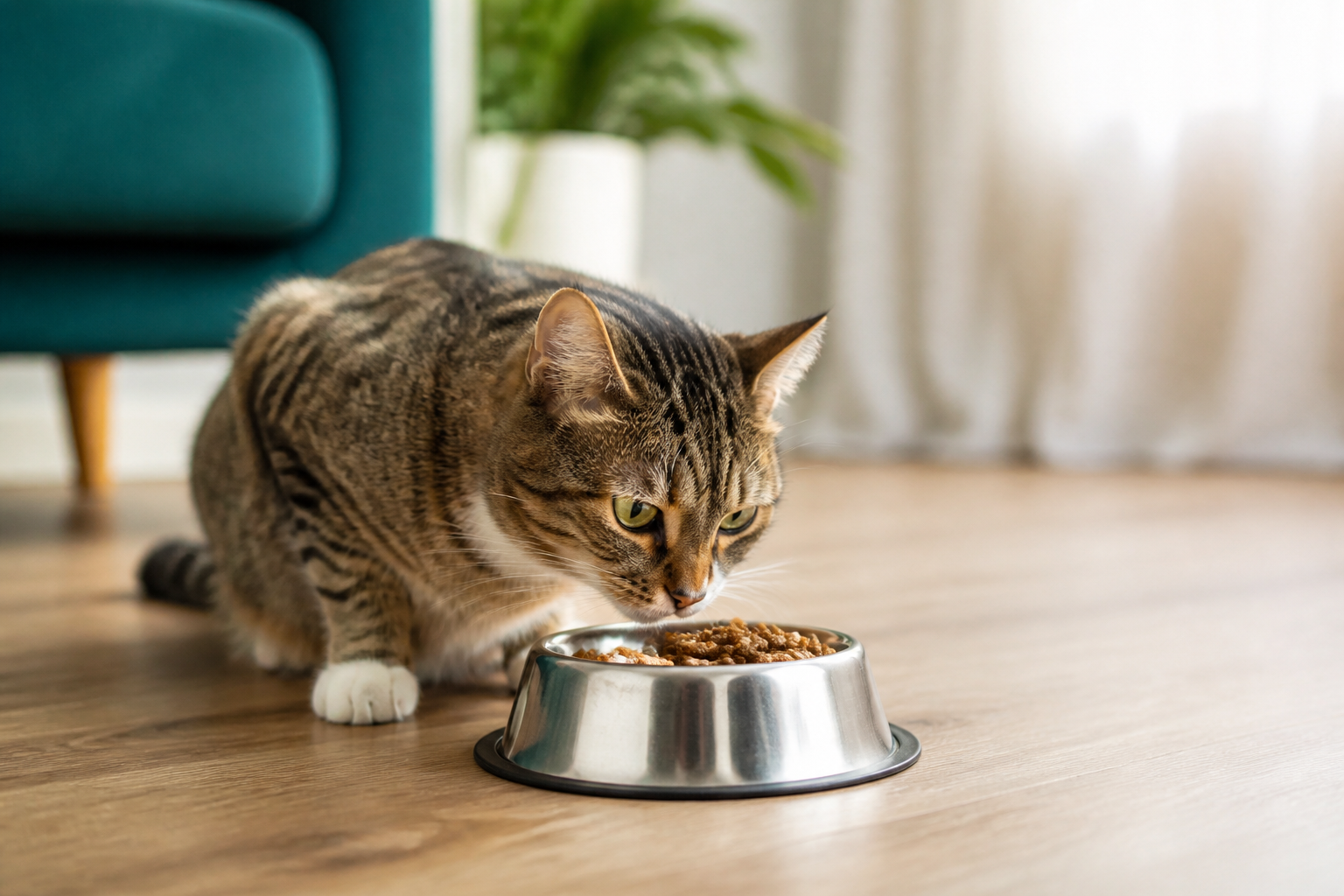
You walk into the kitchen and find your cat hovering over the dog bowl. There is a rhythmic crunching sound as they happily munch on large kibble pieces. It is a common scene in multi-pet households that often leaves owners wondering if they should call the vet. While a few stolen bites might not cause an emergency, you may worry about the long-term effects on your feline friend. At BaxterBoo, we understand that managing different diets under one roof can be a challenge. This article covers the nutritional differences between species, the risks of long-term dog food consumption, and how to keep your pets in their own bowls. While dog food is not toxic to cats, it lacks the essential building blocks they need to thrive.
Quick Answer: It is not ok for cats to eat dry dog food as a primary diet. While a few kibbles are not toxic, dog food lacks essential nutrients like taurine and arachidonic acid that cats need for heart and eye health.
Why Cats Are Not Small Dogs
It is a common misconception that cats and dogs can share the same meal plan because they are both carnivores. This is not strictly true. Dogs are biological omnivores. This means they can derive nutrition from both animal and plant sources. They are scavengers by nature and have evolved to process a wide variety of ingredients.
Cats are obligate carnivores. This means their bodies are physically designed to process animal tissue as their primary source of energy. Their entire metabolic system is tuned to a high protein, high fat diet with very few carbohydrates. In the wild, a cat would get almost all of its moisture and nutrients from its prey.
The Association of American Feed Control Officials (AAFCO) sets different standards for each species. A dog food profile only requires 36 essential nutrients. A cat food profile requires 42. When a cat eats dog food, they are missing out on those six critical components that their bodies cannot produce on their own.
The Critical Nutrient Gap
The most dangerous part of a cat eating dog food is not what is in the bag. It is what is missing from the bag. Several nutrients are vital for a cat but are only found in small amounts or not at all in canine formulas.
Taurine
Taurine is an amino acid that is essential for feline health. Most mammals, including dogs and humans, can synthesize taurine from other amino acids in their bodies. Cats lost this ability somewhere along their evolutionary path. They must get it directly from animal protein in their diet.
If a cat does not get enough taurine, the consequences are severe. They can develop Dilated Cardiomyopathy, which is a serious heart condition where the heart walls become thin and weak. It can also lead to central retinal degeneration. This eventually causes permanent blindness. Dog food rarely contains added taurine because dogs do not need the extra supplement.
Vitamin A
Dogs can take beta-carotene from plants like carrots and convert it into active Vitamin A. Cats cannot perform this conversion. They require preformed Vitamin A that comes from animal livers or synthetic supplements. Most dog foods rely on plant-based sources for their Vitamin A content. A cat eating this food will eventually face a deficiency. This leads to poor coat quality, skin issues, and a weakened immune system.
Arachidonic Acid
This is an essential fatty acid that cats need for inflammatory responses and blood clotting. Dogs can produce this acid internally. Cats cannot. Without it, a cat may struggle with skin irritations and reproductive issues. Most canine kibbles do not include this specific fatty acid in the levels a cat requires.
Protein Content
Cats have a much higher protein requirement than dogs. Protein provides the nitrogen needed for their basic metabolic functions. Dogs can adjust their metabolism if protein is low. Cats cannot. Their bodies constantly break down protein for energy. If the food does not provide enough, their bodies will start to break down their own muscle tissue to meet that need.
Key Takeaway: Cat food is a highly specialized fuel. Dog food is formulated for a different engine entirely. Using the wrong fuel will eventually lead to a total system breakdown.
Short-Term vs Long-Term Effects
If your cat sneaks a few bites of dog food once or twice a week, you probably will not see any immediate changes. Dog food is not poisonous. It does not contain ingredients that act like a toxin in the feline body. However, you should still watch for digestive upset.
Immediate Reactions
Some cats have sensitive stomachs. Switching from a high protein cat kibble to a grain-heavy dog kibble can cause trouble. You might notice:
- Vomiting shortly after eating.
- Loose stools or diarrhea.
- Lethargy.
- Excessive gas.
If these symptoms last more than 24 hours, you should contact your veterinarian. They can help rule out underlying issues like pancreatitis. This condition is rare in cats from a single meal but can happen if the dog food is very high in fat.
Chronic Health Issues
The real danger starts when dog food becomes a meal replacement. If a cat eats dog food for several weeks or months, the nutritional gaps start to show. You may see a dull, brittle coat first. The cat might lose weight or seem less active. Inside the body, the lack of taurine is slowly stressing the heart.
Vet Tip: If you notice your cat is consistently preferring the dog's food over their own, it is time for a checkup. This behavior can sometimes signal a dental problem or a nutritional deficiency that makes them seek out different textures and smells.
Why Is My Cat Attracted to Dog Food
It can be frustrating when you buy premium cat food and your pet chooses the dog's kibble instead. There are several reasons for this behavior. Understanding the "why" helps you stop the "how."
Aroma and Fat Content
Dog food is often coated in animal fats to make it more appealing to canines. These fats smell very strong. To a cat, that scent can be very enticing. It is like a human smelling fresh fries. Even if you have a healthy salad waiting, the fries smell more exciting.
Texture and Variety
Cats are known for being picky eaters. Sometimes they get bored with their usual routine. The different shape and crunch of dog kibble can be a novelty. Large breed dog food has much bigger pieces. Some cats enjoy the challenge of chewing these larger chunks.
Social Dynamics and Dominance
In a multi-pet home, food is a resource. A cat might eat the dog's food simply to show that they can. It is a way of asserting dominance over the dog. If the dog is submissive, they might step aside and let the cat take over the bowl. This is a behavioral issue rather than a nutritional one.
What to Do in an Emergency
Life happens. You might realize at 9:00 PM on a Sunday that the cat food bag is empty. In this specific scenario, a single meal of dog food is better than letting your cat go hungry. One or two meals will not cause a taurine deficiency.
If you are out of cat food, you can also look in your pantry for these safe alternatives:
- Plain, cooked chicken (no bones or skin).
- Canned tuna in water (not oil).
- Cooked salmon.
- Hard-boiled eggs.
- Plain, cooked turkey.
Avoid using human foods that contain onions, garlic, or excessive salt. These are toxic to cats. If you must use dog food as a temporary fix, try to switch back to our cat food selection as soon as possible. Our Autoship program is a great way to ensure you never run out of your cat's favorite brands like Royal Canin or Farmina.
Managing a Multi-Pet Household
Preventing your cat from stealing dog food requires a plan. You cannot always watch your pets 24 hours a day. You need to create a system that makes it impossible or unappealing for them to swap bowls.
Scheduled Feeding Times
Free feeding is the easiest way for pets to steal food. If there is always a bowl of dog kibble on the floor, the cat will eventually find it. Switch to scheduled mealtimes. Put the food down for 20 minutes and then pick up whatever is left. This ensures the dog eats their meal and the cat does not have access to leftovers.
Separate Feeding Rooms
If your pets are competitive, feed them in different rooms. Close the door or use a baby gate. This allows both animals to eat in peace without the pressure of a "neighbor" checking their bowl. It also stops the cat from bullying the dog away from their dinner.
Use Vertical Space
Cats love to climb. Dogs (usually) do not. Feeding your cat on a high counter, a sturdy shelf, or the top of a cat tree keeps their food out of the dog's reach. This also gives the cat a sense of security while they eat. They can look down on their "territory" and feel safe from the dog.
Microchip Feeders
If you have a persistent thief, a microchip-activated feeder is a great investment. These bowls only open when they sense the specific microchip of the correct pet. If the cat approaches the dog's bowl, the lid stays shut. It is a high-tech solution that solves the problem for good.
Transitioning Back to Cat Food
If your cat has developed a habit of eating dog food, you may need to re-train their palate. You can use their interest in dog food to your advantage. Try mixing a very small amount of their favorite wet cat food with their dry kibble to increase the aroma.
Step 1: Eliminate access to dog food entirely. / Use the separate room or elevated feeding methods mentioned above.
Step 2: Offer a high-quality cat food. / Choose a brand with a strong aroma, such as Tiki Cat or Fussie Cat, to compete with the smell of the dog food.
Step 3: Monitor their intake. / Make sure the cat is actually eating their own food and not just waiting for the dog's bowl to reappear.
Step 4: Consult your vet if they refuse to eat. / A cat that goes more than 24 hours without eating is at risk for hepatic lipidosis, a dangerous liver condition.
Bottom line: Discipline in your feeding routine is the only permanent way to stop a cat from eating dog food.
When to See a Professional
Nutritional deficiencies take time to develop. However, if your cat has been sneaking dog food for months, you should schedule a wellness exam. Your vet can perform blood work to check for organ function and protein levels.
We also offer access to a full pet pharmacy through our partnership with Pet's Choice. If your veterinarian prescribes a specific diet for heart health or skin issues caused by poor nutrition, you can find those prescription diets and medications through us. Managing a chronic condition is much easier when you have a reliable source for your pet's medical needs.
We have been operating since 2006 and carry over 500 trusted brands. Whether you need a supplement like Cosequin for a senior cat or a specialized diet like Farmina Vet Life, our experts have curated the best options for your pet's health. We are based in Vernon Hills, Illinois, and our team is always ready to help you find the right gear to keep your pets healthy.
Nutrients That Save Lives
It is helpful to look at the specific requirements that make cat food different. The following table highlights the AAFCO minimums for maintenance in adult pets. These numbers show why the two diets are not interchangeable.
| Nutrient | Adult Dog Minimum | Adult Cat Minimum |
|---|---|---|
| Crude Protein | 18.0% | 26.0% |
| Crude Fat | 5.5% | 9.0% |
| Vitamin A | 5,000 IU/kg | 5,000 - 9,000 IU/kg |
| Taurine | Not Required | 0.10% (Dry) |
| Arachidonic Acid | Not Required | 0.02% |
As you can see, the protein and fat requirements for cats are significantly higher. A dog can survive on a low protein diet, but a cat will struggle to maintain muscle mass. The addition of taurine and arachidonic acid is the most vital difference.
Encouraging Better Eating Habits
Beyond just moving the bowls, you can make your cat's food more exciting. Enrichment is a great way to keep a cat focused on their own nutrition. Use puzzle feeders or lick mats for their wet food. This engages their brain and makes their own meal feel like a reward. For more enrichment ideas, read our guide to cat brain games.
If you have a multi-pet home, you might also consider the MVP Rewards program. You can earn up to 5% back on every purchase of cat and dog food. This makes it easier to afford the high-quality, species-specific diets that keep your pets out of the pharmacy and on the couch.
We carry brands like Stella and Chewy's, Open Farm, and Acana that offer high protein options for cats. These premium foods often have the meaty aroma that cats look for in dog food. By providing a more palatable cat food, you naturally decrease their interest in the dog's bowl.
Conclusion
While it is not an immediate crisis if your cat eats a few pieces of dry dog food, it is not a habit you should encourage. The nutritional gaps in taurine, Vitamin A, and protein can lead to serious long-term health issues like heart disease and vision loss. At BaxterBoo, we want to help you provide the best possible care for your pets through expert guidance and high-quality products. By setting up separate feeding zones and choosing the right life-stage formulas, you can ensure your cat stays healthy and vibrant. If you are worried about your cat's recent eating habits, talk to your vet about a nutritional plan.
- Establish a strict feeding schedule to avoid leftovers.
- Feed your cat on an elevated surface to keep dog food out of reach.
- Ensure your cat food is rich in animal-based protein and taurine.
- Monitor your cat for signs of lethargy or coat changes.
Key Takeaway: Proper feline nutrition requires specific animal tissues that canine diets simply do not provide in the necessary quantities.
To make sure you never run out of the right food for your pets, consider signing up for our Autoship program. You will save on your first order and earn a free MVP Gold membership for ongoing benefits.
FAQ
Can a cat survive on dog food for a week?
A cat can technically survive on dog food for a week in an emergency, but it is far from ideal. They will not likely develop a severe deficiency in seven days, but they may experience significant digestive upset, such as diarrhea or vomiting. It is always better to provide plain cooked meats like chicken or turkey if you are completely out of cat-specific food.
Is it okay for my cat to eat one or two pieces of dog food?
Yes, a couple of pieces of dog food will not harm your cat. Dog food is not toxic, so small amounts are generally safe as a "stolen snack." The problem only arises when dog food becomes a regular part of their diet, as they will miss out on essential nutrients like taurine and arachidonic acid.
What should I do if my cat refuses cat food but loves dog food?
If your cat is shunning their own food for the dog's, first check for health issues like dental pain or stomach sensitivity. You can try to make their cat food more appealing by warming it up or mixing in a small amount of a high-aroma topper. If the behavior continues, consult your veterinarian to ensure there is not an underlying medical reason for their pickiness.
Why is dog food bad for a cat's heart?
Dog food is bad for a cat's heart because it typically lacks added taurine. Cats cannot produce taurine on their own and must get it from their diet. A lack of taurine leads to Dilated Cardiomyopathy, a condition where the heart becomes enlarged and cannot pump blood efficiently, which can be fatal if not corrected.






