
 Save 15% on your 1st Autoship learn more

 Email us
 Live Chat
 FAQs
FAQs





Introduction
You are sitting on the floor with your dog when they let out a big yawn. You notice a thick layer of yellow buildup on their back molars and a smell that is getting harder to ignore. You know a dental cleaning is necessary, but the idea of putting your dog under general anesthesia feels overwhelming. At BaxterBoo, we talk to many pet parents who feel this exact same way. It is a common worry, especially if you have a senior dog or a breed prone to heart issues.
This article looks at the different ways you can manage your dog's oral hygiene without a trip to the surgical suite. We will explain what you can do at home and what professional anesthesia-free options actually involve. Our goal is to help you understand the limits of these methods so you can make the best choice for your pet. Maintaining a healthy mouth is about more than just white teeth.
The Reality of Non-Anesthetic Dental Cleanings
Professional anesthesia-free dental cleaning is often called Non-Anesthetic Dental (NAD). In this procedure, a technician or veterinarian cleans the dog's teeth while the animal is fully awake. This usually involves physical restraint to keep the dog still while sharp metal tools are used to scrape away tartar. While it sounds like a simple alternative to surgery, it is a very different experience for the dog.
Quick Answer: Yes, there are ways to clean a dog's teeth without anesthesia, including professional surface scaling and rigorous at-home care. However, these methods cannot clean deep below the gumline or allow for X-rays, which are necessary to treat advanced dental disease.
Most dogs do not enjoy being held tightly for a long period of time. Unlike a human at the dentist, a dog cannot understand that the scraping is for their own good. If the dog flinches or moves suddenly, the scaling tools can cause small cuts on the gums. This is why many veterinary organizations view this as a cosmetic procedure rather than a medical one. It makes the teeth look better, but it may not address the bacteria hiding where you cannot see it. For additional warning signs, read about what to do when your dog has damaged teeth.
Why Anesthesia Is the Standard for Deep Cleaning
To understand why veterinarians prefer anesthesia, you have to look at the anatomy of a dog's tooth. Most dental problems happen under the gumline. This is the area where bacteria thrive and eventually destroy the bone and tissue holding the tooth in place. When a dog is under anesthesia, a veterinarian can use a probe to check for deep pockets around each tooth.
Anesthesia also allows for dental X-rays. Since you cannot see the roots of the teeth, X-rays are the only way to find abscesses or rotting roots. Without these images, a dog might leave a cleaning with shiny white teeth but a mouth full of hidden pain. If your vet finds a tooth that needs to come out, they can do it right then and there while the dog is asleep and pain-free.
Key Takeaway: Anesthesia-free cleanings are primarily cosmetic. They remove visible tartar from the crown of the tooth but do not treat the underlying causes of gum disease or tooth pain.
Cleaning Teeth at Home Every Day
The most effective way to clean a dog's teeth without anesthesia is to never let the tartar build up in the first place. This requires a consistent at-home routine. Plaque starts to turn into rock-hard tartar within 24 to 48 hours. This means that if you are not cleaning your dog's mouth almost every day, the bacteria are winning the race.
The Gold Standard: Brushing
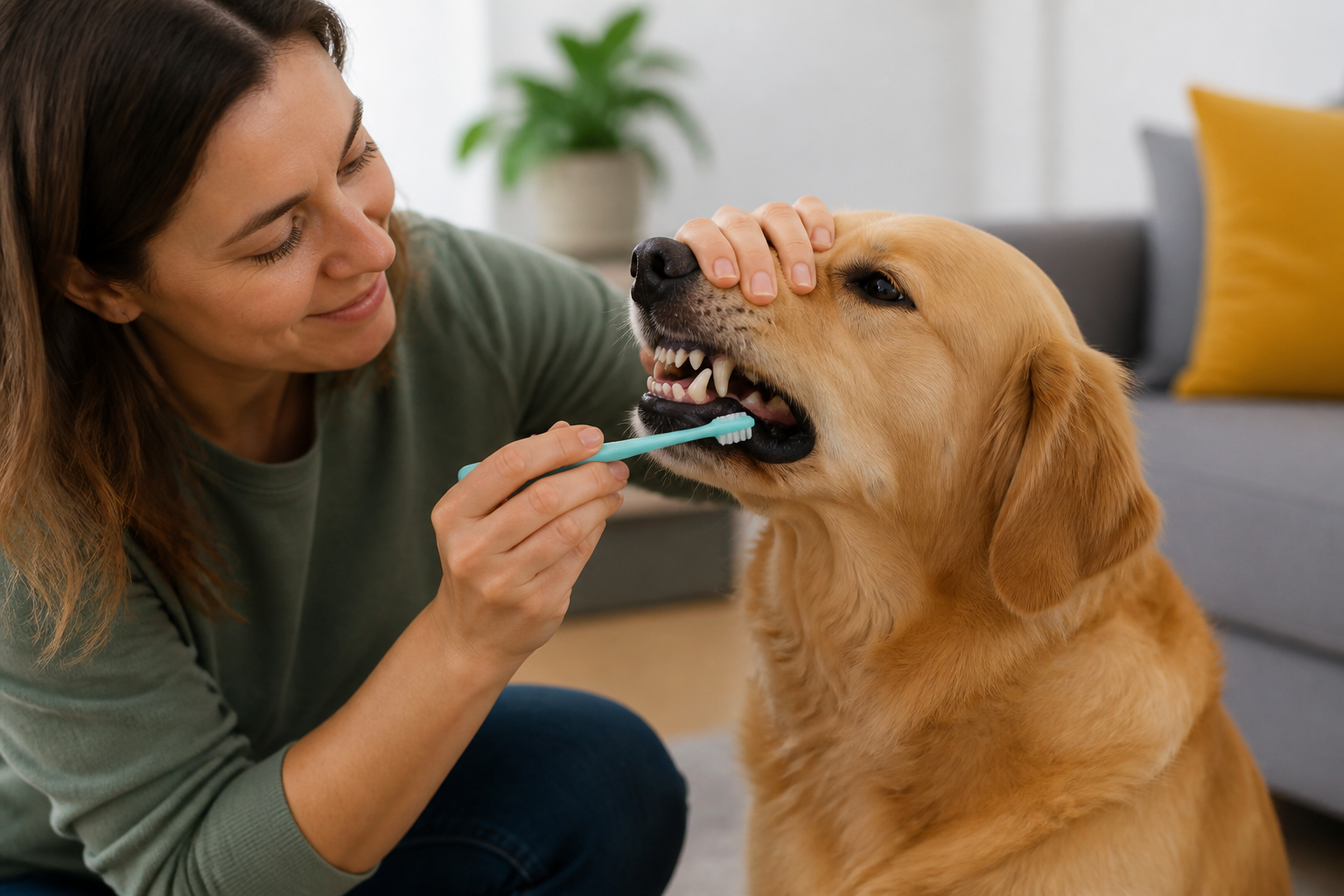
Nothing beats a toothbrush for removing plaque. You should use a brush specifically designed for dogs, as they have longer handles and softer bristles angled for a canine mouth. Never use human toothpaste. It often contains xylitol or high levels of fluoride, both of which are toxic to dogs. Instead, use an enzymatic toothpaste made for pets. These pastes work even if you do not get a perfect scrub because the enzymes help break down biofilm on contact. You can find brushes and toothpaste in our dog dental care category.
Step 1: Introduce the paste. / Let your dog lick a small amount of poultry or seafood flavored toothpaste off your finger.
Step 2: Get them used to touch. / Rub your finger along their gums and teeth for a few seconds to get them comfortable with the sensation.
Step 3: Introduce the brush. / Use a finger brush or a long-handled brush to gently circularize the outer surfaces of the teeth.
Step 4: Focus on the back. / Spend the most time on the upper back molars, as this is where the most tartar usually collects.
Step 5: Reward. / Give them a high-value treat or lots of praise so they associate brushing with something positive.
Using Dental Wipes for Sensitive Dogs
If your dog absolutely refuses a toothbrush, dental wipes are a great middle ground. These are pre-moistened pads that you wrap around your finger. They allow you to physically rub the surface of the tooth to remove slime and debris. While they do not get into the tiny crevices as well as bristles do, they are much better than doing nothing. For more guidance on introducing oral care gradually, review these pet dental care tips.
Wipes are especially helpful for small breeds with crowded teeth. Since these dogs often have very little space in their mouths, a traditional brush can be bulky and uncomfortable. We carry several brands of textured wipes at BaxterBoo that make this process faster for busy mornings.
The Role of Dental Chews and Toys
Chewing is a natural behavior that helps keep teeth clean through mechanical abrasion. When a dog chews on a textured surface, it acts like a squeegee against the tooth. Not all chews are created equal, though. You want items that are firm enough to scrub the teeth but not so hard that they break them. Explore our dental chews and treats for dogs for options suited to different chewing styles.
Brands like Greenies and Kong offer products designed specifically for this purpose. A Kong toy stuffed with a bit of pet-safe peanut butter or wet food encourages long chewing sessions. As the dog works to get the food out, their teeth rub against the rubber, which helps dislodge soft plaque.
Vet Tip: Look for the VOHC (Veterinary Oral Health Council) seal on treats and chews. This seal means the product has been tested and proven to reduce plaque or tartar by a specific percentage.
Water Additives and Oral Sprays
For the truly "brush-shy" dog, water additives and oral rinses are a helpful supplement. These products usually contain enzymes or ingredients like chlorhexidine that kill the bacteria responsible for plaque. You simply add a capful to their water bowl each day.
While these additives will not remove existing tartar, they are excellent at slowing down new buildup. They also do wonders for "dog breath." If your dog has a very red gumline, a spray might be too intense for them. In those cases, a tasteless water additive is the most stress-free way to improve their oral health. You can compare options in our dental and breath care collection.
When Home Cleaning Isn't Enough
There is a point where home care is no longer sufficient. If your dog's gums are bleeding, if they are dropping food, or if you see "recessed" gums where the root is visible, they need professional help. No amount of brushing will fix a tooth that is already loose or infected.
If your vet identifies a serious issue, they might recommend a prescription dental diet. These kibbles are usually much larger and have a specific fiber matrix that does not crumble immediately. This forces the dog to chew the piece, providing a deep scrub. Our pet pharmacy carries prescription products that can be ordered with veterinary authorization.
Note: If your dog has persistent bad breath despite daily brushing, it may be a sign of an internal health issue or a deep infection. A veterinary exam is the only way to rule out systemic problems.
Managing the Risk of Anesthesia
If your vet insists that a professional cleaning under anesthesia is the only safe path, there are ways to make it safer. Modern veterinary medicine uses many of the same monitoring tools as human hospitals. This includes tracking heart rate, blood oxygen levels, and blood pressure.
- Pre-anesthetic bloodwork: This checks kidney and liver function to ensure the dog can process the medication.
- IV fluids: These help maintain blood pressure and keep the dog hydrated during the procedure.
- Tailored protocols: Vets can adjust the type and amount of anesthesia based on the dog's age and health history.
For many pets, the risk of untreated dental disease is actually higher than the risk of anesthesia. Bacteria from an infected mouth can enter the bloodstream and cause permanent damage to the heart, liver, and kidneys.
The Impact of Diet on Dental Health
What your dog eats plays a role in how fast plaque forms. Wet food tends to stick to the teeth more than dry kibble. However, regular dry kibble is not a "magic eraser" for teeth. Most kibbles shatter into small pieces before the dog can really chew them.
If you are concerned about dental health, look for high-quality foods with ingredients that support oral wellness. Some brands use minerals that bind to calcium in the saliva, preventing it from hardening into tartar. We carry a wide selection of premium foods like NutriSource and Stella and Chewy's that focus on overall wellness, which includes keeping the mouth environment healthy.
Bottom line: Daily brushing and mechanical chewing are the best ways to clean a dog's teeth without anesthesia, but they are preventive tools rather than a cure for existing disease.
Maintaining a Schedule with MVP Rewards
Keeping up with dental care means buying toothpaste, chews, and specialized toys on a regular basis. To make this easier on your budget, we recommend using our MVP Rewards program. You can earn up to 5% back on every purchase of dental supplies. This makes it much more affordable to stay consistent with the daily habits that prevent the need for expensive professional procedures.
You might also consider our Autoship program for items like dental treats and water additives. Having these supplies show up at your door every month ensures you never run out, which is the most common reason pet parents fall off their brushing routine. Plus, your first Autoship order comes with extra savings and a free MVP Gold membership.
Choosing the Right Gear
When you are looking for dental supplies at BaxterBoo, keep your dog's size and chewing style in mind. A tiny Chihuahua needs a very different brush and chew than a powerful Great Dane. For aggressive chewers, look for durable rubber toys from brands like Kong or RC Pets. For seniors with sensitive gums, softer rubber or dental wipes are often the best choice.
Our warehouse in Vernon Hills is stocked with over 500 brands, and we handpick every item to ensure it meets our standards for safety and quality. We want you to feel confident that the tools you are using to clean your dog's teeth are effective and safe.
Summary of Home Dental Care
Cleaning a dog's teeth without anesthesia is a long-term commitment. It is not something you can do once every few months and expect results. It requires a daily habit of brushing or wiping, supplemented by the right chews and water additives.
- Brush at least three times a week (daily is best).
- Use enzymatic toothpaste made for dogs.
- Provide VOHC-approved dental chews.
- Use water additives to fight bacteria in the drinking bowl.
- Visit the vet annually for a physical oral exam.
By starting these habits early, you can significantly reduce the amount of tartar that forms. This may help your dog go longer between professional cleanings or even avoid the need for them entirely if their genetics and diet are on your side.
Next Steps for Your Dog’s Smile
The best way to start is to get the right tools in your hands. Check out our dog dental care section to find the brushes, pastes, and wipes that fit your dog's needs. If your vet has already recommended a specific prescription diet or medication for gum health, our pet pharmacy is ready to help fulfill those needs quickly and reliably.
Remember that any new health routine should start with a conversation with your veterinarian. They can tell you exactly what stage of dental disease your dog is currently in and whether at-home methods are enough to turn things around. We are here to support you with the gear and guidance you need to keep those tail-wagging smiles bright and healthy.
FAQ
Is anesthesia-free cleaning as good as a regular vet dental?
No, it is generally considered a cosmetic procedure because it only cleans the visible surface of the tooth. It cannot reach the bacteria under the gumline where the most damage occurs. It also does not allow for dental X-rays, which are necessary to find hidden infections or rotting roots.
How can I remove tartar from my dog's teeth myself?
You cannot safely remove hard tartar (calculus) at home once it has mineralized on the tooth. At-home care like brushing and dental wipes is designed to remove soft plaque before it hardens. Trying to scrape tartar off with metal tools at home can damage the enamel and lead to painful gum injuries.
Are there any risks to anesthesia-free dental cleanings?
The main risks include the stress of physical restraint and the possibility of injury if the dog moves while sharp tools are being used. There is also the danger of "false security," where an owner thinks their dog's mouth is healthy because the teeth look white, while deep-seated infections continue to grow under the gums.
What is the best alternative to brushing a dog's teeth?
If your dog will not tolerate brushing, a combination of dental wipes, VOHC-approved dental chews, and water additives is the next best thing. While not as effective as a toothbrush, using these daily provides mechanical and chemical cleaning that can significantly slow down the buildup of plaque and tartar.






