Save 15% on your 1st Autoship learn more

 Email us
 Live Chat
 FAQs
FAQs





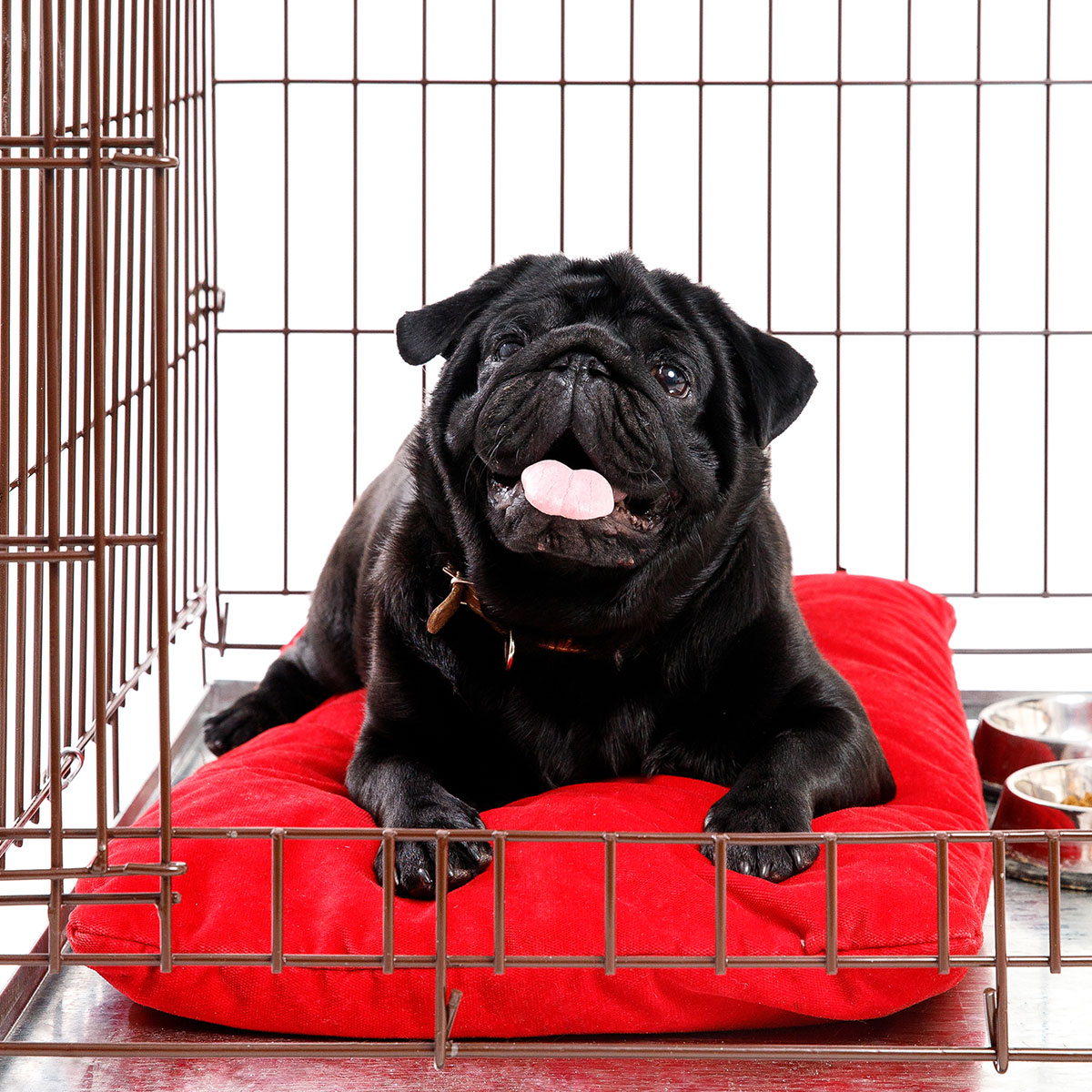
When you bring home a dog or puppy for the first time, there is a lot of excitement. In addition to the excitement, you also have a few more responsibilities to think about. How will you house train your new pooch? Most people turn to crate training as one of the best options available. Crate training taps into your dog’s instincts as den dwellers. Now, this doesn’t happen overnight, unfortunately. It takes some work to crate train! Here is what you need to know about training.
How to Select a Crate
Crate selection may seem overwhelming at first. After all, there are a lot of different crates available. You can choose between plastic crates, metal crates or even fabric crates on rigid frame. Collapsible crates are the best if you plan to travel or if you need to put the crate away occasionally. Soft dog crates come in a variety of colors and tend to have strong steel frames.
On the other hand, traditional crates are better for escape artist dogs. If you plan to be outdoors with your pet, you can also find covers that can protect from UV rays.
What Not to Do in Crate Training
There are certain things that you should avoid while crate training. One thing to keep in mind is that the crate is supposed to be your dog’s safe space. This means that you should never use it as a punishment. You don’t want your dog to be afraid of the kennel.
In addition, you should never keep your dog in the crate for too long. Dogs still need exercise and interaction. You have to make sure that they spend the least amount of time in the crate as possible. Once you can trust that your dog won’t destroy the house when you’re away, you should no longer lock your dog in the crate. After that, your dog can go in and out voluntarily.
How to Introduce Your Dog to Crate
To introduce your dog to the crate, you should place it in an area where you and your dog spend a lot of time. For instance, the family room is one of the best places for it. Place a soft blanket inside and take the door off of the crate so that your pup can explore it. Some dogs may be curious about it and start to sleep in it as soon as possible.
Other dogs, however, may be more hesitant. You can bring more hesitant dogs to the crate and encourage them in a happy tone of voice. Drop some treats into the crate to see if it entices the dog inside. If it doesn’t, do not force it. Continue to offer treats and toys to your furry friend until it is ready to enter the crate.
How to Crate Train
To start crate training, you want to feed your dog in the crate. Put the food dish in the back of the crate and wait until your dog can comfortably eat meals inside. Once your dog is comfortable, begin to shut the crate while he or she eats. When finished, open the door again. Now, as time goes on, you should leave your dog inside for a few minutes more. If your dog whines, do not open the door! If you let the dog out when he or she whines, then you are rewarding the behavior. Wait until the whining stops.
Once you do this, you can begin to confine your pet for longer periods of time. Call your dog over if you have to leave, give the dog a treat and command them into the kennel. Always use an encouraging voice and praise and treat your dog every time he or she does something good. Once inside, stay near the crate for a short time and then go to another room. Once you return, sit quietly again and then let the dog out. Over time, you can increase how long you leave your dog in the crate.
How to Handle Anxiety
Some dogs experience anxiety when in the crate at night. Your dog will initially whine when you crate train. This is completely normal. In most cases, you have to try to ignore it. Never reward your pup by releasing him or her when the whining begins. If you’ve already crate trained to the point where the pup should be okay at night, then your dog may be testing you. Do not yell or hit the crate! This will only scare your puppy.
If your dog won’t stop, then it’s time to investigate the problem. Say the phrase that you normally use when you take your puppy to the bathroom. If your dog becomes suddenly excited, then you may need to take the dog out.
Dogs with true separation anxiety may need more help. You cannot use a crate to stop separation anxiety. In fact, your dog may hurt itself to try to escape to get to you. When this is a real problem, you may need to consult a professional about how to handle the separation anxiety before it becomes worse.
Crate training has a lot of advantages! Not only is it a great way to housetrain your dog, but it can also ease a lot of anxiety that dogs may have when you are away from home. In the wild, canines sleep in dens. When you have a crate for your puppy, you are essentially giving him or her that den in the house. Crate training can be highly effective and beneficial for your pup, as long as you know how to go through the process correctly.