
 Save 15% on your 1st Autoship learn more

 Email us
 Live Chat
 FAQs
FAQs





Introduction
You lean in for a morning snuggle and your dog greets you with a lick, but the smell is overwhelming. That familiar "dog breath" is often the first sign that bacteria and plaque are taking over your pet's mouth. At BaxterBoo, we believe that dental hygiene is just as important for dogs as it is for humans. Most dogs show some sign of dental disease by the time they are three years old. While professional cleanings are necessary, what you do in your own living room makes the biggest difference. This guide covers how to clean your dog’s teeth using brushing, treats, and specialized tools. Taking these steps now can help prevent pain and expensive veterinary procedures later.
The Importance of Routine Oral Care
Dental health is about more than just fresh breath. When plaque stays on the teeth, it mixes with minerals in the saliva to form tartar. Tartar is a hard substance that sticks to the tooth surface. It provides a home for bacteria to grow. These bacteria can eventually travel under the gum line. This causes inflammation, tooth loss, and even infections that spread to the heart or kidneys.
Establishing a routine at home is the best way to keep these issues at bay. Brushing remains the gold standard for care. However, we know that not every dog is a willing participant. Fortunately, there are several tools you can use to maintain a healthy mouth. From enzymatic toothpastes to textured toys, the goal is to break down plaque before it hardens.
Quick Answer: The best way to clean your dog's teeth at home is through daily brushing with dog-safe toothpaste. You can supplement this with dental chews, water additives, and textured toys to help scrub away plaque mechanically.
Getting Started with Dog Toothbrushing
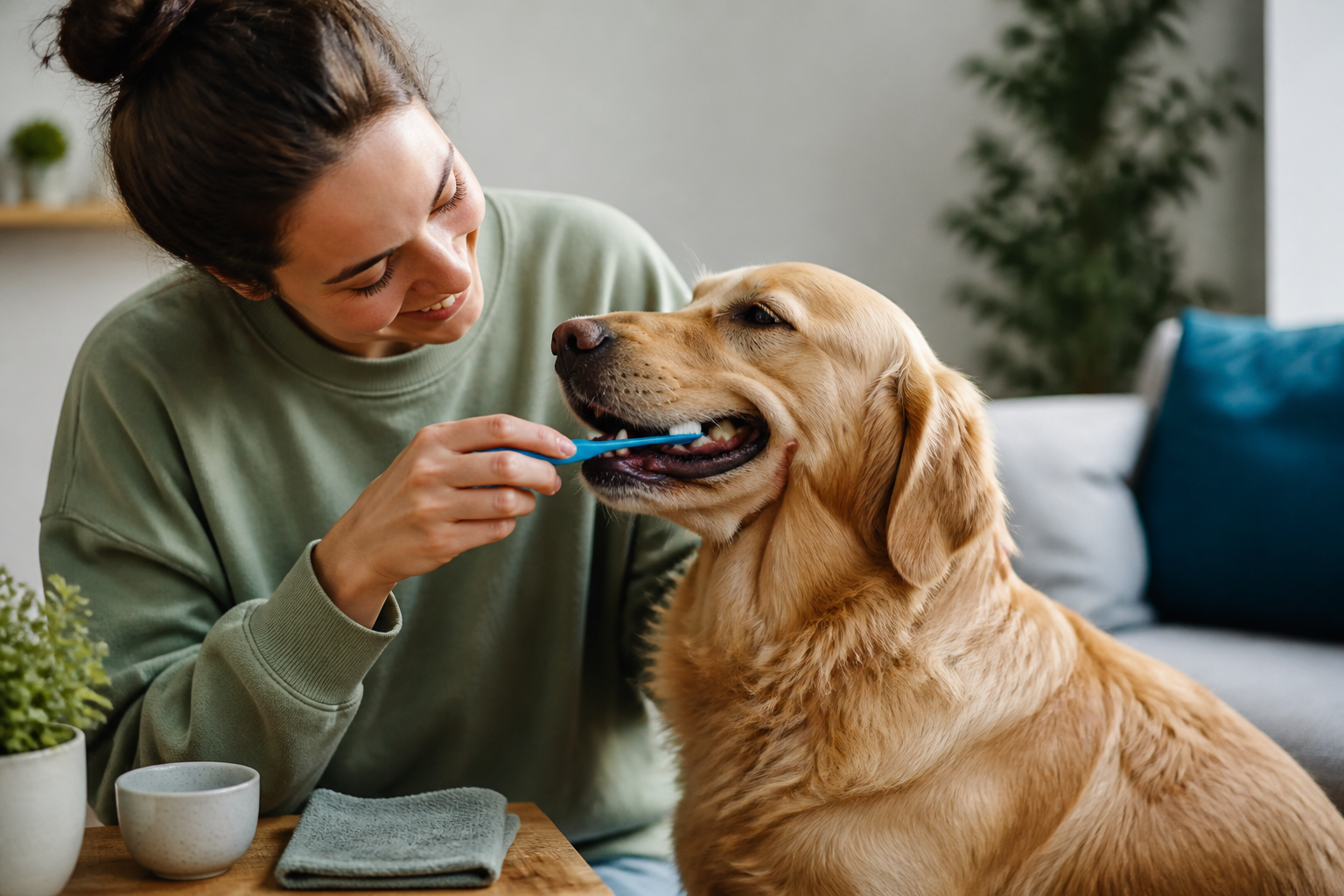
Brushing is the most effective method for removing plaque. You do not need to clean the inside of the teeth. A dog's tongue usually does a good job of keeping those surfaces clear. Focus your energy on the outside of the teeth where the cheek touches the gums.
Choosing the Right Supplies
Never use human toothpaste for your dog. It often contains xylitol, which is toxic to pets. Human toothpaste also contains foaming agents that can upset a dog’s stomach. Buy an enzymatic toothpaste made specifically for pets. These often come in flavors dogs love, such as poultry, beef, or peanut butter.
You also need the right brush. A long-handled brush with angled bristles helps you reach the back molars. If your dog is small or nervous, a finger brush might be easier to control. These silicone caps fit over your pointer finger and allow you to feel exactly where you are cleaning. You can find pet-safe brushes and toothpastes in our dog dental and breath care collection.
Training Your Dog to Accept Brushing
Most dogs do not naturally enjoy having their mouths handled. You must build trust slowly. This process might take a few weeks. Do not rush into a full scrubbing session on the first day.
Step 1: Let them taste the paste. / Put a small amount of dog toothpaste on your finger. Let your dog lick it off. This creates a positive association with the flavor.
Step 2: Touch the mouth. / While your dog licks the paste, gently lift their lip. Rub your finger along their gums. Keep this session under thirty seconds.
Step 3: Introduce the brush. / Put toothpaste on the brush and let them lick it. Gently touch the brush to one or two front teeth. Reward them with praise or a small treat immediately.
Step 4: Start small circles. / Begin brushing the large canine teeth and the premolars. Use gentle circular motions. Work in short bursts of five to ten seconds.
Step 5: Reach the back. / Once they are comfortable, move toward the back of the mouth. This is where the most tartar builds up. Aim for a total of two minutes for the whole mouth.
Vet Tip: If your dog has red, swollen, or bleeding gums, stop brushing and schedule a vet visit. These are signs of active gingivitis or periodontal disease. Brushing an infected mouth can be very painful for your pet.
For additional guidance on introducing oral care, read these pet dental care tips.
Alternatives to Traditional Brushing
Not every dog will sit still for a toothbrush. If your dog is highly resistant, you can still make progress with other methods. These should not entirely replace brushing, but they are far better than doing nothing at all.
Dental Wipes
Dental wipes are textured pads that you wrap around your finger. They are pre-soaked in a cleaning solution. You simply rub them over the surface of the teeth. While they cannot reach deep into the crevices like bristles can, they are excellent at removing daily plaque film. They are also a great option for dogs that find the sensation of a brush too invasive.
Water Additives
Think of water additives as mouthwash for dogs. You add a specific amount to their water bowl every day. These formulas contain enzymes or minerals that help kill bacteria and break down plaque. They are one of the easiest ways to support oral health because they require zero cooperation from the dog.
Dental Sprays
Oral sprays work similarly to additives but are applied directly to the teeth and gums. Many formulas are designed to stick to the oral tissues and work over time. They are particularly helpful for freshening breath quickly between deeper cleanings.
The Role of Dental Chews and Treats
Chewing is a natural behavior that provides significant dental benefits. As a dog chews, the friction helps scrape away soft plaque. However, not all chews are created equal. You want items that are firm enough to provide resistance but not so hard that they break teeth. Explore our dental chews for dogs for brushing supplements.
Selecting Safe Chews
We recommend looking for products with the Veterinary Oral Health Council (VOHC) seal. This seal means the product has been tested and proven to reduce plaque or tartar. BaxterBoo carries several trusted brands that offer effective dental treats, such as Greenies and RedBarn.
- Dental Sticks: These often have a star or cross shape. The ridges are designed to get into the gaps between teeth.
- Natural Chews: Bully sticks and high-quality rawhide alternatives can provide long-lasting chewing sessions.
- Avoid Hard Objects: Never give your dog cow hooves, stones, or large animal bones. These are often harder than the tooth enamel itself and can cause painful fractures.
You can also browse our selection of Redbarn products for natural chew options.
Rubber and Nylon Toys
Textured toys are another great way to clean teeth during playtime. Look for toys with nubs, ridges, or bristles. Brands like Kong make specialized dental toys that you can stuff with pet-safe paste. As the dog works to get the paste out, their teeth rub against the textured rubber. This provides a mechanical cleaning effect that feels like a game.
Our selection of KONG products includes textured dental toys for dogs.
Key Takeaway: Effective at-home dental care uses a "multi-modal" approach. Combining brushing with dental chews and water additives provides the best protection against tartar buildup.
Dietary Support for Dental Health
What your dog eats every day impacts their oral hygiene. While many people believe that all dry kibble cleans teeth, this is a bit of a myth. Most standard kibble is small and brittle. It shatters the moment a dog bites it, providing very little scrubbing action.
Specialized Dental Diets
There are specific "dental diets" designed to act like a toothbrush. The kibble pieces are much larger. They are also made with a fibrous matrix that does not crumble immediately. The tooth sinks into the kibble, and the fibers scrub the surface of the tooth before the piece breaks.
Our pharmacy carries several prescription dental diets through our partnership with Pet's Choice. These foods, such as Royal Canin Dental or Farmina Vet Life, are formulated for dogs who are prone to rapid tartar buildup. Because these are therapeutic diets, you will need a prescription from your veterinarian to order them. Visit our pet pharmacy when your veterinarian recommends prescription products.
Ingredients to Look For
Some foods and treats contain polyphosphates. These are minerals that coat the teeth and prevent calcium in the saliva from turning plaque into hard tartar. If you are concerned about your dog's oral health, check your food labels for these beneficial additives.
Managing Dental Care for Senior Dogs
Older dogs often face more significant dental challenges. Years of plaque buildup can lead to sensitive teeth or receding gums. If you have a senior dog, you must be extra gentle during home cleanings.
Senior dogs may also have underlying health conditions that make oral infections more dangerous. Bacteria from the mouth can enter the bloodstream and put a strain on an aging heart. If your senior dog has lost teeth or has loose ones, avoid hard chews entirely. Soft dental wipes and water additives are usually the safest options for these pets.
For more warning signs to watch for, read how to recognize hidden dental problems in dogs.
When Home Care is Not Enough
Even with perfect at-home habits, most dogs will eventually need a professional cleaning. Home care is preventive. It cannot remove tartar once it has hardened into a cement-like layer. Only a veterinarian using professional scaling equipment can safely remove that buildup.
Signs Your Dog Needs a Professional Visit
You should check your dog's mouth once a week. Look for these warning signs that indicate a bigger problem:
- Persistent Bad Breath: If the breath smells like rot or garbage even after brushing, there may be an infection deep in the gums.
- Discolored Teeth: Brown or yellow deposits near the gum line are hardened tartar.
- Behavioral Changes: Pawing at the face or refusing to eat hard kibble can signal dental pain.
- Bleeding or Redness: Gums should be a healthy pink color. Redness or bleeding during play is a sign of gingivitis.
- Excessive Drooling: A sudden increase in drool can be caused by oral discomfort.
Vet Tip: Schedule a dental exam at least once a year. Your vet can identify hidden issues, such as abscessed roots or oral tumors, that are impossible to see at home. Most professional cleanings require anesthesia to ensure the vet can clean under the gum line safely and take dental X-rays.
Building a Sustainable Routine
Consistency is more important than perfection. If you can only brush your dog's teeth three times a week, that is still significantly better than once a month. Try to link dental care to another daily habit. For example, you might apply a dental spray right after your dog comes in from their final evening walk.
For repeat-purchase dental supplies, our Autoship programme can help you maintain a regular routine.
Creating a Dental Toolkit
Having everything in one place makes it easier to stay on track. We suggest keeping a small kit near your dog's leash or food storage area. This kit should include:
- A pet-safe toothbrush and enzymatic toothpaste
- A container of dental wipes for quick cleanups
- A bottle of water additive
- A few VOHC-approved dental treats
Monitoring Progress
Keep an eye on the color of your dog's teeth. Over a few months of consistent care, you should see less redness in the gums and a reduction in new staining. If the breath improves, you know your efforts are working.
Safety Precautions for Home Cleaning
While cleaning teeth is safe for most dogs, there are a few things to keep in mind. Always supervise your dog when they are using dental chews or toys. If a chew gets small enough to swallow whole, take it away to prevent choking.
If your dog becomes aggressive or tries to bite when you touch their mouth, do not force the issue. Safety comes first. In these cases, focus on passive methods like water additives and dental treats. You can also work with a professional trainer to desensitize your dog to having their mouth handled.
Summary of At-Home Dental Steps
Maintaining your dog's smile does not have to be a chore. By using a combination of methods, you can keep their mouth healthy and their breath fresh.
- Brush Daily: Use enzymatic toothpaste and a soft brush for the best results.
- Use Chews Wisely: Choose VOHC-approved items like those from Greenies or RedBarn.
- Add to Water: Use water additives to kill bacteria with zero effort.
- Check Weekly: Look for red gums, loose teeth, or brown tartar buildup.
- Consult a Vet: Get a professional exam once a year to catch hidden problems.
Bottom line: Consistent at-home care is the best way to prevent dental disease and ensure your dog lives a comfortable, pain-free life.
The BaxterBoo pharmacy is here to help if your veterinarian recommends a prescription dental diet or specific oral medications. Through our partnership with Pet's Choice, we offer FDA-approved options for dogs with chronic dental needs. Keeping up with these tools can help you avoid the stress of advanced dental disease.
FAQ
Can I use baking soda to clean my dog’s teeth?
It is best to avoid using baking soda regularly. While it is not toxic in small amounts, it has a very high alkaline content that can upset a dog’s stomach if swallowed. It also has a salty taste that most dogs dislike, which can make them resist future brushing sessions. Stick to flavored enzymatic toothpastes designed specifically for pets.
How often do I really need to brush my dog’s teeth?
Ideally, you should brush your dog's teeth every day. Plaque can begin to harden into tartar within 24 to 48 hours. If daily brushing is not possible, aim for at least three times a week to make a meaningful impact on their oral health. Supplementing with dental chews on the days you do not brush can also help.
My dog’s breath is still bad after I brush. What should I do?
Persistent bad breath usually indicates that there is a problem beneath the gum line or an infection that brushing cannot reach. It can also be a sign of internal health issues related to the kidneys or liver. If brushing does not improve the smell, you should schedule a veterinary exam to rule out periodontal disease or other medical conditions.
Are dental treats high in calories?
Some dental treats can be quite high in calories, which is a concern for dogs prone to weight gain. Always check the packaging for feeding guidelines and adjust your dog's daily meal portions accordingly. If your dog is on a strict diet, look for low-calorie dental chews or stick to brushing and water additives, which are calorie-free.






