
 Save 15% on your 1st Autoship learn more

 Email us
 Live Chat
 FAQs
FAQs





Introduction
You are sitting on the sofa after a long day when your dog hops up to give you a greeting. Suddenly, a wave of bad breath hits you. It is more than just "dog breath." It is a sharp, metallic, or rotting scent that makes you turn your head. This moment often leads pet owners to worry about the cost and risks of professional dental surgery. While serious decay requires a veterinarian, many people want to know how to maintain oral hygiene at home. At BaxterBoo, we see thousands of pet parents looking for ways to keep those pearly whites clean without jumping straight to the operating table. This guide covers the tools, routines, and products that help manage plaque and tartar buildup. You can take control of your dog's oral health through consistent daily habits and the right supplies.
The Difference Between Routine Cleaning and Dental Surgery
It is important to understand what we mean by avoiding surgery. In the veterinary world, dental surgery usually involves anesthesia to perform deep cleaning under the gum line or to extract teeth that are rotting. If your dog already has loose teeth, bleeding gums, or exposed roots, a vet visit is mandatory. Home care cannot fix a tooth that is already dead.
However, preventive care is designed to stop the progression of gum disease before surgery becomes the only option. Plaque is a soft film of bacteria that forms on the teeth after eating. If it is not removed, it hardens into tartar within about 48 hours. Once tartar forms, it acts like a shield for more bacteria, leading to gingivitis and eventually bone loss. Your goal at home is to disrupt that plaque every single day.
Quick Answer: You can clean a dog's teeth without surgery by using daily brushing, enzymatic toothpastes, dental chews, and water additives. These methods remove soft plaque before it hardens into tartar, which helps prevent the need for extractions or deep scaling under anesthesia.
Establishing a Brushing Routine
Brushing is the single most effective way to keep your dog's mouth healthy. It is the gold standard of care. If you can only do one thing, make it this. Most dogs are not born loving a toothbrush, so you have to move slowly.
Step 1: Choosing Your Supplies
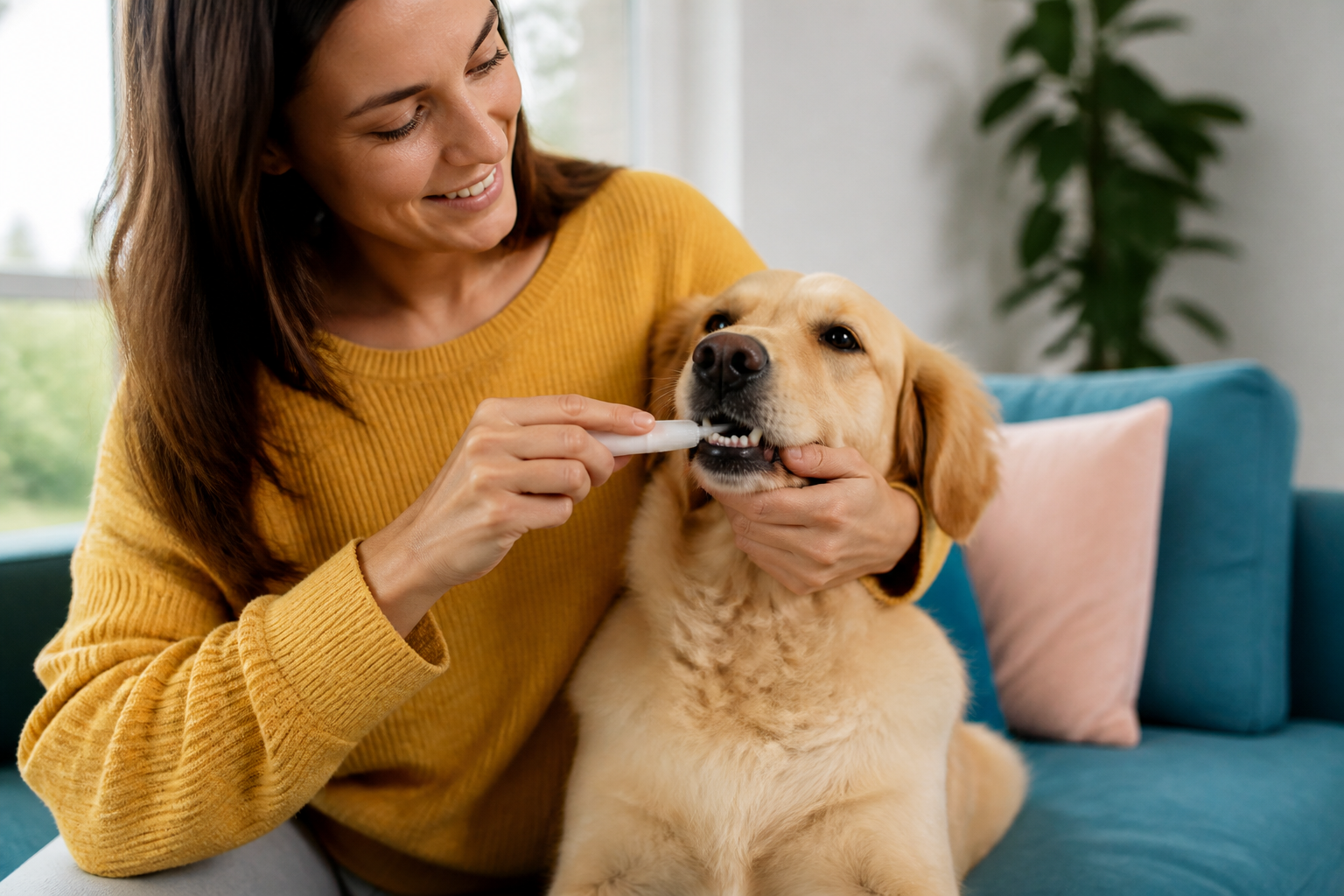
Never use human toothpaste. It contains fluoride and often xylitol, both of which are toxic to dogs. Use a pet-specific enzymatic toothpaste, such as Virbac C.E.T. Enzymatic Pet Toothpaste for Dogs and Cats. These pastes contain enzymes that break down food particles even if you do not scrub every surface perfectly. For the brush, you can use a long-handled pet toothbrush or a silicone finger brush. Finger brushes are great for beginners because they give you more control and feel more natural to the dog.
Step 2: The Introduction
Do not just shove a brush into your dog's mouth. Start by letting them lick the toothpaste off your finger. Most pet pastes are flavored like poultry or beef to make them a treat. Once they enjoy the taste, rub your finger along their gums. Do this for a few days until they are comfortable with you touching their mouth.
Step 3: The Brushing Motion
When you introduce the brush, focus on the outside of the teeth. This is where the most plaque accumulates. Use small, circular motions and try to get the bristles under the gum line slightly. You do not need to worry as much about the inside surfaces of the teeth. A dog's tongue actually does a decent job of cleaning those areas naturally.
Step 4: Consistency and Rewards
Aim for 30 to 60 seconds of brushing per day. If you cannot do it daily, aim for at least three times a week. Always follow the session with a high-value reward. This could be a favorite toy or a quick walk. You want your dog to associate dental care with something positive.
Key Takeaway: Daily brushing with enzymatic toothpaste is the only way to effectively remove plaque before it mineralizes into tartar.
Using Dental Chews and Toys
Not every dog will tolerate a toothbrush right away. This is where mechanical cleaning comes into play. Dental chews are designed to scrape the surface of the teeth as the dog bites down. We carry several brands at BaxterBoo, such as Greenies, that are specifically shaped to get into the crevices of the molars. For more ideas, browse our dental care collection.
When a dog chews on a textured surface, the friction helps rub away soft plaque. Look for products that have the Veterinary Oral Health Council (VOHC) seal of approval. This seal means the product has been tested and proven to reduce plaque or tartar by a certain percentage.
Selecting Safe Toys
Rubber toys with nubs or ridges are excellent for oral health. Brands like Kong offer durable rubber toys that can be stuffed with healthy snacks. As the dog works to get the food out, their teeth rub against the rubber ridges. Avoid extremely hard items like natural bones, antlers, or thick nylon bones. While they might clean the teeth, they are often harder than the tooth enamel itself. This can lead to slab fractures, which will result in the very surgery you are trying to avoid.
Monitoring Chew Time
Always supervise your dog with dental chews. Some dogs are "gulpers" and may try to swallow large chunks of a chew once it gets soft. This can be a choking hazard or cause an intestinal blockage. If the chew gets small enough to fit entirely in their mouth, take it away and replace it with a new one.
For additional product ideas, see our guide to dental chews for dogs.
Water Additives and Dental Wipes
If your dog is particularly sensitive about their mouth being touched, you can use "hands-off" methods. These are not as effective as brushing, but they are better than doing nothing.
Water Additives
A water additive is a liquid solution you pour into your dog's drinking bowl. It usually contains ingredients like chlorhexidine or stabilized chlorine dioxide. These substances help kill the bacteria that cause bad breath and plaque formation. They are typically tasteless and odorless, so most dogs will not even notice a change in their water. This is an easy way to provide 24-hour protection against oral bacteria.
Dental Wipes
Dental wipes are small, textured pads pre-soaked in cleaning solution. If your dog hates the "poke" of a toothbrush, a wipe might feel more like you are just petting their face. You simply wrap the wipe around your pointer finger and rub the surface of the teeth. It is a faster alternative to brushing for busy mornings.
Vet Tip: If your dog has foul breath despite home cleaning, it could indicate an underlying infection or internal health issue. Always consult your veterinarian for a full oral exam before starting a new intensive dental regimen.
For more practical suggestions, read these pet dental care tips.
Nutrition and Specialized Diets
What your dog eats has a direct impact on their dental health. There is a common myth that all dry kibble cleans teeth. In reality, most kibble is small and brittle. It shatters as soon as the tooth hits it, providing very little cleaning action.
Dental Diets
Specialized dental diets, like those from Royal Canin or Farmina Vet Life, are different. The kibble is much larger and has a fibrous structure. Instead of shattering, the tooth sinks into the kibble, which then scrubs the tooth surface all the way to the gum line. Some of these diets also contain polyphosphates. These minerals coat the teeth and prevent calcium in the saliva from turning plaque into hard tartar.
Raw and Fresh Foods
Some pet owners find success with raw diets or fresh foods that include natural enzymes. However, if you feed a soft, wet diet, you must be even more diligent with brushing. Soft food sticks to the teeth and gums much more easily than dry food does. If you use wet food as a topper, consider adding a dental supplement or a crunchier element to help provide some friction.
Signs Your Dog Needs Professional Help
Home cleaning has its limits. It is vital to recognize when "cleaning" is no longer enough and medical intervention is required. If you see any of the following, put down the toothbrush and call your vet:
- Bright red or bleeding gums
- A thick, brown or orange crust on the teeth (this is mature tartar)
- Excessive drooling or dropping food while eating
- Crying out when the mouth is touched
- A bump or swelling on the snout or under the eye
- Loose or missing teeth
At this stage, your dog is likely in pain. Dogs are experts at hiding discomfort, so they may keep eating even with a severe toothache. Professional scaling under anesthesia allows the vet to clean the "pockets" under the gums where home tools cannot reach.
If you are concerned about hidden symptoms, read how to recognize signs of bad teeth in dogs.
Our Pharmacy and Prescription Support
Sometimes, dental issues are caused by chronic infections or underlying conditions. We provide access to a full-scale pharmacy through our partnership with Pet's Choice. If your veterinarian prescribes a specific medicated dental rinse, an antibiotic for an oral infection, or a prescription-strength dental diet, we can help fulfill those needs.
Our pharmacy carries FDA-approved medications that support your dog's recovery from dental procedures or help manage chronic gingivitis. We also offer specialized supplements like Cosequin or Zesty Paws that support overall wellness, which in turn helps the body fight off oral inflammation. Using our Autoship programme is a great way to ensure you never run out of the prescription foods or preventives your vet recommends.
Bottom line: While home care is powerful, some conditions require prescription-strength solutions or professional diagnosis to keep your dog pain-free.
Managing Dental Care for Senior Dogs
Older dogs are at a higher risk for dental disease. Years of plaque accumulation can lead to significant tartar buildup. Many owners of senior dogs are afraid of anesthesia because of the dog's age. This makes at-home care even more critical.
Gentle Cleaning for Seniors
Senior dogs may have sensitive gums or early-stage arthritis in their jaws. Use an extra-soft toothbrush or a very soft cloth with enzymatic gel. If your senior dog has already lost a few teeth, focus on cleaning the remaining ones to prevent further loss.
Cognitive Health and Routine
As dogs age, they can become more confused by changes in routine. If you start a dental habit late in life, be extra patient. Use plenty of praise and keep sessions very short. Maintaining oral health in seniors is also linked to heart health. Bacteria from the mouth can enter the bloodstream and attach to heart valves, leading to serious complications. Keeping the mouth clean is a vital part of senior wellness.
A Summary of Non-Surgical Dental Tools
| Method | Primary Benefit | Ease of Use |
|---|---|---|
| Brushing | Removes plaque, prevents tartar | Moderate (requires training) |
| Dental Chews | Mechanical scraping of molars | Very Easy |
| Water Additives | Reduces oral bacteria levels | Very Easy |
| Enzymatic Gels | Breaks down food particles | Easy |
| Dental Toys | Fun, passive cleaning | Easy |
| Prescription Diets | High-friction scrubbing | Very Easy |
Making Dental Care a Lifestyle
Consistency is the most difficult part of pet dental care. It is easy to skip a day, then a week, and then a month. To make it stick, tie the dental routine to an existing habit. For example, brush your dog's teeth right after you brush your own at night. Or, give them their dental chew every morning after their first walk.
We believe that small, daily investments in your dog's health pay off in the long run. By using the right tools and staying observant, you can significantly reduce the frequency of professional cleanings. Our goal at BaxterBoo is to provide you with the expert-vetted products you need to make this process simple and effective.
Key Takeaway: Success in non-surgical dental care comes from a multi-pronged approach combining mechanical cleaning, chemical bacterial control, and regular observation.
Conclusion
Cleaning your dog's teeth without surgery is entirely possible when you focus on prevention. By establishing a daily brushing habit, utilizing high-quality dental chews, and considering specialized diets, you can keep your dog's mouth healthy and their breath fresh. Remember that while home care is a powerful tool, it does not replace the expert eye of a veterinarian. Regular checkups ensure that any hidden issues are caught before they become painful.
- Start brushing with enzymatic toothpaste today.
- Incorporate VOHC-approved dental chews for mechanical cleaning.
- Use water additives to fight bacteria around the clock.
- Monitor for signs of pain or advanced decay that require a vet.
Bottom line: A proactive dental routine is the best way to ensure your dog enjoys a long, healthy life free from the discomfort of oral disease.
FAQ
Can I use baking soda to clean my dog's teeth?
While baking soda is not immediately toxic in tiny amounts, it has a very high salt content that can upset a dog's stomach if swallowed. It also lacks the enzymes found in pet-specific toothpastes that effectively break down plaque. It is much safer and more effective to use a flavored enzymatic toothpaste designed for dogs.
How often should I replace my dog's toothbrush?
You should replace your dog's toothbrush every three months, or sooner if the bristles start to fray or look dirty. A worn-out brush will not clean as effectively and can actually harbor bacteria. If you use a silicone finger brush, check it regularly for any signs of tearing or wear.
My dog's gums bleed a little when I brush. Should I stop?
A small amount of redness or very light spotting can be normal if you are just starting a routine and your dog has mild gingivitis. However, if the bleeding is heavy or persistent, it is a sign of advanced gum disease. You should stop brushing that area and consult your veterinarian for a professional evaluation.
Are there any natural foods that help clean teeth?
Crunchy vegetables like carrots or apple slices (without seeds) can provide a small amount of mechanical scrubbing. Some people also use plain, unsweetened yogurt because it contains beneficial bacteria that may help balance the oral microbiome. However, these are supplements and should not replace brushing or dental-specific products.






