Save 15% on your 1st Autoship learn more

 Email us
 Live Chat
 FAQs
FAQs





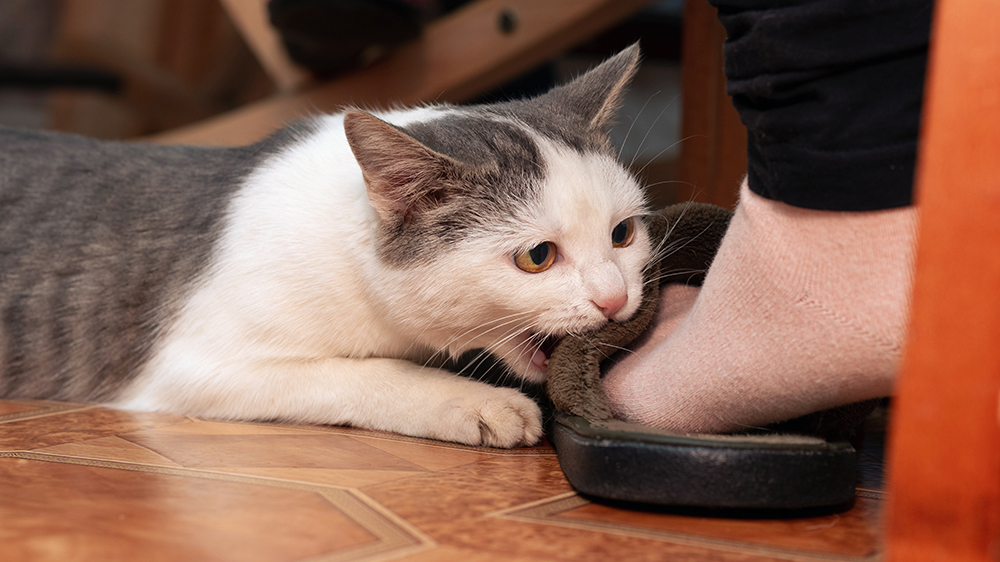
You go to put on your shoes only to find tiny teeth marks on the toes. You start to plug in your phone charger only to realize it's been chewed on. Whether you just got a new cat and are finding out that he has some less-than-cool habits, or you've had your fur baby for years and he's picked up a new habit, one thing is certain: Finding your stuff is chewed up is no fun. On top of that, chewing on things can be dangerous for your pet. To curb the problem, it helps first to know what might be causing your cat to sink his teeth into your belongings.
Why Your Cat Chews on Things
Cats begin to chew on things for a number of reasons. Sometimes, your cat starts the habit because he's feeling anxious. Perhaps you've moved recently or there's been another big change to his routine. Other times, there could be medical reasons that cause him to start chewing. A cat may even start to chew on your belongings simply because he's gotten bored with his toys and decided that your things are more fun to play with. There are several things you can do to help keep your cat, not to mention your stuff safe.
Give Your Cat More Toys
Boredom is often the biggest reason that your cat begins to chew on your belongings, so it stands to reason that one of the best things you can do to stop the behavior is to get him plenty of new cat toys to play with. What you might not realize is just how easily cats get bored with their toys. Dogs will often play with the same few toys until they're dirty, gross, and falling apart, but cats usually get bored with a toy within a few days.
That doesn't mean that you need to go out and buy new toys every week, though. Simply cycle your cat's toys every few days, making sure to offer him one anytime you notice that he's chewing on something he shouldn't be. It's also important that you spend time playing with your cat. He needs plenty of enrichment and quality time with you. Toys like the Meowijuana Get Buzzed Refillable Bee Cat Toy lets you play with your cat while helping him to get exercise by running and jumping.
It's important to give him toys that he can play with alone as well. When you aren't home, leave out something like the Scruffy's Mouse & Ball Play Ring Cat Toy, which allows him to bounce around and get some exercise even without your help. You can also freeze wet cat food and give him cubes to lick and chew on while you aren't home. All you need is the right kind of cat food, an ice cube tray, and a few hours in the freezer. Keep in mind that toys and frozen treats tend to work best for cats who only chew on occasion.
Protect Your Cat From Cords
When cats do chew, they often look for things that are already on or close to the ground, such as the cords to your electronics. Naturally, you don't want your pets to chew on the cords. At best, it can ruin your electronics, and at worst, it could seriously injure your pet or worst. There are several things you can do to prevent your cat from being able to chew on them.
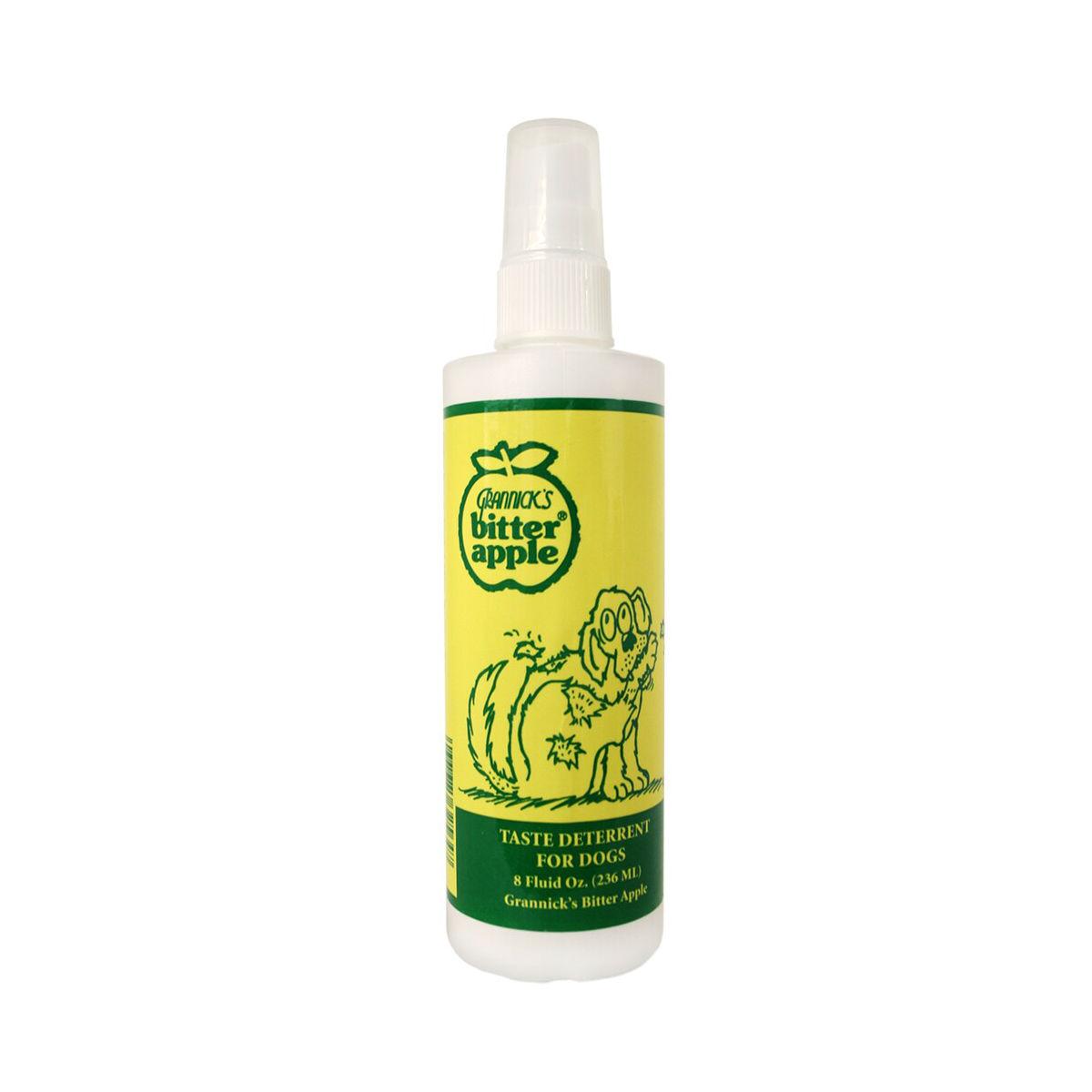
First, cover the cords with hollow tubing, which makes them easy for you to get to as needed but harder for your cat to chew on. Alternatively, you can cover your electronics cords with aluminum foil or double-sided tape, both of which cats try to avoid getting close to. You can also spray the cords with a bitter spray that will taste unpleasant to your cat and keep him from wanting to chew on the cords. You can even purchase a cat-specific motion detector and place it near cords. When your cat sets it off, emits a sound only he will hear and keeps him from getting closer to the cords.
Treat Your Cat's Anxiety
Cats who aren't usually bored and suddenly take up chewing on your belongings may be experiencing some anxiety. Have there been any big changes in your life lately? Maybe you're working longer hours or you've started bringing home a new romantic interest. Cats tend to be quite finicky and often get anxious when the routines they're used to are disrupted even a little bit. If you suspect this is what's going on with your cat, there are some options to try.
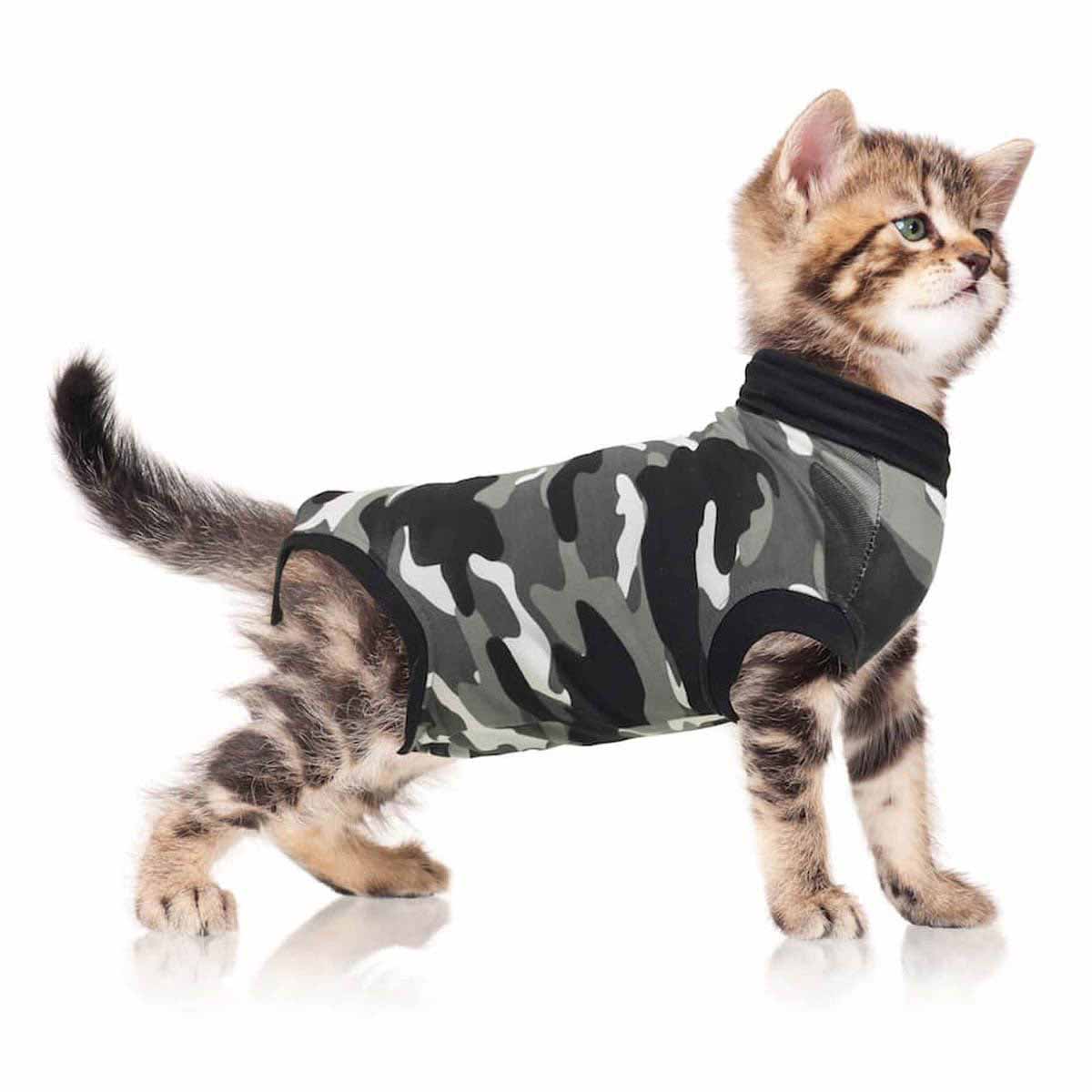
If your cat doesn't mind clothing, consider getting him a Suitical Cat Recovery Suit. Although made to protect your pet after he's had surgery, the pressure it creates can sometimes make a cat feel less anxious. Other options include calming treats such as Zesty Paws Calming Bites Cat Soft Chews, which taste like salmon. You can even purchase diffusers made especially to calm cats. One popular option is the Feliway MultiCat Calming Diffuser for Cats.
When To Talk To a Vet
Most of the time, chewing is nothing serious. However, if nothing seems to stop your cat from chewing on things, or if he has other symptoms, then it may be time to talk to your veterinarian. Look for symptoms such as vomiting, diarrhea, lethargy, or refusing to eat.
Most cats won't stop chewing overnight but as long as you're consistent with offering toys and treats, you will likely be able to curb the behavior. Until then, be sure you're doing all you can to protect your cat from cords, poisonous plants, and anything else that is dangerous for him.