
 Save 15% on your 1st Autoship learn more

 Email us
 Live Chat
 FAQs





Introduction
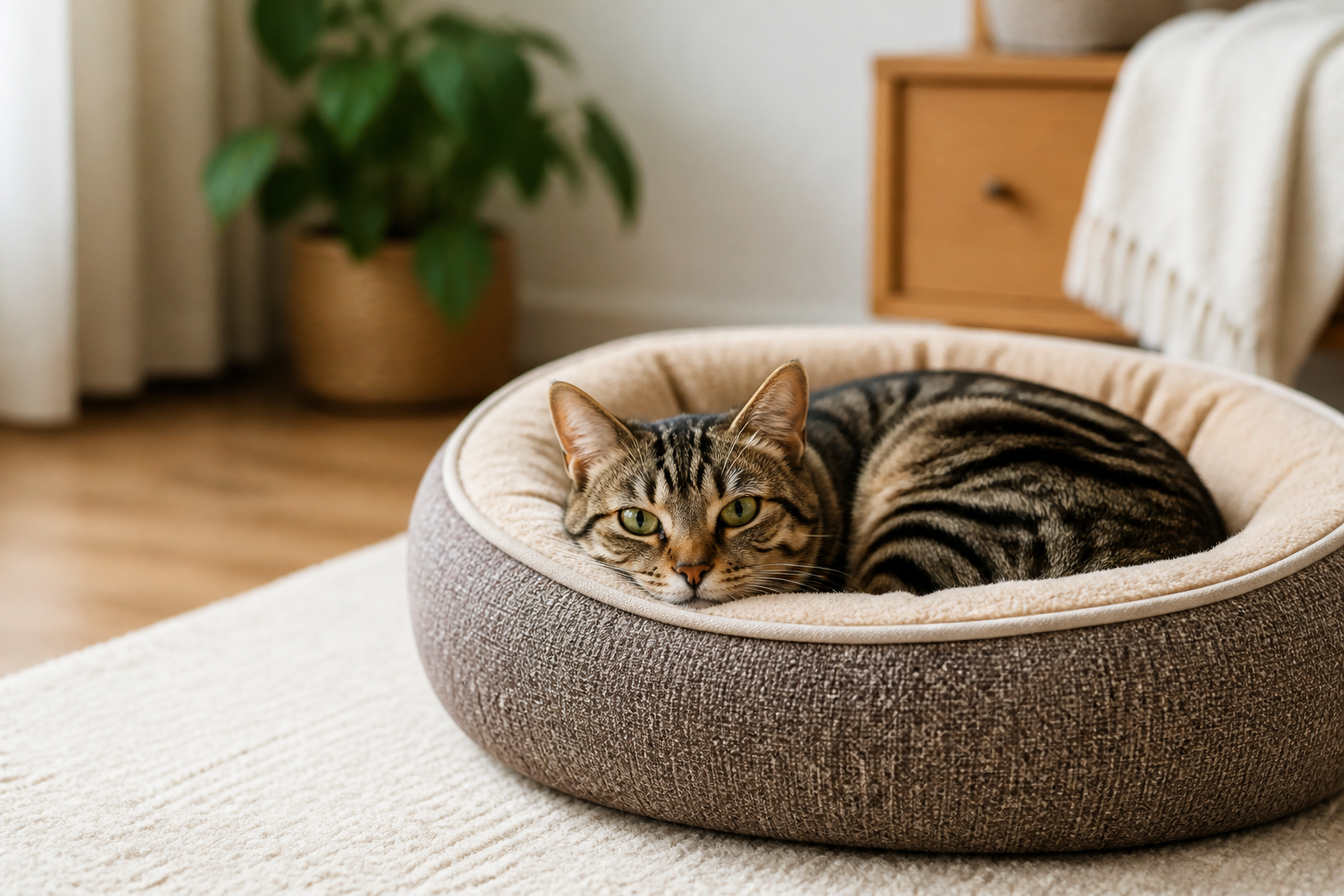
Your cat has claimed the sunny chair, but that spot isn’t always warm or available. A self-warming cat bed offers another place to settle without a plug or cord. It uses materials designed to retain or reflect some of your cat’s own body heat, rather than producing heat on its own.
At BaxterBoo, we know the right bed depends on more than a soft surface. Your cat’s preferred sleeping position, the bed’s wash instructions and where you plan to use it all matter. Outdoor use calls for extra care: a self-warming mat alone is not a weatherproof shelter. Choose a bed that fits your cat and the space, then make sure the sleeping area stays dry and protected.
How Does a Self-Warming Cat Bed Work?
A self-warming bed, sometimes called a self-heating cat bed, is passive. Your cat supplies the body heat, and the bed’s materials help retain some of it. Some designs include a reflective layer. For example, Petmate describes a reflective material layer in one of its self-warming beds.
The bed won’t feel like an electric heating pad before your cat lies on it. Its warmth also depends on the surrounding temperature, the bed’s construction and how much of the sleeping surface your cat covers.
A regular cushioned bed or blanket can also provide insulation. A product labeled self-warming may have an additional thermal layer, so check its description if that feature matters to you.
Heated Cat Beds

Which Style Is Best for Your Cat?
The best self-warming cat bed is one your cat can use comfortably in the place you’ve chosen. A flat mat is convenient for an existing favorite spot, while a bed with sides may appeal to a cat who curls up against a cushion.
| Style | Useful for | What to check |
|---|---|---|
| Flat mat | A chair, carrier or existing bed | The mat should lie flat without bunching or blocking access. |
| Bolstered bed | A cat who likes to curl up or rest against a raised edge | Look for an opening your cat can step through easily. |
| Hooded or cave-style bed | A cat who prefers a covered resting spot | Check that your cat can enter, turn around and leave freely. |
| Padded bed with a low edge | A cat who stretches out or has trouble stepping over high sides | Make sure the sleeping area is large enough for your cat’s preferred position. |
Measure the available space before ordering, especially if the bed must fit inside a carrier or shelter. Then compare the dimensions of the usable sleeping area, not only the outside dimensions. Thick bolsters can leave less room inside than the product’s overall size suggests.
Match the Bed to Your Cat’s Habits
Watch where and how your cat already sleeps. A cat who stretches across the couch may appreciate an open mat. A cat who tucks into a box may prefer a bed with sides or a cover.
Pay attention to the entrance, too. A senior cat or one who moves stiffly may find a low-sided bed easier to enter than a deep cave bed. If your cat seems reluctant to jump, has ongoing stiffness or shows a change in movement, consult your veterinarian rather than relying on a different bed to address the problem.
Texture and sound can influence acceptance. Some thermal layers may make noise as a cat steps on them. If your cat is sensitive to unfamiliar sounds, look closely at the product description and reviews for comments about noise.
Before you choose, check:
- Sleeping space: Can your cat curl up or stretch out comfortably?
- Entry: Can your cat get in and out without climbing over a high edge?
- Surface: Does your cat usually prefer plush fabric, a flatter mat or a covered spot?
- Care: Can you clean the whole bed, or only remove and wash the cover?
- Placement: Will it fit where you intend to use it without folding or bunching?
Can You Use a Self-Warming Cat Bed Outside?
A self-warming bed can be useful in a protected outdoor setup, but it is not a substitute for shelter from wind, rain and cold. It does not generate heat, and a soft bed that becomes wet can leave a cat resting on damp bedding.
For outdoor cats, start with an enclosed, weather-resistant shelter in a protected location. Keep the interior dry and raise the shelter off wet ground when possible. The entrance should remain accessible and positioned to reduce exposure to wind and precipitation.
Straw is a common bedding choice for outdoor cat shelters. It is different from hay, so check what you’re buying. If you add a self-warming mat, choose one whose instructions permit the intended use, and inspect it often for dampness, dirt and damage. An indoor-only plush bed is not automatically suitable for an outdoor shelter.
What Makes an Outdoor Bed a Better Choice?
The most useful outdoor option fits inside the shelter without blocking the entrance or taking up all the space your cat needs to turn around. It should also be easy for you to remove and inspect.
A removable cover may make cleaning easier, but washable does not necessarily mean waterproof. Check the product instructions for outdoor use and drying requirements. If the mat gets wet, remove it and replace it with dry bedding rather than leaving it in place.
For severe weather, provide access to a safe indoor space when possible. If you care for community cats who cannot come indoors, a local rescue or community cat group may be able to help you plan shelter. A passive warming bed alone cannot guarantee adequate warmth in extreme cold.
Vet Tip: Kittens, senior cats and cats with health concerns may need extra protection from cold. Ask your veterinarian about a suitable setup for your cat.
Self-Warming or Electric: Which Should You Choose?
A self-warming bed is a practical choice if you want a cordless resting spot and your cat needs a comfortable place to retain some body heat. You can move it between suitable indoor locations without finding an outlet.
An electric heated bed has a powered heat source. It may be worth discussing with your veterinarian if your cat needs a more controlled source of warmth, but it requires attention to the product’s placement and instructions. Choose a product intended for pets and for the location where you plan to use it.
Neither style is a reason to leave a cat in an otherwise unsuitable environment. Your cat should be able to move away from the bed, and an outdoor setup still needs protection from the weather.
How to Read Self-Warming Cat Bed Reviews
Reviews can help you spot practical details that a product description may not answer. Look for comments about the bed’s actual sleeping area, how it holds up to cleaning and whether the thermal layer makes noise. A review is most useful when it describes a cat and setting similar to yours.
Cats can respond differently to the same bed. In one video review of a K&H self-warming pad, the reviewer reported that one of their cats spent hours on it while another used it very little. That account is useful as an example, not a prediction of how your cat will respond.
Read critical reviews alongside positive ones. A complaint about a small sleeping area may matter more than a color complaint if your cat likes to stretch. Check the current product description for dimensions and care instructions, since a review may describe a different size or version.
We wouldn’t choose a bed on star ratings alone. Use reviews to narrow your options, then decide based on fit, placement and your cat’s habits.
Setting Up Your Cat’s New Bed
Step 1: Pick a familiar location. Put the bed near a place where your cat already likes to rest. Indoors, choose a dry spot away from a draft and busy foot traffic.
Step 2: Check the fit. Place the bed flat and make sure it stays stable when your cat steps on or off it. If it goes inside a carrier or another bed, it should not bunch up or obstruct the opening.
Step 3: Let your cat investigate. Give your cat time to approach the bed without being placed or held in it. You can set it near an existing resting spot and let your cat decide when to try it.
Step 4: Watch how your cat uses it. Notice whether your cat can settle comfortably and leave easily. If your cat avoids the bed, try a quieter location or consider whether the surface, sound or shape may be unappealing.
Step 5: Check it regularly. Look for loose seams, exposed filling, moisture and dirt. Remove a damaged bed if your cat can pull out or chew its contents.
If your cat ignores the bed, don’t assume it needs more heat. The location or style may simply be a poor match. Keep an existing comfortable resting place available while your cat gets used to the new one.
Cleaning and Everyday Care
Read the care label before washing. Some beds have removable covers, while others have a thermal insert that needs different care from the outer fabric. Follow the manufacturer’s instructions for both washing and drying.
A spare cover or second washable mat can be useful while the first one is being cleaned. Make sure the bed is fully dry before returning it to your cat, particularly if it will go into an enclosed space.
Check the bed more often if it is used outdoors. Bring a wet mat inside to clean and dry, and replace damp shelter bedding. A sheltered location makes inspections easier, but it does not eliminate the need to check.
Conclusion
A self-warming cat bed can give your cat a comfortable, cordless place to rest. Choose the shape and size around your cat’s habits, and treat outdoor protection as a separate part of the setup.
- Pick a low, accessible entrance if your cat has trouble stepping over raised sides.
- Check dimensions, cleaning instructions and reviews before choosing a bed.
- Keep outdoor bedding dry and provide a weather-resistant shelter.
- Ask your veterinarian about changes in your cat’s mobility or sensitivity to cold.
Bottom line: The best bed is one your cat can comfortably use in a dry, protected spot.
Explore the cat bedding and furniture selection at BaxterBoo to find a style suited to your cat’s favorite resting place.
FAQ
Do self-warming cat beds need electricity?
No. A self-warming bed uses your cat’s body heat rather than a powered heating element. It won’t provide the same kind of active heat as an electric bed.
Can a self-warming cat bed stay outside?
Only use a bed outdoors if its instructions allow it, and place it inside a dry, weather-resistant shelter. Check it frequently and remove it if it becomes wet or damaged.
How do I know what size cat bed to buy?
Compare the usable sleeping-area dimensions with the space your cat needs to curl up or stretch out. Also measure the intended location, especially if the bed must fit inside a carrier or shelter.
Why won’t my cat use a self-warming bed?
Your cat may dislike the location, shape, texture or sound, or may need time to investigate something new. Try placing it near a familiar resting spot without forcing your cat into it.



- Site & Contents BaxterBoo.com. BaxterBoo is located in the United States.
- Privacy & Security
- Terms of Use
- Accessibility Statement
