
 Save 15% on your 1st Autoship learn more

 Email us
 Live Chat
 FAQs
FAQs





Introduction
Standing in the dog food aisle can feel like a test you did not study for. You see walls of colorful bags and stacks of cans. You might wonder if your dog is missing out on hydration if they only eat kibble. Or perhaps you worry that wet food is too rich for their stomach. At BaxterBoo, we hear these questions every day from pet parents who want the best for their companions.
Deciding whether to feed wet food, dry food, or a combination of both depends on your dog's age, health, and activity level. This article explores the benefits of each type, how to mix them safely, and how to choose the right balance for your home. We will look at the science of moisture, the importance of dental health, and how to manage calories when using both formats. Our goal is to help you build a bowl that keeps your dog happy and healthy for years to come.
Quick Answer: Yes, most dogs can eat both wet and dry food. Mixing them provides the hydration and taste of wet food with the dental benefits and convenience of dry kibble. Just ensure you adjust the portions to avoid overfeeding.
Understanding the Difference Between Wet and Dry Food
The primary difference between these two types of food is moisture content. Most dry dog foods contain about 10 percent moisture. In contrast, wet or canned foods often contain 75 to 80 percent moisture. This difference comes down to how the food is made.
Dry food goes through a process called extrusion. Ingredients are mixed into a dough and cooked under high pressure. The dough is pushed through a die to create the shapes we call kibble. After cooking, the kibble is dried to remove moisture. This makes the food shelf stable and easy to store in large bags.
Wet food starts with ground proteins and other ingredients mixed with a liquid or gravy. This mixture is sealed in a can or pouch and then heated to high temperatures. This process sterilizes the food and locks in the moisture. Because it is sealed, it does not need the same preservatives as dry food to stay fresh on the shelf.
The Nutritional Balance
Both formats can be nutritionally complete. This means they contain all the vitamins, minerals, and amino acids your dog needs. When you look at a label, check for the AAFCO (Association of American Feed Control Officials) statement. It should say the food is complete and balanced for your dog's life stage. Whether you choose a premium brand like [our selection of NutriSource products] or a high protein option like [our selection of Orijen products], the format matters less than the quality of the ingredients inside.
Why Some Dogs Thrive on Wet Food
Wet food is often the go to choice for dogs with specific needs. The high moisture content is a significant benefit. Many dogs do not drink enough water on their own. Eating wet food provides a natural boost to their hydration. This is especially helpful for dogs prone to urinary tract issues or kidney concerns.
The aroma of wet food is much stronger than dry kibble. For a picky eater or a senior dog with a fading sense of smell, that scent can be the difference between them eating or skipping a meal. The texture is also much softer. This makes it a practical choice for puppies with tiny baby teeth or senior dogs with dental pain or missing teeth.
Weight Management Benefits
Wet food can actually help with weight management in some cases. Because it is mostly water, it has a lower calorie density by volume than dry food. This means your dog can eat a larger portion of wet food without consuming as many calories. A full belly helps them feel satisfied longer. If your dog is always begging for more, adding wet food to their routine might help them feel more full.
Key Takeaway: Wet food excels at providing hydration and high palatability. It is often the best choice for senior dogs, picky eaters, and those needing to feel fuller on fewer calories.
The Advantages of Dry Dog Food
Dry food is the most popular choice in the United States for several practical reasons. For most households, it is the most cost effective way to provide high quality nutrition. It is easy to store and does not require refrigeration before it is opened. You can buy large bags that last for weeks, which is a major convenience for busy families.
Dry food also allows for grazing. If your dog prefers to eat small amounts throughout the day, kibble can sit in a bowl without spoiling as quickly as wet food. However, we still recommend picking up the bowl after a set time to maintain a routine.
Support for Dental Health
One of the most cited benefits of dry food is its role in dental care. The crunchy texture of kibble creates a mechanical scraping action on the teeth. This can help reduce the buildup of plaque and tartar. While it is not a replacement for regular teeth brushing, it is a helpful tool in a broader dental hygiene plan. For more on keeping your dog's mouth healthy, our [dog dental care category] is a useful next stop.
Mental Enrichment and Training
Kibble is much easier to use for training and enrichment. You can use pieces of dry food as low calorie rewards during a walk. You can also put kibble into puzzle toys or snuffle mats. These activities provide mental stimulation that wet food cannot offer. It turns mealtime into a game that burns off extra energy.
The Best of Both Worlds: Mixed Feeding
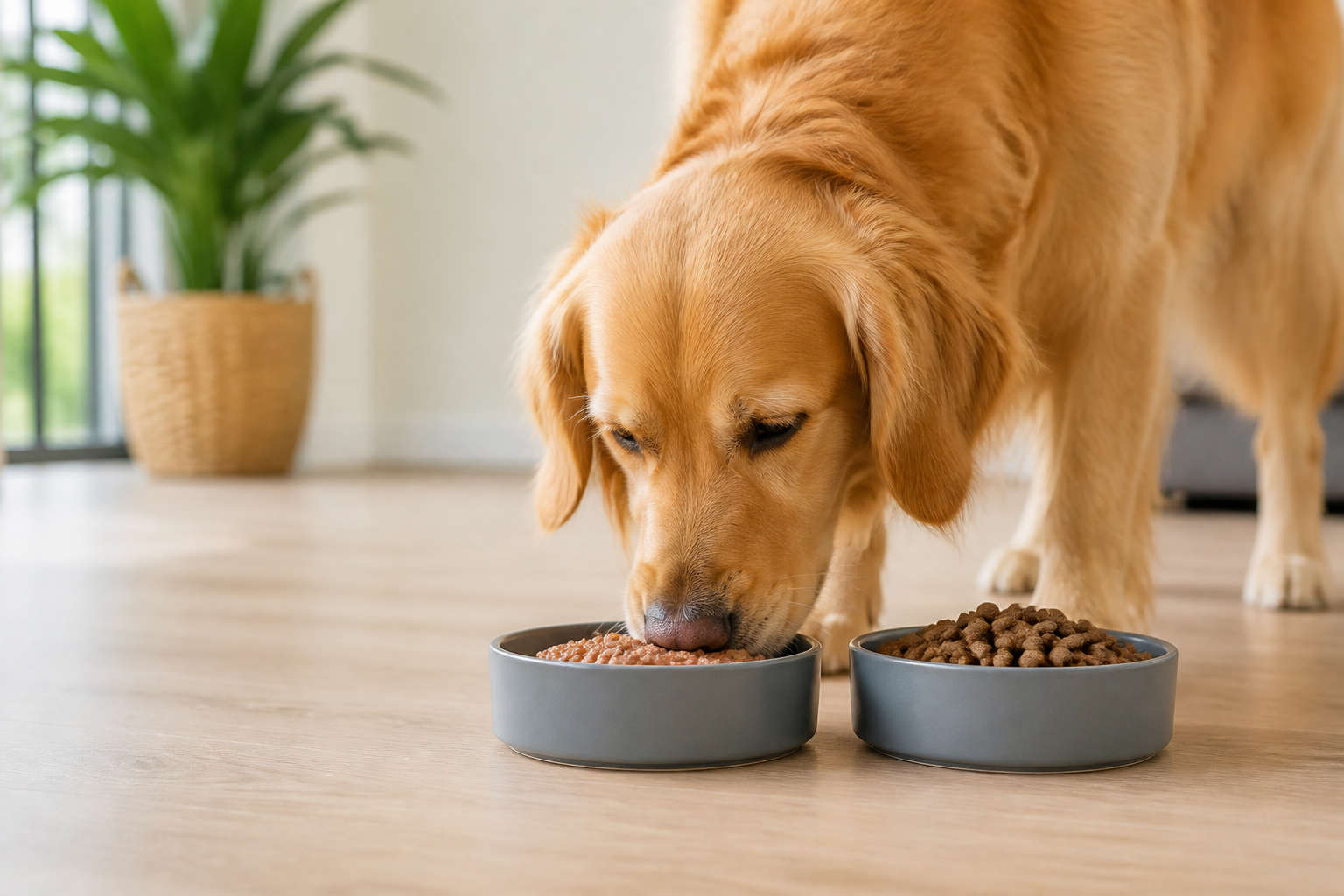
Many pet owners find that a combination of wet and dry food is the perfect middle ground. This is often called mixed feeding or topping. By mixing the two, your dog gets the crunch and convenience of kibble along with the moisture and flavor of wet food.
Benefits of Mixed Feeding
- Increased variety: Different textures and smells keep your dog interested in their bowl.
- Better hydration: You ensure your dog gets more water without forcing them to drink more from the bowl.
- Budget friendly: You can stretch a premium bag of kibble further by adding a smaller amount of wet food as a topper.
- Easier medication: If your dog needs pills, it is much easier to hide them in a spoonful of wet food than in dry kibble.
How to Mix Safely
When you mix foods, you must be careful not to overfeed. Wet food and dry food have very different calorie counts. You cannot simply add a can of wet food on top of a full serving of kibble. This will lead to weight gain quickly.
The best approach is to calculate the total calories your dog needs. Then, decide what percentage will come from each source. For example, you might do 75 percent dry and 25 percent wet. If you are unsure about the math, your veterinarian is a great resource. They can give you a specific daily calorie goal.
Vet Tip: If you are mixing brands or formulas, look for those designed for the same life stage. For example, do not mix a high calorie puppy wet food with a senior weight management dry food without consulting a professional.
Health Considerations and Specialized Diets
Sometimes, the choice between wet and dry food is made for you by a health condition. Dogs with heart disease, kidney issues, or chronic allergies often need specialized nutrition. In these cases, the texture of the food can play a role in how well they manage their symptoms.
Our pet pharmacy provides access to prescription diets through our partnership with Pet's Choice. If your veterinarian prescribes a specific food like Farmina Vet Life or Royal Canin Veterinary Diet, we can help you fulfill that order. Often, these prescription diets come in both wet and dry versions. For more support, our [pet pharmacy] is the place to start.
Managing Allergies and Sensitivities
If your dog has a sensitive stomach or skin allergies, you might find that one format works better than the other. Some wet foods have fewer thickeners or preservatives, which can be easier on a sensitive gut. On the other hand, some dry foods are formulated with limited ingredients specifically for allergy management. If your dog has ongoing itching or digestive upset, it is worth discussing a diet change with your vet.
Feeding Puppies Wet and Dry Food
Puppies have unique nutritional needs. They are growing fast and need a lot of energy. Most puppies start with soft food during the weaning process. As they get older, they can transition to dry kibble.
Feeding a mix of both to a puppy can be very beneficial. It exposes them to different textures early in life. This can prevent them from becoming picky eaters as adults. If you ever need to switch their diet later for health reasons, they will already be comfortable with both wet and dry formats.
Puppy Feeding Steps
Step 1: Start with a high quality puppy formula. Look for brands like NutriSource or Stella and Chewy's that prioritize growth. Step 2: If the puppy is very young, you can soften kibble with warm water or a little bit of wet food to make it easier to chew. Step 3: Gradually increase the ratio of dry food as their adult teeth come in. Step 4: Monitor their growth and weight. Puppies should be lean but not thin.
Senior Dog Needs
As dogs age, their bodies change. Their sense of smell might fade, making them less interested in food. They may also develop arthritis or dental issues that make it hard to stand at a bowl or crunch hard kibble.
Senior dogs often benefit from more wet food in their diet. The extra moisture supports their kidneys, which can become less efficient with age. The softer texture is easier on old teeth. If your senior dog is slowing down, consider adding a warm topper of wet food or bone broth to their kibble to entice them to eat. If you want a deeper dive into aging-dog nutrition, our [dog food selection for senior dogs] is worth browsing.
Bottom line: Senior dogs often need the extra hydration and soft texture of wet food to maintain their health and appetite.
Proper Storage for Freshness
No matter what you choose to feed, how you store it matters. Improper storage can lead to spoiled food, loss of nutrients, or even mold.
Dry Food Storage
Keep kibble in its original bag. These bags are designed to keep out moisture and light. You can place the entire bag inside an airtight plastic or metal container. Squeeze the air out of the bag before sealing it with a clip. Try to use a bag of dry food within six weeks of opening it. After that, the fats in the food can start to go rancid, which affects the taste and nutritional value.
Wet Food Storage
Once a can of wet food is opened, it is a ticking clock. It must be covered and refrigerated immediately. You can use silicone can lids or transfer the food to a glass container. Any wet food left in the bowl for more than two to three hours should be tossed out. It can grow bacteria quickly at room temperature. Use the remaining food in the fridge within three days.
Transitioning Your Dog to a New Diet
Never switch your dog's food overnight. This is a common mistake that leads to upset stomachs and messy cleanup. A slow transition allows the bacteria in your dog's gut to adjust to the new ingredients.
The 10 Day Transition Plan
- Days 1-3: Serve 75 percent of the old food mixed with 25 percent of the new food.
- Days 4-6: Serve a 50/50 mix of the old and new food.
- Days 7-9: Serve 25 percent of the old food with 75 percent of the new food.
- Day 10: Serve 100 percent of the new food.
Watch your dog closely during this time. If they have loose stools or seem lethargic, slow the transition down. Some dogs need two weeks or more to fully adjust to a new protein source or a change in texture. If you are planning a switch, our [guide to moving from dry to wet dog food] is a helpful companion read.
Cost Considerations for Pet Parents
We know that budget is a real factor for many families. Wet food is almost always more expensive than dry food when you look at the cost per calorie. This is because you are paying for the water weight and the more expensive canning process.
If you want the benefits of wet food but need to watch your spending, try using wet food as a small topper rather than a full meal. You can also look into freeze dried or dehydrated options from brands like The Honest Kitchen. These give you the benefits of whole food nutrition and moisture (once you add water) but are often more shelf stable and lighter to ship.
Value Without Compromise
At BaxterBoo, we curate our selection to offer quality at every price point. Whether you are buying a large bag of NutriSource kibble or a case of Tiki Cat wet food, you are getting products we trust. You can also save by using our [MVP Rewards programme] or signing up for [our Autoship programme], which gives you a discount on recurring orders.
Common Myths About Wet and Dry Food
There is a lot of misinformation online about pet nutrition. Let's clear up a few common myths we hear in the warehouse.
Myth 1: Wet food causes weight gain.
Wet food itself does not cause weight gain. Too many calories cause weight gain. Because wet food is often more palatable, dogs might eat more of it if given the chance. However, it actually has fewer calories per ounce than dry food.
Myth 2: Dry food is the only way to keep teeth clean.
While kibble helps, it is not a cure for dental disease. Some dogs eat dry food and still have terrible tartar buildup. Professional cleanings and daily brushing are the only ways to truly keep a dog's mouth healthy. For more tips, our [pet dental care tips blog post] is a useful next step.
Myth 3: You should never mix brands.
As long as both foods are high quality and meet AAFCO standards, you can mix brands. This can actually be good for your dog's gut health by providing a wider range of nutrients. Just make sure you are not introducing too many new things at once.
Conclusion
Choosing between wet and dry food does not have to be an all or nothing decision. Most dogs benefit from the variety and hydration that a mixed diet provides. Dry food offers convenience and dental support, while wet food provides essential moisture and enticing flavors. By understanding your dog's specific needs and managing their calorie intake, you can create a feeding routine that supports their long term wellness.
Check out our full selection of dog food to find the perfect match for your pup. Whether you need premium kibble, savory canned food, or prescription diets from our pharmacy, we have the expertise to help you make the right choice.
- Evaluate your dog's current health and hydration needs.
- Consult your vet for a daily calorie target.
- Start with a slow 10 day transition when introducing new textures.
- Store food properly to ensure freshness and safety.
Key Takeaway: A balanced approach that combines the benefits of both formats is often the best way to keep your dog hydrated, satisfied, and healthy.
FAQ
Is it better to feed a dog wet or dry food for their teeth?
Dry food is generally better for dental health because the crunchy texture helps scrape away some plaque as the dog chews. However, it is not a substitute for regular dental care like brushing or professional cleanings. Wet food does not offer this mechanical cleaning benefit and can sometimes stick to the teeth more easily.
Can I mix wet and dry food at every meal?
Yes, you can mix wet and dry food at every meal as long as you account for the total calories. Many pet owners find that adding a scoop of wet food to dry kibble makes the meal more enjoyable for their dog. Just be sure to reduce the amount of dry food you provide so your dog does not gain unnecessary weight.
Does wet food cause diarrhea in dogs?
Wet food does not inherently cause diarrhea, but a sudden switch from dry to wet food can upset a dog's stomach. Because wet food is richer and has much higher moisture content, it may cause loose stools if introduced too quickly. Always use a gradual transition over 7 to 10 days to let their digestive system adjust.
How do I know how much wet food to add to kibble?
The best way to determine the right amount is to look at the calorie count on both packages. Your veterinarian can tell you exactly how many calories your dog needs per day based on their weight and activity level. If you want to replace some kibble with wet food, you should subtract the calories of the wet food from the total daily allowance of dry food.






