
 Save 15% on your 1st Autoship learn more

 Email us
 Live Chat
 FAQs
FAQs





Introduction
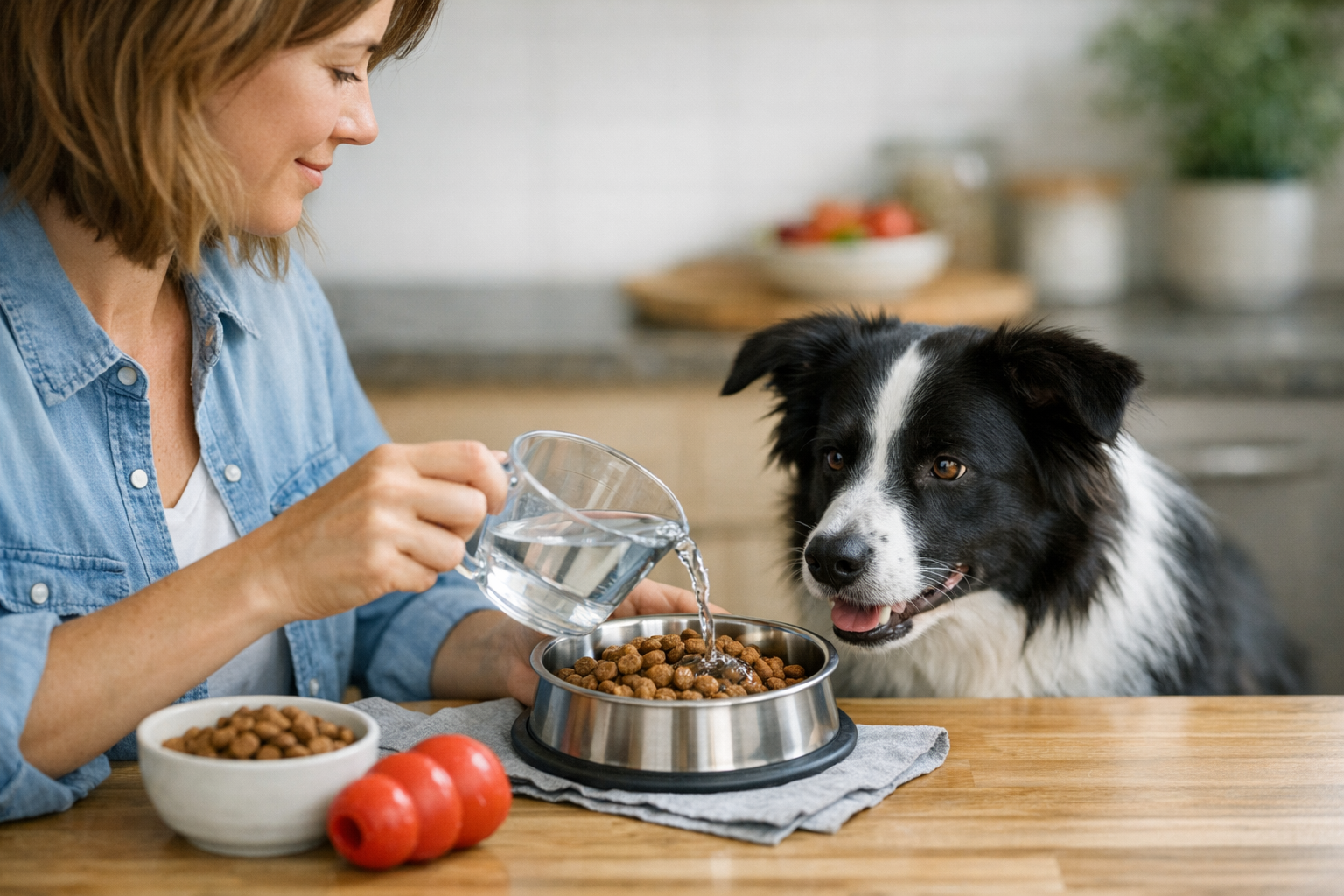
You are standing in the kitchen with a scoop of kibble in your hand, looking at your dog. The bowl is full of hard, brown pellets that seem a bit dull and uninviting. Maybe your dog is a slow eater who picks at their food, or perhaps they are a "gulper" who finishes in seconds. You might wonder if adding a splash of water could make the meal better, safer, or more nutritious. At BaxterBoo, we hear this question from pet parents all the time, and our dog food category is a great place to start if you are looking for new meal options. This article covers the benefits of hydrating dry food, the safety rules you must follow to prevent bacteria, and how this small change can support your dog's long term health. Adding water to kibble is a simple trick that can improve digestion and keep your dog hydrated throughout the day.
Quick Answer: Yes, you can and often should add water to dry dog food. It improves hydration, aids digestion, and makes the food more aromatic for picky eaters, though you must serve it immediately to prevent spoilage.
The Importance of Hydration in a Dry Diet
Most high quality dry dog foods are nutrient dense and convenient, but they are very low in moisture. Typical kibble only contains about 10 percent water. In nature, a canine's diet would naturally include much more moisture from fresh sources. When a dog eats purely dry food, their body has to work harder to stay hydrated. They must drink significantly more from their water bowl to make up the difference.
Many dogs do not drink enough standing water on their own. This is particularly true for certain breeds or older dogs who may have a diminished thirst drive. By adding water directly to the food, you ensure that your dog is getting a boost of hydration with every single bite. This takes the pressure off their kidneys and helps their body process the nutrients more efficiently.
Proper hydration is not just about thirst. It affects every system in the dog's body. It helps with temperature regulation, joint lubrication, and even cognitive function. If your dog is consistently slightly dehydrated due to a dry diet, they might seem more lethargic or have duller skin and fur. A little water in the bowl goes a long way in supporting their overall wellness.
Key Takeaway: Adding water to kibble is one of the easiest ways to increase a dog's daily fluid intake, which supports kidney function and overall metabolic health.
Improving Digestion and Nutrient Absorption
Dry kibble is often made through a process called extrusion. This involves high heat and pressure to create those uniform shapes. Because the food is so dry and dense, it does not always break down quickly once it reaches the stomach. The stomach has to produce a lot of acid and pull moisture from other parts of the body to start the digestive process.
When you add water to the bowl before serving, the breakdown process begins before the food even enters your dog's mouth. The kibble begins to soften and expand. This makes it much easier for the stomach to handle. For dogs with sensitive stomachs or those prone to indigestion, this simple step can reduce gas and discomfort after meals.
Better digestion also leads to better nutrient absorption. When the food is partially broken down and hydrated, the intestines can more easily extract the vitamins, minerals, and proteins. You might even notice that your dog's stools become smaller and more consistent. This is a sign that their body is actually using more of the food rather than letting it pass through as waste.
Preventing Bloat and Gulping
For large breed dogs, eating too fast is a serious health risk. Gulping down dry air along with hard kibble can contribute to gastric torsion, also known as bloat. This is a life threatening emergency. Adding water to the food changes the texture and makes it harder for a dog to inhale their meal in seconds.
The moisture creates a bit of a "stew" consistency. Your dog has to lap up the liquid and chew the softened pieces rather than just vacuuming up dry pellets. This naturally slows down the pace of the meal. If you have a dog that treats every meal like a race, hydrating the food is a great first step in encouraging a calmer eating habit.
Benefits for Picky Eaters and Senior Dogs
As dogs age, their senses often begin to dull. Their sense of smell and taste might not be as sharp as it once was. Dry kibble can be unappealing because it does not have a strong scent. When you add warm water to dry food, it releases the fats and aromas trapped inside the pellets. The steam carries the smell of the meat and grains, which can entice a senior dog or a picky eater to come to the bowl.
Senior dogs also frequently deal with dental issues. Missing teeth, receding gums, or general sensitivity can make crunching through hard kibble painful. Many older dogs start to refuse food not because they are not hungry, but because it hurts to eat. Softening the food with water removes this barrier. It allows them to get the nutrition they need without the discomfort of chewing hard surfaces.
Transitioning for Puppies
Puppies moving from milk or wet food to dry kibble can also benefit from hydrated food. Their "baby" teeth are small, and their jaws are not yet very strong. A bowl of hard kibble can be intimidating. By adding water, you can create a mash that bridges the gap between liquid and solid food. As the puppy grows, you can gradually use less water until they are comfortable with a firmer texture.
Vet Tip: If your senior dog suddenly stops eating dry food, consult your veterinarian to rule out dental disease or other health issues. For dogs managing chronic conditions, our pet pharmacy offers prescription diets that can be safely hydrated to improve palatability.
Weight Management and Satiety
If you have a dog that always seems hungry, water is your best friend. Dry food is incredibly calorie dense. A small volume of food contains a lot of energy. This means your dog's bowl might look quite empty even if you are feeding the correct amount for their weight. This can lead to begging or "counter surfing" because the dog does not feel physically full.
Adding water increases the volume of the meal without adding a single calorie. It fills up the stomach more effectively, sending signals to the brain that the dog is full. This is a common tactic for dogs on a weight loss plan. It helps them feel satisfied and reduces the stress of a restricted calorie diet.
Bottom line: Adding water helps dogs feel fuller for longer, making it an excellent tool for weight management and reducing begging behavior.
How to Properly Add Water to Kibble
Doing this correctly is more than just dumping a cup of water on the food. You want to make sure the meal is appealing and safe. Follow these steps to get the best results for your dog.
Step 1: Measure the food first. Always measure your dog's dry food while it is still dry to ensure you are giving the correct portion.
Step 2: Choose the right water temperature. Use warm water, but never hot or boiling. Boiling water can actually destroy some of the heat sensitive vitamins and probiotics added to the food. Warm water is best for releasing aromas and softening the pieces quickly.
Step 3: Find the right ratio. A good starting point is one part water to two or three parts kibble. For example, if you feed one cup of kibble, try starting with one quarter or one half cup of water. You can adjust this based on whether your dog prefers a light moisture or a soup like consistency.
Step 4: Let it soak. If your dog has dental issues, let the food sit for 5 to 10 minutes until it is soft all the way through. If you just want to improve the smell and hydration, you can serve it immediately.
Step 5: Clean the bowl. This is the most important step. Wet food leaves behind a residue that dry food does not. You must wash your dog's bowl with soap and water after every single meal to prevent the buildup of slime and bacteria.
Safety and Spoilage Concerns
The biggest risk of adding water to dry food is the potential for bacterial growth. Dry kibble is shelf stable because it has very little moisture. Once you add water, you are essentially creating a petri dish for bacteria like Salmonella or Listeria if the food is left out too long.
You should never leave hydrated kibble sitting at room temperature for more than 30 to 40 minutes. If your dog is a "grazer" who likes to eat a few bites and come back later, adding water might not be the best choice for them. If they do not finish the bowl within that short window, you must throw the leftovers away.
Storage and Handling
Never mix water into a large container of dry food. Only add moisture to the individual serving in the bowl. Moisture in the original bag will cause mold to grow rapidly, which can make your dog very sick. Keep your dry food in its original bag inside an airtight container in a cool, dry place. At BaxterBoo, we recommend checking the expiration date on your bag regularly, as the fats in kibble can go rancid over time, especially if the seal is not tight.
Key Takeaway: Only hydrate the amount of food your dog will eat in one sitting, and discard any leftovers within 40 minutes to ensure safety.
The Dental Health Debate
A common argument against adding water to kibble is that dogs need the "crunch" to keep their teeth clean. The idea is that the abrasive action of the hard kibble scrapes away plaque and tartar. However, most modern veterinary experts agree that this effect is minimal.
Most dogs do not actually chew their kibble enough for it to provide a cleaning benefit. They often swallow pieces whole or shatter them into smaller bits that do not provide much friction against the gum line. Additionally, kibble is high in carbohydrates. When those carbs mix with saliva, they turn into sugars that can actually stick to the teeth and feed bacteria.
If you are worried about dental health, there are much more effective ways to manage it than relying on dry food.
- Daily tooth brushing with dog safe toothpaste.
- Dental chews specifically designed to reduce tartar.
- Water additives that help break down plaque.
- Professional veterinary cleanings.
Softening the food does not "ruin" your dog's teeth. If you are providing other forms of dental care, the benefits of hydration and digestion from wet kibble far outweigh the loss of a minor "crunch." A product like Greenies Dental Dog Chew - Fresh can be a helpful part of a daily dental routine.
Alternatives to Plain Water
If you want to provide even more nutrition, you do not have to stop at plain tap water. There are several healthy liquids you can use to hydrate dry food.
Bone Broth
Bone broth is a powerhouse of nutrients. It is rich in collagen, glucosamine, and amino acids. This is especially helpful for senior dogs who need extra joint support. Make sure you use a broth specifically formulated for pets. Human bone broths often contain onions, garlic, and high levels of sodium, all of which are toxic or unhealthy for dogs. A product like SmallBatch Organic Bone Broth Dog Food Topper - Beef is one option to consider.
Goat Milk
Raw or fermented goat milk is often called "universal milk" because it is so easy for many different species to digest. It is packed with probiotics that support gut health. Adding a splash of goat milk to kibble can help dogs with chronic digestive issues or those recovering from a round of antibiotics. You can also explore Native Pet Goat Milk Powder Dog Food Topper as a convenient option.
Canned Food Toppers
You can also use a small amount of wet canned food mixed with water to create a gravy. This provides a variety of textures and a massive boost in flavor. If your dog is on a specific prescription diet for allergies or urinary health, look for the canned version of that same formula. Our pharmacy through Pet's Choice can help you find matching wet and dry versions of many medical diets to ensure you aren't accidentally introducing triggers for your dog's condition. If you want to browse more meal options, our wet dog food collection is a helpful next stop.
| Liquid Option | Primary Benefit | Best For |
|---|---|---|
| Warm Water | Hydration & Digestion | All dogs |
| Bone Broth | Joint & Gut Support | Seniors & Picky Eaters |
| Goat Milk | Probiotics | Sensitive Stomachs |
| Canned Food | Flavor & Protein | Underweight or Picky Dogs |
When to Consult Your Veterinarian
While adding water to food is generally safe, any major change in your dog's eating habits should be discussed with a professional. If you feel you need to add water because your dog is struggling to swallow or seems excessively thirsty, there may be an underlying medical issue.
Conditions like diabetes, kidney disease, or Cushing's disease can cause a dog to drink much more water than usual. Conversely, if a dog is refusing dry food, they might have a fractured tooth or an infection in their mouth. Always check with your vet if you notice:
- Sudden changes in appetite.
- Struggling to chew or dropping food.
- Bad breath that seems metallic or overly foul.
- Excessive drooling while eating.
For dogs with chronic health needs, the way you feed them is just as important as what you feed them. If your vet has prescribed a specific medication or a therapeutic diet, ask them if adding water will affect the efficacy. Most of the time, it is encouraged, but it is always best to be sure. If you are feeding the same food on a regular basis, our Autoship programme can help keep you stocked up without the last-minute scramble.
Vet Tip: For dogs with a history of urinary crystals or stones, increasing water intake via their food is often a critical part of their treatment plan. Discuss the best moisture ratio with your vet to support your dog's specific needs.
Summary of Best Practices
Adding water to dry food is a simple, cost effective way to improve your dog's quality of life. It bridges the gap between the convenience of dry kibble and the biological need for moisture. Whether you have a puppy just starting out or a senior dog who needs a bit of extra help, a hydrated bowl is a healthier bowl.
Keep these final tips in mind:
- Always use clean, filtered water if possible.
- Serve the food immediately after hydrating.
- Wash bowls thoroughly after every meal.
- Monitor your dog's weight and adjust portions as needed.
- Consult your vet for personalized advice.
We want to help you make every mealtime a success. Whether you are looking for a new high quality kibble, a nutritious bone broth topper, or specialized support from our BaxterBoo pharmacy, we have the resources to help your dog thrive. By making small, thoughtful adjustments to your daily routine, you can support your pet's health for years to come, and the MVP Rewards programme can help you save along the way.
FAQ
Does adding water to dog food cause it to spoil?
Yes, adding water to dry food creates a moist environment where bacteria can grow quickly. You should never leave watered down kibble out for more than 40 minutes. If your dog does not finish the meal in that time, throw it away and wash the bowl.
Can I add water to my dog's food if they have a sensitive stomach?
Actually, adding water often helps dogs with sensitive stomachs by making the food easier to digest. The softened kibble is less taxing on the digestive tract and can reduce gas. However, introduce the change slowly to make sure your dog likes the new texture.
Is it better to use cold or warm water for kibble?
Warm water is generally better because it softens the food faster and releases the fats and aromas that make it taste better. Never use boiling water, as it can damage the nutrients in the food. Room temperature water is also fine if your dog is not a picky eater.
Will adding water to kibble help my dog lose weight?
It can help with weight management by increasing the volume of the meal without adding calories. This helps your dog feel more physically full and satisfied. It is a great way to manage hunger in dogs that are on a calorie restricted diet.
For puppies who need a gentler start, the Puppy Shop offers a simple way to browse age-appropriate options, including soft chews like N-Bone Puppy Teething Sticks Dog Treats - Chicken.






