
 Save 15% on your 1st Autoship learn more

 Email us
 Live Chat
 FAQs
FAQs





Introduction
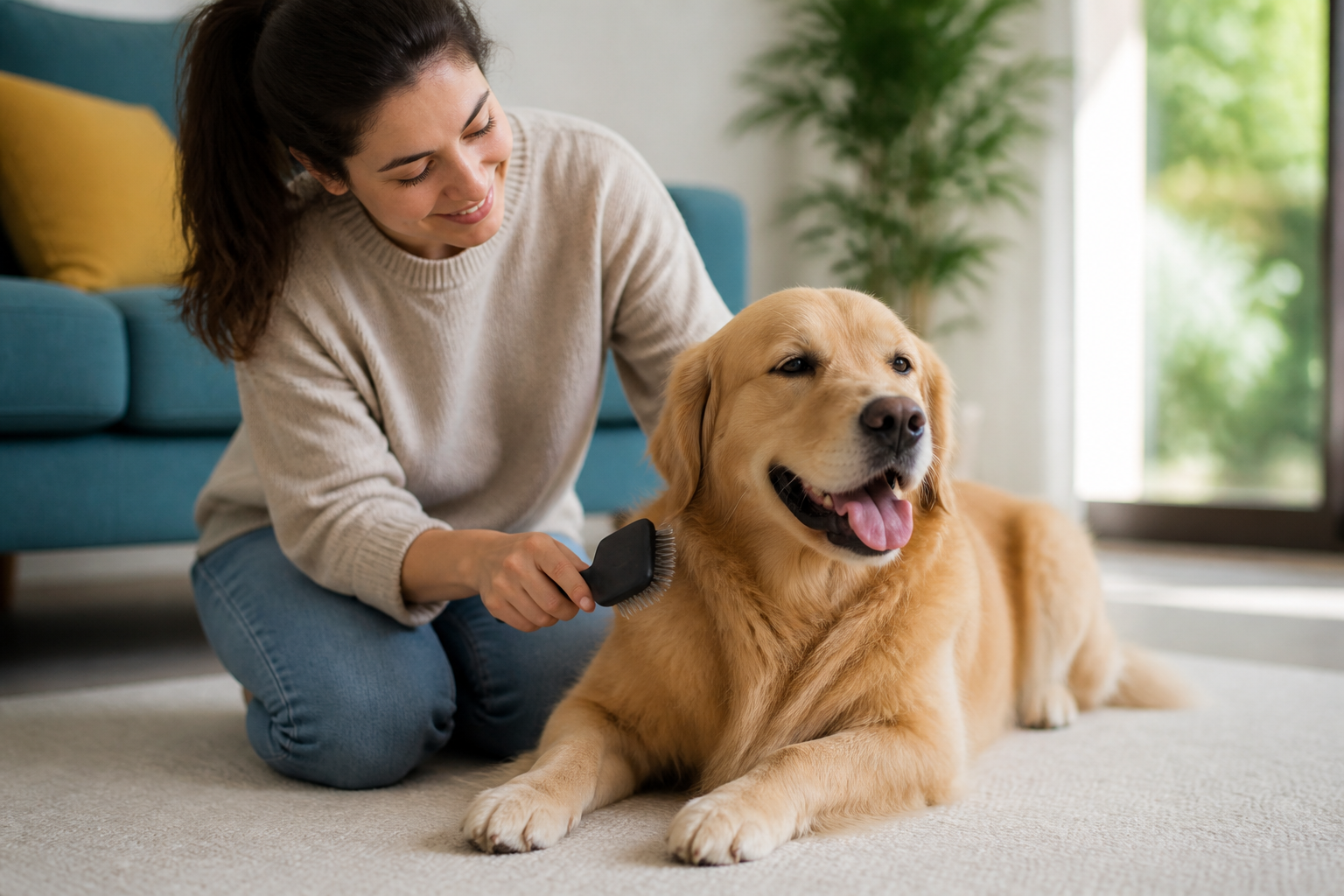
You reach down to pet your dog and feel a small, hard tangle behind their ear. Or maybe you notice a thin layer of fur covering your favorite black leggings after a five-minute snuggle session on the couch. These everyday moments often lead owners to ask the same question: should I brush my dog daily? While some dogs thrive with a quick weekly session, others truly need a daily routine to stay comfortable and healthy.
At BaxterBoo, we have spent years helping pet owners find the right tools for every kind of coat, from the silkiest Yorkie to the fluffiest Husky. This post will explore how often you should pick up the brush based on your dog's specific needs. We will cover the benefits of regular grooming, the best tools for the job, and how to make the process enjoyable for both you and your pet. Establishing the right habit now can prevent painful skin issues and keep your home much cleaner.
Quick Answer: While many short-haired dogs only need brushing once or twice a week, long-haired, curly, or double-coated breeds often require daily brushing to prevent painful mats and manage shedding. Daily brushing is also an excellent way to check for skin issues, lumps, or parasites.
Understanding Your Dog’s Coat Type
The answer to how often you should brush starts with the hair itself. Not all fur is created equal, and different textures require different levels of maintenance. If you use the wrong frequency for your dog's specific coat, you might end up with a matted mess or irritated skin.
Smooth and Short-Coated Dogs
Smooth-coated dogs like Boxers, Dalmatians, and Pointers have hair that lies very close to the body. Short-coated dogs like Labradors or Beagles have slightly more length but still a relatively simple texture. For these breeds, daily brushing is rarely a strict requirement for mat prevention because their hair is too short to tangle.
However, daily brushing for these dogs still has benefits. It helps move natural skin oils across the coat, giving them a healthy shine. It also captures loose hair before it ends up on your furniture. If you choose not to brush daily, aim for at least two sessions a week to keep the skin healthy and the shedding under control.
Double-Coated Breeds
Dogs like German Shepherds, Huskies, and Golden Retrievers have a dense undercoat protected by a tougher outer layer of guard hairs. These dogs are the heavy hitters of the shedding world. During seasonal changes, they "blow" their coats, releasing massive amounts of fur at once.
For these breeds, daily brushing is highly recommended, especially during shedding season. If the dead undercoat is not removed, it can get trapped against the skin. This leads to "compacting," where the fur becomes a thick, felt-like layer that prevents air from reaching the skin. This can cause hot spots and discomfort.
For additional shedding guidance, read our tips for managing seasonal shedding.
Curly and Wire-Coated Dogs
Poodles, Bichons, and many "doodle" mixes have curly hair that does not shed in the traditional sense. Instead of falling out, the dead hair gets caught in the curls. If you do not brush these dogs daily, those trapped hairs quickly turn into knots. Once a knot forms, it attracts more hair and tightens into a mat.
Wire-coated dogs, such as Schnauzers or Airedale Terriers, have a crisp, wiry outer coat and a soft undercoat. While they do not mat as quickly as Poodles, their longer "furnishings" on the legs and face need frequent attention. Daily brushing in these specific areas prevents debris from getting stuck and forming tangles.
For more coat-care ideas, see this guide to grooming curly-haired dogs.
Long and Silky Coats
Yorkshire Terriers, Maltese, and Cocker Spaniels have hair that can grow quite long. These silky coats are very prone to tangling, much like human hair. A single day of running through the grass can result in several small knots. Daily brushing is essential for these dogs if you keep their hair in a long "show" cut. If they are kept in a shorter "puppy" cut, you might be able to skip a day here and there, but daily checks are still a good idea.
Key Takeaway: Coat length and texture are the primary factors in your grooming schedule. Curly and double-coated dogs benefit most from daily attention to prevent matting and skin irritation.
The Physical and Mental Benefits of Daily Brushing
Brushing is about much more than just looking good. It is a fundamental part of your dog's healthcare routine. When you brush your dog every day, you are performing a mini-physical exam that can catch problems before they become serious.
Skin Health and Oil Distribution
Every time you run a brush through your dog’s fur, you are stimulating the skin. This action encourages blood flow to the surface, which supports healthy hair growth. Brushing also distributes sebum, the natural oil produced by the skin. This oil acts as a natural moisturizer and a protective barrier. Without regular brushing, these oils can build up near the skin, leading to a greasy feel or even skin infections, while the ends of the hair remain dry and brittle.
Early Detection of Health Issues
A daily grooming session is the best time to check for anything unusual. As you move the brush and your hands over their body, you might find:
- New lumps or bumps that need a vet's attention.
- Ticks or fleas that have just hitched a ride.
- Burrs, thorns, or grass seeds stuck in the fur or between toes.
- Redness, rashes, or dry, flaky patches of skin.
If you notice persistent skin irritation, hair loss, or unusual growths, it is important to consult your veterinarian. Our dog healthcare products include skin and coat care options for routines recommended by your veterinarian. Catching these issues early often makes treatment much simpler and less expensive.
Vet Tip: Use your daily brushing time to check "hidden" areas like the armpits, behind the ears, and between the toes. These are the most common spots for painful mats and hidden parasites to take hold.
Strengthening the Bond
Dogs are social pack animals. In the wild, canines groom each other to reinforce social bonds. When you brush your dog, you are speaking their language. If the experience is calm and positive, it reinforces your role as a provider and caregiver. Many dogs grow to love their daily brushing session, seeing it as a dedicated time for one on one attention and affection.
Choosing the Right Tools
You wouldn't use a fine-tooth comb to brush a thick rug, and the same logic applies to your dog. Using the wrong tool can be ineffective or even painful for your pet. Our team at BaxterBoo carefully selects grooming gear that meets the needs of different coat types. Explore our dog grooming supplies to find brushes, combs, and other care essentials.
Slicker Brushes
These have fine, short wires spaced closely together on a flat or slightly curved surface. They are the workhorse of the grooming world.
- Best for: Removing mats, tangles, and loose hair in curly, wire, or long-coated breeds.
- Tip: Use a light touch to avoid "brush burn" on the skin.
Bristle Brushes
These use natural or synthetic bristles to smooth the coat and shine the hair.
- Best for: Short-haired and smooth-coated dogs. They are great for finishing a grooming session on any breed to add shine.
- Note: These will not remove deep tangles or thick undercoats.
Pin Brushes
Similar to a hairbrush you might use, these have flexible metal pins with rounded ends.
- Best for: Long-haired dogs with silky coats. They provide a gentle touch that won't pull too hard on delicate hair.
Undercoat Rakes
These tools have long, sturdy teeth designed to reach through the topcoat and pull out the dead hair from the undercoat.
- Best for: Double-coated breeds like Malamutes, Shepherds, and Newfoundlands.
- Bottom line: If you have a heavy shedder, an undercoat rake is a necessity, not an option.
Rubber Curry Brushes
These are made of soft rubber and are used in a circular motion.
- Best for: Short-haired dogs. They massage the skin and pull away loose hair effectively while being very gentle.
Key Takeaway: Match your tool to your dog’s coat. A slicker brush is best for tangles, while a bristle or rubber brush is perfect for short, smooth hair.
How to Establish a Daily Brushing Routine
If your dog isn't used to being brushed, starting a daily routine can feel daunting. The goal is to make it a calm, expected part of the day.
Step 1: Choose the right time. / Pick a moment when your dog is naturally relaxed, such as after a long walk or in the evening while you are watching television.
Step 2: Introduce the tools. / Let your dog sniff the brush. Give them a small treat just for looking at it or touching it with their nose.
Step 3: Start small. / Brush a "safe" area where your dog enjoys being touched, like their back or shoulders. Only do a few strokes at first.
Step 4: Gradually expand. / Over several days, move to more sensitive areas like the belly, legs, and tail. Always follow a session with praise or a high-value treat.
Step 5: Check for mats first. / Before you do a full brushing, run your hands over the dog to feel for knots. If you find a mat, hold the base of the hair near the skin so you don't pull the skin while you gently work the knot out.
Note: Never use scissors to cut out a mat. Dog skin is incredibly thin and moves easily. It is very common for owners to accidentally cut their pet while trying to trim a mat. If a mat is too tight to brush out, seek help from a professional groomer.
Managing Shedding and Mess
Daily brushing is the most effective way to reduce the amount of fur in your home. By capturing the hair on a brush, you prevent it from weaving into your carpets or sticking to your clothes. For owners of heavy shedders, this can be the difference between vacuuming every day or vacuuming once a week.
If you find that your dog’s shedding is excessive even with daily brushing, look at their nutrition. High-quality foods rich in Omega-3 and Omega-6 fatty acids support a strong hair follicle. Brands like Royal Canin, Farmina, and Open Farm offer formulas specifically designed to support skin and coat health. We also carry supplements like Cosequin and Zesty Paws that can provide extra support from the inside out.
For those who want to simplify their pet care, our Autoship program is a great way to ensure you never run out of grooming supplies or the food that keeps their coat healthy. You save on your first order and get a free MVP Gold membership, which makes keeping up with daily care much more affordable.
Dealing with Grooming Anxiety
Not every dog loves the brush right away. Some may have had a painful experience with a mat in the past, or they might just be sensitive to touch. If your dog hides when they see the brush, you need to slow down the process.
For anxious pets, consider using a calming aid before grooming. Products from Honest Paws or Jackson Galaxy can help take the edge off their stress. You can also try a "lick mat" smeared with a little peanut butter. This keeps the dog occupied and provides positive reinforcement while you work on their coat.
If your dog shows signs of extreme distress, such as growling, snapping, or intense shaking, do not force the issue. This is a good time to talk to a trainer or your veterinarian. They can help you determine if there is an underlying medical reason for the sensitivity or help you develop a desensitization plan.
The Role of Professional Grooming
Even if you brush your dog every single day, most breeds still benefit from professional grooming every six to eight weeks. Professionals have high-powered dryers that can blow out trapped undercoat that a hand brush might miss. They also handle the tasks many owners find difficult, such as nail trimming, ear cleaning, and expressing anal glands.
Daily brushing at home makes the professional's job much easier. A dog that is brushed regularly will not have to endure painful de-matting sessions at the salon. This makes the groomer's visit a much more positive experience for your pet.
For bathing and brushing guidance, read these dog bathing dos and don’ts.
Special Considerations for Puppies and Seniors
The age of your dog also plays a role in your daily brushing routine.
Puppies
Start brushing your puppy as soon as you bring them home, even if they don't "need" it yet. Puppy fur is usually soft and easy to manage, but the goal here is training. You want them to be completely comfortable with being handled. Focus on touching their paws, ears, and tail. This preparation will be invaluable once their adult coat comes in, which is often thicker and more prone to tangling.
Seniors
As dogs age, their skin can become thinner and less elastic. They may also develop arthritis, making certain positions uncomfortable. When brushing a senior dog, be extra gentle. Use soft-bristled brushes and keep sessions short. Brushing is particularly important for seniors because they may no longer be able to groom themselves effectively due to stiffness. It also gives you a chance to monitor for the lumps and skin changes that are more common in older pets.
Bottom line: Daily brushing is a low-cost, high-reward habit that improves your dog's physical health, reduces household mess, and strengthens your relationship.
Conclusion
Deciding if you should brush your dog daily depends on their coat, but for most pets, the benefits are clear. From preventing painful mats in Poodles to managing the "fur-nado" from a Husky, a few minutes a day can save hours of work later. Beyond the hygiene, it is a moment of connection and a vital health check.
To get started with a better routine, check out our selection of brushes and grooming tools. If your daily brushing reveals any skin concerns or if you need advice on the best nutrition for a shiny coat, we are here to help. Our pet pharmacy provides access to prescription products for dogs when recommended by a veterinarian.
- Identify your dog's coat type to choose the right frequency.
- Select the correct tool, such as a slicker brush for tangles or a rubber brush for short hair.
- Use grooming time to check for lumps, bumps, and parasites.
- Join the MVP Rewards programme to earn points on every grooming tool and treat purchase.
FAQ
What happens if I don't brush my dog enough?
If you skip brushing, dead hair and skin cells stay trapped against the body. For long-haired or curly breeds, this leads to mats, which are tight clumps of hair that pull painfully on the skin. Over time, mats can cause skin infections, trap moisture, and even restrict a dog's movement.
Can I brush my dog too much?
It is possible to over-brush if you use too much pressure or the wrong type of brush. This can cause "brush burn," which is characterized by red, irritated skin. To avoid this, always use a light touch and ensure the brush you are using is appropriate for your dog's coat length and sensitivity.
Should I brush my dog's hair when it is wet?
Generally, it is better to brush your dog before a bath. Water can actually tighten existing knots and mats, making them nearly impossible to remove once the dog is wet. Always ensure your dog is completely detangled before they get in the tub, and if you must brush a wet dog, use a wide-tooth comb and a detangling spray.
How do I get my dog to sit still for brushing?
The key is patience and positive reinforcement. Start with very short sessions, sometimes only thirty seconds long, and provide high-value treats throughout. Gradually increase the time as your dog becomes more comfortable, and always end the session on a positive note before they get restless.






