
 Save 15% on your 1st Autoship learn more

 Email us
 Live Chat
 FAQs
FAQs





Introduction
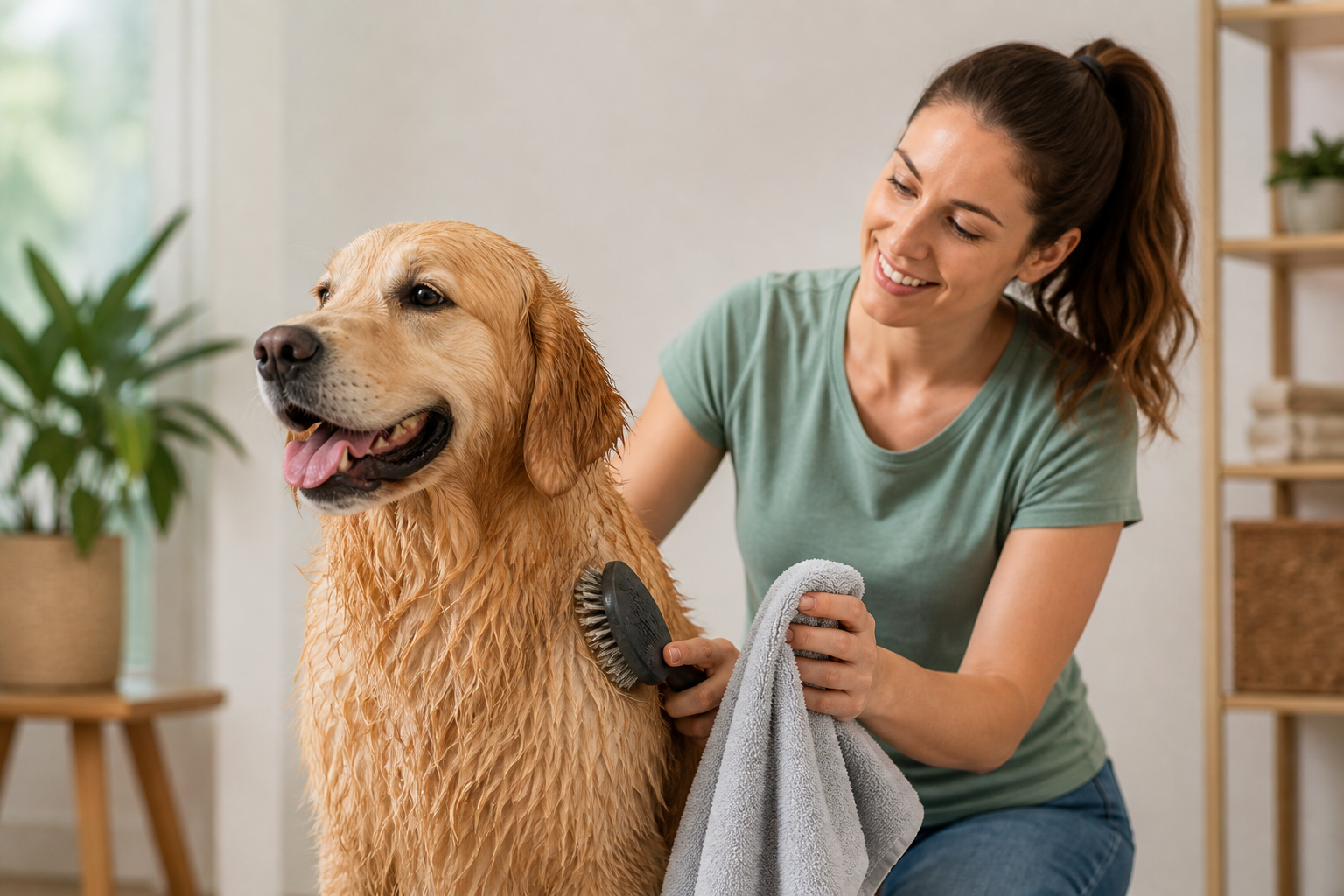
You have just finished giving your dog a bath, and they are shaking water all over the bathroom. Their fur is a damp, tangled mess. You reach for the brush, but then you pause. You might wonder if it is better to work through those knots now while the hair is soft or if you should wait until the coat is completely dry. This is a common dilemma for pet owners who want to keep their dog looking great without causing unnecessary pain or hair breakage.
At BaxterBoo, we have helped pet parents navigate grooming challenges since 2006. We know that the right technique depends on your dog’s specific coat type and the tools you have on hand. This post covers the science of hair strength, the best times to use a brush, and how to avoid damaging your dog’s skin. Understanding the difference between wet and dry brushing will help you maintain a shiny, healthy coat while making grooming a bonding experience rather than a chore.
Quick Answer: Generally, you should brush your dog when their coat is dry to remove mats and tangles. You should only brush a wet dog if you have applied a high quality conditioner or detangling spray to provide "slip" and prevent hair breakage.
The Science of Your Dog’s Hair
To understand why the wet versus dry debate matters, you have to look at the structure of the hair itself. A dog’s hair is held together by different types of bonds. Hydrogen bonds are the most relevant when it comes to water. These bonds break when the hair gets wet, which is why your dog’s fur becomes more elastic and stretchy in the tub.
When hair is wet, the outer layer, called the cuticle, swells. This makes the hair strand weaker and more prone to snapping if you pull on it. If you try to yank a brush through a soaking wet coat without any lubrication, you are likely stretching the hair to its breaking point. This leads to frayed ends and a dull appearance over time.
Dry hair is structurally stronger because those hydrogen bonds are intact. However, dry hair is also less flexible. If the coat is dirty and full of dust or dander, dry brushing can create friction. This friction often leads to static electricity, which makes the hair stand up and tangle even faster. The goal is to find a balance that protects the hair while removing debris.
Why You Should Usually Detangle Before the Bath
Most professional groomers follow a "dry first" rule for a very important reason. Water can act like a glue for existing mats. If your dog has tight clumps of fur or "pelted" areas, adding water causes those fibers to swell and tighten. Once a mat is wet and then dried, it often becomes nearly impossible to remove without clippers.
Brushing your dog before they ever touch the water ensures that you are starting with a smooth foundation. This is especially vital for double coated breeds like Huskies or Golden Retrievers. These dogs have a thick undercoat that traps loose fur. If you do not brush that loose fur out while it is dry, it will turn into a heavy, soggy mess in the tub that takes hours to dry.
Key Takeaway: Always perform a thorough dry brush before bathing your dog. This prevents existing tangles from tightening into permanent mats once they get wet.
Step-by-Step Pre-Bath Routine
- Use a wide tooth comb or a slicker brush to check for knots.
- Focus on high friction areas like behind the ears, under the armpits, and where the collar sits.
- If you find a mat, hold the base of the fur near the skin so you do not pull the skin painfully.
- Work from the ends of the hair up toward the root.
- Once the brush glides through easily, your dog is ready for the water.
The Dangers of Brushing a Sopping Wet Dog
It is a common mistake to start brushing as soon as the dog hops out of the bath. While the hair feels soft, this is actually when it is at its most vulnerable. Because the cuticle is swollen with water, the hair lacks its usual protective barrier. A metal pin brush can easily scrape the hair shaft or, worse, irritate the damp skin.
Wet skin is softer and more sensitive than dry skin. If you brush too hard when the dog is wet, you risk "brush burn." This is a form of skin irritation that looks like a red rash or small scratches. It is uncomfortable for your dog and can lead to skin infections if they start licking the area.
If you must brush while the dog is wet, you need to wait until they are damp rather than dripping. A quick towel dry or a few minutes with a high velocity dryer can bring the moisture level down to a safer range. Even then, the "slip" provided by a product is non-negotiable. For additional bath-time guidance, read our tips for bathing your dog.
The Benefits of Wet Brushing with Conditioner
There is one major exception to the "dry is better" rule. Brushing during the bath while the dog is covered in conditioner can be incredibly effective. This is often called "wet brushing," and it is a favorite technique for groomers working with curly coats or heavy shedders.
When you apply a high quality dog conditioner, it coats the hair in a lubricating layer. This provides the "slip" needed for a brush to glide through without snagging. This technique is excellent for distributing the product evenly from root to tip. It also helps to release dead undercoat that might be stuck in the topcoat.
Vet Tip: If your dog has sensitive skin or allergies, look for conditioners with soothing ingredients like oatmeal or aloe. Always consult your veterinarian if you notice red spots, crusting, or a foul odor during grooming, as these can be signs of a skin infection that requires medicated treatment.
Our pharmacy carries a wide range of FDA-approved treatments and prescription shampoos for dogs with chronic skin conditions. Through our partnership with Pet's Choice, we provide access to the medications your vet might prescribe for dermatitis or fungal issues that make grooming difficult. You can browse our dog pharmacy for available options.
When to Choose Wet Brushing
- For curly breeds like Poodles or Doodles to help define the curls.
- During a heavy deshedding phase to help the undercoat slide out.
- When using a medicated shampoo that needs to reach every inch of the skin.
- If your dog has a very fine, long coat that gets static easily when dry.
Choosing the Right Tools for the Job
The debate between wet and dry brushing also depends on the tool you are holding. Using the wrong brush at the wrong time can cause damage regardless of how wet the hair is. We carry over 500 trusted brands, and we have seen how the right gear changes the grooming experience. Explore our dog brushes and grooming tools to compare options.
Slicker Brushes
These have fine, short wires close together. They are the "workhorses" of the grooming world. They are best used on dry hair to break up tangles and remove loose fluff. Avoid using these on wet skin, as the wire bristles can be too sharp for softened skin.
Pin Brushes
A pin brush looks similar to a human hairbrush but usually has rounded tips. These are safer for wet brushing because the pins are spaced further apart. They do not pull as hard on the elastic wet hair. Brands like Chris Christensen are famous for pin brushes that penetrate deep into the coat without tearing the follicles.
Rubber Brushes
The Kong ZoomGroom is a classic example of a rubber brush. These are fantastic for wet brushing short haired breeds like Labradors or Boxers. You can use them in the tub to massage the skin and pull out loose hair while you shampoo. Because they are made of soft rubber, there is almost zero risk of skin irritation or hair breakage.
Undercoat Rakes
These are designed for dry use only. They reach through the topcoat to pull out the thick "wool" underneath. Using an undercoat rake on a wet dog is usually ineffective and can be painful because the wet hair clumps together and resists the metal teeth.
Using Brushing Sprays to Bridge the Gap
If you do not want to do a full bath but your dog's dry coat is too brittle to brush, a detangling spray is the perfect middle ground. These sprays provide the benefits of wet brushing without the vulnerability of a fully saturated coat. You can find conditioners and detanglers in our dog shampoo and conditioner collection.
A light mist of a grooming spray adds just enough moisture to neutralize static. It also leaves behind a thin layer of conditioning agents that help your comb slide through knots. This is the "Goldilocks" method: not too dry, not too wet.
When using a spray:
- Hold the bottle about six inches away from the coat.
- Mist the area lightly; do not soak it.
- Use your fingers to work the spray into any visible mats.
- Wait about thirty seconds for the product to penetrate before you start brushing.
Key Takeaway: A quality detangling spray or "leave-in" conditioner is a must-have for any grooming kit. It protects the hair bonds from breaking and makes the process much more comfortable for your dog.
A Simple Routine for Home Grooming
To keep your dog’s coat in top shape, we recommend a routine that combines both methods. Consistency is the secret to a dog that actually enjoys being brushed. If you only brush when there are massive tangles, your dog will associate the brush with pain.
Step 1: The Daily Dry Check. Every evening, spend two minutes running a comb through your dog's "problem areas" like the tail and ears. This prevents mats from forming in the first place.
Step 2: The Pre-Bath Prep. Before the bath, use a slicker brush or rake to remove all loose hair and existing tangles.
Step 3: The Bath Massage. Apply shampoo and use a rubber brush to stimulate the skin and remove any remaining dirt. Rinse thoroughly.
Step 4: The Condition and Comb. Apply conditioner. While the conditioner is sitting, use a wide tooth comb or a gentle pin brush to ensure the coat is smooth.
Step 5: The Damp Dry. Towel dry gently by blotting, not rubbing. Use a blow dryer on a cool setting. If you see any small tangles, mist them with a detangling spray and brush them out while the hair is about eighty percent dry.
Bottom line: Brushing a dry, clean coat is the safest standard, but wet brushing with a lubricant like conditioner is a powerful tool for deep cleaning and deshedding.
When Skin Issues Require More Than a Brush
Sometimes, no amount of brushing can fix a coat problem. If your dog has thinning hair, constant itching, or flaky skin, the issue might be internal. Nutrition plays a massive role in coat health. We carry premium brands like Farmina, Royal Canin, and Open Farm that focus on skin and coat health through high quality proteins and Omega-3 fatty acids. Browse our dog healthcare supplies for additional support options.
If your dog is constantly matting despite regular brushing, it might be because their hair is dry and brittle from a lack of nutrients. Switching to a high quality diet or adding a supplement like Cosequin or Zesty Paws can improve the elasticity of the hair.
For more serious concerns like hot spots or allergic reactions, you should always visit your veterinarian. They can determine if your dog needs a prescription diet or a specific medication. Remember that our pharmacy is here to help fill those prescriptions through our partnership with Pet's Choice, making it easy to get everything your pet needs in one place.
Conclusion
Maintaining your dog's coat does not have to be a guessing game. By choosing to brush when the coat is dry for detangling and wet only when using a conditioner, you protect the integrity of the hair and the health of the skin. Every dog is different, but the goal remains the same: a clean, comfortable, and mat-free companion.
- Brush before the bath to prevent mats from tightening.
- Use conditioner or a detangling spray if you brush a wet or damp coat.
- Choose the right tool, such as a rubber brush for the tub or a slicker for dry hair.
- Monitor your dog's skin for signs of irritation or infection.
We invite you to explore our dog grooming supplies for the brushes and sprays mentioned today. If your dog needs extra support for their skin or a specific prescription diet, visit our dog pharmacy to see how we can assist with your vet's recommendations. For even better value, consider joining our Autoship programme to save on your favorite grooming supplies and earn MVP Gold membership rewards.
FAQ
Is it bad to brush a dog right after a bath?
It can be risky because wet hair is more elastic and prone to breakage. If you do not use a detangling spray or conditioner, the brush can stretch and snap the hair strands. It is usually better to wait until the coat is damp or use a leave-in product to protect the hair.
Can I brush my dog while they are still in the bathtub?
Yes, as long as you have applied a generous amount of conditioner. The conditioner acts as a lubricant that allows the brush to glide through the hair without pulling. This is a great way to remove loose undercoat and ensure the conditioner reaches the skin.
Why does my dog get so many mats after being washed?
This often happens if the dog was not thoroughly brushed before the bath. Water causes existing tangles to shrink and tighten as they dry. To prevent this, always ensure your dog is completely tangle-free before they get wet.
What should I do if I find a mat on a wet dog?
Avoid pulling at it with a brush while the hair is wet. Instead, apply a detangling spray or a bit of conditioner directly to the knot and try to gently tease it apart with your fingers. If it does not budge, wait until the hair is dry and use a mat breaker or a wide tooth comb.






