
 Save 15% on your 1st Autoship learn more

 Email us
 Live Chat
 FAQs
FAQs





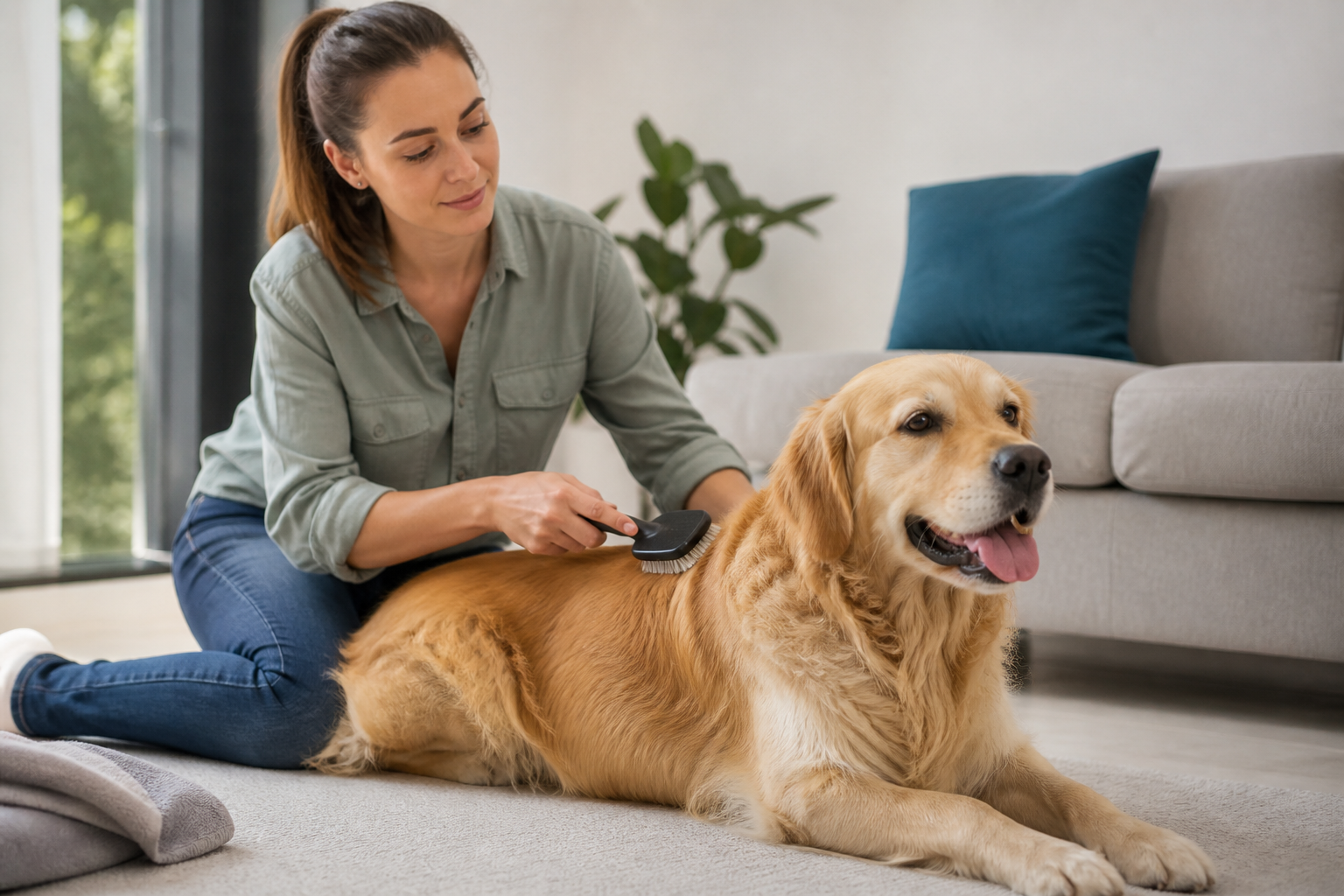
Introduction
You are standing in the bathroom with a soggy, shivering dog who just finished their bath. Your natural instinct is to grab the brush and start working through those tangles while the hair is soft. Or maybe you are looking at a matted coat on a dry dog and wondering if a dunk in the tub would make the job easier. It is a common dilemma for every pet owner who handles grooming at home. At BaxterBoo, we see these questions often from neighbors who want to keep their pets looking their best without causing unnecessary pain. This article covers the science of hair strength, the risks of different brushing methods, and how to choose the right timing for your dog's specific coat type. You will learn why the answer is rarely a simple choice between wet or dry.
Quick Answer: For most dogs, brushing is safest when the coat is dry or lightly dampened with a grooming spray. Brushing soaking wet hair without a professional conditioner can cause the strands to stretch and snap.
The Science of Your Dog's Hair
To understand why timing matters, you have to look at the structure of the hair itself. A dog's hair is made of proteins held together by three types of bonds: hydrogen, disulfide, and salt bonds. These bonds determine how strong, stretchy, and shiny the fur appears.
Hydrogen bonds are the most relevant when it comes to water. These bonds are responsible for the hair's ability to hold its shape and retain moisture. When you get your dog wet, these hydrogen bonds temporarily break. This makes the hair more elastic. While elasticity sounds like a good thing, it actually means the hair is at its weakest tensile state.
When the hair is saturated, the outer layer or cuticle swells. This makes the hair shaft more prone to friction. If you pull a brush through hair in this state, you are not just untangling it. You are stretching the weakened strands until they potentially break or become permanently damaged.
Key Takeaway: Water changes the physical structure of hair by breaking hydrogen bonds, which makes the fur more elastic but much more fragile.
The Dangers of Brushing a Bone-Dry Coat
While wet hair is fragile, brushing a completely dry coat has its own set of problems. This is especially true for dogs with long hair or double coats.
Static Electricity and Friction
If you have ever brushed your own hair in the winter and watched it fly away, you know about static. The same thing happens to your dog. Brushing dry fur creates a buildup of static electricity. This causes individual hairs to stand up and wrap around each other, which actually creates more mats than you started with.
Hair Breakage
Dry hair is structurally stronger than wet hair, but it is also less flexible. Without any lubrication, the bristles of a brush can snag on tiny knots. Instead of the knot sliding apart, the hair snaps. This leads to a dull, frizzy appearance over time. It can also cause "coat funk" where the damaged ends of the hair tangle even faster in the future.
Discomfort for Your Dog
Brushing a dry, tangled coat is often painful. The brush pulls on the skin because there is no "slip" to help the tools glide. If your dog starts to hide when the brush comes out, it might be because the dry brushing process is tugging on their sensitive skin.
When Wet Brushing is Actually Better
There is one major exception to the "don't brush wet hair" rule. Professional groomers often use a technique called wet brushing in the tub. This is not the same as brushing a dog who just jumped out of a lake. For additional bath-time guidance, see these tips for bathing your dog.
The Power of Conditioner
Wet brushing should only happen when the coat is saturated with a high-quality conditioner. Conditioner acts as a lubricant. It fills in the gaps in the hair cuticle and allows the brush to slide through mats without stretching the hair to the breaking point.
Dealing with Severe Matting
If a dog is heavily matted, a dry brush might be impossible. In these cases, getting the dog clean and soaking the mats in conditioner can help. The conditioner softens the debris and "sebum" or skin oils that act like glue in a mat. Once the conditioner is in, you can gently use a wide-toothed comb or a specialized brush to work the mat apart from the outside in.
De-shedding Benefits
For double-coated breeds like Huskies or Labradors, brushing during the bath can help release a massive amount of dead undercoat. The water and soap help loosen the hair that is already ready to fall out. Using a rubber curry brush or a specialized de-shedding tool in the tub can save you hours of vacuuming later.
Vet Tip: If you notice your dog has red, inflamed skin or "hot spots" under their mats, do not attempt to brush them out at home. These areas are very painful and can lead to infections. Consult your veterinarian to see if a professional medical clip is necessary.
The Best Middle Ground: The Damp Method
If you want the benefits of both worlds, the damp method is usually the winner. This involves using a grooming spray or "detangler" on a dry coat before you start. You can find brushes, combs, conditioners, and detangling products in our dog grooming collection.
Step 1: Mist the coat. / Hold the spray bottle about six inches away and lightly mist the area you are about to brush.
Step 2: Work in sections. / Use your fingers to massage the spray into any visible knots.
Step 3: Brush gently. / Use your tool of choice to work through the dampened fur.
This method provides the lubrication of wet brushing without the structural weakness of a fully saturated hair shaft. It eliminates static and protects the hair from snapping. We carry several brands like Honest Paws and Zesty Paws that offer products to support a healthy, shiny coat from both the outside and the inside.
Choosing the Right Tools
The "wet or dry" debate also depends on what you are holding in your hand. Not every brush is safe for every state of the coat. Explore our grooming tools to compare brushes, combs, and bath-time tools.
- Slicker Brushes: These are best used on dry or slightly damp coats. The fine wire bristles can be too harsh on soaking wet skin.
- Pin Brushes: These are excellent for wet brushing in the tub. The long, rounded pins can reach through the water and conditioner to the skin without scratching.
- Rubber Curry Brushes: These are the gold standard for wet brushing short-haired dogs. They massage the skin and pull out dead hair without any risk of breakage.
- Undercoat Rakes: Use these only on dry or very lightly damp coats. They are designed to pull out the undercoat, and doing this on wet hair can be too aggressive.
Grooming by Coat Type
Every dog is different, and their coat type determines the best approach.
Short-Haired Dogs
For breeds like Boxers or Beagles, you can brush them wet or dry. Their hair is short and sturdy enough that breakage is rarely an issue. A rubber brush during the bath is a great way to handle shedding.
Long, Silky Coats
For breeds like Yorkies or Maltese, never brush them bone-dry. The hair is too fine and prone to breakage. Always use a light misting spray or brush them while they are coated in conditioner in the tub.
Double-Coated Breeds
For Goldens, Shepherds, and Newfoundlands, dry brushing is best for daily maintenance. However, a full "blow-out" session in the tub with a high-velocity dryer and a brush can help manage seasonal shedding.
Curly and Wire Coats
Poodles and Doodles often require a mix. Brushing them while they are damp and then drying them completely is the best way to prevent the "poodle frizz" that happens when the hair dries naturally into tight curls. For more guidance, read about grooming curly-haired dogs.
Bottom line: Use the damp method with a grooming spray for daily care, and save full wet brushing for deep conditioning sessions in the tub.
Skin Health and When to See a Professional
Grooming is about more than just looks. It is a vital part of your dog's overall wellness. While you are brushing, you should be looking for lumps, bumps, or skin irritations.
If your dog has chronic skin issues, allergies, or persistent itching, the way you brush might need to change. Sometimes, a specific medicated shampoo is required to treat fungal or bacterial issues. Our dog pharmacy offers prescription medications and prescription pet foods through our partnership with Pet's Choice. If your dog's skin seems oily, flaky, or has a strong odor, it is time to talk to your vet. They can prescribe specialized topicals that you can easily order through our pharmacy service.
- Check for fleas or "flea dirt" while the hair is parted during brushing.
- Look for redness or rashes that might indicate an allergy.
- Feel for any new growths under the skin.
- Watch for signs of pain when you touch certain areas.
The BaxterBoo Grooming Routine
We believe that grooming should be a bonding experience, not a chore. To make it easier, we recommend a consistent routine.
- The Pre-Bath Brush: Always do a quick brush while the dog is dry to remove large mats. Once a mat gets wet, it can tighten like a knot in a shoelace.
- The Bath: Use a shampoo suited for your dog's skin type. If they have sensitive skin, look for oatmeal or aloe-based formulas.
- The Condition: Never skip the conditioner if you plan to brush while wet.
- The Towel Dry: Blot the hair rather than rubbing it. Rubbing creates tangles.
- The Final Brush: Once the dog is damp or dry, do a final pass to ensure the coat is smooth.
Our MVP Rewards program helps you save on the grooming supplies you use most. If you find a shampoo or spray your dog loves, you can use our Autoship program to ensure you never run out. This also gives you a free MVP Gold membership and savings on your first order.
Summary of Brushing Best Practices
Managing your dog's coat does not have to be complicated if you follow a few basic rules.
- Avoid brushing a soaking wet dog unless you have applied a heavy-duty conditioner.
- Never brush a completely dry, long-haired coat without a detangling spray to prevent static and breakage.
- The "sweet spot" for most grooming is when the coat is about 80 percent dry or lightly misted.
- Choose the right tool for the job: pins for wet, slickers for dry, and rubber for short hair.
- Monitor skin health and consult a vet for any persistent irritations.
Key Takeaway: Lubrication is the most important factor in preventing hair damage, whether that comes from water and conditioner or a grooming spray.
Conclusion
Deciding whether to brush your dog's hair wet or dry depends on your goals for that grooming session. For everyday maintenance, a dry brush with a light mist of detangler is the safest way to protect the hair bonds and keep your dog comfortable. If you are tackling heavy shedding or deep cleaning, wet brushing with plenty of conditioner in the tub is a professional secret that works wonders. We are here to support your pet's health journey with everything from pin brushes to prescription skin support. If you are ready to upgrade your at-home grooming kit, explore our full selection of grooming tools and shampoos to find the perfect match for your dog's coat.
FAQ
Can I brush my dog while they are in the bathtub?
Yes, you can brush your dog in the tub, but only if you have applied a generous amount of conditioner first. The conditioner provides the necessary "slip" to prevent the hair from stretching and breaking while it is in its weakened wet state. Use a wide-toothed comb or a rubber curry brush for the best results in the water.
Why does my dog's hair seem more tangled after a bath?
If you do not brush your dog before the bath, the water can cause existing mats to shrink and tighten. This happens because the hair swells when wet and then contracts as it dries, locking the tangles in place. Always perform a "pre-wash" brush to remove loose fur and knots before the coat gets wet.
Is it okay to let my dog air dry before brushing?
Air drying is fine for many breeds, but it can lead to tangles in dogs with curly or very long hair. As the hair dries without tension, it can frizz or mat. For these breeds, it is usually better to brush the coat when it is about 80 percent dry or use a blow dryer on a cool setting while brushing.
What is the best way to remove a mat without hurting my dog?
The best way to remove a mat is to use a detangling spray to lubricate the hair and then work from the ends of the hair toward the skin. Never pull directly on the mat, as this stretches the skin and causes pain. If the mat is too tight, a small amount of conditioner applied directly to the knot can help it slide apart more easily.






