
 Save 15% on your 1st Autoship learn more

 Email us
 Live Chat
 FAQs
FAQs





Introduction
You lean in for a happy morning nuzzle only to be met with a cloud of breath that smells like old gym socks or a swamp. Many of us laugh off dog breath as a standard part of owning a pup. However, that lingering odor is often the first sign of a much deeper health issue. At BaxterBoo, we talk to pet parents every day who are surprised to learn that dental care is not just about fresh breath or white teeth. It is a fundamental pillar of your dog's overall physical wellness.
This post covers why dental hygiene is mandatory for modern dogs and what happens if you skip it. We will also provide a practical guide for home care and professional cleanings. Our goal is to help you build a routine that keeps your dog comfortable and healthy for years to come. Proper dental care is a commitment that pays off in a longer, happier life for your best friend.
Quick Answer: Yes, you absolutely must clean your dog's teeth. Without regular care, plaque turns into tartar, which causes painful gum disease and can lead to life-threatening heart or kidney infections.
Why Domestic Dogs Need Dental Care
A common myth suggests that because wolves do not brush their teeth, our pet dogs do not need to either. This comparison ignores the reality of modern canine life. Domestic dogs have vastly different diets and much longer lifespans than their wild ancestors. Wild canids often chew on tough hides and raw bones that provide a mechanical scraping action on the teeth. Our pets typically eat processed kibble or soft wet food that can leave a sticky residue behind.
When food particles and saliva mix, they form a film called plaque. If this film is not brushed away, it reacts with minerals in the saliva to harden into tartar. You can see tartar as a yellow or brown crust near the gum line. Once tartar forms, it cannot be removed with a toothbrush. It creates a porous surface where more bacteria can grow and thrive.
The environment in a dog's mouth is warm and moist, making it a perfect breeding ground for infection. In the wild, a dog with a severe tooth infection might not live long enough for it to become a chronic problem. Our pets live well into their senior years. We must provide the hygiene that nature no longer provides for them.
Key Takeaway: Modern dog diets and longer lifespans mean that natural chewing is not enough to keep teeth healthy. Daily intervention is required to prevent tartar buildup.
The Serious Risks of Periodontal Disease
Periodontal disease is the most common health problem in adult dogs. By age three, roughly 80 percent of dogs show some sign of dental disease. It begins as gingivitis, which is an inflammation of the gums. You might notice a thin red line where the teeth meet the gums. At this stage, the process is still reversible with good care.
If left untreated, gingivitis progresses to periodontitis. This involves the destruction of the tissues and bone that hold the teeth in place. It is incredibly painful, though dogs are experts at hiding their discomfort. They will often continue to eat even with loose teeth or infected roots because their survival instinct is so strong.
The danger is not limited to the mouth. The gums are very vascular, meaning they have a rich blood supply. When the gums are inflamed and infected, bacteria from the mouth can enter the bloodstream. These bacteria can travel to the heart, liver, and kidneys. This can cause endocarditis, which is an infection of the heart valves, or chronic kidney failure.
Vet Tip: If you notice your dog has bleeding gums or is dropping food while eating, schedule a veterinary exam immediately. Dental pain is often silent, and these signs indicate advanced disease that requires professional treatment.
Professional Dental Cleanings and Anesthesia
Many owners feel nervous about the idea of a professional dental cleaning. This is usually because these procedures require general anesthesia. While the concern is understandable, modern veterinary anesthesia is very safe. We recommend choosing a vet who performs pre-anesthetic blood work to ensure your dog's organs are functioning well before the procedure.
A professional cleaning is the only way to clean beneath the gum line. This is where the most damaging bacteria live. A vet technician or veterinarian will use an ultrasonic scaler to remove tartar. They will also perform a tooth by tooth exam. This often includes dental X-rays to look for hidden problems like root abscesses or bone loss.
What Happens During a Cleaning
- The Exam: The vet checks for oral masses, loose teeth, and gum recession.
- The Scaling: Plaque and tartar are removed from all tooth surfaces.
- The Polishing: The enamel is smoothed to prevent new plaque from sticking easily.
- The Charting: The vet records the health of every tooth for future comparison.
Our pet pharmacy carries a variety of FDA-approved medications through our partnership with Pet's Choice. If your vet discovers an infection or needs to perform an extraction, your dog may require antibiotics or pain relief during recovery. Having access to a reliable pharmacy ensures your pup gets exactly what they need to heal quickly.
Bottom line: Professional cleanings are a medical necessity that addresses the bacteria a toothbrush cannot reach.
A Step-By-Step Guide to Brushing at Home
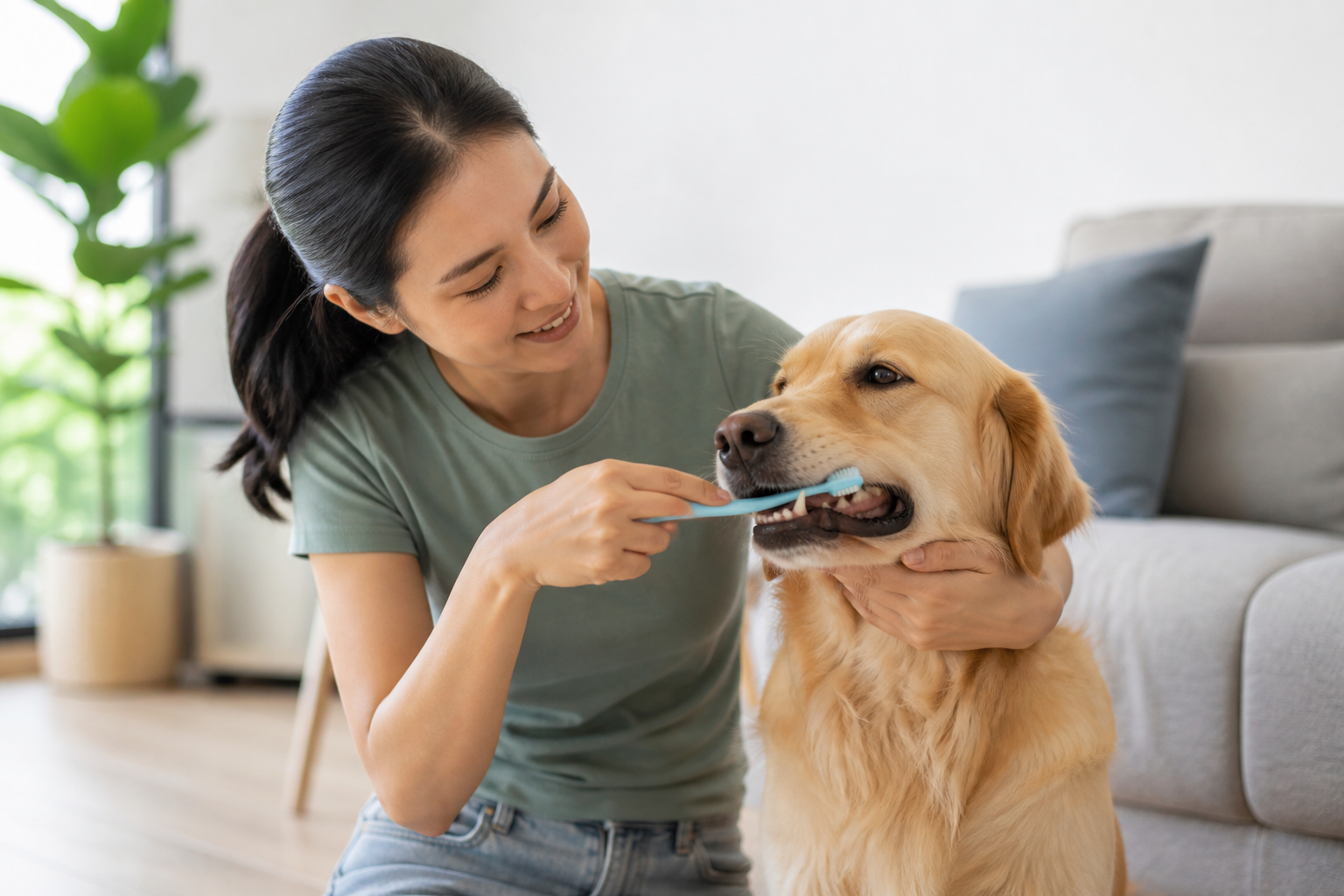
Brushing your dog's teeth is the gold standard for home care. It should ideally be done every single day. We know this sounds like a lot, but it only takes about 60 seconds once your dog is used to the routine. The key is to start slowly and keep the experience positive.
You must use a toothpaste specifically formulated for dogs. Human toothpaste contains ingredients like xylitol, which is highly toxic to dogs. It also contains foaming agents that can upset a dog's stomach since they cannot spit. Dog toothpastes come in flavors like poultry, beef, or peanut butter to make the process a treat.
Step 1: Introduce the flavor. / Let your dog lick a small amount of pet toothpaste off your finger for several days.
Step 2: Touch the teeth and gums. / Gently lift your dog's lips and rub your finger over their gums to get them used to the sensation.
Step 3: Introduce the brush. / Use a soft-bristled dog toothbrush or a finger brush and let them lick the paste off the bristles.
Step 4: Start brushing. / Aim for a 45-degree angle toward the gum line and use small circular motions on the outside surfaces of the teeth.
Step 5: Focus on the back. / Pay special attention to the large premolars and molars in the back, as these are the spots where tartar builds up fastest.
Supplies You Will Need
- Pet-safe enzymatic toothpaste
- A soft-bristled dog toothbrush or finger brush
- High-value treats for rewards
- Patience and a calm environment
For more guidance, read our post on pet dental care tips.
Key Takeaway: Consistency is more important than perfection. Even brushing for thirty seconds most days of the week makes a massive difference in preventing tartar.
Dental Chews and Functional Treats
We understand that not every dog will tolerate a toothbrush. While brushing is best, dental chews are a helpful secondary tool. These treats are designed with a specific texture that helps scrape plaque away as the dog chews. They also often contain ingredients that help neutralize bad breath.
When choosing a chew, look for those with a seal from the Veterinary Oral Health Council (VOHC). This seal means the product has been tested and proven to reduce plaque or tartar. Brands like Greenies are popular for a reason. They provide a mechanical cleaning action and are highly palatable. Explore our selection of Greenies products for dental chew options.
It is important to remember that dental treats add calories to your dog's diet. If you give a chew every day, you may need to slightly reduce their meal portions to prevent weight gain. Always supervise your dog while they are chewing. If they swallow large chunks, it can lead to a choking hazard or digestive blockage.
Bottom line: Dental chews are a great supplement to brushing, but they should be viewed as a tool, not a total replacement for mechanical cleaning.
Diet and Water Additives
What your dog eats every day plays a role in their oral health. There are specialized dental diets available that are formulated to clean teeth. The kibbles in these foods are usually larger and have a fibrous texture. Instead of crumbling immediately, the kibble surrounds the tooth and scrubs it as the dog bites down.
For dogs with severe dental issues, a veterinarian may prescribe a specific therapeutic diet. These are available through our pharmacy partnership. Brands like Farmina Vet Life offer specialized nutrition for various health needs, including those that support overall wellness.
Water additives are another option for busy pet parents. These are liquids you add to your dog's drinking bowl. They contain enzymes or ingredients like chlorhexidine that help kill bacteria in the mouth. While they do not remove existing tartar, they can slow down the rate at which new plaque forms.
For additional ideas, see our guide to dog dental care and fresh-breath products.
Vet Tip: Never rely on water additives or food alone if your dog already has visible tartar or bad breath. These products are preventive, not curative.
Identifying Dental Pain in Your Dog
Dogs are hardwired to hide pain. This is an ancestral trait designed to prevent them from appearing vulnerable to predators. As a result, an owner might think their dog's mouth is fine when the dog is actually in significant distress. You have to be a detective to spot the subtle signs of oral discomfort.
One common sign is a change in how they interact with toys. If your dog used to love fetching a ball but now shows no interest, their mouth might be too sore to grip it. You might also notice them tilting their head to one side while eating or dropping kibble on the floor.
Signs of Oral Discomfort
- Pawing at the mouth or rubbing the face on furniture
- Excessive drooling, sometimes tinged with blood
- A sudden preference for wet food over dry kibble
- Swelling on the face, especially under the eye
- Increased irritability or shying away when you touch their head
If you see these signs, please do not try to "wait and see." An abscessed tooth is an emergency that requires professional care and often a round of antibiotics from the pharmacy.
Read warning signs of hidden dental problems in dogs for more guidance on what to watch for.
Key Takeaway: A dog that is still eating is not necessarily a dog that is pain-free. Look for changes in behavior and mouth-rubbing as indicators of dental trouble.
Breed-Specific Dental Concerns
Not all dogs are created equal when it comes to their teeth. Some breeds are genetically predisposed to dental disease and require much more frequent attention. Small and toy breeds are at the top of this list. Dogs like Chihuahuas, Yorkies, and Poodles have the same 42 teeth as a Great Dane, but those teeth are crowded into a much smaller jaw.
This crowding creates many nooks and crannies where food and bacteria can hide. Small dogs also often retain their "baby" teeth, leading to a double row of teeth that traps debris. If these deciduous teeth do not fall out on their own, they usually need to be extracted by a vet.
Brachycephalic breeds, or those with flat faces like Pugs and Bulldogs, also face challenges. Their jaw structure is often misaligned. This means their teeth do not meet properly, which prevents the natural cleaning that happens during chewing. If you own one of these breeds, you should be checking their mouth weekly and aiming for daily brushing from puppyhood.
Note: Owners of small or flat-faced breeds should expect to schedule professional cleanings more frequently, sometimes as often as every six to twelve months.
Setting Up a Long-Term Dental Routine
The best time to start a dental routine was when your dog was a puppy. The second best time is today. It is never too late to start caring for your dog's teeth, even if they already have some tartar buildup. While you cannot brush away existing tartar, you can prevent it from getting worse and causing a systemic infection.
We recommend a multi-pronged approach. This includes daily brushing, the use of VOHC-approved dental treats, and regular veterinary checkups. By combining these methods, you create layers of protection for your dog's health.
To make things easier, you can use our Autoship program for your dental supplies. This ensures you never run out of toothpaste or your dog's favorite dental chews. Plus, you will save on your orders and earn points through our MVP Rewards program. Staying consistent is much easier when the supplies show up at your door right when you need them.
Key Takeaway: A successful dental plan uses multiple tools, including brushing, treats, and professional oversight, to cover all aspects of oral health.
Conclusion
Cleaning your dog's teeth is an essential part of being a responsible pet owner. It is about much more than fresh breath. It is about preventing chronic pain and protecting vital organs from dangerous bacteria. While the task might seem daunting at first, it quickly becomes a simple part of your daily bonding time.
- Brush daily using pet-specific toothpaste.
- Use dental chews and additives as helpful supplements.
- Monitor for signs of pain or bleeding gums.
- Schedule annual veterinary dental exams.
By taking these steps, you are investing in your dog's long-term health. If you are looking for the right tools to get started, we invite you to browse our dog dental care category. From enzymatic pastes to specialized toys, we have everything you need to keep those pearly whites shining and your dog's heart healthy.
FAQ
Can I use human toothpaste for my dog?
No, you should never use human toothpaste for a dog. It often contains xylitol, an artificial sweetener that is life-threatening for dogs even in small amounts. Additionally, human toothpaste contains detergents that are meant to be spat out, but dogs swallow everything, which can lead to severe stomach upset.
How often does my dog really need a professional cleaning?
Most dogs benefit from a professional cleaning once a year, but the frequency depends on the individual. Small breeds and dogs with misaligned jaws may need cleanings every six months. Your veterinarian will assess the level of plaque and tartar during your annual wellness exam to give you a specific recommendation.
My dog hates the toothbrush, what should I do?
If your dog is resistant, take several steps back and focus on the reward. Start by just letting them lick toothpaste off your finger without the brush. You can also try dental wipes or finger brushes, which are often less intimidating than a standard toothbrush. If they remain very stressed, focus on dental chews and water additives while consulting a trainer for desensitization tips.
Are bones safe for cleaning a dog's teeth?
While some people use raw bones for dental health, they come with risks. Hard bones like marrow bones or antlers can actually cause teeth to fracture. They can also splinter and cause internal injuries or blockages. If you choose to give bones, always supervise your dog and consult your vet about which types are safest for your dog's specific chewing style.






