
 Save 15% on your 1st Autoship learn more

 Email us
 Live Chat
 FAQs
FAQs





Introduction
Standing in our dog food category at BaxterBoo can feel like a test you did not study for. You see rows of colorful bags filled with crunchy kibble next to stacks of cans with savory labels. You want the best for your dog, but the sheer volume of choices is enough to make anyone pause. Choosing between wet and dry food is one of the first big decisions every pet owner faces. It is not just about price or convenience. It is about your dog's hydration, dental health, and specific nutritional needs. This guide will walk you through the pros and cons of each format. We will help you understand how to pick the right bowl for your dog's unique lifestyle. Both options can be healthy, but the right one depends on your dog's age and health.
Quick Answer: Both wet and dry dog food provide complete nutrition when they meet AAFCO standards. Dry food is convenient and supports dental health, while wet food provides essential hydration and appeals to picky eaters. Many owners find that mixing both offers the best balance of health benefits and value.
The Core Differences Between Wet and Dry Food
The biggest difference between these two types of food is the water content. Dry food, which we usually call kibble, typically contains about 10 percent moisture. Wet food is much higher, often reaching 75 to 80 percent moisture. This difference comes down to how the food is made in the factory.
Dry food starts as a dough. Manufacturers mix proteins, grains, and vitamins. They then cook this mixture and push it through a machine called an extruder. This machine cuts the dough into the small shapes we recognize. The kibble is then dried to remove moisture. This process makes it shelf-stable and easy to store in large bags.
Wet food goes through a different process. The ingredients are ground and mixed with a gravy or gel. This mixture is put into cans or pouches and then sealed. The containers are heated to a high temperature to kill bacteria and ensure the food stays fresh without preservatives. Because the water is trapped inside the can, the food stays soft and moist.
Key Takeaway: The primary distinction between wet and dry food is the moisture level. This affects how the food is processed, stored, and how it impacts your dog's hydration.
The Practical Benefits of Dry Dog Food
Most dog owners in the United States choose dry food for its simplicity. It is the foundation of the pet food industry for several good reasons.
Convenience and Storage
Kibble is incredibly easy to handle. You can buy a large bag and keep it in a cool, dry place for weeks. Once you open the bag, the food stays fresh if you seal it properly. It does not require refrigeration. You can also leave it in a bowl all day. This is perfect for dogs that like to graze or eat small amounts over several hours.
Cost Effectiveness
When you look at the price per meal, dry food is almost always the winner. It has a higher caloric density than wet food. This means a small volume of kibble contains more energy than the same volume of canned food. You do not have to buy as much weight in food to keep your dog full and healthy. This makes it a great choice for large breeds or multi-dog households.
Dental Health Support
The crunch of kibble is not just satisfying for your dog. It actually serves a purpose. As your dog chews, the hard texture helps scrape away a small amount of plaque from the teeth. Some specialized dry foods are even shaped to maximize this cleaning effect. While it does not replace brushing, it is a helpful tool for maintaining oral hygiene.
Mental Stimulation
Dry food works well with interactive toys. You can put kibble into puzzle feeders, snuffle mats, or treat-dispensing balls. This forces your dog to work for their meal. It provides mental enrichment and slows down fast eaters. Wet food is much harder to use in these types of activities without creating a mess.
Bottom line: Dry food is the most convenient and budget-friendly option for most owners, offering dental benefits and working well with enrichment toys.
When Wet Dog Food Is the Better Choice
While kibble is popular, wet food offers several health advantages that dry food cannot match. Many dogs thrive on a canned diet, especially as they age.
Superior Hydration
Some dogs are not big drinkers. If your dog ignores the water bowl, wet food is a great way to sneak extra moisture into their day. This is vital for dogs with certain health issues. High moisture intake helps flush the urinary system and supports kidney function.
High Palatability for Picky Eaters
Wet food smells much stronger than dry food. To a dog, a strong smell is the most important part of a meal. The rich, meaty aroma can entice a dog that has lost their appetite. If your dog is recovering from an illness or is naturally finicky, a can of high-quality wet food can be a lifesaver.
Easier to Chew and Swallow
As dogs get older, they often develop dental problems. Missing teeth or sore gums make it hard to crunch on hard kibble. Wet food has a soft texture that requires almost no chewing. This makes mealtime much more comfortable for senior pets. Puppies with small baby teeth also find wet food easier to manage during the weaning process.
Weight Management and Satiety
Because wet food contains so much water, it has fewer calories per cup than dry food. This allows you to give your dog a larger portion without increasing their calorie count. The extra volume can help a dog feel full and satisfied. This is a great strategy for dogs that are always begging for more food but need to lose a few pounds.
Vet Tip: If your dog has been diagnosed with urinary stones or kidney disease, your veterinarian may recommend a high-moisture diet. We carry prescription diets through our pet pharmacy that are specifically formulated for chronic health conditions. Always consult your vet before switching to a medical or therapeutic diet.
Choosing Based on Your Dog's Life Stage
Your dog's nutritional needs change as they grow. What worked for them as a puppy might not be the best choice when they reach their golden years.
Puppies and Growing Dogs
Puppies need a lot of energy and specific nutrients to build bones and muscle. High-quality dry puppy food is excellent for providing concentrated calories. However, young puppies can benefit from a mix. The soft texture of wet food is gentle on their developing teeth. It also introduces them to different textures early in life. This can prevent them from becoming picky eaters later on.
Active Adult Dogs
For a healthy, active adult dog, dry food is often the most practical choice. It provides the energy they need for walks and play. If your dog has no trouble staying hydrated and has healthy teeth, a premium kibble is a great foundation. You can always use wet food as an occasional topper for variety.
Senior Dogs
Senior dogs often face a decline in their senses of taste and smell. They may also struggle with weight gain as their metabolism slows down. Wet food helps on both fronts. The strong aroma encourages them to eat, and the high water content helps them feel full without overeating. Additionally, many senior dogs have underlying health issues where extra hydration is beneficial.
| Feature | Dry Food (Kibble) | Wet Food (Canned) |
|---|---|---|
| Moisture Content | Low (approx. 10%) | High (approx. 75-80%) |
| Storage | Easy, shelf-stable | Needs fridge after opening |
| Cost | Generally lower | Generally higher |
| Dental Benefit | Helps reduce plaque | No dental benefit |
| Aroma | Mild | Strong and enticing |
| Best For | Grazers, large breeds | Picky eaters, seniors |
The Best of Both Worlds: Mixing Wet and Dry
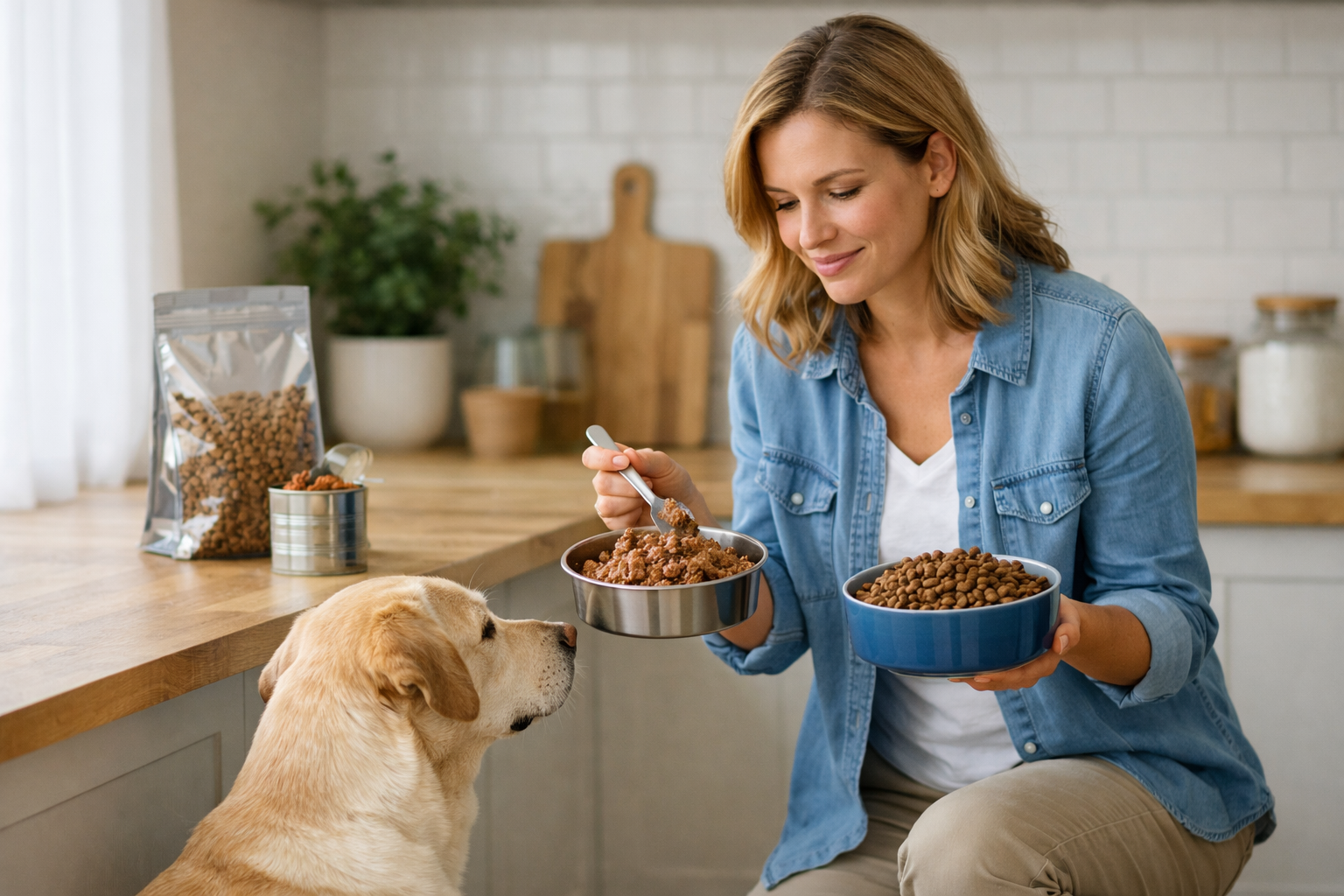
You do not have to pick just one. Many pet owners find that a combination of both is the ideal solution. This is often called mixed feeding or topping.
Mixing wet food into kibble makes the meal more exciting. It provides the dental benefits of the dry food and the hydration of the wet food. It can also make your budget go further. You can buy a large bag of kibble and use a smaller amount of canned food as a flavorful topper.
How to Mix Safely
When you mix two types of food, you must be careful about calories. You cannot just add a scoop of wet food on top of a full portion of dry food. This will lead to weight gain. You need to reduce the amount of kibble to account for the calories in the wet food.
Step 1: Determine the total daily calories your dog needs. Your vet can help you find this number.
Step 2: Decide on a ratio. A common split is 75 percent calories from dry and 25 percent from wet.
Step 3: Measure both parts carefully. Use a standard measuring cup or a kitchen scale for accuracy.
Step 4: Mix thoroughly so your dog cannot just pick out the "good stuff" and leave the kibble.
Bottom line: Mixing wet and dry food is a great way to improve your dog's mealtime experience while maintaining the health benefits of both formats.
Managing Health Conditions Through Diet
Sometimes the choice between wet and dry is made for you by a health diagnosis. Certain conditions require very specific nutrient levels and moisture content.
If your dog has sensitive skin or food allergies, we carry brands like Open Farm and Royal Canin that offer limited-ingredient options in both wet and dry forms. For dogs with digestive issues, wet food is often easier to process. It is gentler on the stomach and moves through the digestive tract more smoothly.
For more serious issues like heart disease or diabetes, your vet might prescribe a specific diet. These are not standard over-the-counter foods. Our BaxterBoo pharmacy offers prescription diets through our pet pharmacy. Whether your vet recommends a canned kidney diet or a dry weight management formula, we can help you get the exact food your dog needs.
Vet Tip: Never try to treat a medical condition with food alone without a professional diagnosis. If your dog is showing signs of illness, such as excessive thirst, vomiting, or lethargy, see your vet immediately. They can provide a prescription that we can then fulfill through our pharmacy service.
Storage and Safety Tips
How you store your dog's food is just as important as which brand you buy. Improper storage can lead to spoiled food or a loss of nutrients.
Storing Dry Food
Do not pour the kibble directly into a plastic bin. The original bag is designed to keep the food fresh and protect the fats from oxidizing. Place the entire bag inside a sealable container. This provides a double barrier against air and pests. Try to use a bag within six weeks of opening it. After that, the vitamins begin to degrade and the oils can go rancid.
Storing Wet Food
Once you open a can of dog food, the clock starts ticking. You should only leave wet food in your dog's bowl for about 30 minutes. If they do not eat it, toss it out. Bacteria grow quickly in moist environments. Store any unused portion in the refrigerator. Use a tight-fitting silicone lid or transfer the food to an airtight glass container. Use it within three days or throw it away.
- Keep dry food in its original bag inside a bin.
- Store food in a cool, dry place, not the garage.
- Check "Best By" dates before purchasing.
- Wash food bowls daily with hot, soapy water.
Transitioning to a New Food
If you decide to switch from dry to wet, or vice versa, you must go slowly. A sudden change in diet is the fastest way to give your dog an upset stomach. Their digestive system needs time to adjust to new ingredients and moisture levels.
We recommend a transition period of at least seven to ten days. Start by replacing about 25 percent of their old food with the new food. Watch their stool consistency and energy levels. If they seem fine after two days, move to a 50/50 mix. Continue this gradual increase until they are eating 100 percent of the new food.
If your dog develops diarrhea or starts vomiting during the switch, slow down. Go back to the previous ratio for a few days before trying to increase the new food again. Some dogs are more sensitive than others and might need two weeks for a full transition.
Key Takeaway: A slow transition over 7 to 10 days prevents digestive upset and helps your dog accept the new flavor and texture.
What to Look for on the Label
Regardless of whether you choose a bag or a can, the quality of the ingredients matters most. At BaxterBoo, we handpick the brands we carry to ensure they meet high standards.
Look for a named protein as the first ingredient. This should be something like "chicken," "beef," or "lamb," rather than "meat by-products." Check for the AAFCO statement on the back of the packaging. This tells you if the food is "complete and balanced." This means it contains every vitamin and mineral your dog needs to stay healthy without any other supplements.
Avoid foods with excessive fillers or artificial colors. Your dog does not care if their kibble is red or green. Those dyes are only there to appeal to humans. High-quality brands like Stella & Chewy's, NutriSource, and Royal Canin focus on nutrition rather than appearance.
Making the Final Decision
At the end of the day, the best food is the one that your dog enjoys and that keeps them healthy. There is no single "right" answer for every dog. You might find that your dog loves a specific brand of kibble but needs a spoonful of wet food to get started. Or you might have a senior dog who clearly feels better on an all-wet diet.
Consider your budget, your schedule, and your dog's physical condition. If you are ever unsure, your veterinarian is your best resource for nutritional advice. They can look at your dog's blood work and body condition to give you a personalized recommendation.
We invite you to explore our wide selection of both wet and dry foods. Our team is always here to help you find the right match for your pet's needs. Whether you are looking for a premium kibble, a savory canned stew, or a prescription diet from our pharmacy, we have the expertise to guide you.
Bottom line: Your dog's health is a journey that changes over time. Stay observant, consult your vet, and choose high-quality options that fit your lifestyle.
FAQ
Is wet food or dry food better for a dog's weight loss?
Wet food can often be better for weight loss because it has a lower caloric density. The high moisture content helps dogs feel full while consuming fewer calories. However, you must still monitor the total daily intake to ensure they are in a calorie deficit.
Does feeding only wet food cause dental problems?
Wet food does not directly cause dental problems, but it lacks the mechanical scraping action of dry kibble. Dogs on an all-wet diet may develop tartar faster if their teeth are not brushed regularly. It is important to maintain a dental routine regardless of what food format you choose.
Can I mix two different brands of wet and dry food?
Yes, you can mix different brands as long as both are high-quality and complete and balanced. This is a common way to provide variety. Just be sure to calculate the calories for both so you do not accidentally overfeed your dog.
How long can I leave wet food out in the bowl?
Wet food should not sit out for more than 30 to 60 minutes. Because of its high moisture content, it is a breeding ground for bacteria once it is exposed to the air. If your dog does not finish their meal in one sitting, refrigerate the leftovers immediately.






