
 Save 15% on your 1st Autoship learn more

 Email us
 Live Chat
 FAQs
FAQs





Introduction
You fill the bowl with high-quality kibble and set it down. Your dog walks over, takes one sniff, and looks back at you with a bored expression. We see this often at BaxterBoo. Many pet owners wonder if they can stir in a little wet food to make things more interesting. You might worry about upsetting their stomach or accidentally causing weight gain.
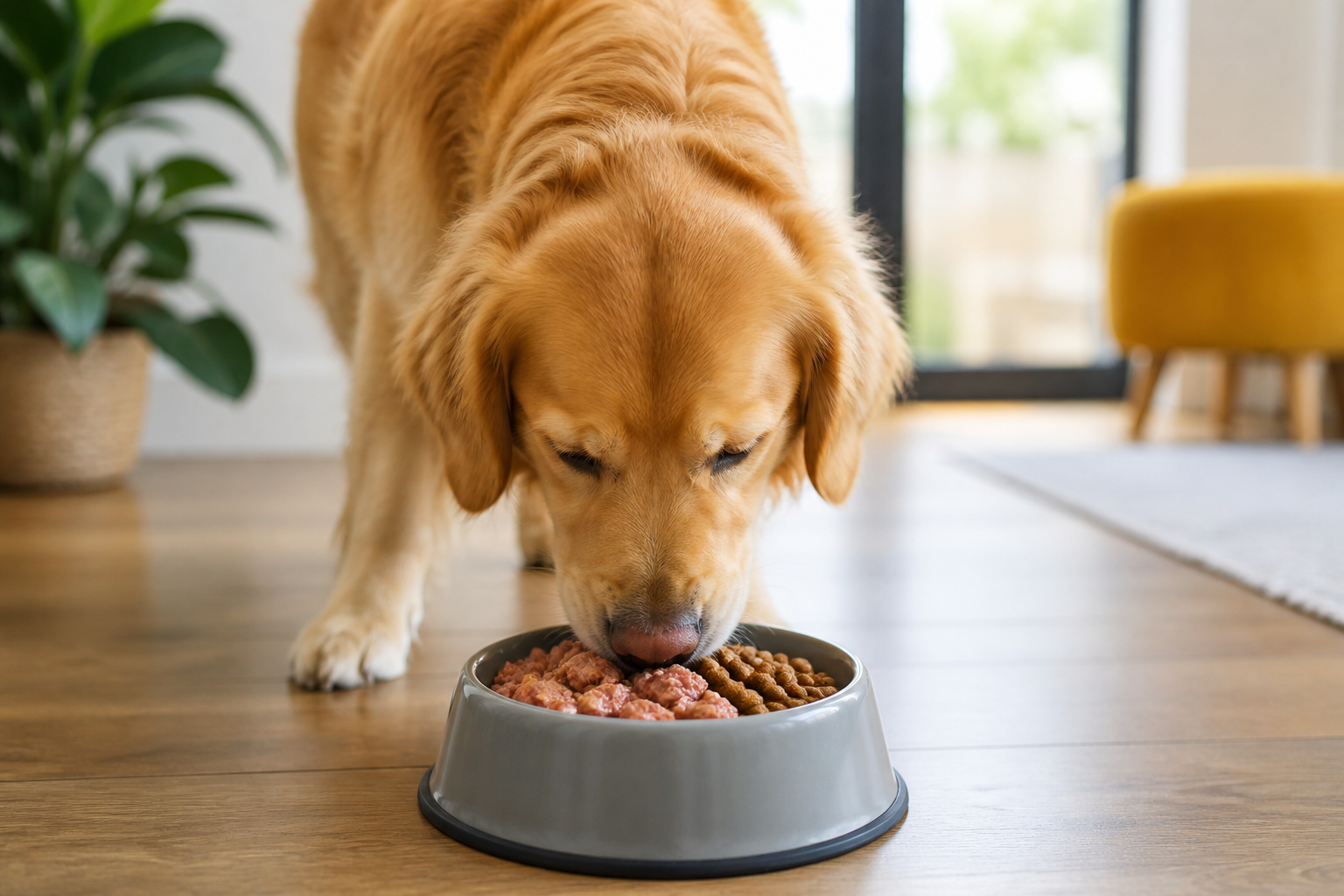
Mixing wet and dry dog food is more than just a way to spoil a picky eater. It is a practical feeding strategy that offers several health benefits. This guide covers the nutritional advantages, safety rules, and portion math for mixed feeding. We will help you understand how to combine textures while keeping your dog at a healthy weight. By the end, you will know exactly how to create a balanced meal that your dog will actually finish.
Quick Answer: Yes, you can safely mix wet and dry dog food as long as both products are labeled as complete and balanced. This feeding method improves hydration and taste while maintaining the dental benefits of crunchy kibble. It is an excellent option for picky eaters, senior dogs, and pets needing extra moisture.
The Benefits of a Mixed Diet
Feeding a combination of textures provides the best of both worlds. Dry food is famous for its convenience and cost-effectiveness. Wet food is known for its high moisture content and intense aroma. When you combine them, you create a meal that is both functional and highly palatable, especially when you shop our dog food category.
Enhanced Hydration
Many dogs do not drink enough water from their bowls. This is especially true for active dogs or those living in warm climates. Wet dog food is typically about 75 percent to 80 percent water. By adding a scoop of wet food to dry kibble, you naturally increase your dog's daily fluid intake. Better hydration supports kidney function and helps flush out the urinary system.
Improved Palatability for Picky Eaters
Dogs rely heavily on their sense of smell to decide if something is worth eating. Dry kibble has a mild scent compared to the rich, meaty aroma of canned food. If your dog is recovering from an illness or is simply a fussy eater, the smell of wet food can jumpstart their appetite. Mixing the two allows the gravy or pate to coat the kibble. This makes it much harder for your dog to pick out the "good bits" and leave the rest, which is why many pet parents browse our wet dog food collection.
Dental Health Support
While wet food is tasty, it does not do much for dental hygiene. The mechanical action of chewing dry kibble helps scrape away a small amount of plaque. By keeping dry food as part of the mix, your dog still gets that crunch. This helps maintain gum health and reduces tartar buildup over time.
Texture Variety and Enrichment
Eating the same hard pellets every day can lead to food boredom. Mixing in different textures provides sensory enrichment. You can use shreds, chunks in gravy, or smooth pates to keep your dog engaged with their meal. This variety can prevent dogs from becoming bored with their diet and refusing food later on.
Key Takeaway: Mixed feeding combines the hydration and taste of wet food with the dental benefits and cost-savings of dry kibble.
Safety Rules for Mixing Dog Food
Before you start scoop-mixing, there are a few rules to ensure your dog stays healthy. You cannot simply throw any two foods together without looking at the labels. Consistency and quality are the two most important factors.
Look for the AAFCO Statement
The Association of American Feed Control Officials (AAFCO) sets standards for pet food nutrition. Every bag or can you buy should state that it is "complete and balanced." This means the food contains all the vitamins and minerals your dog needs. If you mix a complete dry food with a complete wet food, the overall meal remains balanced. However, if you use a "topper" or "mixer" that is labeled for supplemental feeding only, it should not make up more than 10 percent of the total calories.
Match the Life Stage
Puppies have different nutritional needs than senior dogs. They require more protein, fat, and specific minerals for bone growth. If you are feeding a puppy, both the wet and dry components must be formulated for growth. Likewise, a senior dog might benefit from lower-calorie wet foods with added joint support. Never mix a puppy kibble with an adult wet food unless your veterinarian specifically suggests it.
Stick to the Same Brand for Sensitivities
If your dog has a sensitive stomach, we recommend staying within the same brand. Companies often use similar protein sources and ingredient bases across their wet and dry lines. This consistency makes it easier on your dog’s digestive system. For example, if you feed Farmina dry food, using a Farmina wet formula can reduce the risk of gas or loose stools.
Vet Tip: If your dog has a chronic health condition like kidney disease or severe allergies, consult your veterinarian before mixing foods. Our pet pharmacy carries a wide range of prescription diets designed for these needs.
How to Calculate Portions and Calories
The biggest mistake pet owners make is adding wet food on top of a full serving of dry food. This leads to accidental weight gain. You must "trade" some of your dry food for the wet food to keep the calories level, and our dry dog food collection is a useful place to compare calorie counts.
Understanding Calorie Density
Dry food is much more calorie-dense than wet food because the water has been removed. A cup of kibble might have 400 calories, while a full can of wet food might only be 300 calories. You cannot do a simple one-to-one swap by volume. You have to look at the kilocalories (kcal) per cup and kcal per can.
The Replacement Method
If you want to replace 25 percent of your dog's dry food with wet food, follow these steps:
- Determine the total daily calories your dog needs.
- Find the calorie count for your specific dry food.
- Find the calorie count for your wet food.
- Subtract 25 percent of the dry food calories.
- Add back that same amount of calories in wet food.
Feeding Comparison Table
| Feature | Dry Kibble | Wet Food | Mixed Feeding |
|---|---|---|---|
| Moisture | Low (approx. 10%) | High (approx. 75-80%) | Moderate |
| Storage | Easy, shelf-stable | Needs fridge after opening | Mix must be eaten fresh |
| Cost | Most affordable | More expensive per meal | Moderate value |
| Dental Impact | Helps scrape plaque | No dental benefit | Provides partial benefit |
| Palatability | Moderate | High | High |
Key Takeaway: Always replace a portion of the dry food calories with the equivalent wet food calories to prevent obesity.
Best Practices for Transitioning and Serving
Sudden changes in diet can lead to diarrhea or vomiting. Even if you are just adding a little wet food to a familiar kibble, take it slow.
The 7-Day Transition Plan
- Days 1-2: 90 percent dry food mixed with 10 percent wet food.
- Days 3-4: 75 percent dry food mixed with 25 percent wet food.
- Days 5-6: 60 percent dry food mixed with 40 percent wet food.
- Day 7: Your final desired ratio.
Mixing Techniques
There are several ways to serve a mixed meal. Some dogs prefer the "ice cream scoop" method where a dollop of wet food sits on top. Others prefer the "stew" method. To make a stew, add a tablespoon of warm water to the wet food and stir it into the kibble until every piece is coated. This is the best way to ensure a picky eater doesn't just lick the wet food off the top.
Proper Food Storage
Dry food can stay in the bowl for a while, but wet food spoils quickly. Once you mix the two, your dog needs to eat it within 30 to 60 minutes. If they leave leftovers, you must throw them away. Open cans of wet food should be covered with a silicone lid and kept in the refrigerator. Use them within three days for maximum freshness.
Selecting Quality Toppers
If you do not want to use a full can of wet food, consider high-protein toppers. Brands like Stella and Chewy's or Open Farm offer freeze-dried raw bits or bone broths. These add concentrated nutrition and flavor without the bulk of traditional canned food, and you can explore our selection of Open Farm products when you're ready to compare options.
Bottom line: Transition slowly over one week and never leave mixed food sitting out for more than an hour.
Specific Needs and Life Stages
Different dogs benefit from mixed feeding in different ways. Understanding your dog's specific profile helps you choose the right mix.
Senior Dogs
Older dogs often experience a decline in their sense of smell and taste. They may also have dental pain or missing teeth that make hard kibble difficult to crunch. Mixing in wet food provides a stronger aroma to entice them. You can also let the mix sit for five minutes to allow the wet food to soften the dry pellets. This makes the meal much easier to chew, and our senior dog food category is a helpful next stop.
Large and Giant Breeds
Large dogs require a lot of calories, which can make a 100 percent wet diet very expensive. Mixed feeding is a great way to give them the variety they love while keeping the base of the diet affordable. Be careful with high-fat wet foods, as keeping large breeds lean is vital for their joint health.
Dogs with Sensitive Skin or Allergies
If your dog struggles with itchy skin, look for limited-ingredient wet foods. Brands like Royal Canin or Farmina Vet Life offer specific formulas for sensitivities. By mixing a limited-ingredient wet food with a matching dry food, you can provide variety without triggering an allergic flare-up, and our Farmina selection is a strong place to start.
Puppies
Puppies burn energy fast. A little wet food can give them the extra protein boost they need during growth spurts. It also exposes them to different textures early in life. This helps prevent them from becoming overly picky adults.
Vet Tip: For dogs with severe food allergies or medical conditions, we offer prescription-strength diets through our pharmacy to help manage chronic needs.
Common Mistakes to Avoid
While mixing is simple, a few common errors can undermine your dog's health.
Overfeeding Treats
When you start mixing wet food, remember that it counts as part of the daily food intake. Many owners add wet food and then still give the same amount of treats. If your dog's weight starts to creep up, the first thing to cut back is the treats, not the primary meal.
Mixing Prescription with Retail Food
If your veterinarian has prescribed a specific therapeutic diet for a condition like urinary stones or heart issues, do not mix it with standard grocery store food. Standard food can "dilute" the therapeutic benefits of the prescription diet. Always stay within the prescription line for both wet and dry components.
Not Cleaning the Bowl
Kibble crumbs are dry and relatively clean. Wet food residue is a breeding ground for bacteria. You must wash your dog's bowl with soap and hot water after every mixed meal. This prevents the buildup of biofilm and keeps your dog's face and mouth clean.
- Check the calorie count on both labels.
- Use a measuring cup for the kibble.
- Use a digital scale for the wet food if possible.
- Observe your dog's stool quality for the first two weeks.
- Monitor your dog's body condition score.
Key Takeaway: Accuracy in measuring and cleanliness in serving are essential for a successful mixed feeding routine.
Conclusion
Mixing wet and dry dog food is an excellent way to support your dog’s health and happiness. It provides the hydration and flavor of wet food while keeping the dental and financial benefits of dry kibble. Whether you are helping a senior dog eat more easily or trying to satisfy a picky puppy, this method offers a flexible solution.
At BaxterBoo, we curate a wide selection of premium brands to help you find the perfect match for your pet, including our selection of The Honest Kitchen products and our selection of Stella & Chewy's products. Remember to transition slowly and watch those calories to keep your pup fit. If your dog needs a specialized diet for a health condition, our pharmacy is here to help with prescription foods and medications.
Bottom line: Start with a small amount of wet food, stay consistent with your brand choices, and always consult your vet for specific health concerns.
FAQ
Is it okay to mix different brands of wet and dry dog food?
Yes, you can mix different brands as long as both are labeled as complete and balanced for your dog's life stage. However, if your dog has a sensitive stomach, it is usually safer to stick to the same brand for both. Different brands use different ingredient profiles, and staying consistent can help prevent digestive upset.
Will mixing wet food into dry food cause my dog to gain weight?
It will only cause weight gain if you do not adjust the portions. You must reduce the amount of dry food to compensate for the calories in the wet food. Always check the labels for the calorie count (kcal) per serving to ensure the total daily intake remains the same.
Can I mix wet food with dry food and leave it out all day?
No, you should never leave mixed food out for more than an hour. Wet food spoils quickly at room temperature and can attract bacteria or pests. If your dog does not finish the meal within 60 minutes, throw it away and wash the bowl thoroughly.
Does mixing wet food with kibble ruin the dental benefits of dry food?
It does not completely ruin the benefits, but it may reduce them slightly if the kibble becomes very soft. To maintain dental health, you can serve the wet food as a topper right before your dog eats. This ensures the kibble stays crunchy enough to provide some mechanical scraping on the teeth.






