Save 15% on your 1st Autoship learn more

 Email us
 Live Chat
 FAQs
FAQs





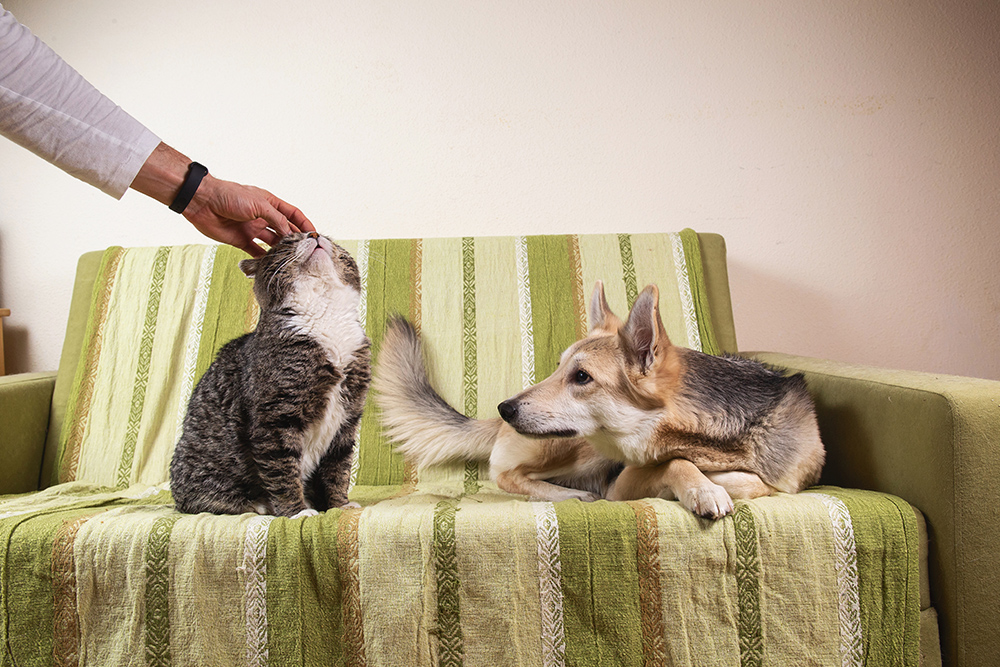
Some studies show pets can exhibit what many people interpret as jealous behavior. For example, a dog may jump in between its owner and another pet or person, or a cat may hiss or growl when an owner plays with another cat. However, while people define these characteristics or mannerisms as jealousy, it is difficult to say whether a pet feels or experiences the emotion in the same way that people do.
Animal behaviorists prefer to refer to jealousy in pets as a competitive situation. Your pet sees something it wants — its owner's attention, for instance — and it must compete with another person, pet, or object to get it. While competing, your pet may push its way into your space, growl, hiss, etc.
Despite the definition, jealousy or competitiveness can cause problems. It is necessary for the owner to watch for such behavior and attempt to correct it before it becomes habitual.
Contributing Factors of Jealousy in Pets
Jealous-like behaviors typically result from a want for attention, confinement, or boredom. Like people, pets can experience insecurity. Their insecurity results in a need for individual attention. A pet may want cuddles, playtime, training, or anything to keep them active.
A lack of toys and other resources can lead to boredom and social conflict, especially in a multi-pet household. Also, inadequate space to roam and play and a lack of exercise can cause anxiety and trigger jealous behavior.
Signs of Jealousy
Sometimes, unruly or disobedient pets are actually exhibiting signs of jealousy. Owners need to watch for signs of jealous-like behavior, so they can correct the situation and help their animal cope with specific situations. Experts suggest there are nine signs of jealousy in pets.
1. Aggression
Aggression is risky behavior and can have potentially hazardous repercussions. A jealous animal might growl, show its teeth, nip, bite, or attack, depending on the situation.
If your pet exhibits any aggressive signs toward another animal or person, corrective action is necessary. You need to remove the animal from the situation to reduce the risk of injury to others.
Also, if a dog exhibits aggressive behavior, consider enrolling it in training. A professional trainer can help you and your pet learn to deal with triggering situations, ensuring the safety of everyone involved.
2. Bathroom "Accidents"
Pets cannot tell you when they feel insecure, so they might show you instead. If your pet goes to the bathroom in areas they are not supposed to, they might be trying to tell you something.
However, do not brush off the behavior as jealousy. When your pet goes outside permitted areas, it could point to health issues. Therefore, if your pet is peeing or pooping outside a litter box or going in the house instead of the yard, take them to the vet for a checkup.
If they are healthy, you can focus on improving their mental health. Sometimes, you can make a pet happier by simply spending more time with it.
3. Clingy Behavior
Most people want their pets to cuddle with them, but too much cuddling can point to insecurity. For example, if a dog is constantly underfoot, it might feel jealous or anxious. Incessant licking is also attention-seeking behavior.
While you might want affection from your pets, too much is a nuisance and can point to problems. Clinginess can lead to aggressive behavior if you are not careful.
4. Pushy Behavior
Does your dog lay on top of you and try to keep you from moving? While some dogs will play like this, frequent demanding behavior is a sign of jealousy and anxiety. Your pet tries to keep you where you are because they want your attention and fear you leaving. Calming collars can help anxious animals relax.
5. Competing With Other Pets
Pets often exhibit jealous behavior in multi-animal households. An owner must divide their attention among several pets, which can leave some feeling left out. Signs your pet is competing with others include:
• Growling
• Hissing
• Fighting
While training is essential for curtailing competitive traits, you also need to consider the safety of the other animals in the home. A muzzle is a good option for protecting other animals against bites and attacks.
6. Scare Tactics
If your pet wants you all to itself, it will try to scare off strangers or potential competition. Scare tactics include barking, hissing, growling, etc. Some animals will also pop up on their hind legs to make themselves bigger and more intimidating.
7. Performing
If you spent a lot of time teaching your dog or pet specific tricks, the animal might perform the trick to get your attention. For example, dogs might roll over or spin, or cats might beg.
8. Crowding Work Spaces
Cats are notorious for crowding peoples' home office spaces. It is not uncommon for a cat that wants attention to lay across a keyboard, close a laptop, or lay in an owner's lap while they try to work. If crowding your area does not work, some cats will start knocking things from the desk onto the floor.
9. Leaving the Room
Not all jealous behaviors are combative or intrusive. Sometimes, a pet might get angry and exit whatever room you are in. They might not want to see you with another pet or want you to feel bad for ignoring them.
It is impossible to say that animals feel jealousy the same way people do, but they exhibit jealous behavior. You can help curb feelings of jealousy by giving your pet the attention, exercise, and toys it deserves.