
 Save 15% on your 1st Autoship learn more

 Email us
 Live Chat
 FAQs
FAQs





Introduction
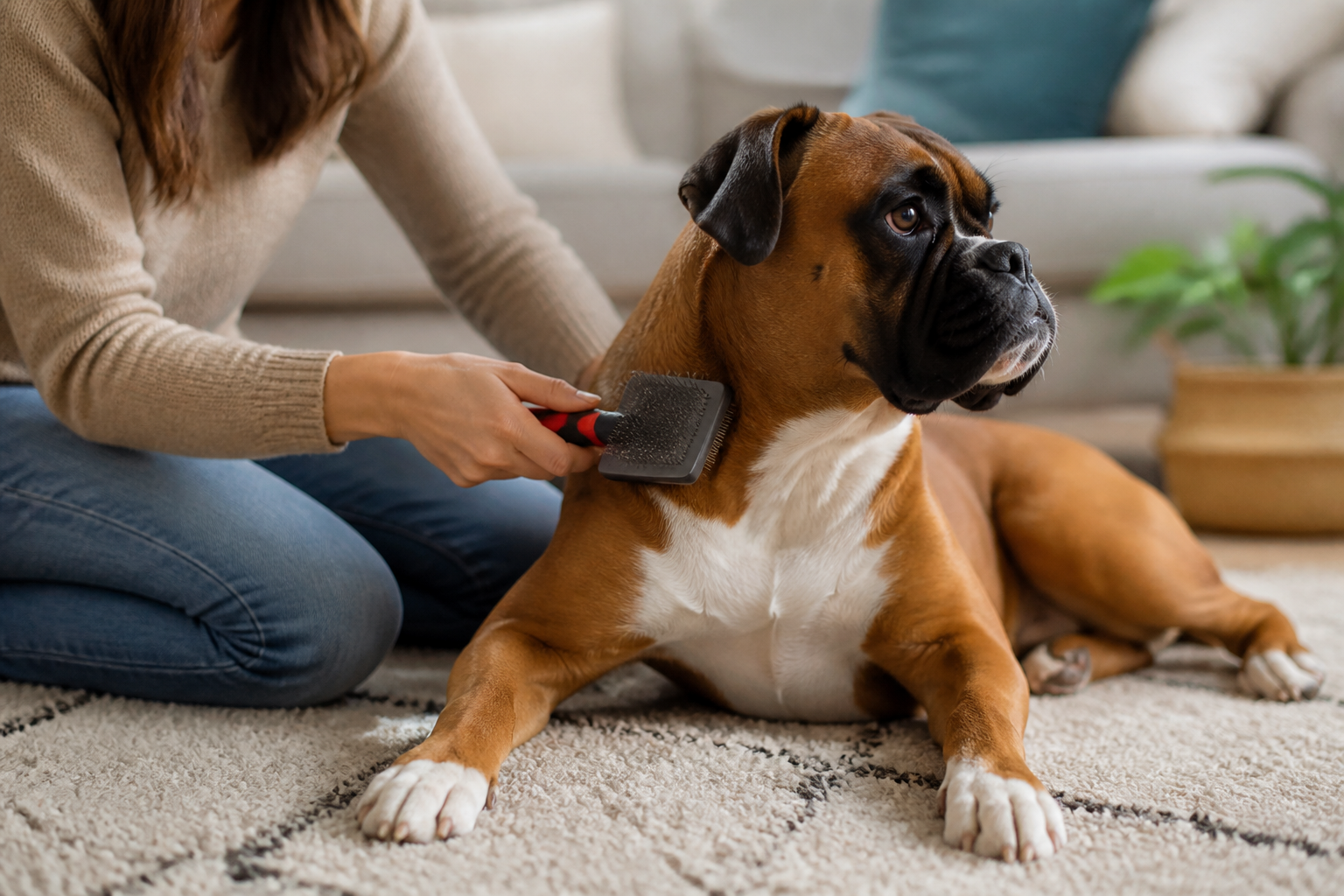
You might notice those tiny, stiff Boxer hairs "weaving" themselves into your sofa cushions or sticking to your favorite black trousers. While Boxers have a very short and smooth coat, they are certainly not maintenance-free when it comes to grooming. Finding the right tools is the first step toward keeping your home cleaner and your dog more comfortable. At BaxterBoo, we know that the right brush does more than just remove hair. It helps distribute natural skin oils and gives you a chance to check for skin issues. This post covers the specific brush types that work best for the Boxer breed and how to use them effectively. We will help you build a simple grooming kit that keeps that famous Boxer shine bright all year long.
Understanding the Boxer Coat
Boxers have a single coat that is short, shiny, and lies tight to the body. They do not have the thick, fuzzy undercoat seen in breeds like Huskies or Labs. This means you do not need heavy-duty rakes or tools designed to "dig" through layers of fur. Instead, you need tools that work on the surface of the skin and the top layer of hair.
Because their hair is so short, their skin is more exposed to the elements. This makes them prone to dryness or irritation if the wrong tools are used. A brush that is too sharp or stiff can actually scratch their skin. You want tools that prioritize massage and oil distribution.
Quick Answer: The best brush for a Boxer is a rubber curry brush or a grooming mitt. These tools effectively lift loose hair and massage the skin without causing irritation to their short, single coat.
The Essential Rubber Curry Brush
The rubber curry brush is the most important tool for any Boxer owner. These brushes usually have soft rubber nubs or "teeth" that grab onto loose hair through friction. As you move the brush over your dog, the rubber creates a slight pull that lifts dead fur away from the skin.
One of the biggest benefits of a rubber brush is the massage factor. Boxers are muscular and active dogs. A firm but gentle massage with a rubber brush feels great on their muscles and helps improve blood circulation to the skin. This increased blood flow supports healthy hair growth and skin renewal.
We often recommend the Kong ZoomGroom for this specific purpose. It is a durable rubber tool that is easy to grip. It works well on dry fur for daily maintenance and can also be used in the bath to work shampoo down to the skin.
Why Rubber Works Best
- It is gentle on the skin and will not cause "brush burn."
- It grabs short, stiff hairs that slicker brushes might miss.
- It is easy to clean with just a quick rinse.
- It doubles as a bathing tool.
For more options, explore our dog grooming tools for brushes and bath accessories suited to at-home care.
Using a Bristle Brush for Shine
Once you have used a rubber tool to remove the loose hair, a bristle brush is the perfect finishing touch. Look for a brush with natural or soft synthetic bristles. These brushes are designed to smooth the coat and move the natural oils from the skin down the hair shaft.
Boxers are known for their "patent leather" shine. This luster comes from sebum, a natural oil produced by the skin. If you do not brush your dog, these oils can sit at the base of the hair and lead to a dull appearance or even a "doggy" odor. Using short, quick strokes with a bristle brush spreads those oils. This creates a protective barrier against moisture and adds that signature glow.
Key Takeaway: Use a rubber curry brush first to remove loose hair, then finish with a bristle brush to distribute oils and create a high-shine finish.
Handling Seasonal Shedding
While Boxers shed year-round, they typically have two heavier shedding periods in the spring and autumn. During these times, you might find that the rubber curry brush alone is not quite enough. This is when a specialized de-shedding tool can be helpful, but you must use it with caution.
Tools with a very fine metal edge can be effective at grabbing the tiny hairs that are ready to fall out. However, because Boxers have such thin coats, it is very easy to over-groom one spot and cause skin redness. If you choose a de-shedding tool, only use light pressure and keep the tool moving. Never stay in one area for more than a couple of passes.
For additional shedding guidance, read how regular grooming helps manage seasonal shedding.
Shedding Season Checklist
- Brush daily during peak shedding weeks.
- Increase the frequency of rubber curry brush sessions.
- Use a damp cloth to wipe away any "flyaway" hairs after brushing.
- Consider a skin and coat supplement to support the new hair growth.
The Role of Grooming Mitts
For Boxers who are a bit nervous about traditional brushes, grooming mitts are an excellent alternative. These are essentially gloves with rubber nubs on the palm. They allow you to groom your dog simply by petting them.
This is particularly useful for the "hard to reach" or sensitive areas on a Boxer. Many dogs dislike having their legs, belly, or chest brushed with a hard tool. A mitt feels like a normal hand, which helps the dog stay calm. It is also a great way to introduce puppies to the grooming process.
Managing Skin Folds and Sensitive Areas
Boxers are famous for their expressive faces and those adorable "jowls." However, those skin folds around the muzzle and eyes can trap moisture, dirt, and bacteria. While you are grooming the rest of the body, you must pay special attention to these areas.
You should never use a standard brush on the face or inside skin folds. Instead, use a soft, damp cloth or specialized grooming wipes. Gently wipe inside the folds to remove any "gunk" or debris. If these areas are left damp, they can develop a foul smell or even a localized skin infection.
Care for Dry Elbows
Many Boxers develop callouses or dry, cracked skin on their elbows. This often happens because they like to "flop" down on hard floors. During your grooming sessions, check these spots. Applying a pet-safe balm or moisturizer can help keep the skin from cracking.
Vet Tip: If you notice redness, a strong odor, or persistent itching in your Boxer's skin folds, consult your veterinarian. These can be signs of a yeast or bacterial infection that may require medicated wipes or treatments from a pharmacy.
Bathing Your Boxer
Boxers generally only need a bath once every four to six weeks. Bathing them too often can strip away those essential oils and lead to itchy, flaky skin. When you do bathe them, choosing the right shampoo is vital.
Since the breed is prone to skin sensitivities, look for gentle formulas. Ingredients like oatmeal or aloe vera are great for soothing the skin. Use your rubber curry brush while the dog is lathered up to help lift even more dead hair.
After the bath, make sure to dry them thoroughly, especially inside those facial folds. We carry a variety of moisturizing shampoos at our warehouse that are perfect for maintaining the Boxer coat without causing irritation.
For more bath-time guidance, see these dos and don'ts for bathing your dog. You can also browse our dog grooming supplies for shampoos, wipes, and bathing tools.
Nutrition and Coat Health
No amount of brushing can fix a coat that is dull due to poor nutrition. What your Boxer eats directly impacts the quality of their skin and fur. Look for foods rich in Omega-3 and Omega-6 fatty acids. Brands like Farmina, Stella and Chewy's, or Open Farm often include these essential nutrients to support coat health.
If your dog has chronic skin issues, they might have an underlying allergy. This is quite common in the breed. In these cases, your vet might recommend a prescription diet. Our pharmacy carries a wide range of prescription pet foods and FDA-approved medications to help manage these conditions through our partnership with Pet's Choice.
Training Your Boxer for Grooming
Boxers are high-energy dogs. Expecting them to stand still for a 15-minute grooming session can be a challenge. It is best to start grooming when they are calm, perhaps after a long walk or a play session.
Keep your initial sessions very short. Give them a treat and plenty of praise for standing still while you use the rubber brush. If they start to get "wiggly," stop the session and try again later. The goal is to make grooming a bonding experience rather than a struggle.
Step-by-Step Grooming Routine
Step 1: Start with the rubber curry brush. / Use circular motions across the back and sides to loosen hair.
Step 2: Move to the legs and belly. / Use a grooming mitt if your dog is sensitive in these areas.
Step 3: Follow up with the bristle brush. / Use long, sweeping strokes in the direction of hair growth to add shine.
Step 4: Wipe the facial folds. / Use a clean, damp cloth to gently remove debris from the muzzle area.
Step 5: Inspect the paws and ears. / Check for any redness, ticks, or dirt that may have been picked up outside.
How Often Should You Brush?
A thorough brushing once a week is usually enough for most Boxers. This helps keep the shedding under control and ensures the skin stays healthy. However, if your dog spends a lot of time outdoors or is currently in a heavy shedding season, you may want to increase this to two or three times a week.
Regular brushing also serves as a "health check." As you move the brush over their body, you can feel for new lumps, bumps, or sores. Because Boxers can be prone to certain skin tumors, catching these early is very important.
Key Takeaway: A consistent weekly grooming routine is the best way to monitor your Boxer's overall health while keeping their coat looking its best.
Common Grooming Mistakes to Avoid
One of the biggest mistakes Boxer owners make is using a slicker brush with sharp metal pins. While these are great for Poodles or Golden Retrievers, they can be quite painful on the thin skin of a Boxer. Always test the brush on the back of your own hand. If it feels scratchy or sharp, it is too harsh for your dog.
Another mistake is neglecting the undercarriage. It is easy to just brush the back and sides, but hair also accumulates on the chest and around the thighs. Make sure you are covering the entire dog for a truly effective de-shedding session.
Finally, do not forget the ears and tail. While there is not much hair there, these areas still benefit from a gentle wipe and a quick pass with a soft brush to remove dust and dander.
Supplements for Skin and Coat
If your Boxer's coat looks a little dull despite regular brushing, you might consider adding a supplement to their routine. Products containing fish oil or biotin can help improve skin elasticity and hair strength. We carry several trusted supplement brands, including Zesty Paws and Honest Paws, which offer easy-to-administer chews.
Always talk to your vet before starting a new supplement, especially if your dog is already on medication. They can help you determine the right balance for your dog's specific needs.
For related options, browse our dog skin and coat care collection or read about supplements for supporting healthy skin and coats.
Bottom line: Using the right tools like rubber brushes and grooming mitts makes the process easier for you and more comfortable for your Boxer.
Conclusion
Grooming your Boxer does not have to be a chore. With a simple kit consisting of a rubber curry brush, a bristle brush, and some gentle wipes, you can keep your dog looking sharp and feeling great. Remember to focus on massaging the skin and distributing those natural oils to achieve that famous shine. Regular sessions also allow you to keep an eye on their skin health and catch any issues early. If you notice persistent skin problems or allergies, remember that our pharmacy offers a range of prescription solutions to help your pet feel their best. Visit our dog grooming category today to find the perfect brushes and supplies for your Boxer.
FAQ
Do Boxers need to be brushed?
Yes, Boxers need regular brushing even though they have very short hair. Brushing removes dead fur that would otherwise end up on your furniture and helps distribute natural skin oils. It also provides a great opportunity to check for skin issues or lumps.
Can I use a Furminator on my Boxer?
You can use a de-shedding tool like a Furminator, but you must be extremely careful. Since Boxers have a thin, single coat, the metal edge can easily irritate their skin. Use very light pressure and avoid going over the same spot multiple times in one session.
Why does my Boxer have a "doggy" smell?
A "doggy" smell in Boxers often comes from trapped dirt and oils in their coat or bacteria in their skin folds. Regular weekly brushing and cleaning of their facial folds usually resolves this. If the smell persists after a bath, it might indicate a skin or ear infection that requires a vet visit.
How do I make my Boxer's coat shine?
The best way to make a Boxer's coat shine is to use a bristle brush to distribute their natural skin oils. A high-quality diet rich in Omega fatty acids also plays a massive role in coat luster. Regular bathing with a moisturizing shampoo will help keep the coat clean and reflective.






