
 Save 15% on your 1st Autoship learn more

 Email us
 Live Chat
 FAQs
FAQs





Introduction
You are sitting on the sofa when the rhythmic thumping of your dog scratching their ear interrupts the quiet. You notice white flakes on their back during a petting session, or perhaps their coat feels more like dry straw than soft fur. Dry skin is a common hurdle for many pet parents. It often crops up when the seasons change or when indoor heating strips moisture from the air. At BaxterBoo, we know that a healthy coat starts from within. While a high-quality kibble provides a solid foundation, specific additions can provide the extra nutrients your dog needs to stop the itch. This article explores safe, effective ingredients you likely already have in your kitchen or can find in our dog health category. By adjusting what goes into the bowl, you can help your dog find relief and restore that healthy shine.
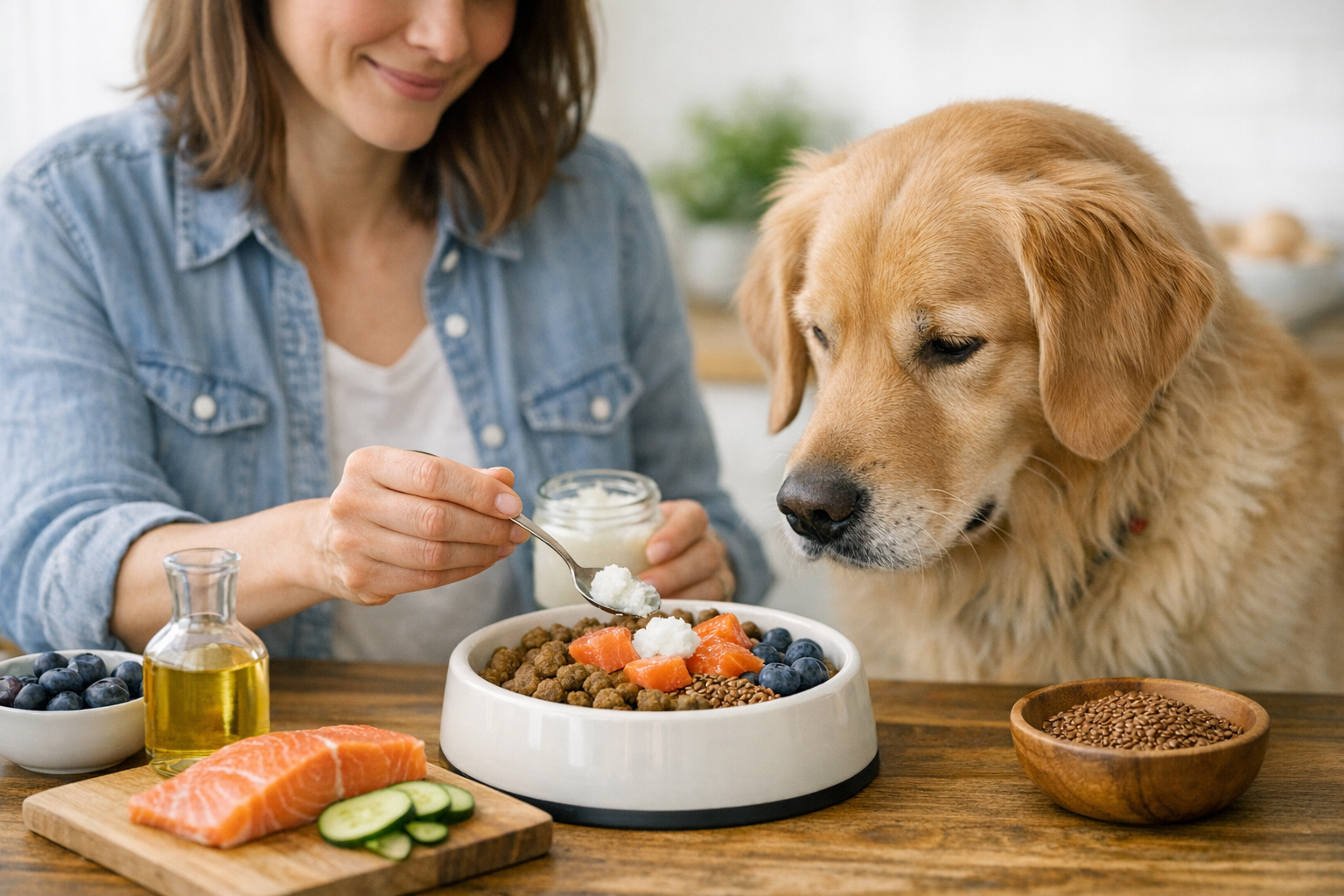
Quick Answer: Adding healthy fats like salmon oil or fresh eggs to your dog's meal can significantly improve dry skin. These additives provide essential Omega-3 fatty acids and biotin that support the skin barrier and reduce inflammation.
The Role of the Skin Barrier
To understand what to add to the bowl, it helps to know why the skin gets dry in the first place. The skin is the largest organ in your dog's body. It acts as a primary barrier against the environment. When this barrier is healthy, it traps moisture inside and keeps irritants out. When it is weakened, moisture escapes. This leads to the flakiness and itching we see on the surface.
Nutrition is the foundation of a strong skin barrier. If a dog does not get enough specific fatty acids or vitamins, their body will prioritize internal organs over the skin. This often results in a coat that feels brittle or dusty. Environmental factors like dry winter air or over-bathing also play a role. However, internal support is usually the most effective way to see long-term changes. For a deeper dive into meal planning, start with our dog food category.
The Best Oils to Add to Dog Food
Oils are the most popular recommendation for canine skin health. They provide concentrated fats that help "grease the wheels" of the skin's regenerative process. Not all fats are created equal for this purpose. You are looking for specific types of polyunsaturated fats.
Fish Oils for Immediate Support
Fish oil is the gold standard for itchy dogs. It is rich in EPA and DHA. These are specific types of Omega-3 fatty acids that the canine body can use immediately. Some plant-based oils require the body to convert nutrients first. This is less efficient for many dogs.
Adding a high-quality salmon or pollock oil to the bowl can help reduce inflammation. This is particularly helpful for dogs who scratch due to seasonal allergies. Most owners notice a significant change in coat gloss within three to four weeks. A daily skin-support supplement like The Missing Link Original Superfood Dog Supplement can be a convenient option to consider.
Plant-Based Oils
If your dog has a sensitivity to fish, plant-based oils are a viable alternative. Flaxseed oil is a common choice. It contains alpha-linolenic acid. While dogs are less efficient at converting this into EPA, it still provides a boost to the skin’s lipid barrier.
Coconut oil is another frequent addition. It contains medium-chain triglycerides and lauric acid. These have mild antibacterial and antifungal properties. While it does not provide the same Omega-3 punch as fish oil, it can improve coat softness. Some owners also apply a tiny amount topically to dry elbows or cracked paw pads.
| Oil Type | Primary Benefit | Key Nutrient |
|---|---|---|
| Salmon Oil | Reduces inflammation and adds high shine | EPA & DHA (Omega-3) |
| Flaxseed Oil | Supports the moisture barrier | ALA (Omega-3) |
| Coconut Oil | Antifungal properties and soft fur | Lauric Acid |
| Olive Oil | Improves elasticity and antioxidants | Vitamin E |
Key Takeaway: Omega-3 fatty acids are the most effective nutrients for repairing the skin barrier. Fish oils provide the most bioavailable form for dogs.
Whole Food Toppers for Skin Support
You do not always need a bottle of a specific supplement to see results. Many items already in your kitchen can serve as potent skin-supporting toppers. These whole foods provide a complex profile of vitamins and minerals.
The Power of Eggs
Eggs are one of the most complete sources of nutrition you can add to a dog's bowl. They are rich in biotin. This is a B vitamin that is essential for cell growth and the metabolism of fatty acids. A deficiency in biotin often shows up as scaly skin and hair loss.
Feeding a plain, boiled, or scrambled egg once or twice a week is an easy way to provide protein. Just be sure to avoid adding salt, butter, or seasonings. These can irritate a dog's digestive system. Avoid feeding raw egg whites regularly. They contain avidin, which can actually interfere with biotin absorption over time.
Sardines and Small Fish
If you want the benefits of fish oil in a whole food form, sardines are an excellent choice. Look for sardines packed in water with no added salt. These small fish are loaded with Omega-3s. They are also generally low in mercury compared to larger fish like tuna.
Adding one or two sardines to a meal a few times a week provides a massive boost. They also contain minerals like calcium and selenium. Most dogs find the scent irresistible. This makes them a great option for picky eaters who also happen to have itchy skin.
Fresh Vegetables
Certain vegetables provide hydration and antioxidants that support skin health. Carrots and sweet potatoes are high in Vitamin A. This vitamin is crucial for skin cell repair. You can steam them and mash them into the kibble. This makes the nutrients easier for the dog to digest.
Vet Tip: Always introduce new foods gradually. Sudden changes in diet can cause stomach upset or diarrhea. Start with a small amount and wait 48 hours to see how your dog reacts. If your dog's skin issues include sores, discharge, or a strong odor, please consult your veterinarian to rule out infections.
Improving the Gut-Skin Connection
Sometimes dry skin is a reflection of what is happening in the gut. The microbiome plays a large role in immune health. A healthy gut often leads to a more robust immune response. This can reduce the severity of skin reactions to environmental allergens like dust or pollen.
Plain, unsweetened yogurt or kefir can be a great addition. These provide probiotics that help balance the digestive tract. Make sure the yogurt does not contain any artificial sweeteners. Xylitol is a common sweetener that is highly toxic to dogs. Check the label carefully for "birch sugar" or "xylitol" before serving. If you want a broader look at diet changes, see our blog post on feeding freeze-dried dog food.
The Importance of Hydration
We often think of dry skin as a lack of oil. However, it is just as often a lack of water. If a dog is mildly dehydrated, their skin will be the first place to show it. The skin loses its elasticity and becomes prone to cracking.
Moisture-Rich Additions
If your dog only eats dry kibble, they may not get much moisture from their food. Adding a splash of warm water to the bowl is the simplest fix. You can also use low-sodium bone broth. This adds flavor and extra collagen which supports skin health.
You can also use moisture-rich vegetables as snacks:
- Cucumber: High water content and very cooling.
- Zucchini: Provides fiber and hydration.
- Watermelon: A hydrating treat rich in Vitamin A (remove all seeds).
Transitioning Your Dog to New Additives
When you decide to change your dog's routine, it is tempting to add everything at once. This makes it hard to tell what is actually working. It can also overwhelm your dog's digestive system.
Step 1: Choose one ingredient. / Select one oil or one whole food to add to their routine. This allows you to monitor the specific results.
Step 2: Start with a quarter dose. / For salmon oil, this might just be a half-pump. For eggs, start with a few bites of a scrambled egg.
Step 3: Monitor for changes. / Watch for loose stools or gas over the first 48 hours. If all is well, you can gradually increase to the full amount.
Step 4: Practice patience. / It takes about 21 to 30 days for a dog's skin cells to turn over. Do not judge the success of an additive until you have used it consistently for at least a month.
Bottom line: Consistency is more important than quantity. Small, daily additions are more effective than a large dose once a week.
Environmental Factors and Grooming
While diet is the primary focus, your home environment can support your efforts. In the winter, indoor heating strips moisture from the air. Using a humidifier in the room where your dog sleeps can prevent their skin from drying out overnight.
Grooming habits also play a massive role. Over-bathing is a leading cause of dry skin. It strips away the natural oils that your dog's body works hard to produce. We recommend bathing most dogs no more than once every four weeks. When you do bathe them, use a soap-free oatmeal shampoo or a moisturizing conditioner from our dog grooming category.
Brushing is also a form of skin care. Regular brushing stimulates the sebaceous glands. These glands produce the natural oils that protect the skin. Brushing also helps distribute those oils down the hair shaft. This creates a natural shine and prevents the skin from becoming "dusty" with dead cells. For a gentle grooming option, check out our selection of Kin + Kind products.
When to Seek Veterinary Care
Food additions are excellent for mild dryness and seasonal flakes. However, some skin issues require medical intervention. If your dog is losing hair in patches, has red inflamed skin, or is scratching until they bleed, it is time for a professional opinion.
Our pet pharmacy carries a wide range of FDA-approved medications and prescription pet foods. We offer these through our partnership with Pet's Choice. For dogs with severe food allergies, a prescription hydrolyzed protein diet might be necessary. These diets are specifically formulated to avoid triggering the immune system.
Chronic skin conditions like atopy or yeast infections often need more than just a food topper. A veterinarian can perform a skin scrape to look for mites or bacteria. If your vet prescribes a specific medicated shampoo or an oral allergy medication, you can often find those through our pharmacy services. This ensures you get the exact treatment your dog needs to stop the itch.
Managing the Cost of Care
Caring for a dog with sensitive skin can add up over time. We want to make it easier for you to provide high-quality care. Our MVP Rewards programme allows you to earn points on every purchase. This includes the oils, treats, and foods you use to support your dog's skin.
If you find a specific oil or food that works wonders, consider our Autoship programme. This ensures you never run out of your dog's essentials. You also save on your first order and gain MVP Gold membership. This is a practical way to keep your dog's skin-care routine consistent without the stress of reordering every month.
Conclusion
Dealing with a dog's dry skin requires a proactive approach from the inside out. By adding healthy fats like salmon oil and whole foods like eggs or sardines, you provide the building blocks for a healthy skin barrier. Remember to increase hydration and manage the environment with tools like humidifiers and proper grooming. At BaxterBoo, we have been helping pet parents find these solutions since 2006. Whether you are browsing our warehouse in Vernon Hills or ordering online, we are here to support your dog's health journey. Start with one simple addition to the bowl today and watch your dog's coat transform over the coming weeks. For more practical care tips, read our guide to healthy dog paw pads.
Key Takeaway: Dry skin is often a nutritional or environmental issue. Combining high-quality food additives with proper grooming and hydration is the most effective path to relief.
FAQ
How long does it take for food additions to fix dry skin?
It usually takes three to four weeks to see a visible difference in your dog's coat. This is because the skin cells need time to regenerate and the new, healthier hair needs to grow in. Consistency is vital during this period to ensure the body has a steady supply of nutrients.
Can I give my dog too much oil?
Yes, adding too much oil too quickly can cause digestive upset or pancreatitis in sensitive dogs. Excessive amounts of fat can also lead to unwanted weight gain. Always follow the recommended serving size based on your dog's weight and consult your vet if you are unsure.
Is olive oil or coconut oil better for dry skin?
Olive oil is excellent for improving skin elasticity and provides Vitamin E. Coconut oil is often preferred for its mild antifungal properties and for making the coat feel soft. For the most significant reduction in itchiness, a fish-based oil like salmon oil is usually the top choice due to its high Omega-3 content.
What should I do if my dog is still scratching after diet changes?
If diet changes and additives do not stop the scratching after a month, your dog may have an underlying medical issue. This could be environmental allergies, a parasitic infection like mites, or a yeast overgrowth. You should visit your veterinarian for a diagnosis and consider checking our pharmacy for prescription treatment options.






