
 Save 15% on your 1st Autoship learn more

 Email us
 Live Chat
 FAQs
FAQs





Introduction
You are sitting on the couch with your dog when they lean in for a lick. Suddenly, you notice a smell that is far from fresh. You might also see a film of yellow buildup along their gum line. These are common signs that your dog needs a better dental routine. Many pet owners feel overwhelmed by the thought of brushing, but keeping those pearly whites clean is manageable with the right approach. At BaxterBoo, we have helped thousands of owners find the best tools to maintain their pet's oral health. This guide will explain exactly what you can use to clean your dog’s teeth at home safely. We will cover everything from enzymatic toothpastes to dental chews and prescription diets. Establishing a routine now can prevent discomfort and expensive veterinary procedures later.
Quick Answer: You should use a pet-specific toothbrush and enzymatic toothpaste designed for dogs. For dogs that resist brushing, dental wipes, water additives, and VOHC-approved dental chews are effective alternatives for reducing plaque.
The Essential Tools for Brushing
The most effective way to clean your dog’s teeth is through mechanical brushing. This process physically breaks up plaque before it can harden into tartar. To do this correctly, you need tools designed specifically for a dog's mouth.
Pet-Safe Toothpaste
You must never use human toothpaste on your dog. Most human toothpastes contain fluoride and detergents like sodium lauryl sulfate, which can upset a dog’s stomach. Many also contain xylitol, an artificial sweetener that is highly toxic to dogs. Pet-specific toothpastes are usually enzymatic. This means they contain proteins that help break down food particles and bacteria even if you cannot reach every corner of the mouth. These pastes come in flavors dogs actually enjoy, such as poultry, beef, or peanut butter. The Virbac C.E.T. Enzymatic Pet Toothpaste is one pet-specific option.
Choosing the Right Brush
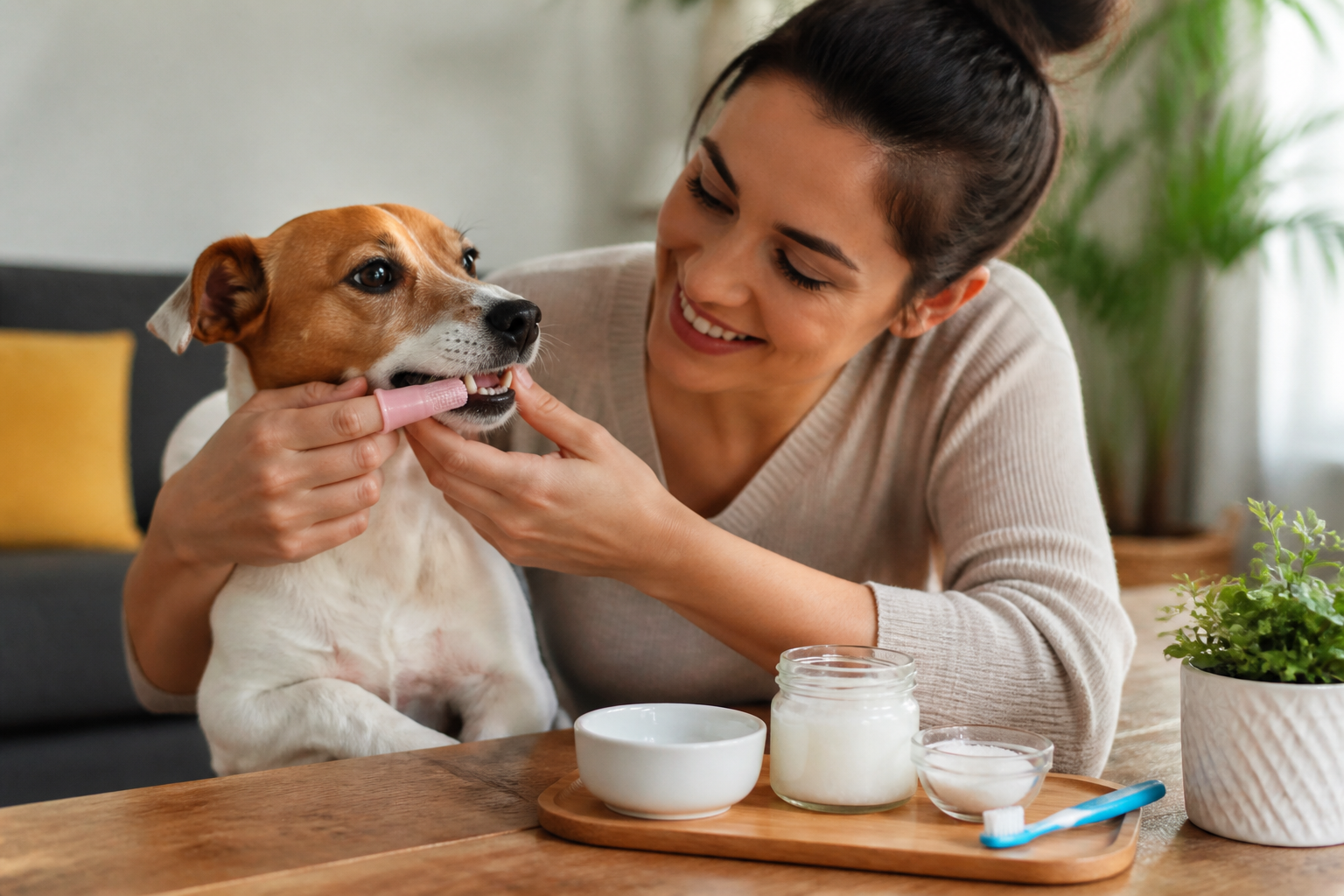
The type of brush you choose depends on your dog’s size and comfort level. A standard pet toothbrush has a long, angled handle to help you reach the back molars. These often have two different head sizes on either end. For smaller dogs or puppies, a finger brush is often a better starting point. This is a small silicone sleeve that fits over your index finger. It allows you to feel exactly where you are cleaning. This can be less intimidating for a dog that is not used to having their mouth touched. A dual-ended brush, such as the Virbac C.E.T. Dual-Ended Pet Toothbrush, offers different brush sizes for pets of different sizes.
Dental Wipes
If your dog refuses a brush, dental wipes are a great middle ground. These are textured pads pre-soaked in a cleaning solution. You wrap the wipe around your finger and rub the surfaces of the teeth. While they do not reach deep between teeth as well as bristles do, they are excellent at removing the daily film of plaque. You can compare wipes, gels, toothbrushes, and other options in our dog dental and breath care collection.
Key Takeaway: Enzymatic toothpaste and a pet-specific brush are the gold standard for home care. Always avoid human dental products as they contain ingredients that are toxic to pets.
Why You Must Avoid Certain Household Items
When looking for home remedies, you might see suggestions for using baking soda or salt. We strongly advise against this. Baking soda has a high alkaline content. If swallowed in large amounts, it can disturb the acid balance in your dog’s stomach. Salt can lead to dehydration or electrolyte imbalances.
Some people suggest using hydrogen peroxide. This is far too harsh for a dog’s sensitive gums. It can cause irritation and even chemical burns if not diluted perfectly. Stick to products formulated by veterinary professionals. These have been tested for safety and palatability. Using the wrong substance can make your dog fear the cleaning process. This makes it much harder to maintain their health over the long term. For additional guidance, read these pet dental care tips.
Step-by-Step Guide to Brushing Your Dog’s Teeth
Most dogs do not naturally enjoy having their teeth brushed. You have to teach them that this is a positive experience.
Step 1: Choose the right time. / Pick a moment when your dog is relaxed and calm. A tired dog after a long walk is often more cooperative.
Step 2: Introduce the toothpaste. / Put a small amount of pet toothpaste on your finger. Let your dog lick it off so they get used to the flavor.
Step 3: Test the mouth. / Gently lift your dog’s lip. Rub your finger along their gums and teeth for a few seconds.
Step 4: Introduce the brush. / Apply toothpaste to the brush. Let your dog lick it again.
Step 5: Start brushing the front. / Lift the lip and brush the large canine teeth in a circular motion. Focus on the gum line where plaque collects.
Step 6: Move to the back. / Gradually work your way toward the back molars. This is where the most tartar usually builds up.
Step 7: Reward your dog. / Give them plenty of verbal praise or a small dental-friendly treat afterward.
Vet Tip: If you notice your dog’s gums are bright red or bleeding during brushing, stop and call your veterinarian. This can be a sign of advanced gingivitis or periodontal disease that needs professional treatment.
Cleaning Teeth Without Brushing
We know that not every dog is a candidate for brushing. Some dogs have mouth sensitivity or behavioral hurdles. In these cases, you can use several effective alternatives.
Dental Chews and Treats
Dental chews are designed to be abrasive. As your dog chews, the treat scrapes against the tooth surface. This action helps wipe away soft plaque. Look for products that have the Veterinary Oral Health Council (VOHC) seal. This seal means the product has been scientifically proven to reduce plaque or tartar. Brands like Greenies or Cosequin offer options that fit into this category. Browse our selection of Greenies products for dental chew options.
Water Additives
Water additives are a low-effort way to support oral health. You simply add a capful of the solution to your dog’s water bowl. These additives often contain enzymes or ingredients like chlorine dioxide that kill odor-causing bacteria. They are excellent for freshening breath. However, they do not provide the mechanical scrubbing that a brush or chew offers. Think of them as a mouthwash for pets.
Dental Toys
Specific rubber toys are molded with ridges and nubs. When your dog plays and chews on these, the nubs massage the gums and clean the teeth. You can even put a bit of pet toothpaste inside some of these toys to increase the cleaning power. Ensure the toy is made of a durable material that your dog cannot swallow in pieces.
Key Takeaway: If brushing is impossible, combine dental chews, water additives, and specialized toys. A multi-pronged approach is the best way to manage plaque without a toothbrush.
For more ideas, see these dental chews for dogs.
Dietary Choices for Dental Health
What your dog eats every day has a significant impact on their teeth. While food alone cannot replace cleaning, it is a major factor in the speed of tartar buildup.
Kibble vs. Wet Food
In general, dry kibble is better for dental health than wet food. The crunchy texture of kibble provides some friction as the dog bites down. Wet food tends to stick to the teeth and get trapped under the gum line. However, standard kibble often crumbles too quickly to provide a real cleaning benefit.
Prescription Dental Diets
If your dog is prone to rapid tartar buildup, your vet might recommend a prescription dental diet. These kibbles are much larger and have a specific fibrous structure. Instead of shattering, the kibble allows the tooth to sink into it. This provides a scrubbing action from the tip of the tooth down to the gum line. We carry several of these professional formulas through our Farmina Vet Life selection.
Our pharmacy provides access to FDA-approved medications and specialized diets through our partnership with Pet's Choice. If your veterinarian prescribes a specific food like Farmina Vet Life for dental or weight management, we can help fulfill that order. This ensures your dog gets the exact nutrition they need for their chronic health concerns. Learn more about our pet pharmacy partnership.
Natural Remedies and Safe Additions
Many owners look for natural ways to freshen their dog's breath at home. While these are not primary cleaning methods, they can be helpful additions to a healthy routine.
- Fresh Parsley: Chopping a small amount of fresh parsley into your dog’s food can help neutralize odors.
- Coconut Oil: Some owners use a small amount of coconut oil on a brush. It has mild antimicrobial properties and most dogs love the taste.
- Carrots and Apples: Slices of these crunchy vegetables can provide a natural scraping action. Just be sure to remove apple seeds and cores.
Always introduce new foods slowly. Monitor your dog for any signs of stomach upset. Natural remedies should never replace a professional dental plan.
Recognizing the Signs of Dental Disease
Even with the best home care, you must stay alert for signs of trouble. Dogs are experts at hiding pain. Often, they will continue to eat even if they have a fractured tooth or an abscess.
Look for these warning signs:
- Yellow or brown crust along the gum line (tartar).
- Gums that are swollen, red, or bleeding.
- Persistent bad breath that does not go away with brushing.
- Pawing at the mouth or rubbing the face on furniture.
- Dropping food while eating or refusing hard kibble.
- Loose, broken, or missing teeth.
If you see any of these symptoms, a home cleaning is not enough. You should schedule a visit with your veterinarian for a professional assessment. They may recommend a professional cleaning under anesthesia. This is the only way to clean beneath the gum line and identify hidden problems with X-rays. Read what to do when your dog has damaged teeth.
Managing Dental Health for Senior Dogs
As dogs age, their dental needs become more complex. Senior dogs are more likely to have receding gums or underlying health issues that affect their mouth. They might also have more sensitivity. For an older dog, you may need to switch to a softer brush or a gentler dental wipe.
If your senior dog has conditions like heart or kidney issues, managing their dental health is even more critical. Bacteria from the mouth can enter the bloodstream and affect major organs. Our pharmacy carries medications for various chronic conditions that may coincide with dental aging. If your vet prescribes antibiotics for a mouth infection or pain relief for dental issues, we can assist with those prescriptions.
Conclusion
Cleaning your dog’s teeth at home is a vital part of being a pet owner. Whether you use a traditional toothbrush, dental wipes, or a combination of chews and water additives, consistency is the secret to success. Start slowly and keep the experience positive for your dog. Remember that home care is a preventive measure, not a cure for existing dental disease. Regular veterinary checkups are essential to ensure your dog’s mouth stays healthy. At BaxterBoo, we offer a wide selection of brushes, pastes, and VOHC-approved treats to support your journey. You can also save on these recurring needs by using our Autoship program, which ensures you never run out of your favorite dental supplies.
- Use pet-safe toothpaste only.
- Aim for brushing three to four times per week.
- Use dental chews as a supplement to brushing.
- Consult your vet for any signs of bleeding or pain.
Bottom line: A consistent home dental routine involving brushing and quality chews can add years of comfort to your dog’s life.
FAQ
How often should I clean my dog's teeth at home?
Ideally, you should brush your dog's teeth every day to prevent plaque from hardening into tartar. If daily brushing is not possible, aim for at least three to four times a week. Supplementing with dental chews and water additives on the off days can also help maintain oral hygiene.
Can I use human toothpaste to clean my dog's teeth?
No, you should never use human toothpaste for dogs because it often contains fluoride and xylitol. Fluoride can be toxic if swallowed, and xylitol is a sweetener that is deadly to dogs. Additionally, the foaming agents in human toothpaste can cause severe stomach upset for your pet.
My dog hates the toothbrush. What else can I use?
If your dog resists a toothbrush, try using dental wipes or a silicone finger brush. You can also use water additives that kill bacteria in their drinking bowl or VOHC-approved dental chews that scrape teeth as they eat. A combination of these tools is often effective for dogs that are mouth-sensitive.
Is baking soda safe for cleaning my dog's teeth?
While baking soda is a common household cleaner, it is not recommended for dogs. It has a very high alkaline content that can disrupt the natural pH balance of your dog's stomach if swallowed. It also has a taste that many dogs find unpleasant, which may make them fight the cleaning process even more.






