
 Save 15% on your 1st Autoship learn more

 Email us
 Live Chat
 FAQs
FAQs





Introduction
You are relaxing on the couch when your dog leans in for a friendly lick, and the smell is overwhelming. That sharp, funky scent often called dog breath is more than just a nuisance. It is usually the first sign that plaque and bacteria are moving into your dog's mouth. At BaxterBoo, we know that dental health is a major part of your dog's overall wellness, affecting everything from their comfort to their heart health.
This guide covers practical strategies for cleaning your dog's teeth at home. We will look at brushing techniques, the best types of dental chews, and when it is time to move from home care to a professional veterinary visit. Proper oral hygiene can help your dog live a longer, more comfortable life. By following a consistent routine, you can prevent many common dental issues before they become painful or expensive problems.
The Reality of Canine Dental Disease
Most dogs show some signs of dental disease by the time they are three years old. This starts as plaque, which is a sticky film of bacteria that forms on the teeth after eating. If it is not removed within 48 hours, it hardens into tartar. Tartar is a brown or yellow mineral deposit that sticks firmly to the tooth surface. You cannot brush tartar away once it forms.
When tartar builds up along the gum line, it causes inflammation known as gingivitis. This can lead to receding gums, infections, and eventually tooth loss. Because dogs are experts at hiding pain, you might not notice a problem until it is advanced. This is why a proactive approach is so important for every dog owner.
Key Takeaway: Plaque turns into tartar in less than two days, making consistent daily or every-other-day care the only way to prevent permanent buildup.
For more guidance on building a routine, read these pet dental care tips.
The Gold Standard: Brushing Your Dogs Teeth
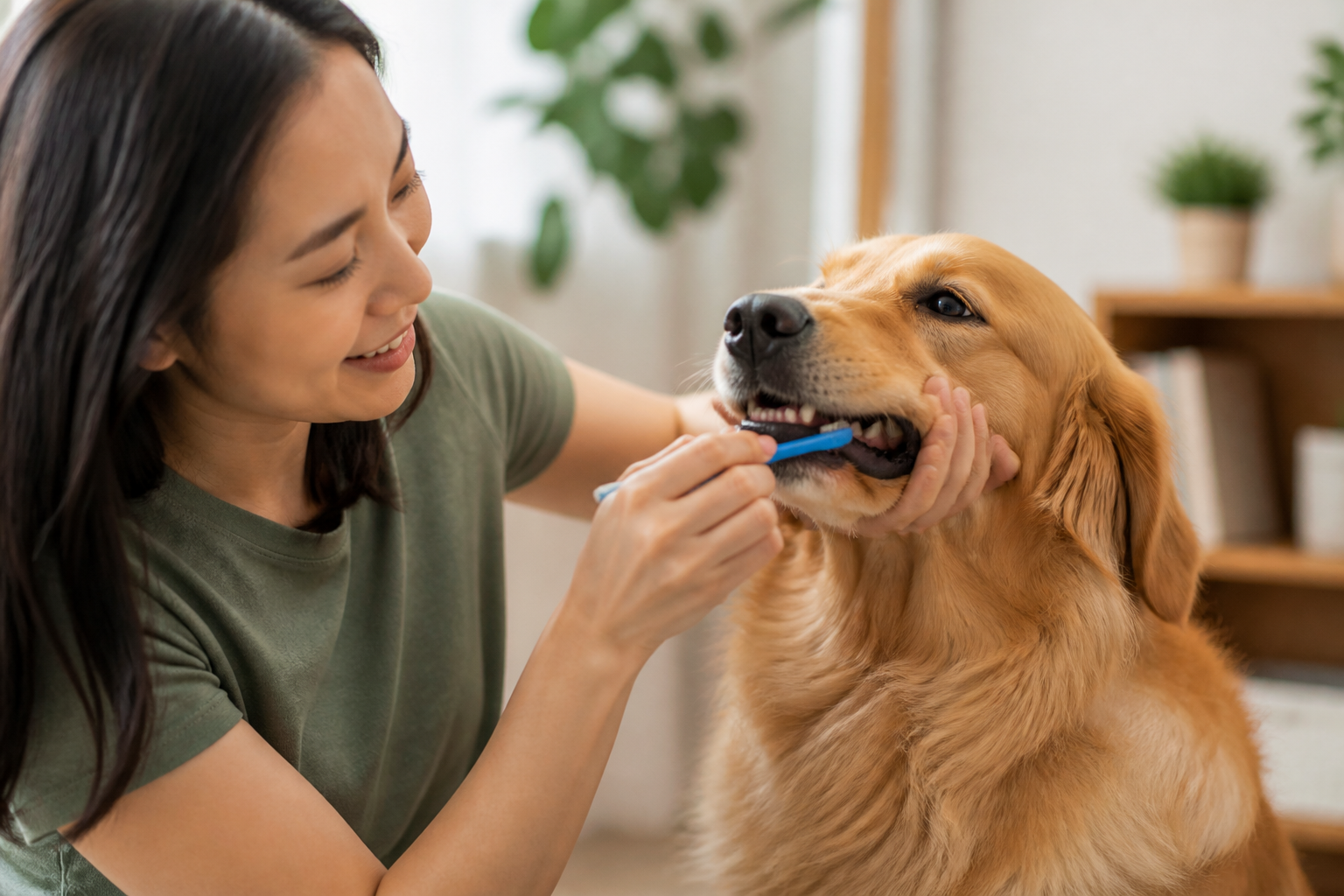
Brushing is the most effective way to clean your dog's teeth because it physically breaks up the plaque. While it might seem daunting, most dogs can learn to accept it with patience. You should never use human toothpaste for this task. Human products contain fluoride and xylitol, which are toxic to pets. Always choose a paste made specifically for dogs.
Many dog toothpastes come in flavors like poultry, beef, or peanut butter to make the experience more like a treat. To get started, you will need a soft-bristled brush or a finger brush. A finger brush is a small rubber cap with bristles that fits over your index finger, which gives you better control for beginners.
How to Start a Brushing Routine
Step 1: Let them taste the paste. / Put a small amount of dog toothpaste on your finger and let your dog lick it off to build a positive association.
Step 2: Touch the teeth and gums. / Gently lift your dog's lip and rub your finger along their gums to get them used to the sensation of being handled.
Step 3: Introduce the brush. / Apply a small amount of paste to the brush and gently move it in circular motions on the outside of the upper teeth.
Step 4: Focus on the back. / The back molars are where the most plaque accumulates, so try to reach these areas once your dog is comfortable.
Step 5: Reward the effort. / Give your dog a high-value treat or extra praise immediately after you finish to reinforce that brushing is a good thing.
Vet Tip: If your dog has red, bleeding, or swollen gums, stop brushing and consult your veterinarian. These are signs of active gum disease that can make brushing painful and might require medical treatment before you start a home routine.
You can find additional toothbrushes, rinses, and oral-care products in our dog dental care collection.
Dental Chews and Treats
For many owners, brushing every day is a challenge. Dental chews are a popular alternative that help bridge the gap. These treats are designed with specific textures that scrape the teeth as the dog chews. This mechanical action helps rub away plaque before it hardens.
When you choose a dental chew, look for products with the Veterinary Oral Health Council (VOHC) seal. This seal means the product has been tested and proven to reduce plaque or tartar by a significant margin. We carry brands like Greenies dental chews and our selection of Redbarn products that offer various textures to satisfy different chewing styles.
It is important to match the size of the chew to your dog. A chew that is too small can be swallowed whole, which poses a choking risk and provides no dental benefit. Conversely, a chew that is too hard can actually fracture a tooth. If you can't indent the chew with your thumbnail, it might be too hard for your dog's enamel.
Bottom line: Dental chews are a helpful supplement to brushing, but they should be used in moderation to avoid adding too many calories to your dog's diet.
For more product ideas, explore these dental chews for dogs.
Using Dental Toys for Mechanical Cleaning
Chew toys are another way to encourage your dog to clean their own teeth through play. Toys made of durable rubber with ridges or nubs are particularly effective. Brands like Kong design toys specifically to massage the gums and scrape the teeth while your dog tries to get a treat out from the center.
Rope toys can also act like a form of doggy dental floss. As the dog bites down on the fibers, the rope slides between the teeth to help remove debris. However, always supervise your dog with rope toys. If they start to shred the rope, they could swallow the strings, which can cause serious digestive blockages.
You can browse our dog toys category for rubber, rope, and chew options.
Choosing the Right Dental Toy
- Look for rubber toys with deep grooves that can reach the gum line.
- Avoid toys made of hard plastic, nylon, or real animal bones which can crack teeth.
- Rotate toys to keep your dog interested and chewing regularly.
- Clean toys frequently to remove saliva and bacteria buildup.
Water Additives and Oral Sprays
If your dog is very resistant to having their mouth handled, water additives and dental sprays can offer some support. Water additives are liquids you pour into your dog's drinking bowl. They usually contain enzymes or ingredients that help kill the bacteria responsible for plaque and bad breath.
Dental sprays work similarly but are applied directly to the teeth and gums. These are often easier to use than a brush because you only need to lift the lip and spray. While these products are not as effective as physical brushing, they are a great way to maintain a cleaner mouth environment between more thorough cleanings.
Our pharmacy provides access to a variety of professional-grade dental rinses and additives. Through our partnership with Pet's Choice, we offer FDA-approved options for dogs with chronic oral health needs. These can be especially helpful for senior dogs or breeds prone to dental issues, such as small dogs with crowded teeth.
Explore our pet pharmacy for oral-care products and other pet health supplies.
The Role of Diet in Dental Health
What your dog eats can impact how much plaque builds up on their teeth. There is a common belief that all dry kibble cleans teeth, but this is not always true. Most kibble is small and brittle, so it shatters as soon as a dog bites it. This provides very little cleaning action.
However, specific dental diets are formulated differently. The kibble in these foods is usually larger and has a fiber structure that does not shatter. Instead, the tooth sinks into the kibble, allowing the fibers to scrub the tooth surface. We carry premium brands like Royal Canin and Farmina Vet Life that offer specialized formulas to support oral health.
Vet Tip: Some prescription dental diets are specifically designed to manage advanced tartar and gum health. If your dog has a history of dental problems, ask your vet if a prescription diet from our pharmacy is a good fit for their long-term care plan.
For regularly purchased food and dental supplies, our Autoship programme can help make reordering easier.
Professional Veterinary Cleanings
Even with the best home care, most dogs will eventually need a professional dental cleaning. Just like humans go to the dentist to get tartar removed, dogs need a veterinarian to perform a deep clean under the gum line. This procedure is done under general anesthesia to ensure the vet can safely examine every tooth and use ultrasonic scalers without stressing the dog.
A professional cleaning allows the vet to take X-rays of the jaw. This is vital because many dental problems, such as abscesses or bone loss, happen below the surface where you cannot see them. If you notice your dog is only chewing on one side of their mouth or dropping food, they might have a painful tooth that needs professional attention.
Key Takeaway: Home care is about prevention, while professional cleanings are about treatment. You need both to keep your dog healthy.
When to Contact Your Veterinarian
It is important to monitor your dog's mouth regularly for signs of trouble. While some bad breath is normal, a sudden change can indicate an infection. You should also watch for changes in behavior that suggest mouth pain.
- Excessive drooling or pawing at the face.
- Bleeding from the mouth or blood on chew toys.
- Loose or missing teeth.
- Lumps or bumps on the gums or under the tongue.
- Reluctance to eat hard food or crunchy treats.
If you see these signs, a vet visit is the next step. They can diagnose the issue and determine if your dog needs medication or a surgical cleaning. Our pharmacy carries a range of medications for managing oral infections and pain, which your vet can prescribe after an exam.
For more warning signs, read how to recognize hidden dental problems in dogs.
Quick Answer: To clean your dog's teeth effectively, use a combination of daily brushing with pet-safe toothpaste, VOHC-approved dental chews, and specialized dental toys. For the best results, supplement these at-home methods with professional veterinary cleanings to address tartar below the gum line.
Natural Solutions and At-Home Tips
Some owners prefer using natural items to help with dental hygiene. Raw vegetables like carrots or apple slices can provide a crunch that helps scrape teeth. These are low-calorie options that many dogs enjoy. However, they should not be the only method you use, as they do not provide the same mechanical cleaning as a dedicated dental chew.
Another tip is to avoid giving your dog "people food" that is high in sugar or soft starches. These foods stick to the teeth and feed the bacteria that cause plaque. Stick to high-quality dog food and treats designed for canine health.
Consistency is the Key to Success
The most important part of any dental routine is consistency. Cleaning your dog's teeth once a month will not prevent tartar. It is better to do a quick, two-minute brushing session three times a week than a deep clean once every few months.
Try to link dental care to another habit you already have. For example, you could give your dog their dental chew every day after you finish your own dinner. Or, keep the dog toothbrush next to your own so you remember to use it before bed. Small, regular steps will save you from large vet bills and keep your dog's smile bright.
At BaxterBoo, we have been helping pet owners find the right gear since 2006. Our team carefully selects every dental product we carry to ensure it meets our standards for safety and effectiveness. Whether you need a starter kit for a new puppy or specialized food for a senior dog, we have the tools to help you succeed.
Bottom line: A healthy mouth leads to a healthy dog, and a simple daily routine is the best way to ensure your pet stays happy and pain-free.
FAQ
How often do I really need to brush my dog's teeth?
Ideally, you should brush your dog's teeth every day to prevent plaque from hardening into tartar. If daily brushing is not possible, aim for at least three times a week to maintain a basic level of oral hygiene. Supplementing with dental chews on the days you do not brush can also help keep their mouth cleaner.
Can I use baking soda to clean my dog's teeth?
It is best to avoid using baking soda because it has a high alkaline content and can upset your dog's stomach if swallowed. It also lacks the flavors that make pet-specific toothpaste appealing to dogs. Stick to toothpaste formulated for dogs, as these are designed to be swallowed safely and come in flavors dogs enjoy.
Are bones safe for cleaning a dog's teeth?
Natural bones are a controversial topic in pet care because they can be very hard on teeth. While chewing on a raw bone can scrape away plaque, it also carries a risk of fractured teeth or splintering, which can cause internal damage. Many veterinarians recommend using high-quality synthetic dental chews or rubber toys instead of real bones to avoid these risks.
Why does my dog still have bad breath after I brush their teeth?
If your dog's breath remains foul after cleaning, there may be an underlying issue like a deep infection, gum disease, or even a systemic health problem like kidney or liver issues. Persistent bad breath is a sign that you should visit your veterinarian for a thorough exam. They can check for hidden tartar or other medical conditions that home cleaning cannot address.






