
 Save 15% on your 1st Autoship learn more

 Email us
 Live Chat
 FAQs
FAQs





Introduction
You lean in for a happy morning nuzzle from your dog only to be met with a cloud of breath that could peel paint. Most pet owners have been there. While we love our dogs, the "dog breath" stereotype is often a sign of plaque and tartar buildup rather than just a natural scent. Keeping those pearly whites clean is about more than just a fresh smell. It is a vital part of their overall health.
At BaxterBoo, we see thousands of pet parents looking for ways to manage oral hygiene without a daily struggle. There is no single magic bullet for dental care. Instead, a good routine usually involves a combination of tools, treats, and professional guidance. This post covers the best options for cleaning your dog's teeth at home. We will look at everything from enzymatic toothpastes to crunchy snacks and water additives. Our goal is to help you build a dental routine that fits your lifestyle and keeps your dog healthy.
The Gold Standard: Brushing with Enzymatic Toothpaste
Brushing remains the most effective way to remove plaque before it hardens into tartar. Plaque is a sticky film of bacteria that forms on the teeth after eating. If it is not brushed away, it mineralizes into tartar within 48 to 72 hours. Once tartar forms, you cannot brush it off at home. Only a professional cleaning by a veterinarian can remove it.
You must never use human toothpaste for your dog. Our toothpaste contains foaming agents and fluoride that can upset a dog's stomach. Many human brands also use xylitol as a sweetener. Xylitol is extremely toxic to dogs and can be fatal even in small amounts. Dog-specific toothpastes are enzymatic. This means they use proteins to break down food particles and bacteria even if you do not get a perfect scrub. For a pet-safe option, consider Vets Preferred Enzymatic Dog Toothpaste - Peanut Butter.
Quick Answer: You can give your dog enzymatic toothpaste, dental chews with the VOHC seal, and water additives to help clean their teeth. Brushing is the most effective method, but a combination of mechanical scraping from toys and chemical cleaning from additives works best.
Choosing the Right Tools
The type of brush you use depends on your dog's comfort level. Standard dog toothbrushes have long handles and angled heads to reach the back molars. If your dog is nervous, a finger brush might be better. These silicone caps fit over your pointer finger and allow you to feel exactly where you are brushing.
Step 1: Let your dog lick a small amount of flavored toothpaste off your finger. Most dog pastes come in poultry, beef, or peanut butter flavors to make them more appealing.
Step 2: Gently lift the lip and rub the toothpaste onto the outer surfaces of the teeth using your finger or a brush.
Step 3: Focus on the gum line. This is where bacteria hide and cause inflammation.
Step 4: Reward your dog with praise or a dental-friendly treat to create a positive association.
Vet Tip: Start dental training as early as possible. Puppies are more accepting of having their mouths handled. If you have an adult dog, go slow. Even brushing two or three times a week provides significant health benefits compared to not brushing at all.
For additional guidance on introducing dental care, read The Top 10 Pet Dental Care Tips.
Dental Chews and Their Role in Oral Health
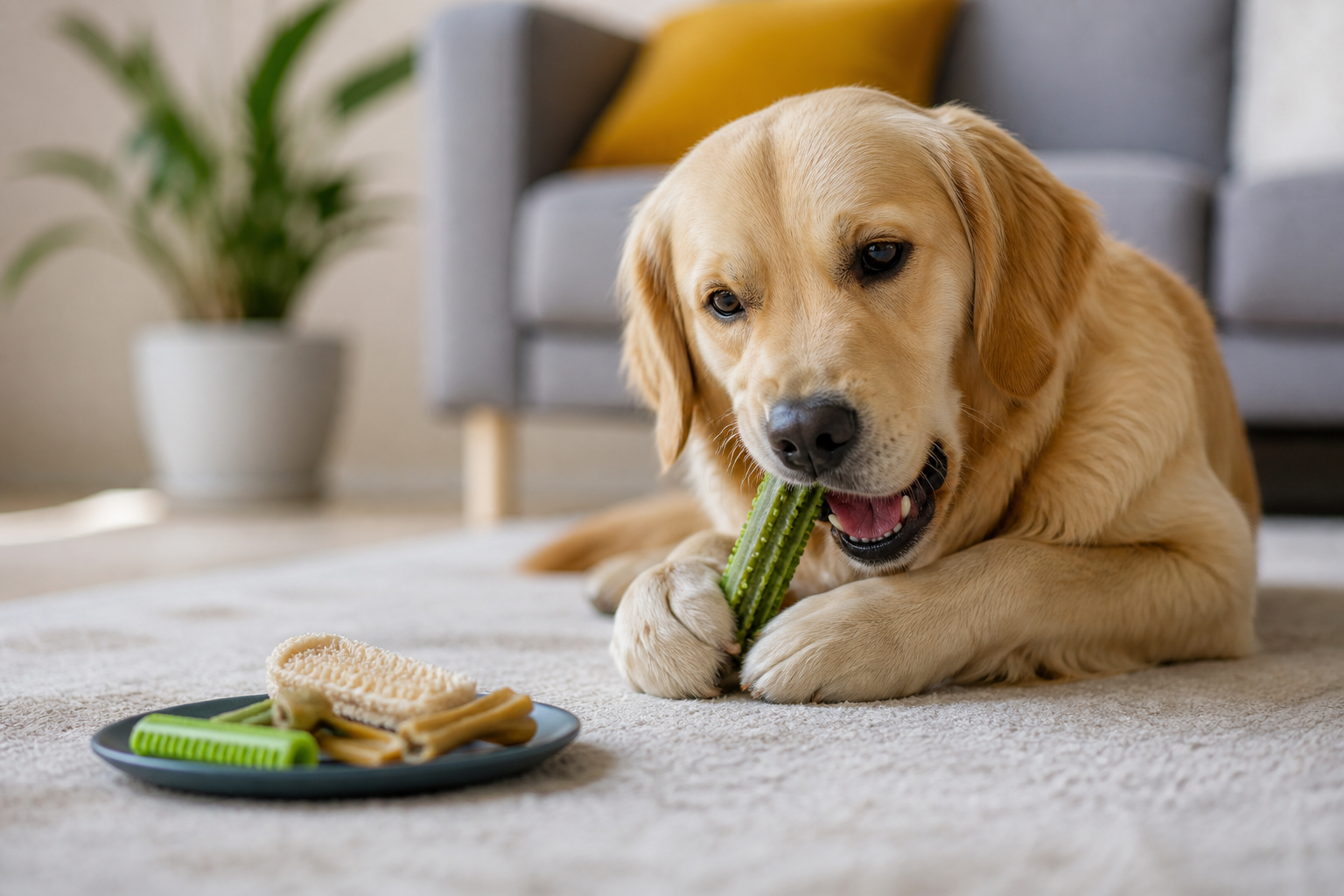
Not every dog will sit still for a toothbrush. This is where dental chews become a valuable tool. These treats are designed with specific textures that scrape the surface of the teeth as the dog chews. The mechanical action helps rub away soft plaque. You can explore our dog dental treats for options suited to different chewing preferences.
When shopping for chews, look for the Veterinary Oral Health Council (VOHC) seal. This seal means the product has been independently tested and proven to reduce plaque or tartar by a certain percentage. Brands like Greenies are well-known for this. The unique shape of these chews allows the dog's teeth to sink into the treat, providing a cleaning effect all the way down to the gum line. You can browse our selection of Greenies products when comparing dental treats.
Texture and Safety
The density of the chew matters. A good dental chew should be firm but have some "give" to it. If a chew is as hard as a rock, it puts the dog at risk for tooth fractures. We recommend the "fingernail test." If you can't make a small dent in the chew with your thumbnail, it might be too hard for your dog's enamel.
- Avoid: Real bones, hooves, and antlers. These are common culprits for broken carnassial teeth.
- Choose: Compressed vegetable-based chews or high-quality rawhide alternatives.
- Supervise: Always watch your dog while they enjoy a chew to ensure they do not swallow large chunks.
For more ideas between brushings, see 10 Best Dental Chews for Dogs.
Dietary Options and Prescription Dental Foods
What your dog eats every day impacts their oral environment. There is a common myth that all dry kibble cleans teeth. While kibble is better than soft canned food for some dogs, standard kibble often shatters too quickly to provide much cleaning. However, specific dental diets are formulated differently.
Prescription dental foods, such as Hill's Prescription Diet t/d, use a specialized fiber matrix. Instead of crumbling, the kibble holds together as the tooth penetrates it. This acts like a squeegee for the tooth surface. Because these are specialized diets, they often require a veterinary consultation to ensure they meet your dog's nutritional needs.
Our pet pharmacy at BaxterBoo offers a wide range of prescription pet foods and medications through our partnership with Pet's Choice. If your veterinarian recommends a specific dental diet for a health condition like advanced periodontal disease, you can easily manage those orders through us. This ensures your dog gets the exact formulation needed to manage their oral health.
Using Probiotics for Oral Health
Recent research suggests that the "good" bacteria in a dog's mouth can help fight the "bad" bacteria that cause gum disease. Some pet owners use supplements like yogurt or kefir to introduce beneficial bacteria. While this can support gut health, specific oral probiotics are often more effective. These are usually powders or treats designed to colonize the mouth and reduce inflammation.
Key Takeaway: Dental health is a multi-step process. Brushing handles the mechanical cleaning, while specialized diets and probiotics address the chemical and biological environment of the mouth.
Water Additives and Dental Gels
If you have a busy schedule or a very stubborn dog, water additives and dental gels are a great "hands-off" option. Water additives are clear, tasteless liquids that you mix into your dog's water bowl. They contain enzymes and ingredients like zinc gluconate that help kill bacteria and prevent plaque from hardening into tartar. Our dog dental health collection includes water additives and other oral-care options.
Dental gels work similarly but are applied directly to the gums. You do not necessarily need to brush them in. You simply dab the gel on the outside of the teeth, and the dog's tongue will spread it around as they lick. This is an excellent solution for senior dogs who may have sensitive gums or lost teeth. One example is OxyFresh Pet Dental Gel Toothpaste.
Common Ingredients in Additives
- Chlorhexidine: A powerful antiseptic often found in veterinary-grade rinses.
- Green Tea Extract: Helps fight the bacteria that cause bad breath.
- Citric Acid: Can help break down the bonds that hold plaque to the enamel.
Natural Chews and Vegetables
Many owners prefer to give their dogs natural items to help with teeth cleaning. Crunchy vegetables like raw carrots or apple slices (without seeds) can provide a mild scrubbing effect. They are low in calories and high in fiber, making them a healthy snack choice.
However, vegetables should not be the only thing you rely on for dental care. They do not contain the enzymes necessary to break down plaque, and they do not reach the back of the mouth where most dental issues occur. They are a great supplement to a routine, but they cannot replace a toothbrush or a VOHC-approved chew.
The Problem with Real Bones
It is a long-standing tradition to give dogs bones to clean their teeth. While raw, meaty bones can scrape away plaque, they come with significant risks. Cooked bones are a absolute no-go because they splinter and can cause internal perforations. Raw bones can carry bacteria or cause painful tooth fractures. If you choose to give your dog bones, always consult your vet first and supervise the chewing session closely.
Vet Tip: If you notice your dog is chewing on only one side of their mouth or dropping food, they may have a painful tooth. Home cleaning cannot fix an existing infection or a cracked tooth. See your vet immediately if you notice these signs or see bleeding in the water bowl.
Recognizing the Signs of Dental Disease
You need to know what you are fighting against. Simply looking at your dog's teeth once a week can help you spot trouble before it becomes a major medical expense. Healthy gums should be a light pink color. Healthy teeth should be white or off-white without significant yellow or brown buildup near the gum line.
Signs your dog needs a professional dental checkup:
- Persistent bad breath: A "sweet" or "rotten" smell that does not go away.
- Red or swollen gums: This is a sign of gingivitis.
- Receding gum line: When the root of the tooth begins to show.
- Difficulty eating: Pawing at the mouth or avoiding dry food.
- Loose teeth: Adult dogs should not lose teeth naturally.
Maintaining a clean mouth is not just about the teeth. It is about the whole body. Bacteria from the mouth can enter the bloodstream through inflamed gums. From there, it can travel to the heart, liver, and kidneys, causing chronic organ damage over time. This is why we take dental care so seriously at BaxterBoo.
For a closer look at warning signs, read Is Your Dog Hiding Bad Teeth? Warning Signs and What to Do.
Building a Sustainable Dental Routine
The best routine is the one you can actually stick to. You do not have to do everything on this list every day. A balanced approach often works best for most families. For example, you might aim to brush three times a week, give a dental chew on the other days, and use a water additive daily.
Recommended Weekly Schedule
- Monday/Wednesday/Friday: Brush with enzymatic toothpaste.
- Tuesday/Thursday/Saturday: Give a VOHC-approved dental chew like Greenies.
- Sunday: Check the mouth for redness or new buildup.
- Daily: Use a water additive in their main water bowl.
Bottom line: Consistency is more important than perfection when it comes to cleaning your dog's teeth.
If you regularly reorder dental supplies, our Autoship programme can help keep your routine on schedule.
Summary of Dental Cleaning Options
| Method | Effort Level | Effectiveness | Best For |
|---|---|---|---|
| Brushing | High | Excellent | Preventing plaque and gingivitis. |
| Dental Chews | Low | Good | Mechanical scraping and rewards. |
| Water Additives | Very Low | Moderate | Easy maintenance for busy owners. |
| Dental Gels | Moderate | Good | Dogs that dislike the feeling of a brush. |
| Prescription Diet | Low | High | Dogs with chronic dental issues. |
Professional Care and the BaxterBoo Pharmacy
Even with the best home care, most dogs will eventually need a professional cleaning. A veterinarian can perform a thorough scaling and polishing under anesthesia. This allows them to clean under the gum line where your toothbrush cannot reach. They can also take X-rays to check for abscesses or bone loss that are invisible to the naked eye.
After a professional cleaning, your dog might be prescribed oral antibiotics or pain relief. This is where we can help. Our pharmacy, through our Pet's Choice partnership, carries FDA-approved medications to support your dog’s recovery. We also stock a variety of prescription dental diets designed to keep those teeth clean once the vet has given them a fresh start.
If you are managing a senior dog or a breed prone to dental issues, like Chihuahuas or Greyhounds, staying on top of these needs is essential. Using our Autoship program for your dental treats and additives ensures you never run out, which is the easiest way to maintain a consistent routine. Plus, Autoship customers get an MVP Gold membership, providing even more value on the supplies you use every month. Explore the MVP Rewards programme for current membership details.
Key Takeaway: Home care slows down the progression of dental disease, but professional veterinary intervention is the only way to treat established issues.
Helping Your Dog Live a Healthier Life
Taking care of your dog's teeth is an investment in their longevity. It prevents pain, saves money on emergency extractions, and keeps their breath fresh for those afternoon snuggles. Whether you choose a high-tech water additive or stick to the classic toothbrush, the effort you put in today will pay off for years to come.
At BaxterBoo, we have been helping pet parents find the right gear and wellness supplies since 2006. We handpick the brands we carry because we want the best for your pets, just like we want the best for our own. From toys that scrub to supplements that support healthy gums, we have the tools you need to succeed.
Next steps for a healthy smile:
- Schedule a dental exam with your veterinarian.
- Pick up a dog-safe enzymatic toothpaste and a soft brush.
- Look for the VOHC seal on your dog's favorite treats.
- Consider a water additive for easy daily maintenance.
Bottom line: A combination of brushing, quality chews, and regular vet visits is the best way to ensure your dog stays healthy and happy.
FAQ
Can I use human toothpaste to clean my dog's teeth?
No, you should never use human toothpaste for dogs. Human brands often contain fluoride and foaming agents like SLS that can cause stomach upset. More importantly, many contain xylitol, which is a sweetener that is highly toxic to dogs and can be life-threatening.
How often should I brush my dog's teeth at home?
Ideally, you should brush your dog's teeth every day to remove plaque before it hardens into tartar. If daily brushing is not possible, aiming for three times a week still provides significant benefits. Consistency is key to preventing long-term dental disease and inflammation.
Are dental chews enough to keep my dog's teeth clean?
While dental chews are a great tool, they are usually not enough on their own. They primarily clean the chewing surfaces and the tips of the teeth. They often miss the gum line where most bacteria live. Chews work best when used as a supplement to regular brushing and veterinary checkups.
Do crunchy vegetables like carrots actually clean teeth?
Crunchy vegetables provide a very mild mechanical scrubbing action, but they are not a replacement for dental products. They lack the enzymes found in toothpaste and the specialized textures of dental chews. They are a healthy, low-calorie treat, but they should be part of a larger dental care routine.






