
 Save 15% on your 1st Autoship learn more

 Email us
 Live Chat
 FAQs
FAQs





Introduction
You lean in for a friendly lick or a snuggle and suddenly notice it. That unmistakable, sharp scent of "dog breath" is hard to ignore. While many owners think bad breath is just a natural part of being a dog, it is actually often a sign of oral health issues. Plaque and tartar can build up quickly on a dog's teeth, leading to red gums, discomfort, and eventual tooth loss.
At BaxterBoo, we know that keeping up with a dental routine can feel like a chore, especially if your dog is not a fan of having their mouth handled. The good news is that you have a wide variety of tools and methods at your disposal. From specialized brushes to enzymatic treats and water additives, you can find a solution that fits your lifestyle. This guide covers the best supplies and techniques to keep your dog's mouth healthy and their breath fresh.
Quick Answer: You can clean a dog's teeth using a pet-specific toothbrush, enzymatic toothpaste, dental wipes, or oral rinses. For dogs that resist brushing, dental chews and textured toys like those from Kong can help remove plaque mechanically.
The Best Brushes for Canine Dental Care
The most effective way to remove plaque is through physical scrubbing. Brushing provides a mechanical action that breaks up the sticky film of bacteria before it can harden into tartar. However, you cannot just grab a spare human toothbrush from the cabinet. Human brushes are often too stiff and the wrong shape for a dog's mouth.
Handle Brushes
Most handle brushes for dogs have a dual-ended design. One side features a large brush head for the big molars in the back. The other side has a smaller, tapered head for the tiny incisors at the front. The long handle is helpful because it allows you to reach deep into the back of the mouth without putting your fingers in the "danger zone" if your dog is a bit nippy.
Finger Brushes
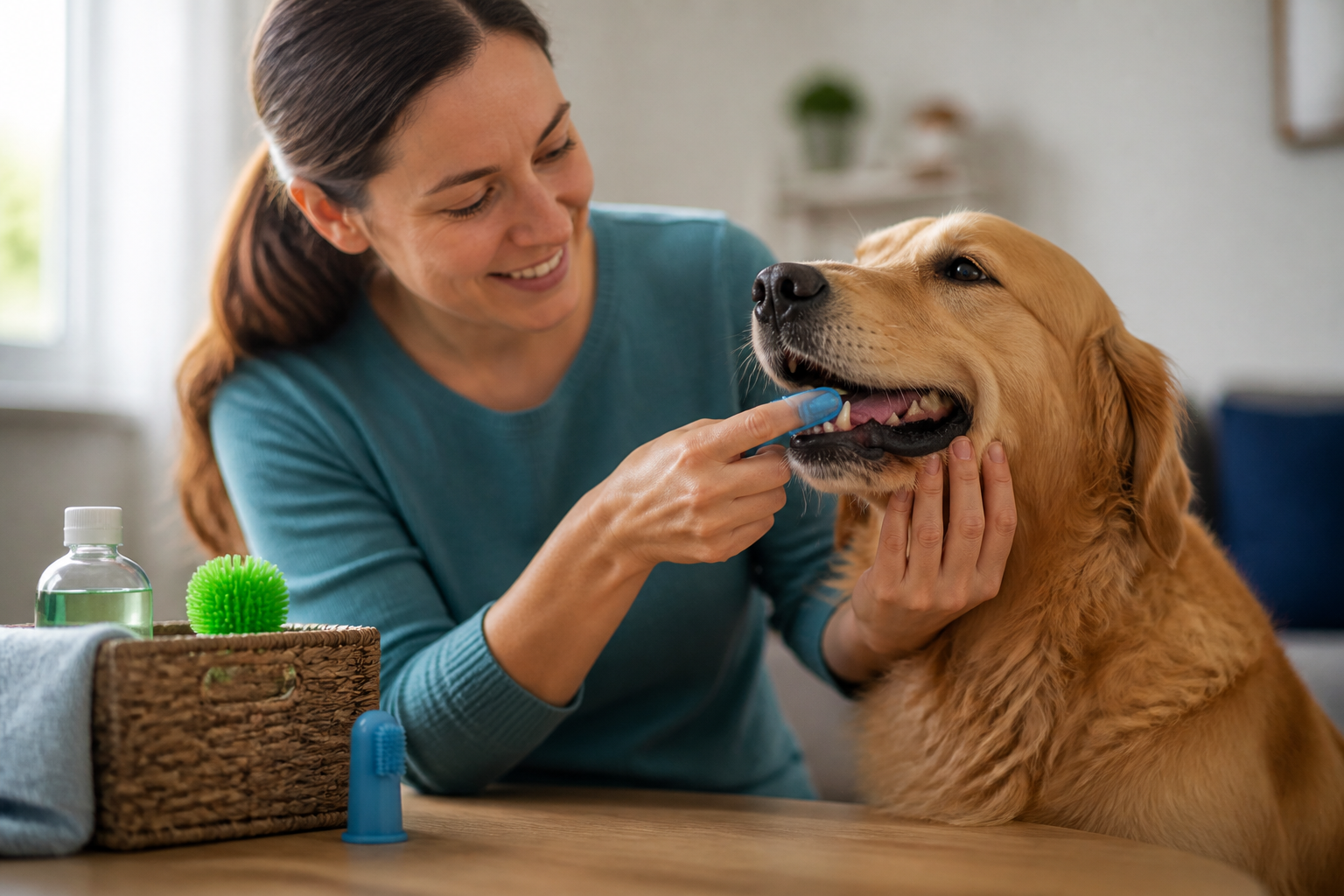
If your dog is intimidated by a long plastic stick, a finger brush is a great alternative. These are small, flexible caps made of silicone or rubber that slip right over your pointer finger. They have soft nubs or bristles on one side. Many dogs tolerate this better because it feels more like you are just massaging their gums with your hand. It also gives you more tactile control, so you can feel exactly where the teeth are.
Ultrasonic or 360-Degree Brushes
For a very thorough clean, some owners use 360-degree brushes. These have bristles circling the entire head, meaning you can clean the top, bottom, and sides of the teeth at the same time. This is excellent for dogs that do not sit still for long. You get more cleaning done in a shorter amount of time.
Key Takeaway: Choosing a brush depends on your dog's temperament and mouth size. Finger brushes offer more control for beginners, while long-handled brushes reach back molars more effectively.
Why Dog-Safe Toothpaste is Essential
It is a common mistake to think human toothpaste is fine for pets. This is actually dangerous. Human toothpaste contains ingredients like fluoride and sodium lauryl sulfate, which can upset a dog's stomach. Many human pastes also contain Xylitol, an artificial sweetener that is highly toxic to dogs.
Enzymatic Formulas
Dog-specific toothpaste is usually "enzymatic." This means it contains enzymes that help break down plaque and bacteria chemically even after you stop brushing. Unlike our toothpaste, pet versions do not foam up. This is important because dogs cannot "spit" and will swallow the paste.
Appealing Flavors
To make the experience better for your pet, these pastes come in flavors like poultry, beef, or peanut butter. When the paste tastes like a treat, the dog is much more likely to look forward to the session. We carry a variety of these flavors in our dog dental care collection to help make the process easier for both you and your pup.
Vet Tip: If your dog has very red or bleeding gums, consult your veterinarian before you start a brushing routine. Brushing over an active infection or a fractured tooth can be very painful and might require professional medical treatment first.
Dental Chews and Treats
Not every dog will sit still for a toothbrush. If you have a wiggly puppy or a mouth-shy senior, dental chews are a fantastic supplement. These items are designed to be chewed for an extended period, which creates friction against the teeth.
How They Work
High-quality dental treats, such as Greenies, are shaped with ridges and nubs that act like a squeegee against the tooth surface. As the dog bites down, the treat scrapes away soft plaque. Some treats also include ingredients that freshen breath and support gum health.
Choosing the Right Size
Size is the most important factor when picking a chew. If the treat is too small, your dog might gulp it down in one bite, which defeats the purpose of the mechanical cleaning. If it is too large, they might struggle to chew it properly. Always supervise your dog when they are eating a dental chew to ensure they are chewing it thoroughly and not trying to swallow large chunks.
For more ideas, browse our dental treats for dogs.
Using Water Additives and Oral Rinses
If you need a "hands-off" approach, water additives are a simple option. These are liquid solutions that you pour directly into your dog's water bowl. They contain ingredients that help kill bacteria in the mouth and prevent plaque from sticking to the teeth.
Benefits of Additives
Additives are ideal for dogs that refuse to let you touch their mouths. They work every time your dog takes a drink. While they are not as effective as brushing for removing existing buildup, they are excellent for maintenance and breath freshening.
Oral Rinses
Rinses are slightly more direct than water additives. You squirt the liquid inside the dog's cheek. The dog then naturally licks, which spreads the solution across the teeth and gums. These are often used for dogs with early-stage gum disease to reduce the bacterial load in the mouth.
Dental Wipes for Quick Cleaning
Dental wipes are essentially textured cloths pre-soaked in a cleaning solution. You wrap the wipe around your finger and rub it over the surface of the teeth. This is a middle ground between a finger brush and an oral rinse.
When to Use Wipes
Wipes are perfect for removing the daily film of slime that forms on the teeth. They are also useful for dogs that have very sensitive gums, as the cloth is much softer than a nylon bristle. However, wipes cannot reach the deep crevices between teeth or the back of the molars as well as a brush can.
For additional guidance, review these top pet dental care tips.
Bottom line: Wipes are an excellent tool for daily maintenance and for pets that are sensitive to the sensation of bristles.
The Role of Toys and Enrichment
Your dog's toy box can actually be a part of their dental hygiene routine. Certain toys are specifically designed to clean teeth while the dog plays. Rubber toys with nubs, like many Kong products, massage the gums and scrape the teeth as the dog chews.
Rope Toys
Cotton rope toys can act like dental floss. As the dog's teeth sink into the rope fibers, the material rubs against the sides of the teeth. It is important to check rope toys regularly for fraying. If your dog starts eating the strings, it is time to replace the toy.
Safe Materials
Look for toys made of durable rubber or TPE. Avoid toys that are too hard, like real bones or heavy nylon, which can actually cause tooth fractures. If you cannot indent the toy with your thumbnail, it might be too hard for your dog's teeth.
You can find more options in our dog toys category.
Dietary Choices and Prescription Foods
What your dog eats every day has a massive impact on their oral health. While some people believe all dry kibble cleans teeth, most standard kibble actually crumbles too quickly to provide much benefit.
Dental-Specific Diets
There are prescription and specialty diets designed specifically for oral health. These kibbles are usually larger and have a fibrous texture that does not shatter immediately. This forces the dog to chew, providing a scrubbing action.
BaxterBoo Pharmacy and Prescription Needs
If your veterinarian finds that your dog has significant dental issues, they may prescribe a specific dental diet. Our pet pharmacy carries FDA-approved medications and prescription pet foods through our partnership with Pet's Choice. We offer brands like Royal Canin and Farmina Vet Life that provide specialized nutrition for various health needs, including dental support. Having your prescription foods delivered through us is a convenient way to stay consistent with your dog's health plan.
How to Clean Your Dog's Teeth: A Step-by-Step Guide
Transitioning your dog to a dental routine takes time. You cannot expect them to be comfortable with a toothbrush in their mouth on the first try.
Step 1: The Flavor Test.
Put a small dab of dog-safe toothpaste on your finger and let your dog lick it off. Do this for a few days so they associate the paste with a tasty reward.
Step 2: Finger Rubbing.
Once they like the paste, start rubbing your finger along their gums and teeth while they lick. This gets them used to the sensation of someone touching their mouth.
Step 3: Introduce the Tool.
Show them the toothbrush or finger brush. Let them sniff it. Put some toothpaste on the bristles and let them lick it off the brush.
Step 4: The Actual Brush.
Gently lift the lip and brush the large canine teeth in the front using a circular motion. Keep the first few sessions very short, perhaps only thirty seconds.
Step 5: Reach the Back.
As your dog gets comfortable, move further back to the molars. Focus on the outside of the teeth, as this is where the most plaque accumulates.
Step 6: Reward and Praise.
Always end the session with a treat or a favorite game. This ensures your dog views dental time as a positive experience.
Recognizing Signs of Dental Disease
Even with the best home care, dental disease can still occur. It is important to know what to look for so you can call the vet before a minor issue becomes a major infection.
- Persistent Bad Breath: While "dog breath" is common, an exceptionally foul or rotting smell is a red flag.
- Discolored Teeth: Healthy teeth are white. Look for yellow or brown crust near the gumline.
- Swollen or Bleeding Gums: Gums should be a healthy pink. Redness or bleeding during play is not normal.
- Changes in Eating Habits: If your dog starts dropping food, chewing on only one side, or refusing dry kibble, they may be in pain.
- Pawing at the Face: This often indicates mouth pain or a stuck object between the teeth.
For more detail about warning signs, read how to recognize signs of bad teeth in dogs.
Key Takeaway: Regular home checks are just as important as cleaning. Catching plaque before it turns into tartar can save your dog from painful extractions later in life.
Comparing Dental Cleaning Tools
| Tool Type | Best For | Effort Level | Effectiveness |
|---|---|---|---|
| Handle Toothbrush | Deep cleaning molars | High | Excellent |
| Finger Brush | Puppies and small dogs | Medium | Very Good |
| Dental Wipes | Sensitive gums/maintenance | Low | Moderate |
| Dental Chews | Daily plaque control | Very Low | Good |
| Water Additives | Difficult-to-handle dogs | Minimal | Preventive |
Professional Cleanings vs. At-Home Care
Home care is vital, but it does not replace the need for professional veterinary checkups. At-home brushing mainly cleans the visible part of the tooth. A veterinarian can clean beneath the gumline, which is where the most serious bacteria hide.
During a professional cleaning, the vet will scale and polish the teeth. They can also take X-rays to see if there is any bone loss or infection deep in the roots. Most dogs will need a professional cleaning at some point in their senior years, even with diligent brushing. Using a combination of home care and regular vet visits is the best strategy for a long, healthy life.
Vet Tip: Ask your vet to show you the proper brushing technique during your next wellness visit. They can give you specific advice based on your dog's jaw shape and any crowded teeth.
Summary of Best Practices
Maintaining your dog's dental health is a lifelong commitment that pays off in the form of fewer vet bills and a happier pet. Start as early as possible to get your dog used to the process.
- Use only pet-safe enzymatic toothpaste.
- Aim for brushing at least three times a week.
- Supplement with dental chews and toys for mechanical cleaning.
- Use water additives or wipes for maintenance between brushes.
- Watch for signs of pain or infection and consult your vet regularly.
We are here to support you in this journey with all the supplies you need, from basic brushes to prescription diets through our pharmacy. Our Autoship program is a great way to ensure you never run out of dental treats or toothpaste, and you can earn rewards on every purchase through our MVP Rewards program.
FAQ
Can I use baking soda to clean my dog's teeth?
While baking soda is not immediately toxic, it is not recommended for regular use. It has a high alkaline content that can upset a dog's stomach if swallowed in large amounts. Additionally, most dogs dislike the salty taste, which can make them resist future brushing attempts. It is much better to use a flavored enzymatic toothpaste designed specifically for pets.
How often should I use dental wipes on my dog?
For the best results, you should use dental wipes daily. Plaque begins to harden into tartar within 24 to 48 hours, so wiping away the daily film of bacteria is essential. If you cannot manage every day, three times a week is the minimum recommended frequency to see a real benefit. Wipes are a great supplement to use on days when you do not have time for a full brushing session.
My dog's gums bleed when I brush. Should I stop?
Minor bleeding can happen if your dog has early-stage gingivitis, much like it does in humans. However, if the bleeding is heavy or the gums look very swollen and dark red, you should stop and consult your veterinarian. This could be a sign of advanced periodontal disease that requires professional treatment rather than just at-home brushing. A vet can determine if it is safe to continue your routine or if a medical intervention is needed first.
Do dental chews actually work?
Dental chews are effective at reducing plaque and tartar on the chewing surfaces of the teeth. They work through mechanical abrasion, essentially scrubbing the teeth as the dog gnaws. However, they are less effective at cleaning the front teeth (incisors) or the gumline. For the best oral health, use dental chews as a helpful addition to regular brushing rather than a total replacement.






