
 Save 15% on your 1st Autoship learn more

 Email us
 Live Chat
 FAQs
FAQs





Introduction
You lean in for a friendly morning nuzzle only to be met with a cloud of breath that smells like a damp basement. Most dog owners have been there. While we often focus on shiny coats or sturdy leashes, oral hygiene is a part of pet care that frequently slips through the cracks until the smell becomes impossible to ignore. At BaxterBoo, we talk to owners every day who are surprised to learn that dental disease is one of the most common health issues in dogs. This guide covers the specific tools you need to scrub away plaque and the safe alternatives available if your dog treats a toothbrush like an enemy. We will walk you through the safest toothpastes, the most effective brush styles, and how our pet pharmacy can support your dog's long term dental health.
The Right Toothbrush for the Job
The most effective tool for cleaning a dog's teeth is a physical brush. While you might be tempted to grab an old human toothbrush from the cabinet, pet-specific designs exist for a reason. Dog mouths are shaped differently than ours. Their gums are also quite sensitive to the stiff bristles found on many adult human brushes.
Traditional Pet Toothbrushes
A standard dog toothbrush usually features a long handle with a slight angle. This angle is important because it allows you to reach the back molars without forcing your dog to open their mouth uncomfortably wide. Many of these brushes are double-ended. They have a large head for the big flat surfaces of the canines and a smaller head for the tiny incisors at the front.
Finger Brushes
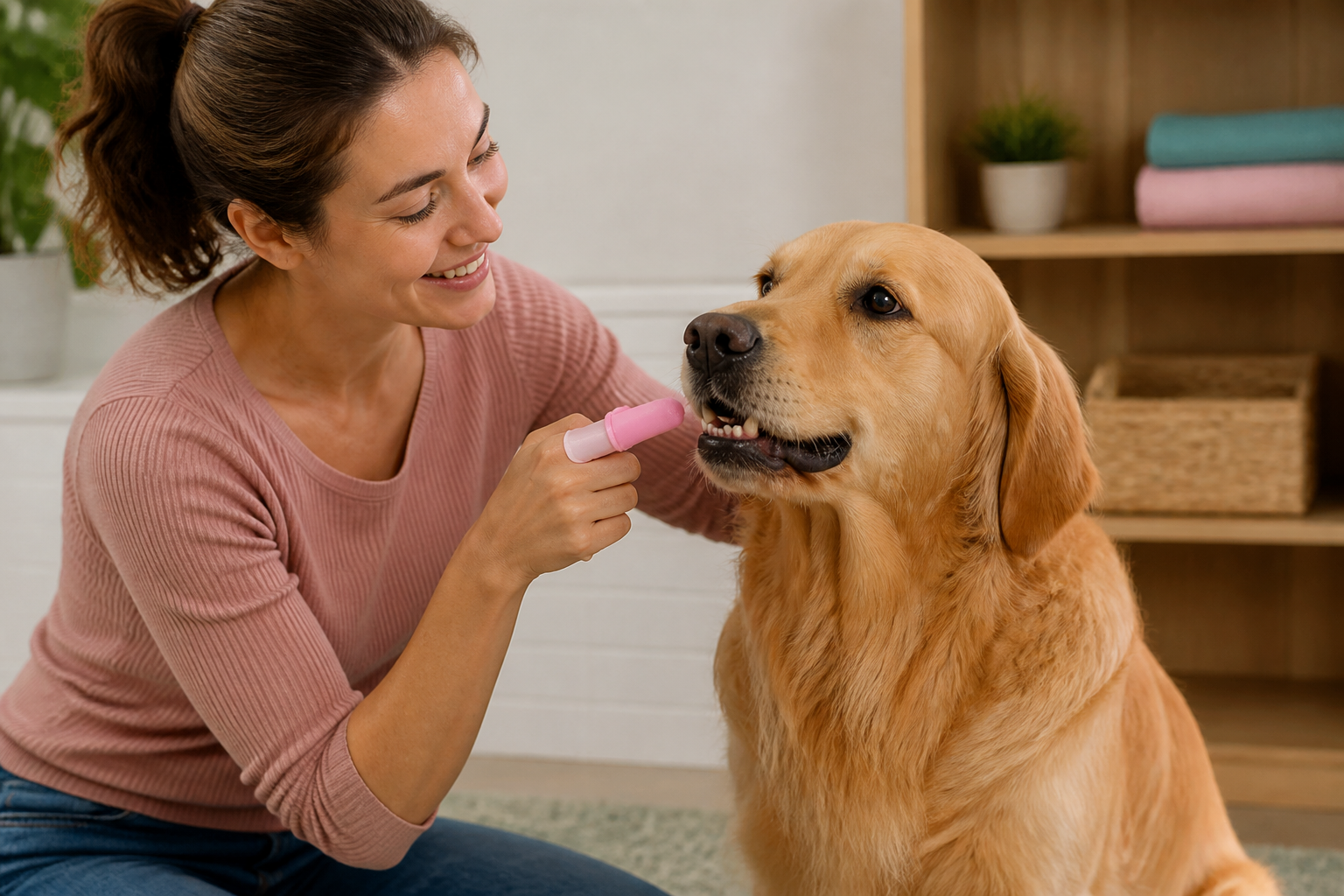
If your dog is nervous about long plastic objects entering their mouth, a finger brush is a great starting point. These are small silicone or rubber caps that slip over your pointer finger. They have tiny, soft nubs on one side. Using a finger brush gives you more tactile control. You can feel exactly where the teeth are and how much pressure you are applying. They are especially helpful for small breeds like Chihuahuas or Yorkies where space is limited.
Specialized Bristles and Textures
Some brushes use 360-degree bristles. These look like a tiny round bottle brush. They are designed to clean the top, bottom, and sides of the teeth simultaneously. This can be a massive time saver if your dog only grants you thirty seconds of cooperation. For senior dogs with receding gums, look for extra-soft bristles to avoid causing irritation or bleeding.
Quick Answer: Use a soft-bristled pet toothbrush or a silicone finger brush along with enzymatic dog-safe toothpaste. Never use human products, as they contain ingredients like xylitol or fluoride that are toxic to dogs.
Choosing a Safe Dog Toothpaste
The toothpaste you choose is just as important as the brush. You must never use human toothpaste on a dog. Our toothpaste contains foaming agents like sodium lauryl sulfate and sweeteners like xylitol. While we spit these out, dogs swallow everything. Xylitol is highly toxic to dogs and can cause life-threatening drops in blood sugar or liver failure.
For pet-safe formulas, browse our dog dental care collection.
The Power of Enzymes
Most high-quality dog toothpastes are enzymatic. This means they contain proteins that help break down plaque and bacteria chemically. Even if you cannot scrub every single surface perfectly, the enzymes continue to work after you finish brushing. This is a huge advantage over human toothpaste which relies almost entirely on physical abrasion.
Flavor Profiles That Work
Since you cannot explain the benefits of minty freshness to a dog, manufacturers focus on flavors dogs actually enjoy. Common options include:
- Poultry or chicken
- Beef
- Peanut butter
- Malt
- Vanilla or ginger
Choosing a flavor your dog views as a treat makes the process much easier. If they look forward to the taste of the paste, they are less likely to fight the brush.
Ingredients to Avoid
Always read the label before purchasing. Avoid any paste that contains artificial sweeteners or high levels of baking soda. While baking soda can help with whitening, it has a high alkaline content that can upset a dog's stomach if swallowed in large quantities. Stick to formulas specifically labeled for canine use.
Key Takeaway: Enzymatic dog toothpaste does most of the heavy lifting by breaking down bacteria even after the brushing session ends.
Alternatives to Brushing
Some dogs simply will not tolerate a brush in their mouth. If your dog snaps or becomes extremely stressed, you should not force the issue. Stress can lead to a negative association with grooming. There are several passive ways to maintain oral health that require less cooperation.
Dental Wipes and Pads
Dental wipes are textured cloths pre-soaked in cleaning solutions. You wrap the wipe around your finger and rub it over the surface of the teeth. This is less invasive than a brush and can be more effective than doing nothing at all. Wipes are great for removing the daily film of plaque before it hardens into tartar.
Water Additives
Water additives are the easiest dental tool to use. You simply add a capful of the solution to your dog's water bowl every time you refill it. These solutions contain ingredients that help kill oral bacteria and freshen breath. They are tasteless and odorless so most dogs do not even notice they are there.
One option is Synergy Labs Dental Fresh Water Additive Dog Original Formula.
Dental Gels
Dental gels are applied directly to the gum line. You do not necessarily have to brush them. Your dog's tongue will naturally spread the gel around their mouth as they lick. Like enzymatic toothpaste, these gels use natural cleaners to soften plaque over time.
- Wipes are best for surface plaque.
- Additives work well for systemic bacteria control.
- Gels are a good middle ground for dogs that dislike brushes.
For additional guidance, see our pet dental care tips.
Dental Chews and Toys as Cleaning Tools
Your dog's natural urge to chew can be a powerful tool for dental hygiene. Certain treats and toys are designed to scrape the teeth as the dog gnaws on them. This mechanical action mimics the effect of a toothbrush.
Explore our dental dog treats for chewable options that complement an at-home routine.
VOHC Approved Chews
When shopping for dental treats, look for the Veterinary Oral Health Council (VOHC) seal. This seal means the product has been tested and proven to reduce plaque or tartar by a specific percentage. Common brands like Greenies or certain Redbarn products are designed with ridges and textures that reach deep into the gaps between teeth.
Rubber and Nylon Toys
Specific toys are molded with nubs, ridges, or even small rubber bristles. As your dog chews, these features massage the gums and scrub the teeth. Some toys, like those from Kong, can be stuffed with enzymatic dental gel to combine mechanical scrubbing with chemical cleaning.
Browse our dental dog toys for textured options designed for chewing.
The Problem with Hard Bones
Be careful with extremely hard chews like cow hooves, antlers, or cooked bones. While they might clean the teeth, they are often harder than the tooth enamel itself. This can lead to slab fractures. A slab fracture is a painful break where a piece of the tooth flakes off, often exposing the sensitive pulp inside. If a chew is too hard to indent with your thumbnail, it might be too hard for your dog's teeth.
Vet Tip: If your dog has existing dental pain or loose teeth, avoid hard chews entirely. Consult your veterinarian for a dental exam to ensure their mouth is healthy enough for abrasive treats.
How to Clean Your Dog's Teeth at Home
Starting a dental routine can be intimidating if your dog is not used to it. The key is to move slowly. You want this to feel like a bonding activity rather than a chore or a punishment.
Step 1: Get them used to touch. / Spend a few days just lifting your dog's lips and touching their teeth with your bare finger. Give them a high-value treat immediately afterward.
Step 2: Introduce the flavor. / Let your dog lick a small amount of enzymatic toothpaste off your finger. This builds a positive association with the taste.
Step 3: Try the brush. / Apply a small amount of paste to the brush and let them lick it. Gently rub just the front teeth in a circular motion for a few seconds.
Step 4: Expand the reach. / Gradually move toward the back molars. These are the areas where the most tartar builds up. Focus on the outside of the teeth, as the tongue usually keeps the inside surfaces relatively clean.
Step 5: Keep it short. / Aim for thirty to sixty seconds per side. You do not need to spend ten minutes scrubbing. Consistency is more important than duration.
Bottom line: A daily thirty-second session is much more effective than a deep clean once a month.
For more help getting started, read our guide to dog dental warning signs and care.
Managing Dental Health Through Diet
What your dog eats every day has a direct impact on their oral hygiene. While diet alone cannot replace brushing, it can provide an extra layer of protection against decay.
Kibble vs. Wet Food
There is a common belief that dry kibble cleans teeth simply because it is crunchy. While some kibble is designed to stay intact longer to provide a scrubbing effect, most regular kibble shatters immediately upon contact. This means it provides very little cleaning. Wet food, however, can stick to the teeth and gums, providing a breeding ground for bacteria. If you feed a wet diet, brushing becomes even more critical.
Prescription Dental Diets
For dogs prone to heavy tartar buildup, your vet might recommend a prescription dental diet. These formulas use a specific fiber matrix. Instead of crumbling, the kibble surrounds the tooth as the dog bites down, effectively wiping the surface. Our pharmacy carries prescription pet foods through our partnership with Pet's Choice. These specialized diets can make a significant difference for breeds that are genetically predisposed to dental issues.
When to Call the Veterinarian
Home cleaning is a preventive measure, not a cure for existing disease. If your dog already has thick, brown tartar or red, inflamed gums, brushing might actually be painful. In these cases, you need professional intervention.
Signs of Dental Disease
Watch for these red flags during your cleaning sessions:
- Bleeding gums when you brush
- Difficulty chewing or dropping food
- Loose or missing teeth
- Excessive drooling
- Pawing at the mouth or face
- A foul odor that persists even after cleaning
Professional Cleanings
A professional dental cleaning performed by a veterinarian is the only way to remove tartar that has hardened into calculus. This procedure is done under general anesthesia. It allows the vet to clean under the gum line and take X-rays to check for bone loss or abscesses. Once the vet has "reset" the mouth with a professional cleaning, your home routine will be much more effective.
Pharmacy and Ongoing Support
If your dog is diagnosed with periodontal disease, they may require more than just a toothbrush. They might need oral antibiotics or pain relief medications following a procedure. We offer access to FDA-approved medications through our pharmacy partnership. Whether it is a prescription wash or a specific medication to manage oral infections, having a reliable source for these products is a key part of your dog's wellness plan.
Vet Tip: Schedule a dental check-up at least once a year. Small breeds and seniors may need more frequent exams, as dental infections can eventually impact the heart and kidneys.
Conclusion
Cleaning your dog's teeth does not have to be a struggle. By choosing the right combination of soft brushes, enzymatic pastes, and dental chews, you can prevent painful infections and expensive vet bills. We focus on providing expertly curated products at BaxterBoo to help you maintain your dog's health from puppyhood through their senior years. Start slow, stay consistent, and remember that even a little bit of cleaning is better than none at all.
- Use pet-specific enzymatic toothpaste.
- Incorporate dental toys for mechanical cleaning.
- Watch for signs of pain or bleeding.
- Consult your vet for yearly professional exams.
Key Takeaway: Proper dental care involves a combination of at-home brushing, dental-friendly diets, and regular veterinary check-ups to ensure long term health.
To get started on your dog's oral health journey, explore our selection of dental care products or talk to your vet about prescription options available through our pet pharmacy.
FAQ
Can I use a human toothbrush on my dog?
You can use a child-sized human toothbrush if it has very soft bristles, but avoid adult brushes which are often too stiff. Pet-specific brushes are usually better because the handles are angled to reach the back of a dog's mouth more easily. Never use a human brush with human toothpaste, as the paste is toxic to dogs.
How often should I clean my dog's teeth?
Ideally, you should brush your dog's teeth every day to prevent plaque from hardening into tartar. Tartar can begin to form within 24 to 48 hours, so consistency is vital. If daily brushing is not possible, aim for at least three times a week and supplement with dental wipes or water additives.
My dog hates the toothbrush, what else can I use?
If your dog resists a brush, try using dental wipes or a silicone finger brush which feels more natural to them. You can also use water additives and VOHC-approved dental chews to help reduce bacteria and plaque mechanically. For very difficult dogs, enzymatic dental gels can be applied to the gums without any scrubbing required.
Why does my dog have bad breath even after brushing?
Persistent bad breath often indicates that there is an underlying issue like gum disease, an abscess, or tartar buildup under the gum line. It could also be a sign of a digestive or kidney problem. If a regular cleaning routine does not improve the smell, you should schedule an exam with your veterinarian to rule out a more serious health condition.






