
 Save 15% on your 1st Autoship learn more

 Email us
 Live Chat
 FAQs
FAQs





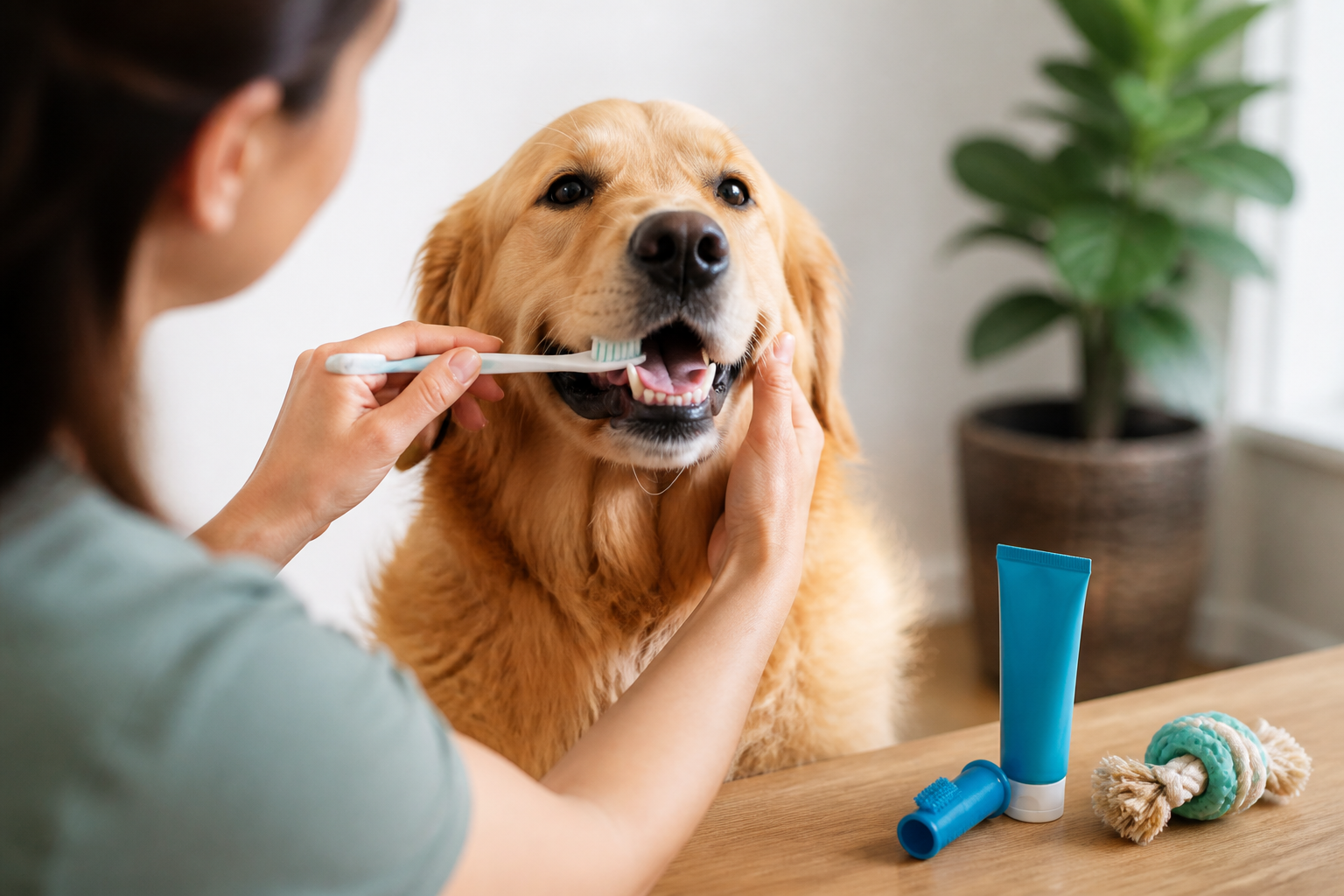
Introduction
You are sitting on the couch for a quiet evening when your dog leans in for a friendly lick. Suddenly, a wave of foul breath hits you, and the moment of affection becomes a bit less pleasant. This is a common realization for many pet parents. We often notice the smell before we see the plaque. At BaxterBoo, we understand that staring at the massive selection of our dog dental care products can feel overwhelming. You want to do right by your dog, but you need to know exactly what tools are safe and effective. This post covers the specific brushes, pastes, and dental aids that actually work to keep your dog's mouth healthy. We will also look at how to handle pets that refuse a toothbrush. Establishing a solid dental routine is one of the best ways to ensure your dog lives a long, pain free life.
Quick Answer: You should clean your dog's teeth using a toothbrush designed for pets and a dog-specific enzymatic toothpaste. Never use human toothpaste, as it often contains ingredients like xylitol or fluoride that are toxic to dogs.
The Golden Rule: Why Human Toothpaste is Dangerous
The most important thing to remember when looking for cleaning supplies is that your dog’s mouth is not the same as yours. You might be tempted to grab the tube of peppermint paste from your bathroom cabinet, but this is a serious safety risk. Human toothpaste is formulated with the assumption that the user will spit the foam out. Dogs, however, swallow everything you put in their mouths.
Many human toothpastes contain xylitol, an artificial sweetener that is highly toxic to dogs. Even small amounts can cause a life-threatening drop in blood sugar or liver failure. Additionally, the fluoride in our toothpaste can lead to toxicity if swallowed daily by a pet. Most human brands also include foaming agents like sodium lauryl sulfate. These can cause significant stomach upset for a dog.
When you shop for dog-specific paste, you are looking for an enzymatic formula. These pastes contain enzymes that help break down plaque and bacteria chemically. This is helpful because it continues to work even after you stop brushing. They also come in flavors that dogs actually enjoy, such as poultry, beef, or peanut butter. This turns a chore into a treat-like experience for your pet. One example is Virbac C.E.T. Enzymatic Pet Toothpaste for Dogs and Cats - Poultry, which is formulated for pets and available in a poultry flavor.
Vet Tip: If you suspect your dog has swallowed human toothpaste containing xylitol, contact your veterinarian or an animal poison control center immediately. Symptoms can include vomiting, lethargy, and loss of coordination.
Selecting the Right Toothbrush for Your Dog
Once you have the right paste, you need a tool to apply it. The type of brush you choose depends largely on your dog's size and their comfort level with having their mouth handled. There is no one-size-fits-all solution here.
Traditional Dog Toothbrushes
These look similar to human brushes but usually have angled heads. The angle helps you reach the back molars without having to open the dog's mouth uncomfortably wide. Some versions feature a double-headed design. This allows you to clean the inner and outer surfaces of the teeth at the same time. This is a huge time saver for wiggly dogs.
Finger Brushes
A finger brush is a small silicone or rubber cap with soft bristles that fits over your index finger. These are excellent for puppies or dogs that are nervous about long, plastic objects in their mouths. Because you can feel exactly where your finger is, you are less likely to accidentally poke the gums too hard. However, they do put your fingers in the "splash zone," so they are best for dogs that are unlikely to nip.
Small or Child-Sized Brushes
For toy breeds like Chihuahuas or Pomeranians, even a standard dog brush can be too large. In these cases, a very soft, child-sized human toothbrush can work well. The key is to ensure the bristles are extra soft to avoid irritating the delicate gum tissue of a small dog.
- Puppies: Start with a finger brush to build trust.
- Large Dogs: Use a long-handled angled brush for maximum reach.
- Sensitive Gums: Look for silicone bristles rather than nylon.
- Experienced Pets: Try a 360-degree brush that cleans all sides at once.
Key Takeaway: The best toothbrush is the one your dog will tolerate. Start with a finger brush if they are hesitant, then move to an angled brush for better reach as they get used to the sensation.
A Step-By-Step Guide to Brushing
Knowing what to clean dogs teeth with is only half the battle. You also need a technique that does not turn into a wrestling match. Consistency is more important than perfection when you first start. For additional guidance, review these top pet dental care tips.
Step 1: The taste test.
Put a small dab of dog toothpaste on your finger and let your dog lick it off. Do this for a few days without trying to brush. You want them to associate the paste with a positive reward.
Step 2: Finger rubbing.
Once they like the flavor, begin rubbing your finger along their gums and teeth. Lift the lip gently. Keep these sessions under thirty seconds and follow up with praise.
Step 3: Introduce the brush.
Apply a small amount of paste to your chosen brush. Let the dog lick it off the bristles first. Then, gently brush just the front teeth using a circular motion.
Step 4: Reach the back.
Slowly work your way toward the back molars over several sessions. This is where most plaque and tartar build up. You do not need to worry about the inside of the teeth as much, since the dog's tongue does a fair job of cleaning those surfaces.
Step 5: Reward and repeat.
Always end on a high note. Give a small treat or a favorite toy immediately after you finish. Aim to brush at least three times a week, though daily is the gold standard for preventing dental disease.
Bottom line: Slow introductions and positive reinforcement turn dental care into a bonding activity rather than a stressful chore.
What to Use if Your Dog Refuses Brushing
Some dogs simply will not tolerate a toothbrush. If you have an older rescue dog or a particularly stubborn pet, you still have options. While nothing replaces the mechanical scrubbing of a brush, these alternatives help slow down the accumulation of plaque.
Dental Wipes
These are pre-moistened pads designed to be wrapped around your finger. You simply wipe the surface of the teeth and the gum line. They are less invasive than a brush and can remove the soft film of plaque before it hardens into tartar. They are also a great travel option when a full brushing session is not possible. TrueBlue Fast & Fresh Dog Dental Wipes are one option for dogs that resist brushing.
Water Additives
These are liquid solutions you pour into your dog's water bowl. They contain ingredients that help kill oral bacteria and freshen breath. This is the most passive form of dental care. It is particularly useful for multi-dog households where individual brushing is difficult to manage.
Dental Gels
If your dog hates the scrubbing motion, you can use a dental gel. You simply apply the gel to the gum line on both sides. The dog's saliva will mix with the gel and coat the teeth. The enzymes in the gel then work to break down the biofilm that leads to tartar.
Vet Tip: Check for the VOHC (Veterinary Oral Health Council) seal on water additives and gels. This seal indicates that the product has been reviewed and meets specific standards for reducing plaque or tartar.
The Role of Dental Chews and Treats
Many owners ask if they can just use treats instead of brushing. While treats are helpful, they should be viewed as a supplement rather than a replacement. At BaxterBoo, we carry a variety of dental chews for dogs that use a specific texture to scrape the teeth as the dog chews.
When a dog gnaws on a high quality dental chew, the mechanical action helps rub away plaque. Many of these treats also contain ingredients like alfalfa or parsley to help with breath odor. However, be mindful of the calorie count. Dental treats can be calorie-dense, so you may need to adjust your dog's daily meal portions to prevent weight gain.
Another option is a rubber dental toy. These toys often have nubs or ridges that massage the gums and clean the teeth while the dog plays. You can even smear a bit of dog-safe toothpaste into the grooves of the toy to increase the cleaning power during a game of fetch or a solo chew session.
Key Takeaway: Dental chews and toys provide mechanical cleaning for the hard-to-reach back molars, but they work best when used alongside regular brushing or wipes.
Diet, Raw Bones, and Oral Health
What you put in the food bowl also impacts the mouth. There is a long-standing debate about whether dry food cleans teeth better than wet food. While the crunch of kibble provides a tiny amount of friction, most dogs swallow their kibble whole or break it into only a few pieces. This means the cleaning effect is minimal.
Some specialized prescription dental diets are designed with a larger kibble size and a fiber matrix that does not shatter immediately. This forces the dog to chew, which helps scrub the tooth surface. Our pharmacy carries several prescription dental diets. If your dog has a history of heavy tartar buildup, a prescription diet might be a helpful tool to discuss with your vet.
Raw bones are another common suggestion for cleaning teeth. While chewing on a raw, meaty bone can naturally scale the teeth, there are risks involved. Bones can cause tooth fractures if the dog chews too aggressively. They can also splinter and cause internal blockages or injuries. If you choose to use bones, always supervise your dog and consult your vet to see if your dog's teeth are strong enough for this type of chewing.
Bottom line: Diet plays a supporting role in oral health, but specialized dental kibble or supervised chewing should be combined with active cleaning for the best results.
Recognizing Signs of Dental Disease
Even with the best tools, some dogs are genetically prone to dental issues. Smaller breeds, in particular, often have crowded teeth that trap food and bacteria. It is important to know when your at-home cleaning is not enough. For a closer look at warning signs, read how to recognize bad teeth in dogs.
If you see heavy brown or yellow deposits that do not come off with a brush, that is tartar. Tartar is plaque that has mineralized and hardened. Once it reaches this stage, you cannot brush it away. It requires a professional scaling by a veterinarian.
Other warning signs include:
- Red, swollen, or bleeding gums
- A sudden change in eating habits or dropped food
- Pawing at the mouth
- Excessive drooling
- Loose or missing teeth
- Lumps or bumps inside the mouth
Vet Tip: Dental health is linked to heart and kidney health. Bacteria from the mouth can enter the bloodstream and cause infections in vital organs. If you notice persistent redness or bleeding, schedule a veterinary exam.
Professional Cleaning and the BaxterBoo Pharmacy
There comes a time in almost every dog's life when a professional cleaning is necessary. This procedure is done under general anesthesia so the vet can clean beneath the gum line and take X-rays to check for bone loss or abscessed roots. Many owners worry about anesthesia, but it is the only way to ensure a thorough and painless cleaning.
Following a professional cleaning, your vet might prescribe specific medications or oral rinses to help the gums heal. Our pet pharmacy provides access to prescription medications and prescription diets. Having a reliable source for these health needs makes it easier to follow through on your vet's treatment plan.
If your dog is diagnosed with periodontal disease, you may need to use a prescription strength antimicrobial rinse. These are often easier to apply than toothpaste during the healing phase. We can help you manage these ongoing health needs so your dog stays comfortable and infection free.
Key Takeaway: At-home care is about prevention, but professional care is about treatment. Use both to keep your dog's oral health on track throughout their senior years.
Summary of Dog Dental Care Tools
| Tool Type | Best For | Pros | Cons |
|---|---|---|---|
| Enzymatic Paste | All Dogs | Breaks down plaque chemically | Must be pet-safe flavors |
| Angled Brush | Cooperative Dogs | Reaches back molars easily | Learning curve for the dog |
| Finger Brush | Puppies/Small Dogs | Better control and feel | Fingers are near teeth |
| Dental Wipes | Sensitive Dogs | Very gentle and quick | Cannot reach deep crevices |
| Water Additive | Picky/Aggressive Dogs | No handling required | Least effective on its own |
| Dental Chews | High-Drive Chewers | Dogs love the "work" | High in calories |
Conclusion
Keeping your dog's mouth clean is a vital part of being a pet parent. By choosing the right tools, like enzymatic toothpaste and an angled brush, you can prevent the pain and inflammation associated with dental disease. If your dog is not a fan of the brush, do not give up. Utilize wipes, water additives, and dental toys to maintain hygiene. Remember to always use products specifically formulated for pets to avoid toxicity. At BaxterBoo, we are here to support your pet's wellness journey with the right supplies and expert guidance. For those managing more serious dental conditions, our pharmacy offers a convenient way to get the prescription diets and medications your vet recommends. Start a routine today, and your dog will thank you with many years of healthy, happy, and much fresher kisses.
FAQ
Can I use baking soda to clean my dog's teeth?
It is not recommended to use baking soda for your dog. While it can help scrub away stains, it has a high alkaline content that can upset a dog’s stomach if swallowed. Most dogs will swallow a significant amount of whatever you use to brush, so it is much safer to stick with an enzymatic pet toothpaste.
How often do I really need to brush my dog's teeth?
While daily brushing is the most effective way to prevent plaque from hardening into tartar, doing it three times a week can still make a massive difference. Plaque begins to mineralize into tartar within 24 to 48 hours. The more frequent your sessions, the less likely your dog will need frequent professional cleanings under anesthesia.
Why does my dog's breath still smell after brushing?
Persistent bad breath, even after cleaning, can be a sign of underlying issues. It may indicate that there is an infection deep under the gum line, a decaying tooth, or even a digestive or kidney problem. If a week of regular brushing does not improve the smell, it is time to visit the veterinarian for a full oral exam.
Are anesthesia-free dental cleanings a good idea?
Anesthesia-free cleanings are generally considered cosmetic. They can remove the visible tartar on the surface of the teeth, but they cannot address the bacteria and tartar hidden under the gum line where most disease occurs. Furthermore, the scraping tools can cause tiny scratches on the enamel that actually allow more plaque to stick in the future if the teeth are not polished afterward.






