
 Save 15% on your 1st Autoship learn more

 Email us
 Live Chat
 FAQs
FAQs





Introduction
You lean in for a happy pup kiss and get hit with a "stink bomb" of bad breath. It is a common moment for many of us, and it often signals that plaque and tartar are moving in. At BaxterBoo, we know that keeping those pearly whites clean is about more than just a fresh smell. It is about long term health and preventing pain. This guide covers the most effective ways to manage your dog's oral hygiene, from the tools you use at home to the care provided by your veterinarian. We will look at brushing techniques, the role of dental chews, and how specialized diets can make a difference. Understanding these options helps you build a routine that keeps your dog comfortable and healthy for years to come.
The Importance of Canine Dental Hygiene
Many owners assume that "dog breath" is just a natural part of owning a pet. While a dog's mouth will never smell like minty fresh gum, a truly foul odor is usually a sign of bacteria. When food particles and saliva mix, they form a sticky film called plaque. If this film is not removed through cleaning, it hardens into tartar within about 48 hours.
Tartar is much more difficult to remove than plaque. It provides a rough surface where even more bacteria can grow. Eventually, this bacteria makes its way under the gumline. This leads to gingivitis, which shows up as red, swollen, or bleeding gums. If the cycle continues, it can lead to periodontal disease. This condition destroys the bone and tissues that hold teeth in place.
Beyond the mouth, dental health affects the whole body. Bacteria from infected gums can enter the bloodstream. From there, it can travel to major organs like the heart, liver, and kidneys. This is why a solid dental routine is a cornerstone of overall wellness.
Key Takeaway: Dental care is a whole body health issue. Preventing tartar buildup at the gumline protects your dog from systemic infections and chronic pain.
Daily Brushing: The Gold Standard
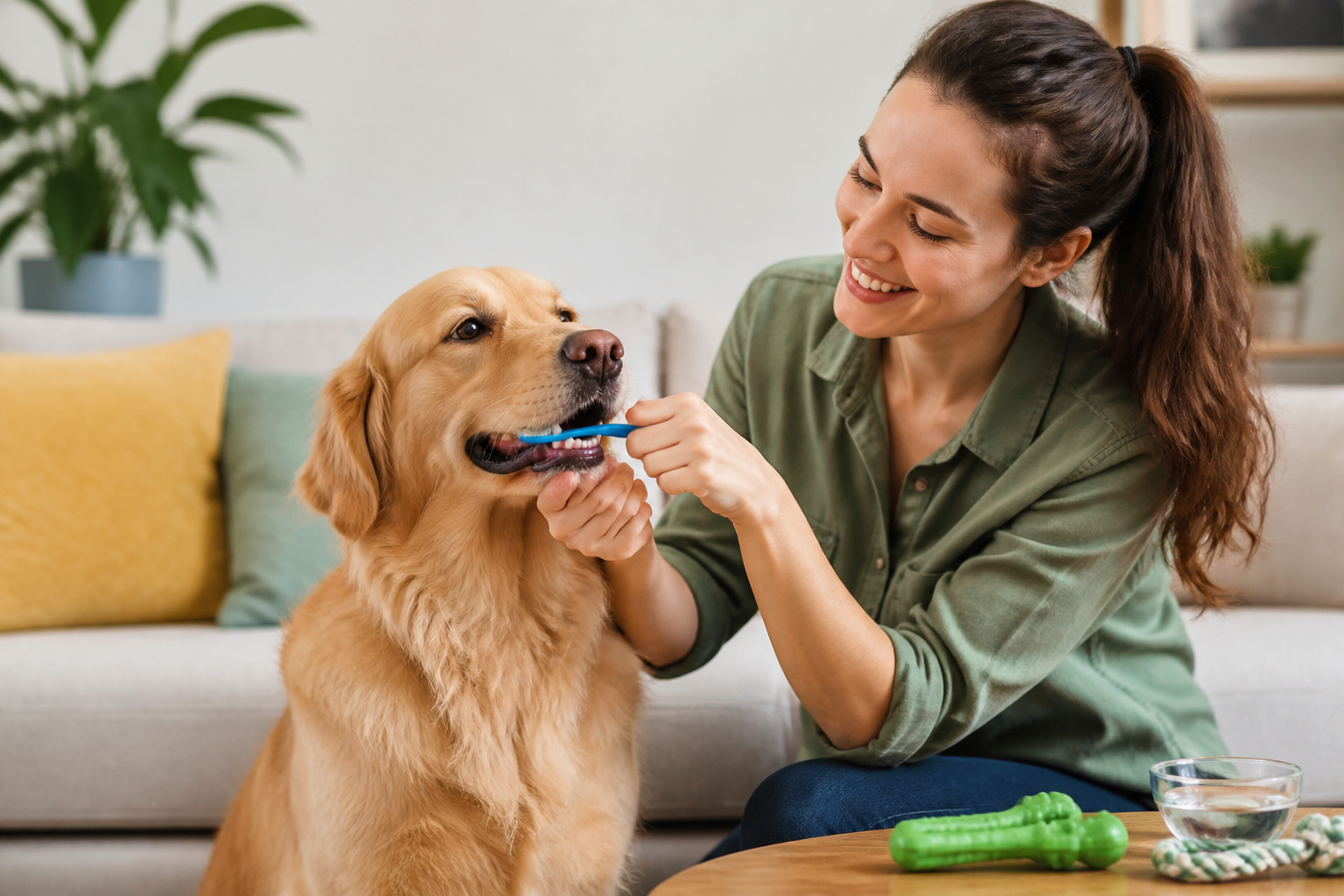
If you ask any veterinarian what helps clean dogs teeth most effectively, the answer is always brushing. It is the only way to physically scrub away plaque before it mineralizes into tartar. While it might seem daunting to stick a brush into your dog's mouth, most pets can learn to tolerate or even enjoy the process.
Choosing the Right Tools
You should never use human toothpaste for a dog. Our toothpaste often contains fluoride and foaming agents like sodium lauryl sulfate, which can upset a dog's stomach. Some human pastes also contain xylitol, which is highly toxic to dogs.
Instead, look for enzymatic dog toothpaste. These are flavored like poultry, beef, or peanut butter to make the experience a treat. The enzymes in the paste help break down food particles even if you do not get every single spot with the brush.
For the brush itself, you have a few options:
- Standard Pet Toothbrushes: These have long handles and angled heads to reach the back molars.
- Finger Brushes: These silicone sleeves fit over your fingertip. They are excellent for puppies or dogs who are nervous about a long plastic stick in their mouth.
- Small Breed Brushes: For tiny mouths, a soft bristled baby toothbrush or a specialized small pet brush is necessary to avoid hurting the gums.
How to Brush Your Dog's Teeth
Consistency is more important than perfection. Aiming for daily brushing is the goal, but three times a week is a great starting point.
Step 1: Introduce the paste. / Let your dog lick a small amount of flavored toothpaste off your finger. This builds a positive association.
Step 2: Touch the mouth. / Gently lift your dog's lips and rub your finger along their gums. Reward them with praise or a small treat.
Step 3: Introduce the brush. / Put a bit of paste on the brush and let them lick it. Slowly start moving the brush in a circular motion on the outside surfaces of the teeth.
Step 4: Focus on the gumline. / Most plaque collects where the tooth meets the gum. You do not usually need to worry about the inside surfaces of the teeth, as the tongue does a decent job of cleaning those.
Step 5: Keep it short. / Stop before your dog gets frustrated. A 30 second session that ends happily is better than a 5 minute session that causes stress.
Vet Tip: If your dog shows any signs of aggression or extreme fear during brushing, do not force it. Consult a professional trainer or your vet to find a safer way to manage their dental health.
Dental Chews and Treats
Not every dog will sit still for a toothbrush. This is where our dog dental care collection becomes a valuable tool. These treats are designed to be long lasting and have specific textures that scrape the teeth as the dog chews.
How Dental Chews Work
When a dog gnaws on a high quality dental chew, the mechanical action acts like a squeegee on the tooth surface. Many of these products also contain ingredients that help prevent tartar from bonding to the enamel.
When shopping for these, look for the Veterinary Oral Health Council (VOHC) seal. This seal indicates that the product has been tested and proven to reduce plaque or tartar by at least 20 percent. We carry several brands that meet these standards, including Greenies and certain Redbarn products.
Choosing the Right Size
Size matters when it comes to safety and effectiveness. If a chew is too small, a dog might swallow it whole, which creates a choking hazard or a digestive blockage. If it is too large, they might not be able to get their jaws around it to do any real cleaning. Always follow the weight guidelines on the packaging.
Note: Dental treats add calories to your dog's diet. If you are giving a daily dental chew, you may need to slightly reduce their main meal portions to prevent weight gain.
The Role of Diet in Dental Health
What your dog eats every day plays a part in how clean their teeth stay. While most kibble provides some minor scraping action, standard dry food is not a replacement for brushing. Most kibble pieces shatter easily, meaning they do not do much to clean the gumline.
Prescription Dental Diets
For dogs prone to heavy tartar buildup, your veterinarian might recommend a prescription dental diet. These are not your average bags of food. The kibble is usually much larger and has a fibrous structure that does not crumble immediately. Instead, the tooth sinks into the nugget, allowing the fibers to scrub the surface of the tooth all the way to the gumline.
Our pet pharmacy works with Pet's Choice to provide FDA approved prescription diets and medications. If your vet prescribes a specialized food like Royal Canin Vet Life or Hill's Prescription Diet t/d, we can help fulfill those needs through our partnership. These diets often contain minerals that bind calcium in the saliva, preventing it from turning plaque into hard tartar.
Raw Bones and Natural Chews
Some owners prefer a more natural approach using raw bones. Chewing on a raw, meaty bone can provide excellent mechanical cleaning. However, this comes with risks that you must weigh carefully.
- Safety: Never give cooked bones. Cooking makes bones brittle and prone to splintering, which can puncture the digestive tract.
- Hardness: Very hard bones, like marrow bones, can actually fracture a dog's teeth if they are an aggressive chewer.
- Hygiene: Raw bones can carry bacteria like Salmonella or E. coli. Always supervise your dog and clean the area afterward.
Bottom line: Prescription dental diets are often safer and more consistent than raw bones for maintaining oral health in most domestic dogs.
Water Additives and Dental Wipes
For dogs that are particularly difficult to handle, water additives and wipes offer a hands-off or low-impact alternative. These are not as effective as brushing, but they are far better than doing nothing at all.
Water Additives
These are liquid solutions that you add to your dog's drinking water bowl. They usually contain enzymes or minerals designed to kill bacteria and freshen breath. They are tasteless and odorless, so most dogs do not even notice them. They work by changing the chemistry of the saliva to make it a less hospitable environment for plaque.
Dental Wipes
If your dog hates the "clunky" feel of a toothbrush, dental wipes might be a better fit. These are textured pads that you wrap around your finger. You simply swipe them over the teeth and gums. They are excellent for removing the daily film of plaque, though they cannot reach into the deep crevices between teeth as well as a brush can.
Key Takeaway: Wipes and additives are great supplements for busy owners or senior dogs who can no longer tolerate vigorous brushing.
Recognizing Signs of Dental Trouble
Even with the best home care, problems can arise. It is important to know when a "home cleaning" approach is no longer enough and a trip to the vet is required.
Watch for these red flags:
- Persistent bad breath: If the smell is fruity, musty, or extremely foul, it could indicate infection or internal health issues.
- Changes in eating habits: If your dog starts dropping food, chewing on only one side of their mouth, or avoiding hard kibble, they may be in pain.
- Visible tartar: Brown or yellow crusty deposits that do not come off with brushing.
- Bleeding or red gums: Gums should be a healthy pink. Redness or bleeding during play or brushing is a sign of gingivitis.
- Swelling: Any lumps on the gums or swelling under the eye can indicate a tooth root abscess.
For additional warning signs, read how to recognize hidden dental problems in dogs.
Vet Tip: Annual wellness exams should always include a dental check. Your vet can see things behind the molars or under the tongue that you might miss at home.
Professional Dental Cleanings
At some point, most dogs will need a professional cleaning. This is similar to the cleaning you get at the dentist, but with one major difference: dogs require general anesthesia.
Why Anesthesia is Necessary
A proper professional cleaning involves scaling tartar from underneath the gumline and taking dental X-rays. It is impossible to do this safely or thoroughly while a dog is awake. Anesthesia-free cleanings might make the teeth look white, but they leave the dangerous bacteria under the gums untouched. This can give owners a false sense of security while disease continues to progress out of sight.
A professional cleaning at the vet's office usually includes:
- A physical exam and bloodwork: To ensure the dog is healthy enough for anesthesia.
- Ultrasonic scaling: To remove tartar from all surfaces.
- Subgingival cleaning: Cleaning the pockets under the gums where disease starts.
- Polishing: Smoothing the enamel so plaque has a harder time sticking.
- X-rays: To check for bone loss or infected roots that are not visible to the naked eye.
For a broader overview, explore these pet dental care tips.
Managing the Cost and Risk
Many owners worry about the cost and the risks of anesthesia. To manage costs, focus on prevention. The more you brush at home, the less often your dog will need a professional cleaning. As for anesthesia, modern veterinary medicine is very safe. Vets monitor heart rate, oxygen levels, and blood pressure throughout the procedure to minimize risks.
Bottom line: Professional cleanings are a medical necessity, not a cosmetic luxury. They are the only way to treat established periodontal disease.
Special Considerations for Breed and Age
Different dogs have different dental needs. Your approach should change based on who you are caring for.
Small and Brachycephalic Breeds
Small dogs, such as Yorkies, Chihuahuas, and Pugs, are notorious for dental issues. They often have the same number of teeth as large dogs but much smaller mouths. This leads to crowding, which traps food and bacteria. These breeds often need daily brushing and more frequent professional cleanings.
Senior Dogs
Older dogs may have receding gums or sensitive teeth. For these pets, soft finger brushes or dental wipes are often more comfortable than stiff toothbrushes. If a senior dog has lost teeth, they may need a transition to softer food, but you should still wipe their gums to keep bacteria levels low.
Puppies
Start dental care as soon as your puppy comes home. Even though they will lose their baby teeth, getting them used to the sensation of brushing now will save you years of struggle later. It is also a good time to check for "retained" baby teeth that do not fall out on their own, as these can cause alignment issues for adult teeth.
Building a Sustainable Routine
The best dental plan is one you can actually stick to. You do not have to do everything every day. A balanced routine might look like this:
- Daily: A quick session with a dental wipe or a quick brush.
- Daily: A VOHC approved dental chew.
- Constant: A water additive in their main water bowl.
- Annually: A dental checkup with your veterinarian.
If you miss a day, do not worry. Just start again the next day. Every bit of plaque you remove is a win for your dog's health.
At BaxterBoo, we have been helping pet owners find the right gear and wellness products since 2006. Whether you need a finger brush for a new puppy or you are looking for a specific dental treat that won't upset a sensitive stomach, we carry over 500 trusted brands to help you succeed.
Next Steps for Your Dog
- Check your dog's gums today. If they are bright red or if you see brown buildup, schedule a vet visit.
- Pick up a dog-safe enzymatic toothpaste.
- Consider signing up for our Autoship programme. This ensures you never run out of dental chews and saves you money on every recurring order.
- Join the MVP Rewards programme to earn points on every dental care purchase, which you can use for future savings.
Keeping your dog's teeth clean is a lifelong commitment, but the reward is a pain-free pet with a healthy heart and fresh breath. By combining at-home brushing with the right treats and professional veterinary care, you are giving your dog the best chance at a long and happy life.
FAQ
Can I use baking soda to clean my dog's teeth?
While baking soda is not toxic, it has a very high salt content and an unpleasant taste that may cause your dog to dislike brushing. It is also quite abrasive, which can wear down tooth enamel over time if used too often. It is much better to use a formulated enzymatic dog toothpaste that is designed to be swallowed and tastes good to your pet.
How often should I replace my dog's toothbrush?
You should replace a pet toothbrush about every three to four months, just like you do with your own. If the bristles start to fray or if your dog has been sick with an oral infection, replace it sooner. Keeping the brush clean and dry between uses is also important to prevent bacteria from growing on the bristles.
Why does my dog's breath still smell after brushing?
If brushing does not improve your dog's breath, the odor may be coming from tartar already hardened under the gumline, which a brush cannot reach. It could also be a sign of a more serious health issue, such as kidney disease or a digestive problem. In these cases, a veterinary exam is necessary to find the underlying cause of the smell.
Are dental chews enough to keep teeth clean without brushing?
While dental chews are a helpful tool for mechanical cleaning, they are not as effective as manual brushing. Chews usually only reach the chewing surfaces of the back teeth and may miss the canines and incisors at the front of the mouth. For the best results, use dental chews as a supplement to a regular brushing routine rather than a total replacement.






