
 Save 15% on your 1st Autoship learn more

 Email us
 Live Chat
 FAQs
FAQs





Introduction
You are sitting on the sofa with your dog when they lean in for a happy nuzzle. Instead of a sweet moment, you are met with a puff of breath that smells like a swamp. Many pet owners think "dog breath" is just a natural part of life with a canine. In reality, that odor is often the first sign of bacteria and plaque buildup. At BaxterBoo, we talk to owners every day who want to know how to manage their pet's oral health without a struggle. This guide explores the most effective ways to maintain a bright smile and healthy gums through daily habits and professional support. We will cover everything from the best brushing techniques to specialized diets and toys that do the heavy lifting for you.
Quick Answer: A combination of daily tooth brushing, dental-specific treats, and professional veterinary cleanings is the most effective way to keep teeth clean. Using products with the Veterinary Oral Health Council (VOHC) seal ensures they meet high standards for plaque and tartar reduction.
The Gold Standard: Brushing Your Dog's Teeth
Brushing is the single most effective way to remove plaque before it hardens into tartar. Plaque is a soft, sticky film of bacteria that forms on the teeth after eating. If it stays there for more than 48 hours, it minerals into tartar, which is a hard, brown substance that you cannot brush away at home.
Most dogs are not born loving the toothbrush. It is a skill that you need to teach with patience and plenty of positive reinforcement. You should aim to brush at least three times a week, though daily is the goal for dogs prone to dental disease. For additional guidance, read our top pet dental care tips.
Choosing the Right Tools
Never use human toothpaste for your dog. Human formulas often contain xylitol, which is toxic to dogs, and foaming agents that can upset their stomachs. Dog toothpaste comes in flavors like poultry, beef, and peanut butter to make the experience a treat.
For the brush itself, you have options:
- Standard pet toothbrushes: These have long handles and angled heads to reach the back molars.
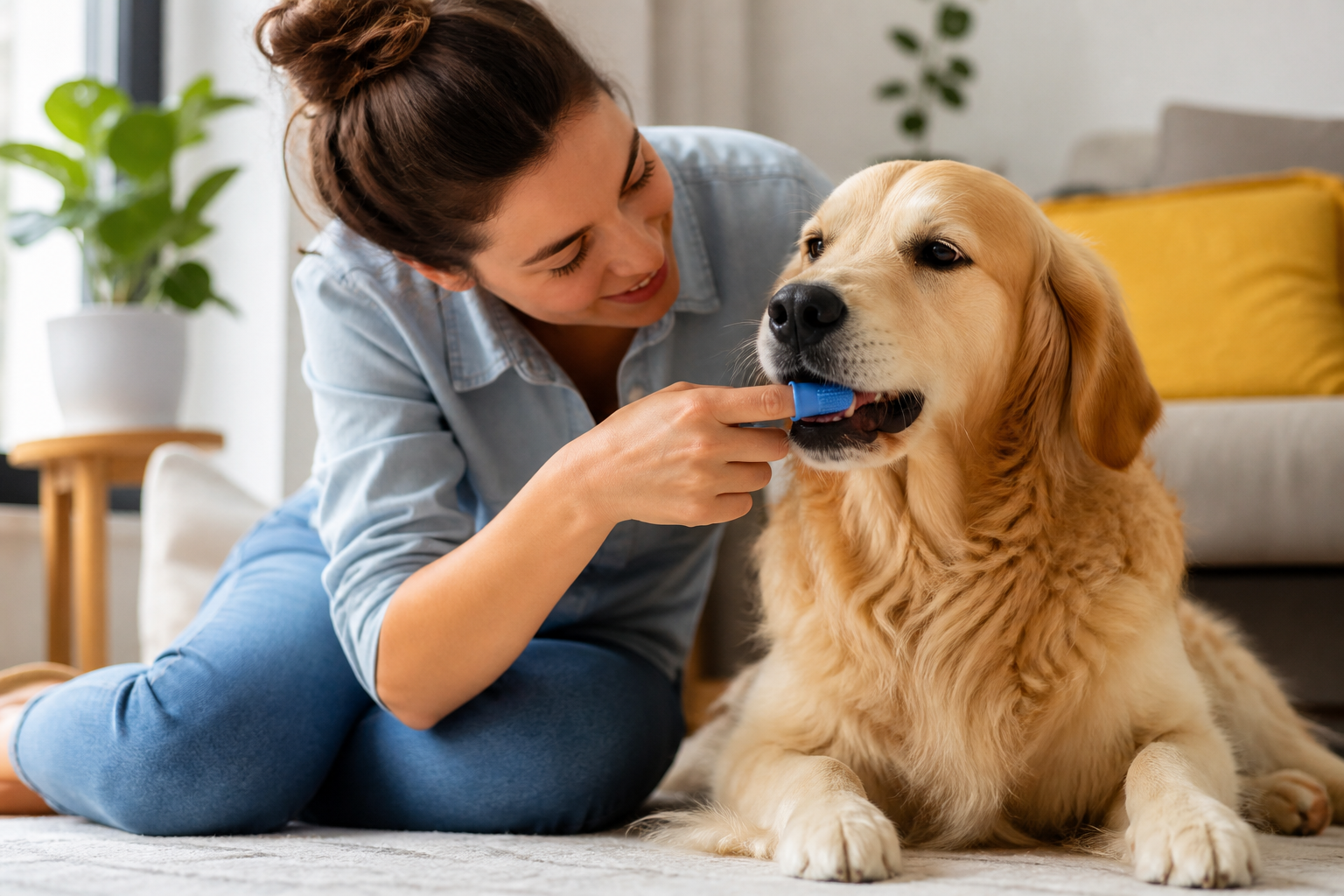
- Finger brushes: These silicone caps fit over your pointer finger, giving you more control and a better "feel" for the teeth.
- Double-headed brushes: These clean the front and back of the tooth at the same time.
How to Start a Brushing Routine
The key is to move slowly and keep sessions short. Do not try to clean the whole mouth on day one.
Step 1: Let your dog lick the toothpaste. / Allow them to enjoy the flavor so they associate the tube with a reward.
Step 2: Rub your finger along their gums. / Get them used to having their lips lifted and their mouth touched without a brush involved.
Step 3: Introduce the brush. / Use a small amount of paste and gently brush the large canine teeth in the front.
Step 4: Gradually reach the back. / Over several days, work your way back to the molars where the most buildup occurs.
Key Takeaway: Brushing is a preventative measure designed to remove soft plaque. Once tartar forms, it requires professional equipment to remove safely.
Dental Chews and Treats
For dogs that absolutely refuse a toothbrush, dental chews are a helpful second line of defense. These treats are designed with specific textures that scrape the surface of the tooth as the dog bites down. You can explore our dog dental chews and treats for options suited to different chewing styles.
When you shop for these, look for the VOHC Seal of Acceptance. This seal means the product has been through rigorous testing to prove it actually reduces plaque and tartar. Brands like Greenies, OraVet, and certain RedBarn products are popular choices that dogs love. Our guide to the best dental chews for dogs offers another way to compare chew styles.
How They Work
The effectiveness of a dental chew depends on the "mechanical action." This means the dog must actually chew the treat for a few minutes. If your dog gulps the treat down in one second, it is not doing much for their teeth. Always choose a size appropriate for your dog's weight to ensure they spend enough time working on it.
| Feature | Dental Chews | Regular Biscuit Treats |
|---|---|---|
| Texture | Flexible and porous | Hard and crumbly |
| Cleaning Action | Scrapes teeth to the gumline | Breaks apart quickly |
| Ingredients | Often includes breath fresheners | Standard nutritional profile |
| Primary Goal | Plaque removal | Reward or snack |
Bottom line: Dental chews are a convenient supplement to brushing but should not be the only form of dental care your dog receives.
Nutrition and Prescription Dental Diets
What your dog eats every day has a massive impact on their oral health. While there is a common myth that all dry kibble cleans teeth, most standard kibble is too small and brittle. It shatters as soon as the tooth hits it, providing very little cleaning action.
Specialized dental diets are different. These kibbles are larger and have a fibrous structure that does not crumble immediately. The tooth sinks into the kibble, which scrubs the surface as the dog chews.
Accessing Professional Diets
Some of the most effective dental foods are available by prescription only. These are formulated for dogs with existing periodontal issues or those highly prone to disease. Through our partnership with Pet's Choice, the our dog pharmacy offers FDA-approved prescription diets like Royal Canin Vet Life and Hill's Prescription Diet t/d.
If your veterinarian recommends a specific dental food, we can help you fulfill that order through our pharmacy section. These diets are carefully balanced to provide full nutrition while focusing heavily on oral hygiene.
Vet Tip: If your dog has red, bleeding gums or loose teeth, do not start a hard dental diet without consulting your vet. Chewing hard kibble or treats can be extremely painful for a dog with active dental disease.
Water Additives and Dental Powders
Water additives are often called "drinkable mouthwash" for pets. They are a great option for busy owners or senior dogs who might be too sensitive for physical brushing. You simply add a measured amount to your dog's water bowl every time you refill it. The Synergy Labs Dental Fresh Water Additive is one option made for this type of routine.
These additives usually contain enzymes or ingredients like chlorhexidine that help break down the biofilm of bacteria in the mouth. They do not just mask the smell of bad breath: they target the source of the odor.
Using Dental Powders
Powders are another "set it and forget it" option. Brands like VetriScience offer powders that you sprinkle directly onto your dog's food. These often contain probiotics that encourage "good" bacteria in the mouth, which crowds out the bacteria that cause plaque. You can browse our dental supplements for powder-based options.
- Easy to use for picky eaters.
- Tasteless or lightly flavored to encourage consumption.
- Works throughout the day as the dog swallows saliva.
Bottom line: Additives and powders are excellent for reducing the bacterial load in the mouth, but they cannot replace the physical scrubbing action of a brush or chew.
Safe Toys for Dental Health
Playtime is a secret weapon for keeping teeth clean. The right toys encourage the production of saliva, which is a natural mouthwash that helps rinse away food particles. For more ideas, see our guide to the best dog toys.
The Best Toy Types
- Rubber toys with nubs: Look for toys with ridges or bumps. These massage the gums and scrape the teeth as the dog chews.
- Rope toys: The fibers of a cotton rope can act like a giant piece of dental floss, sliding between the teeth.
- Hollow toys: You can stuff these with dog-safe toothpaste or dental-friendly treats to encourage longer chewing sessions.
What to Avoid
Be careful with toys that are too hard. A good rule of thumb is the "knee cap test." If you would not want to be hit in the knee with the toy, it is probably too hard for your dog's teeth.
Avoid real bones, antlers, and heavy nylon bones. These are the leading cause of fractured teeth in dogs. While they might scrape off some tartar, the risk of a painful and expensive tooth break is high. Also, avoid tennis balls for heavy chewers, as the fuzz can be abrasive and wear down the tooth enamel over time.
Key Takeaway: Choose "giving" materials like natural rubber or cotton rope to protect tooth enamel while providing a cleaning effect.
Recognizing the Signs of Dental Disease
Even with the best home care, problems can arise. It is important to check your dog's mouth once a week for any changes. If you catch issues early, you can often prevent pain and tooth loss. Our article on warning signs of dental problems in dogs provides additional guidance.
Watch for these warning signs:
- Persistent bad breath that does not go away after brushing.
- Red, swollen, or bleeding gums (gingivitis).
- Visible brown or yellow tartar near the gumline.
- Loose or missing teeth.
- Excessive drooling.
- Paw prints or blood on chew toys.
- Changing eating habits, such as dropping food or eating only on one side of the mouth.
If you notice any of these symptoms, it is time for a veterinary visit. Dental disease is more than just a cosmetic issue. The bacteria in the mouth can enter the bloodstream and cause damage to the heart, kidneys, and liver over time.
The Role of Professional Cleanings
Home care is about prevention, but professional care is about treatment. Just like humans need a dental hygienist to scale away tartar, dogs need professional cleanings.
Why Anesthesia is Necessary
A real dental cleaning for a dog must happen under general anesthesia. Some places offer "anesthesia-free" cleaning, but we do not recommend this. Without anesthesia, a vet cannot clean under the gumline, which is where the most dangerous bacteria live. It is also impossible to perform a full exam or take X-rays of the tooth roots while a dog is awake and moving.
During a professional cleaning, the vet will:
- Perform a full oral exam and chart every tooth.
- Take digital X-rays to look for abscesses or bone loss.
- Scale away tartar using ultrasonic tools.
- Polish the teeth to smooth out micro-scratches where plaque likes to hide.
Vet Tip: Most dogs benefit from a professional cleaning once a year, though small breeds like Yorkies or Chihuahuas may need them more often due to their crowded teeth. Discuss a schedule with your vet during your annual wellness exam.
Creating a Manageable Dental Routine
The best dental plan is the one you can actually stick to. You do not have to do everything on this list every single day. Instead, try to build a layered approach that fits your lifestyle.
Step 1: Set a schedule for brushing. / Even twice a week makes a massive difference compared to not brushing at all.
Step 2: Swap standard treats for dental chews. / This provides a cleaning benefit during a time when you were already going to give your dog a reward.
Step 3: Add a water additive. / This is an easy way to provide 24/7 bacterial support with zero effort.
Step 4: Keep up with annual vet visits. / Let the professionals handle the deep cleaning while you manage the daily maintenance.
By combining these methods, you are giving your dog the best chance at a long, pain-free life. We are here to support that journey with the supplies you need.
Conclusion
Keeping your dog's teeth clean is a vital part of their overall wellness. From the mechanical scrubbing of a toothbrush to the advanced enzymes in water additives, every small step helps prevent painful dental disease. Remember to look for the VOHC seal on treats and consider a specialized diet if your dog is prone to buildup. At BaxterBoo, we are committed to providing the gear and expertise you need to care for your pet at every life stage. Whether you are looking for a new finger brush, a durable rubber toy, or a prescription diet through our pharmacy, we have you covered.
Bottom line: Consistency is the secret to a healthy mouth, so find a routine that works for both you and your dog.
Our MVP Rewards program is a great way to save on the dental supplies you use every month. You can earn points on every purchase of toothpaste, chews, and toys to use toward future orders.
FAQ
How often should I actually brush my dog's teeth?
Ideally, you should brush your dog's teeth every single day to prevent plaque from turning into tartar. However, we know that is not always possible for busy owners, so aiming for at least three times a week is a realistic and effective goal. Consistency matters more than perfection, as even occasional brushing significantly reduces the risk of gum disease.
Can I just give my dog a bone to clean their teeth?
While chewing on certain things helps, real bones are not a safe choice for dental health. They are often too hard and can lead to fractured teeth, which require expensive surgery to fix. Instead, choose high-quality dental chews with the VOHC seal or durable rubber toys that provide the same scrubbing action without the risk of injury.
Do dental water additives really work?
Water additives are effective at reducing the number of bacteria in the mouth and freshening breath, but they are not a total replacement for brushing. They work best as part of a layered approach, helping to break down the biofilm on the teeth between brushing sessions. They are an excellent option for dogs that do not allow their mouths to be handled easily.
What is the VOHC seal and why does it matter?
The Veterinary Oral Health Council (VOHC) seal is an award given to pet products that meet pre-set standards for reducing plaque and tartar. When you see this seal on a bag of treats or a bottle of additive, you know the product has been scientifically tested and proven to work. It helps owners cut through marketing fluff to find products that actually improve oral hygiene.






