
 Save 15% on your 1st Autoship learn more

 Email us
 Live Chat
 FAQs
FAQs





Introduction
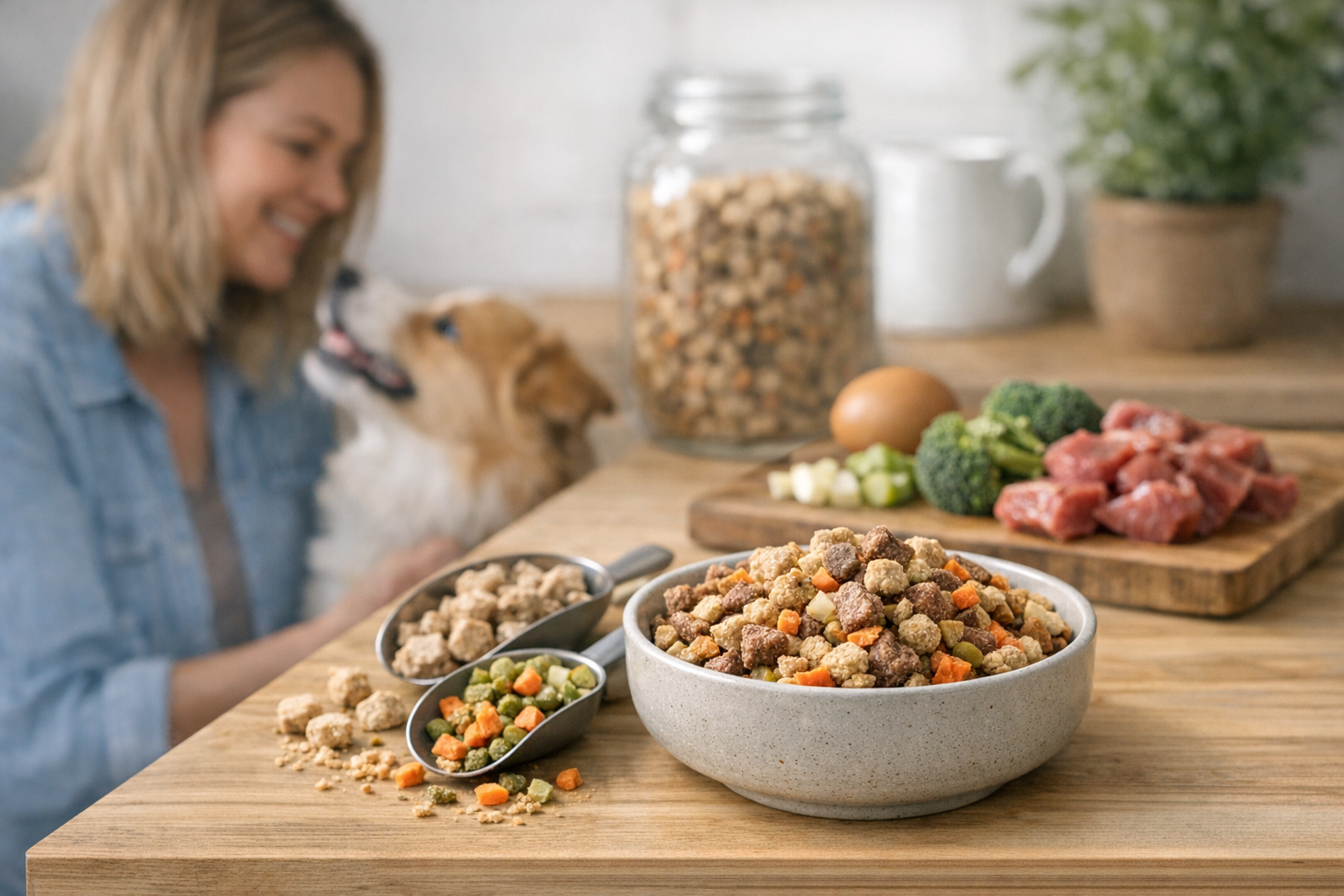
You might be standing in the pet food aisle or scrolling through an online shop and notice bags that look like kibble but come with a much higher price tag and labels like "raw" and "minimally processed." This is the moment many dog owners find themselves in when they first encounter freeze dried raw dog food. It looks like a dry biscuit or a small nugget, but it claims to offer the nutrition of a raw meat diet without the messy cleanup or freezer space. At BaxterBoo, we hear from customers every day who want to know if this format is truly better for their dogs or just a passing trend. This article covers exactly what this food is, how it is made, the benefits it offers for your dog, and how to feed it safely. We will help you decide if this high protein option belongs in your dog's bowl, and you can start by browsing our freeze-dried food collection.
Quick Answer: Freeze dried raw dog food is a minimally processed diet made from raw meat, organs, and bone that has undergone a moisture removal process called sublimation. It provides the nutritional profile of a raw diet in a shelf stable, convenient form that does not require refrigeration.
The Science Behind Freeze Drying
Understanding this food starts with the process of sublimation. Most traditional dog foods are cooked at high temperatures. Kibble is extruded, which means it is blasted with heat and pressure. This cooking process can sometimes change the nutritional structure of the ingredients. Freeze drying is different because it never uses high heat.
The process begins with raw ingredients, usually high quality meats, organs, and occasionally fruits or vegetables. These ingredients are frozen to extremely low temperatures. Once frozen, the food is placed in a vacuum chamber. The pressure is lowered, and a tiny amount of heat is applied. This causes the ice in the food to turn directly into water vapor without ever becoming liquid.
Because the moisture is removed at such low temperatures, the physical structure of the meat stays intact. The vitamins, minerals, and natural enzymes do not break down the way they do during heavy cooking. The result is a lightweight, porous nugget that contains almost all the original nutrients found in the raw ingredients.
Comparing Freeze Dried to Kibble and Dehydrated Food
It is easy to confuse freeze dried food with dehydrated food or traditional kibble. They all look dry and come in bags, but the internal chemistry is quite different. Kibble is a cooked product that often uses grains or starches as binders to hold the shape of the biscuit.
Dehydrated dog food is also different. Dehydration uses low heat and circulating air to blow moisture off the food over a long period. While better than high heat cooking, dehydration can still cause the meat to shrink and become tough. It can also slightly alter the vitamins. Freeze drying preserves the shape, color, and nutritional density much more effectively than dehydration.
The ingredients in freeze dried raw diets are typically much simpler. You will often see a very high percentage of meat, sometimes up to 95 percent. Most brands we carry at BaxterBoo, such as Stella & Chewy's or Open Farm, focus on limited ingredients. This makes it a popular choice for dogs with sensitivities to common fillers like corn, wheat, or soy.
Key Takeaway: Freeze drying preserves the integrity of raw ingredients by removing moisture through cold vacuum pressure rather than high heat, resulting in a more nutrient dense product than kibble.
Nutritional Benefits for Your Dog
The primary reason owners switch to a freeze dried raw diet is the nutritional density. Because the food is essentially raw meat with the water removed, it is packed with bioavailable protein. This means your dog's body can easily break down and use the nutrients for muscle maintenance and energy.
Many owners report seeing specific changes in their dogs after switching. These often include:
- Smaller, firmer stools because the dog is absorbing more of the food and producing less waste.
- A shinier, softer coat due to the natural fats and oils that remain undamaged.
- Improved dental health because the texture of some freeze dried nuggets can help reduce plaque buildup.
- Increased excitement at mealtime, especially for picky eaters who are drawn to the strong aroma of real meat.
The high protein and low carbohydrate content also mimic what a dog might eat in the wild. This can be especially helpful for maintaining a healthy weight. Since there are fewer "empty" calories from starches, your dog stays fuller for longer on smaller portions, especially when you compare it with other mix-in options like our food topper collection.
Safety and High Pressure Pasteurization
One of the biggest concerns with any raw diet is the risk of bacteria like Salmonella or Listeria. This is a valid concern for both the pet and the people in the house. To address this, many reputable manufacturers use a process called High Pressure Pasteurization, or HPP.
HPP is a cold pasteurization technique. The food is subjected to incredibly high levels of pressure that literally crush the cell walls of harmful bacteria without using heat. This makes the food safe to handle while keeping the "raw" nutritional benefits intact. When shopping for freeze dried food, we always recommend looking for brands that clearly state their safety protocols.
Vet Tip: If you have a dog with a compromised immune system, or if there are young children or elderly individuals in your home, consult your veterinarian before switching to a raw diet. They can help you determine if the bacterial risk is appropriate for your specific household environment.
How to Feed Freeze Dried Raw Food
You do not have to use freeze dried food as a full meal to see the benefits. Because it is expensive, many owners find creative ways to incorporate it into their budget. There are three main ways to serve it.
Full Meal Replacement
This is the most straightforward method. You feed the freeze dried nuggets or patties as the sole source of nutrition. Most brands require you to rehydrate the food with warm water, goat milk, or bone broth before serving. Rehydration is vital because it helps with digestion and ensures your dog stays hydrated.
Meal Toppers and Mixers
If a full raw diet is out of your budget, using freeze dried food as a topper is a great middle ground. You can crumble a few nuggets over regular kibble. This adds a boost of high quality protein and makes the meal much more appealing to a picky dog. Brands like our Stella & Chewy's selection and Stella and Chewy's offer specific "meal mixer" bags for this purpose.
High Value Treats
Because freeze dried meat has such a potent smell and taste, it makes an excellent training treat. It is much healthier than many processed treats that are full of sugar and glycerin. You can easily break the nuggets into tiny pieces for repeat rewards during a training session.
Managing the Cost and Storage
There is no getting around the fact that freeze dried raw dog food is a premium product. The process of sublimation is expensive and time consuming. However, you are paying for density. A small bag of freeze dried food often contains the same amount of nutrition as a much larger bag of kibble because all the heavy water and bulky fillers have been removed.
Storage is one of the biggest advantages of this format. Unlike frozen raw food, you do not need to clear out space in your freezer. You can keep the bag in your pantry. As long as the bag is sealed and kept in a cool, dry place, it can last for many months. This also makes it the perfect option for traveling with your dog or for use as a high quality emergency food supply, especially if you set it up through our Autoship programme.
Ingredient Quality and AAFCO Standards
Not all freeze dried foods are created equal. When you read the label, the first several ingredients should be specific animal proteins like "beef," "turkey heart," or "lamb liver." Avoid bags that use vague terms like "animal fat" or "meat by-products."
You also need to check for a statement from the Association of American Feed Control Officials, known as AAFCO. This statement confirms that the food is "complete and balanced." Some freeze dried products are intended only for "intermittent or supplemental feeding." This means they lack the necessary vitamins and minerals to be a full meal. We at BaxterBoo ensure our primary food lines meet these essential standards so you can shop with confidence.
If your dog has specific health needs, such as kidney issues or severe allergies, you might need a more tailored approach. Our pet pharmacy carries a variety of specialized diets and medications through our partnership with Pet's Choice. Sometimes a prescription diet is the best path for chronic conditions, and your vet can help you decide if a raw diet fits into that plan.
Bottom line: Always check for the AAFCO "complete and balanced" statement to ensure the food meets all your dog's daily nutritional requirements.
Transitioning Your Dog to Freeze Dried Food
You should never switch your dog's food overnight. Their digestive systems are sensitive to changes in protein levels and fat content. A slow transition helps prevent upset stomachs and diarrhea. This is especially true when moving from a high carb kibble to a high protein raw diet.
Step 1: Start with a small amount. / Mix about 25 percent of the freeze dried food (rehydrated) with 75 percent of their current food for two or three days.
Step 2: Watch for changes. / Monitor your dog's energy levels and stool consistency. If everything looks normal, move to a 50/50 split.
Step 3: Increase the ratio. / If the dog is doing well after another few days, move to 75 percent freeze dried and 25 percent old food.
Step 4: Complete the switch. / By the end of a week, your dog should be ready for 100 percent freeze dried raw food.
If at any point your dog develops loose stools, slow down the process. Give them an extra day or two at the previous ratio before moving forward, or review our wet and dry food guide for more transition context.
Potential Challenges to Consider
While there are many positives, freeze dried raw food is not perfect for every dog or every owner. The cost is the most significant hurdle. For a large breed dog, feeding 100 percent freeze dried raw can be a major monthly expense.
Another challenge is rehydration. If you are in a rush in the morning, waiting for the food to soak up water can feel like a chore. However, skipping this step can lead to dehydration or constipation in some dogs. The food is very dry, and it will pull moisture from the dog's body during digestion if you do not add water first.
Finally, you must practice good hygiene. Even though the food is shelf stable, it is still raw meat. You should wash your hands and your dog's bowl thoroughly after every feeding. Use stainless steel or ceramic bowls rather than plastic, as plastic can develop tiny scratches that harbor bacteria.
Selecting the Right Brand
We carry a wide variety of trusted brands that specialize in this category. Each has a slightly different focus. For example, Steve's Real Food often uses a variety of organ meats and unique proteins like New Zealand Green Lipped Mussels for joint support. Open Farm focuses on ethically sourced, crate free, and grass fed meats with full traceability.
If your dog is a senior, look for recipes that include added glucosamine or chondroitin. For puppies, ensure the bag specifically states it is formulated for growth. Puppies have very specific calcium and phosphorus requirements that must be met for their bones to develop correctly.
Key Takeaway: Choose a brand that aligns with your dog's life stage and your own values regarding ingredient sourcing and safety testing.
Summary of Freeze Dried Raw Benefits
The switch to freeze dried raw is often a turning point for dogs with poor appetites or dull coats. By removing the heat of traditional processing, these foods offer a level of nutrition that is hard to find in a standard bag of kibble.
- High bioavailability for better nutrient absorption.
- Shelf stable convenience without the need for a freezer.
- Simple, clean ingredient lists that avoid common allergens.
- Improved energy levels and coat health.
If you are curious about trying it, starting with a bag of meal toppers is a low risk way to see how your dog reacts. We see many owners start this way and quickly notice a difference in their dog's enthusiasm for dinner, and MVP Rewards can help you keep the savings going.
Conclusion
Freeze dried raw dog food offers a practical way to give your dog the benefits of a raw diet without the logistical headaches. It combines the nutritional integrity of raw meat with the convenience of a shelf stable product. While it requires a larger financial investment than standard kibble, the potential benefits for digestion, skin health, and energy are significant. Whether you choose to use it as a complete meal or a tasty topper, it is an excellent way to elevate your dog's nutrition. If you are ready to explore the options, you can find a wide selection of top brands in our freeze-dried food collection.
FAQ
Do I have to add water to freeze dried dog food? While you can technically feed it dry, it is highly recommended to rehydrate the food with water or broth. This helps with digestion and ensures your dog remains hydrated, as the food is extremely low in moisture. Rehydrating also brings out the natural aromas, making it more appealing to picky eaters.
Is freeze dried dog food safe to handle? Yes, but you should treat it with the same care as raw meat. Most reputable brands use High Pressure Pasteurization to kill pathogens, but it is still good practice to wash your hands and bowls after feeding. Avoid leaving rehydrated food out for more than 30 minutes to prevent bacterial growth.
Is freeze dried food better than frozen raw food? Neither is necessarily better, but freeze dried is much more convenient for storage and travel. Both offer similar nutritional profiles because neither is cooked at high heat. Frozen raw food often has a higher moisture content, while freeze dried gives you more flexibility since it does not require refrigeration.
Can I mix freeze dried raw food with regular kibble? Yes, mixing it with kibble is a very popular way to improve a dog's diet while managing costs. It is an excellent way to add high quality protein and palatability to a standard meal. Just ensure you are not overfeeding your dog, as freeze dried food is very calorie dense.






