
 Save 15% on your 1st Autoship learn more

 Email us
 Live Chat
 FAQs
FAQs





Introduction
You are relaxing on the sofa when your dog leans in for a friendly lick, and the scent is enough to make you reel. Many pet owners realize their dog's oral hygiene needs work only when the "puppy breath" turns into a persistent, foul odor. At BaxterBoo, we know that dental care is about much more than fresh breath. It is a critical part of maintaining your dog's heart, liver, and kidney health. Neglecting the mouth allows bacteria to enter the bloodstream, which can lead to serious systemic issues over time. This guide explores the most effective tools for cleaning canine teeth, from the gold standard of brushing to the convenience of water additives. We will help you understand which products actually work and how to build a routine that keeps your pet healthy and happy.
Quick Answer: Brushing with dog-specific toothpaste is the most effective way to clean a dog's teeth. Combining this with VOHC-approved dental chews, textured toys, and regular veterinary exams provides the best defense against plaque and periodontal disease.
The Gold Standard: Brushing Your Dog's Teeth
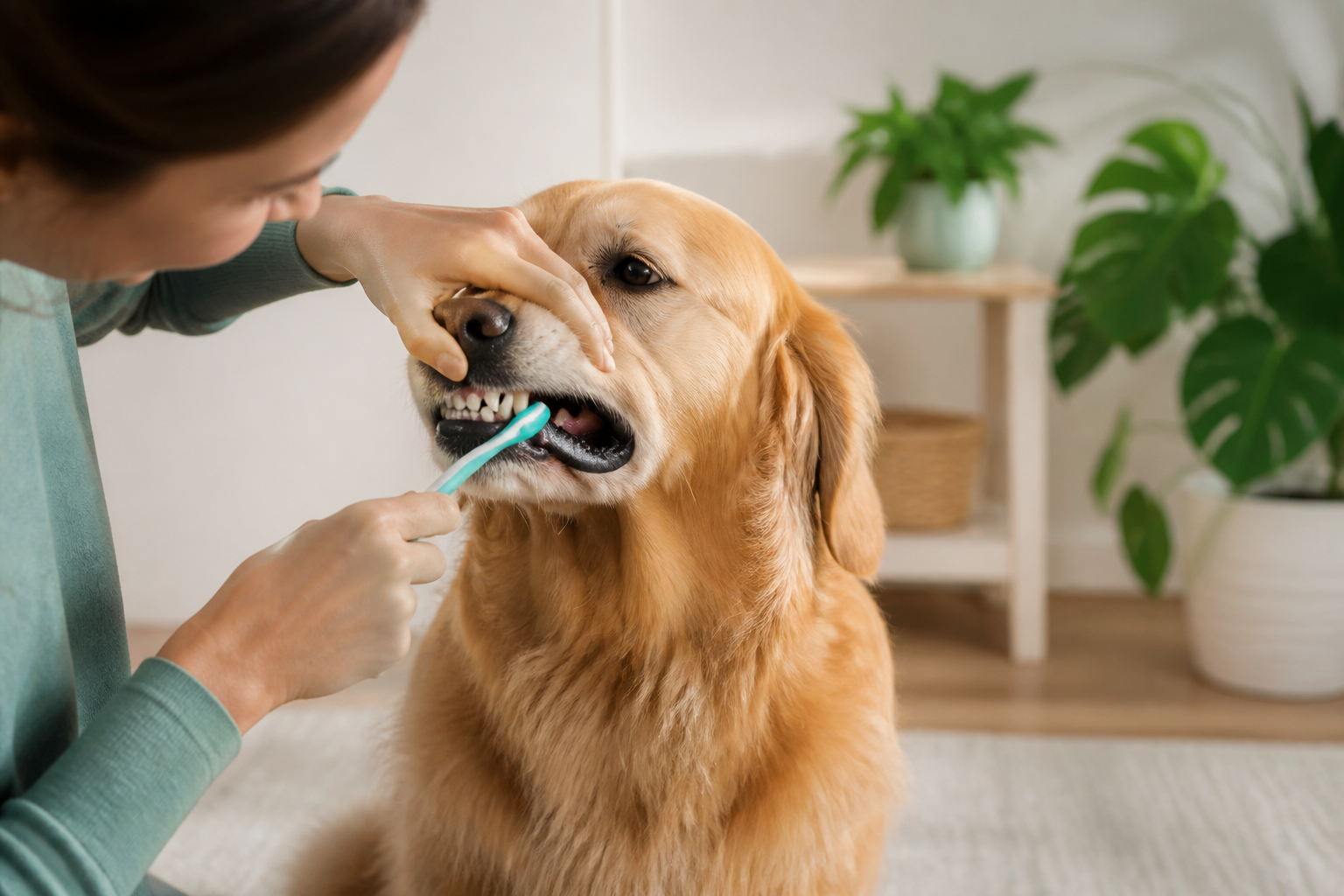
Daily brushing is the single most effective way to remove plaque before it hardens into tartar. Plaque is a sticky film of bacteria that forms on the teeth within hours of eating. If it is not brushed away, it reacts with minerals in the saliva to form tartar, also known as calculus. Once tartar forms, it is like concrete and cannot be removed with a toothbrush. You will need a professional cleaning from a veterinarian to get rid of it.
To start, you need the right tools. Never use human toothpaste. Many human pastes contain xylitol, an artificial sweetener that is highly toxic to dogs. Human toothpaste also contains foaming agents that are meant to be spit out, but dogs will swallow whatever you put in their mouths. Dog-specific toothpaste comes in flavors like poultry, beef, or peanut butter to make the experience more pleasant for them. A Virbac C.E.T. enzymatic pet toothpaste is one dog-safe option formulated for companion animals.
You have a few choices for the brush itself. A standard dog toothbrush has a long handle and an angled head to reach the back molars. If your dog is small or nervous about a large object in their mouth, a finger brush might be better. This is a small rubber cap with bristles that fits over your index finger. It allows for more precision and a gentler touch.
How to Introduce Brushing
Step 1: Let your dog lick a small amount of flavored toothpaste off your finger. This builds a positive association with the taste.
Step 2: Gently rub your finger along their gums and teeth without the brush. This gets them used to the sensation of their mouth being handled.
Step 3: Introduce the brush at a 45-degree angle to the gum line. Use small, circular motions.
Step 4: Focus on the outside of the teeth. This is where most plaque accumulates. The tongue usually does a decent job of cleaning the inside surfaces.
Key Takeaway: Consistency matters more than duration. Brushing for 30 seconds every day is far more effective than a five-minute session once a month.
Dental Chews and Treats
Not every dog is a willing participant in a brushing routine. This is where dental chews become a valuable tool. These treats are designed to be long-lasting and have a specific texture that scrubs the teeth as the dog chews. As the teeth sink into the chew, the material scrapes away plaque and food particles. You can explore our dental and breath care collection for brushing supplies, chews, and other oral-care products.
When shopping for chews, look for the VOHC seal. The Veterinary Oral Health Council only awards this seal to products that have been scientifically proven to reduce plaque or tartar. Brands like Greenies and certain RedBarn products are popular choices because they balance palatability with dental benefits.
It is important to supervise your dog while they enjoy a dental chew. Some dogs are "gulpers" who may try to swallow large chunks. This can lead to a choking hazard or digestive blockages. Ensure the chew is appropriate for your dog’s size. A chew that is too small can be swallowed whole, while one that is too large might be too hard for a small dog’s jaw.
Vet Tip: If you notice your dog's gums bleeding when they eat a dental chew, it could be a sign of early gingivitis. Consult your veterinarian to check for underlying dental disease before continuing with hard treats.
For more ideas, see our guide to the best dental chews for dogs.
Durable Toys for Mechanical Scrubbing
Playtime is an excellent opportunity for some passive dental cleaning. Certain toys are specifically designed with ridges, nubs, and grooves that massage the gums and scrape the teeth. When a dog gnaws on a textured rubber toy, it helps stimulate blood flow to the gums and physically disrupts the biofilm on the tooth surface.
Kong toys are a staple for this purpose. They are durable enough to withstand heavy chewing, and the classic shape provides a varied surface for the teeth. You can even smear a bit of dog-safe dental gel inside the grooves of a toy to increase its effectiveness. Toys from brands like RC Pets and Jackson Galaxy offer different textures that cater to different chewing styles.
Avoid toys that are too hard. A good rule of thumb is the "fingernail test." If you cannot make a small dent in the toy with your fingernail, it might be hard enough to fracture a tooth. This is why many vets recommend avoiding real bones, elk antlers, or hard plastic toys for aggressive chewers. Broken teeth are painful and often require expensive extractions.
- Look for rubber toys with deep grooves.
- Avoid tennis balls, as the fuzz can act like sandpaper and wear down tooth enamel over time.
- Rotate toys regularly to keep your dog interested in chewing.
- Clean toys frequently to prevent bacteria buildup.
Water Additives and Oral Sprays
For owners with a busy schedule or dogs that are extremely head-shy, water additives and oral sprays offer a low-effort way to support dental health. These products typically contain enzymes or minerals that help break down the bacteria that cause plaque.
Water additives are flavorless liquids that you simply pour into your dog's water bowl. As they drink throughout the day, the solution coats the teeth and gums. This is particularly helpful for targeting the entire mouth, including the hard-to-reach areas in the back. While they are not as effective as physical scrubbing, they are an excellent supplement to other methods.
Oral sprays work similarly but are applied directly to the teeth and gums. They are often used after a meal to neutralize food acids and freshen breath. Some sprays are formulated to soften existing tartar over time, making it easier to brush away. We carry several of these options in our dog dental care collection to help make dental maintenance easier for every lifestyle.
The Role of Diet in Dental Health
There is a common belief that dry kibble cleans a dog's teeth because it is crunchy. While some kibble may provide a tiny bit of scraping, most standard dry food crumbles too quickly to have a significant impact. In fact, many dogs swallow kibble whole or in large chunks, meaning it spends very little time in contact with the tooth surface.
However, specific prescription dental diets are different. These foods are formulated with a larger kibble size and a specific fiber matrix that does not crumble immediately. Instead, the tooth sinks into the kibble, allowing the fibers to scrub the tooth surface all the way to the gum line. These diets often contain minerals that bind calcium in the saliva, preventing it from turning plaque into tartar.
Our pharmacy provides access to these specialized prescription diets through our partnership with Pet's Choice. If your dog has a history of rapid tartar buildup or early-stage dental disease, a prescription diet like Royal Canin Dental or Farmina Vet Life can be a powerful tool. These diets require a prescription from your veterinarian to ensure they are the right choice for your dog's specific health needs.
Key Takeaway: Standard kibble is not a substitute for brushing. If you want diet-based dental cleaning, look for VOHC-approved dental diets or those prescribed by your vet.
Natural Options: Carrots, Apples, and Raw Bones
Some owners prefer to use fresh foods to help keep teeth clean. Raw carrots and apple slices (without the seeds or core) are healthy, low-calorie treats that provide a satisfying crunch. The mechanical action of chewing these firm vegetables can help remove some surface debris. While they are a great snack, they do not contain the enzymatic ingredients found in dedicated dental products.
Raw bones are a more controversial topic in the pet world. Raw, meaty bones can be effective at scaling teeth because the meat and cartilage act like natural floss. However, there are significant risks involved. Bones can carry bacteria like Salmonella or E. coli. They can also splinter and cause internal punctures or cause painful tooth fractures if they are too hard.
If you choose to use bones for dental health:
- Never feed cooked bones, as they become brittle and splinter easily.
- Always supervise your dog during the entire chewing session.
- Choose a bone size that is too large for your dog to swallow.
- Consult your veterinarian to see if your dog's teeth are strong enough for bone chewing.
Professional Care and the Pharmacy
Even with the best home routine, most dogs will eventually need a professional dental cleaning. Just like humans go to the dentist, dogs need a veterinarian to scale the teeth under the gum line, where the most damaging bacteria hide. A professional cleaning is performed under general anesthesia to ensure the vet can safely and thoroughly examine every tooth and take X-rays if necessary.
Anesthesia allows the veterinarian to identify problems that are not visible to the naked eye, such as root abscesses or bone loss. If your dog is diagnosed with periodontal disease, your vet may prescribe medications to manage infection or pain.
Our pharmacy carries FDA-approved medications and prescription products through our partnership with Pet's Choice. This includes everything from specialized oral rinses to antibiotics that might be needed after a dental procedure. Using a reputable pharmacy ensures you are getting genuine, safe medications for your pet's recovery and ongoing maintenance.
Signs of Dental Disease to Watch For
It is helpful to know what "normal" looks like so you can spot changes early. A healthy dog should have pink gums and white teeth without significant brown or gray staining. The breath should not be offensive. If you notice any of the following symptoms, it is time for a veterinary visit. For additional guidance, read how to recognize warning signs of dental disease in dogs.
- Bad breath (halitosis) that persists.
- Yellow or brown buildup on the teeth near the gum line.
- Red, swollen, or bleeding gums.
- Difficulty eating or dropping food.
- Pawing at the mouth or face.
- Loose or missing teeth.
- Excessive drooling.
Vet Tip: Dental pain in dogs is often silent. Many dogs will continue to eat even with severe oral pain. Do not wait for your dog to stop eating before addressing dental concerns; regular exams are the only way to catch hidden pain.
Building a Sustainable Routine
The best dental care routine is the one you can actually stick to. You do not have to do everything at once. Start small and build up as your dog becomes more comfortable. A combination approach usually yields the best results.
Step 1: Aim for daily brushing, even if it is only for 30 seconds.
Step 2: Provide a VOHC-approved dental chew on days when you cannot brush.
Step 3: Add a water additive to their daily bowl for constant bacterial support.
Step 4: Schedule an annual dental exam with your veterinarian to monitor progress.
At BaxterBoo, we have been helping pet owners since 2006, and we know that consistency is the secret to a healthy pet. Whether you are starting with a new puppy or managing the needs of a senior dog, we have the supplies and the expertise to support you. By taking these small steps now, you can prevent painful procedures and keep your dog's tail wagging for years to come.
Bottom line: Effective dental care requires a mix of physical brushing, mechanical chewing, and professional veterinary oversight to prevent long-term health issues.
FAQ
How often do I really need to brush my dog's teeth?
Ideally, you should brush your dog's teeth every day to remove plaque before it hardens into tartar. Tartar can begin to form within 24 to 48 hours, so brushing less than three times a week is generally not very effective. If daily brushing is not possible, try to do it at least every other day and supplement with dental chews.
Are dental chews as good as brushing?
Dental chews are a helpful supplement but are not a complete replacement for brushing. Brushing allows you to target the gum line and the specific surfaces where plaque accumulates most, whereas chews rely on where the dog happens to bite down. Using both in combination provides the most thorough cleaning for your dog's mouth.
Can I use a regular toothbrush for my dog?
You can use a soft-bristled human toothbrush, especially a child-sized one, but a dog-specific brush is often better. Dog brushes are angled to reach the back molars more easily and have softer bristles designed for canine gums. The most important thing is to never use human toothpaste, as it contains ingredients like xylitol that are toxic to dogs.
Why does my dog still have bad breath even after cleaning?
Persistent bad breath can be a sign of deep-seated periodontal disease, an infection, or even an underlying internal health issue like kidney or liver problems. If you are cleaning the teeth regularly and the odor remains, it is important to see a veterinarian for a professional exam. There may be tartar or infection under the gum line that a toothbrush cannot reach.






