Save 15% on your 1st Autoship learn more

 Email us
 Live Chat
 FAQs
FAQs





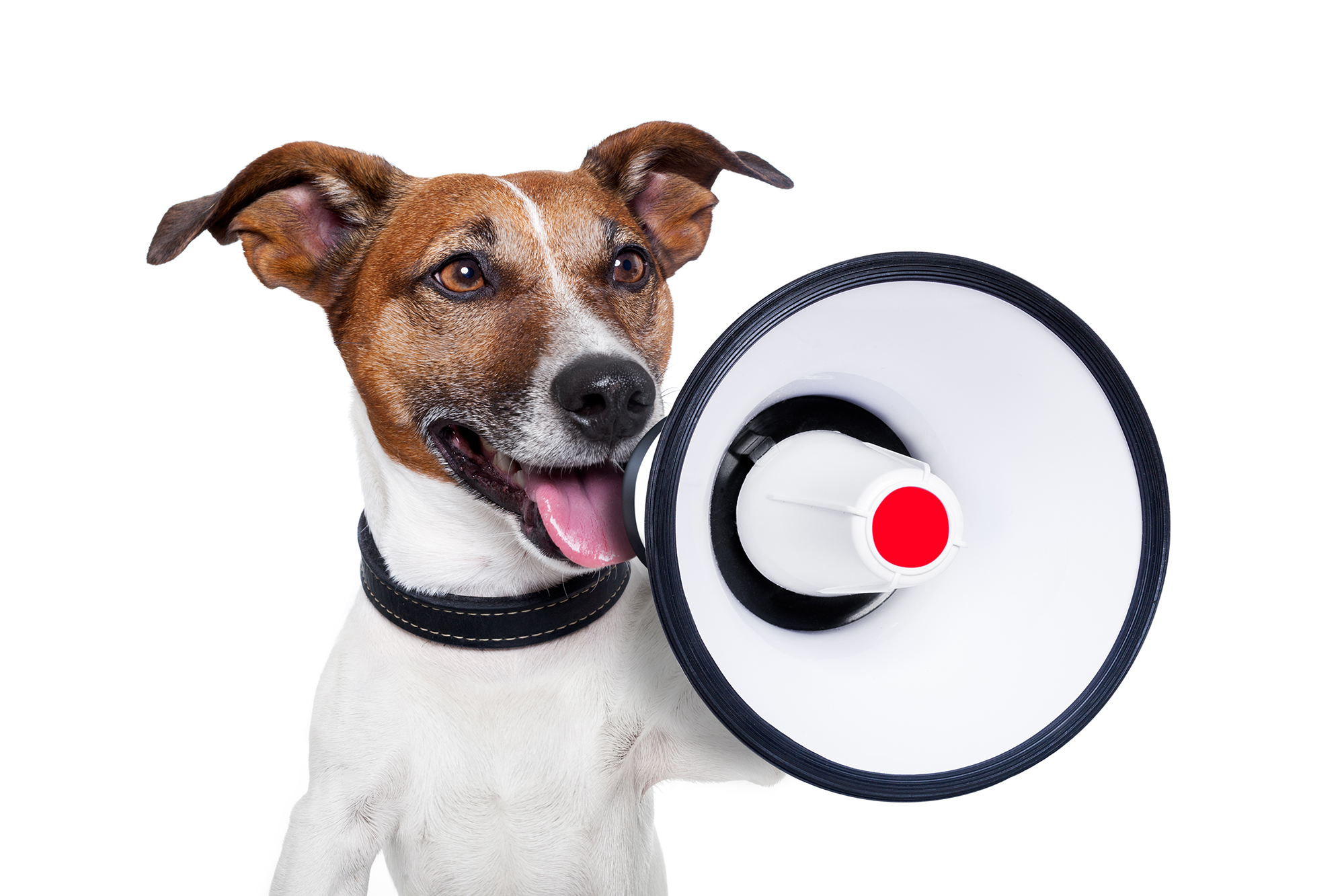
Dogs may not be able to talk in the traditional sense of the term, but that doesn’t mean they can’t communicate with you. Dogs are capable of communicating their thoughts, feelings and needs via body language and behaviors. Though every pooch will have his or her own unique way of communicating, some doggy signals are more universal than others. It is important that you recognize typical dog expressions and behaviors, as well as your pup’s unique indicators, so that you and your four-legged friend can enjoy a more fulfilling, two-way relationship.
Dogs Communicate Through Sounds
Like humans, dogs are verbal creatures. Though they cannot form syllables, much less whole words, they can emit sounds at a variety of frequencies and that communicate various emotions and feelings. The most common types of sounds you may hear from your pooch include the following:
-
Barking: Dog barking is the equivalent to human yelling. Like when humans yell, dogs bark when they want to be heard. A continuous bark may indicate that a stranger is present. A yelping bark may indicate that your pooch is hurt, and a loud, deep bark may signal a warning to someone or something to not come near.
-
Whining: When your pooch emits a high-pitched by low-volume sound, he or she may be trying to express to you that he or she is hurt, hungry, in need of some attention or under stress. Whining may be an indicator that your pup misses someone or something, such as another animal companion.
-
Panting: Panting typically indicates excitement. However, it can signal nervousness or, in worst cases, a serious medical condition. If your dog pants in extreme heat and/or after playing outside, he or she may be overheating. If the panting persists for no discernable reason, schedule a vet appointment immediately to rule out underlying medical conditions.
-
Howling: Howling is generally reserved for other dogs in the area. It is a way in which dogs announce their presence and communicate with local canines.
-
Singing: If your dog’s vocalizations sound a bit like singing, that’s because they’re probably trying to belt a tune. Dogs “sing” when they are happy or excited, such as when you get home from work or present them with a treat.
Dogs Communicate Through Body Language
In addition to making sounds, your furry friend may also try to communicate with you via body language. In fact, body language, when combined with one of the aforementioned five sounds, can yield some of the most accurate representations of what your pup is trying to say. Below are common dog behaviors that can likely tell you more about what your dog is thinking than any vocalization:
-
Tail Movement: Want to know if your dog is happy, sad, angry or confused? Look to his or her tail. When a dog’s tail wags, you know that he or she is happy, excited and ready to play. When it’s tucked between the legs, however, your pup may be fearful or nervous. When pointed and/or erect, the tail can tell you that your pup is on full alert and that he or she may dart after a perceived threat if you’re not paying attention.
-
Hair Raising: When a dog’s hair raises — even if it’s your own beloved canine — keep your distance. Hair movement, particularly along the spine and at the back of the neck and head, tells you that a dog is nervous, angry and on high alert. It is an indicator that they either don’t feel comfortable with you or that they sense a nearby threat. Either way, take it as your cue to keep your distance until the threat subsides.
-
Head Tilting: The head title doesn’t indicate much except that your pup is either trying to listen to what you have to say or that he or she empathizes with you. However, it’s adorable, and it is probably one of the most well-known and well-loved of all the doggy signals.
-
Eye Shape: Like humans, so much of what a dog has to say is in the eyes. When your pup is content, his or her eyes will appear normal-sized. Widening of the eyes may indicate aggression or feelings of fear. If your dog isn’t feeling well, his or her eyes may appear droopy or squinted.
-
Mouth Movement: A happy dog may try to lick a parent or another pet, while a calm does may relax with the mouth just slightly open. A pooch that is nervous may clench his or her jaw closed, while a submissive pet may continually lick their lips and yawn. When a dog shows teeth, it is a tell-tale sign that he or she senses danger and either wants to protect you or him or herself. Very rarely does it mean a dog is smiling (though, teeth could be a smile as well, which is why it’s important to look for other cues).
-
Ear Movement: You can tell a lot about what a dog is feeling through his or her ear position. Erect ears may either indicate that your pup is merely listening to the environment. Erect ears, combined with a stiff stance and concentrated look, may tell you that he or she senses an unknown presence nearby and is trying to discern whether or not it’s a threat. Erect ears pointing forward is a sign that your pet sees a threat and is ready to attack. Laid back ears, on the other hand, may tell you that your pup is being submissive or is ready for some attention. When combined with barred teeth and other body signals, however, they could indicate nearby danger.