
 Save 15% on your 1st Autoship learn more

 Email us
 Live Chat
 FAQs
FAQs





Introduction
You lean in for a happy morning nuzzle only to be met with a cloud of breath that smells like a bait shop. That sudden "stink" is often the first sign that plaque and bacteria are taking over your dog's mouth. At BaxterBoo, we know that looking into your dog's mouth can be intimidating. You might see yellow buildup or red gums and wonder where to start.
The truth is that no single product works for every dog. The best choice depends on your pet's personality and the current state of their oral health. This guide covers everything from enzymatic toothpastes to prescription dental diets. We will help you build a routine that actually works. We believe that a combination of mechanical cleaning and chemical plaque fighters is the most effective way to keep your dog healthy.
The Gold Standard: Enzymatic Toothpaste and Brushing
Most veterinarians agree that brushing is the single most effective way to clean a dog's teeth. It provides mechanical action to scrub away plaque before it hardens into tartar. However, you cannot use human toothpaste. Human products often contain xylitol or high levels of fluoride. These are toxic to dogs.
Canine toothpaste is usually enzymatic. This means it contains enzymes like glucose oxidase and lactoperoxidase. These ingredients produce a natural antibacterial reaction that continues to work even after you stop brushing. Most brands come in flavors like poultry, beef, or peanut butter to make the experience more pleasant for your dog. The Virbac C.E.T. Enzymatic Pet Toothpaste is one pet-formulated option made for dogs and cats.
Choosing the Right Brush
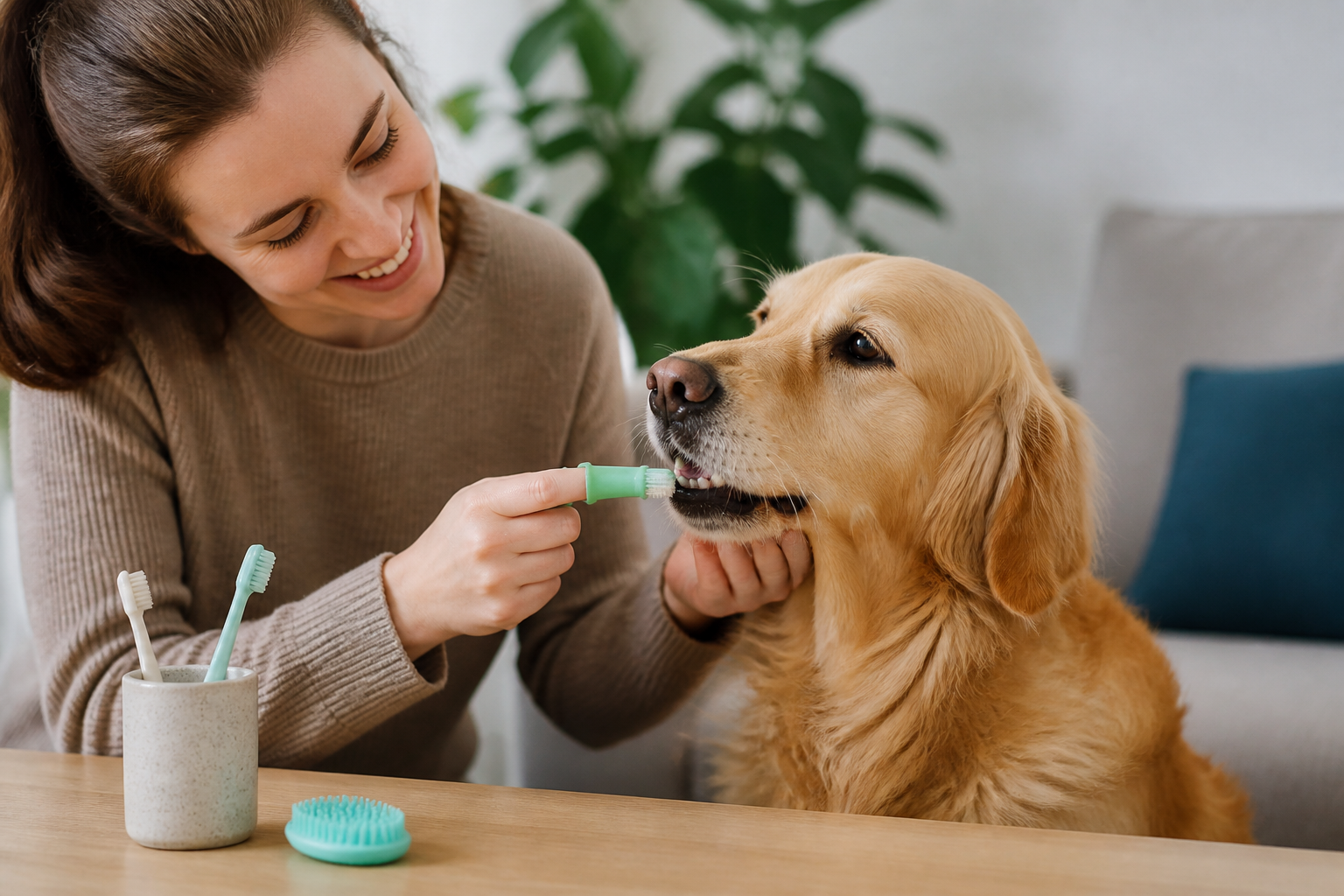
The tool you use is just as important as the paste. For large dogs, a long-handled brush allows you to reach the back molars. These are the teeth most prone to heavy tartar buildup. For small dogs or puppies, a finger brush is often less scary. It gives you more control and lets you feel exactly where you are cleaning.
Why Mechanical Action Matters
Plaque is a sticky film of bacteria. It starts forming just hours after a meal. If it is not physically disturbed, it reacts with minerals in the saliva. This process turns soft plaque into rock-hard calculus, also known as tartar. Once tartar forms, a toothbrush cannot remove it. Only a professional veterinary cleaning can.
Quick Answer: The best product for most dogs is a VOHC-approved enzymatic toothpaste used with a soft-bristled brush. This combination provides both mechanical scrubbing and chemical plaque prevention.
For additional guidance on building a brushing habit, read these pet dental care tips.
Understanding the VOHC Seal
When you shop for dental products, you will see many claims. Some say they "whiten teeth" or "freshen breath." To find products that actually work, look for the Veterinary Oral Health Council (VOHC) Seal of Acceptance.
The VOHC is an independent organization. They review data from clinical trials conducted by pet product companies. A product only gets the seal if it meets strict standards for reducing plaque or tartar by at least 20 percent.
Why the Seal is a Trust Signal
- It proves the product was tested on real dogs.
- The results are reviewed by veterinary dentists.
- It separates marketing fluff from scientifically backed tools.
We carry many brands that hold this seal, including Greenies, Royal Canin, and Hill’s Prescription Diet. When you see that seal, you know you are spending your money on something that has a measurable impact on your dog's health.
Dental Chews and Treats
Not every dog will sit still for a toothbrush. This is where dental chews become a vital part of the routine. These treats are designed to be long-lasting. As your dog chews, the texture of the treat scrapes against the tooth surface. You can explore our dog dental care category for chews, gels, toothpaste, and other oral-care products.
The Role of Texture
Quality dental chews like Greenies or Oravet have a specific "give." They allow the tooth to sink into the treat. This ensures the cleaning action reaches all the way down to the gumline. Some chews also contain ingredients that create a protective barrier on the teeth. This barrier makes it harder for new bacteria to stick.
The Greenies Original Dental Dog Chews are available in a regular size for dogs weighing 25–50 pounds.
Managing the Calories
Dental treats are effective, but they are still treats. They contain calories that can lead to weight gain if you are not careful.
- Always choose the correct size for your dog's weight.
- Reduce their main meal slightly if they get a daily dental chew.
- Monitor your dog while they eat the treat to prevent choking.
Key Takeaway: Dental chews are a great supplement to brushing but should not be the only tool you use. They work best on the chewing surfaces and outer sides of the teeth.
For more ideas, see these dental chews for dogs.
Water Additives and Oral Sprays
For dogs that are truly "hands-off" about their mouths, water additives are a helpful hands-free option. These products are usually tasteless and odorless. You simply add a capful to your dog's water bowl each time you refill it.
How Additives Work
Most water additives use zinc gluconate or chlorhexidine to kill bacteria in the mouth. These ingredients help neutralize the sulfur compounds that cause bad breath. They also help break down the biofilm that leads to plaque formation.
Sprays and Gels
Oral sprays and gels are similar to additives but are applied directly to the teeth or gums. Some gels, like Petsmile, do not even require brushing. You simply dab a bit on the dog's lips or teeth, and their tongue spreads it around. This is a great intermediate step for senior dogs or pets with sensitive gums. The Petsmile Professional Toothpaste is one no-brush option.
Vet Tip: If your dog has red, bleeding, or swollen gums, skip the spray and call your vet. These can be signs of advanced periodontal disease that require medical intervention rather than a retail product.
Prescription Dental Diets
For dogs prone to rapid tartar buildup, a change in diet can make a massive difference. Standard kibble is often small and brittle. It shatters the moment a dog bites down. This provides almost no cleaning benefit.
Prescription dental diets are different. Brands like Royal Canin Vet Life or Hill’s Prescription Diet t/d feature extra-large kibble. The fibers in the kibble are aligned in a way that prevents the nugget from crumbling. Instead, the tooth must penetrate the kibble. This creates a "squeegee" effect that cleans the tooth surface.
Accessing Prescription Food
These diets contain specific nutrient profiles and are considered a medical tool. Because of this, they require a prescription from your veterinarian. Our pet pharmacy makes it easy to manage these needs. Through our partnership with Pet's Choice, we can fulfill your vet's prescription and ship these specialized diets directly to your door.
Bottom line: Prescription diets provide constant mechanical cleaning every time your dog eats, making them ideal for high-risk breeds like Greyhounds or Pugs.
Dental Wipes for Sensitive Mouths
If your dog finds a toothbrush too invasive, dental wipes are an excellent alternative. These are textured pads pre-soaked with cleaning solutions. You wrap the wipe around your finger and rub it over the teeth and gums.
Benefits of Using Wipes
- They are less bulky than a brush.
- You can feel the teeth, which helps you target specific spots.
- They are great for cleaning the "smile line" where the lip meets the gum.
Wipes are particularly useful for puppies. They help get the puppy used to having your fingers in their mouth. This sets a foundation for easier brushing later in life.
Signs Your Dog Needs More Than Just a Cleaning Product
While the products we sell are excellent for prevention, they cannot cure an existing infection. It is important to know when to stop "cleaning" and start "treating." Periodontal disease can lead to bacteria entering the bloodstream. This can eventually damage the heart, liver, and kidneys.
Watch for These Symptoms:
- Persistent bad breath that does not improve with brushing.
- Loose or missing teeth.
- Pawing at the face or rubbing the mouth on the carpet.
- Blood on chew toys or in the water bowl.
- Swelling under the eye or along the jawline.
If you notice these signs, a trip to the vet is mandatory. They may recommend a professional cleaning under anesthesia. This is the only way to clean the space under the gumline where the most dangerous bacteria live.
You can also review these warning signs of dental disease in dogs.
How to Introduce a New Dental Routine
Most dogs do not naturally want a plastic stick in their mouth. You have to build trust. Start slowly and keep the sessions short.
Step 1: Let them taste the toothpaste. / Put a small dab on your finger and let them lick it off. Do this for a few days without trying to touch their teeth.
Step 2: Rub the gums. / Use your finger to gently rub their gums while they lick the paste. This gets them used to the sensation of their lips being lifted.
Step 3: Introduce the tool. / Let them lick the paste off the brush or wipe. Move the brush in a small circular motion on just the front teeth.
Step 4: Build up to the back. / Gradually work your way to the back molars. Focus on the outside of the teeth, as the tongue usually keeps the inside surfaces cleaner.
The Role of Our Pharmacy in Oral Care
Sometimes, dental health requires more than just a good scrub. If your vet diagnoses an oral infection, they may prescribe antibiotics or medicated rinses. At BaxterBoo, we aim to be your full-service partner in pet health.
Our pharmacy provides FDA-approved medications through our partnership with Pet's Choice. This includes prescription-strength dental gels and rinses that help manage chronic gingivitis or post-surgical healing. By integrating your shopping for treats and gear with your pharmacy needs, you can keep all your dog's records in one place.
Choosing Products Based on Life Stage
The "best" product changes as your dog grows. A puppy has different needs than a senior dog with fragile teeth.
For Puppies
Focus on wipes and soft finger brushes. This is the time to build the habit. Use highly palatable pastes to make it a fun "treat" time rather than a chore. Our puppy collection can help you find supplies for a new routine.
For Adult Dogs
This is the prime time for dental chews and regular brushing. If your dog is a heavy chewer, look for durable dental toys that can help scrub the teeth during play.
For Seniors
Older dogs often have some degree of gum recession. They may find hard chews painful. Switch to softer dental treats or water additives. This is also the best time to discuss prescription dental diets with your vet to reduce the frequency of professional cleanings.
Summary of the Best Dental Tools
To get the most out of your efforts, use a combination of these categories.
| Product Type | Best For | Level of Effort |
|---|---|---|
| Enzymatic Paste | Deep cleaning and prevention | High |
| Dental Chews | Daily maintenance and reward | Low |
| Water Additives | Difficult dogs and fresh breath | Very Low |
| Prescription Diet | Dogs prone to heavy tartar | Low |
| Dental Wipes | Puppies and sensitive gums | Medium |
Building a Long-Term Dental Plan
Consistency is more important than the specific brand you choose. Brushing once a month does very little. Brushing three times a week can change your dog's life.
We recommend setting a schedule. Perhaps your dog gets a dental chew every morning and a quick brushing session every other evening. You can track your purchases and save money by using our Autoship programme. This ensures you never run out of the pastes or chews your dog relies on.
Plus, every purchase earns you points toward the MVP Rewards programme. These rewards can be used on future orders for anything from flea protection to new toys. When you prioritize your dog's teeth, you are investing in their overall longevity and comfort.
Conclusion
Finding the best product to clean your dog's teeth starts with understanding your dog's unique needs. Whether you choose a high-tech enzymatic gel, a crunchy dental chew, or a prescription diet from our pharmacy, the goal is to stop plaque before it becomes a problem. At BaxterBoo, we have been helping pet owners navigate these choices since 2006. We handpick every product to ensure it meets our standards for safety and effectiveness.
Take a look at your dog's gums today. If you see redness or smell something foul, start with a vet visit. Then, browse our dental care category to find the tools that fit your lifestyle. Your dog’s health starts with their smile.
Key Takeaway: A multi-pronged approach is best. Combine brushing with VOHC-approved chews or water additives for the most comprehensive protection against dental disease.
FAQ
Can I use human toothpaste on my dog?
No, you should never use human toothpaste for your dog. Human toothpastes often contain xylitol, which is a sweetener that is highly toxic to dogs and can cause liver failure. They also contain foaming agents that are not meant to be swallowed, which can cause stomach upset in pets.
How often should I clean my dog's teeth?
Ideally, you should brush your dog's teeth every single day to remove plaque before it hardens into tartar. If daily brushing is not possible, aim for at least three times a week. Supplementing with daily dental chews or water additives can help fill the gaps on days when you cannot brush.
Are dental chews as effective as brushing?
Dental chews are a helpful tool, but they are generally not as effective as manual brushing. Brushing allows you to target the gumline and the back of the mouth more precisely. However, for dogs that will not tolerate a brush, a VOHC-approved dental chew is a much better option than no dental care at all.
Why does my dog's breath still smell after brushing?
If your dog has chronic bad breath despite regular cleaning, there may be an underlying issue. This could include a rotted tooth, a deep infection below the gumline, or even internal health issues like kidney disease. If the smell is persistent or "fishy," you should consult your veterinarian for a full dental exam.






