
 Save 15% on your 1st Autoship learn more

 Email us
 Live Chat
 FAQs
FAQs





Introduction
You lean in for a pup kiss and get hit with a wall of noticeably bad breath. This is a common moment for many dog owners. While we love our dogs, their oral hygiene often falls behind their coat care or exercise routine. At BaxterBoo, we know that dental health is about more than just fresh breath. It is a vital part of your dog's overall wellness and long term comfort. This article explores the most effective tools for cleaning canine teeth. We will cover daily brushing, dental chews, water additives, and the role of professional veterinary care. Maintaining a clean mouth requires a multi-pronged approach. Finding the right combination for your dog is the best way to prevent painful infections and tooth loss.
Quick Answer: The single best thing for cleaning a dog's teeth is daily brushing with dog-specific toothpaste. While chews and additives help, the mechanical action of a brush is the most effective way to remove plaque before it hardens into tartar.
The Gold Standard: Manual Brushing
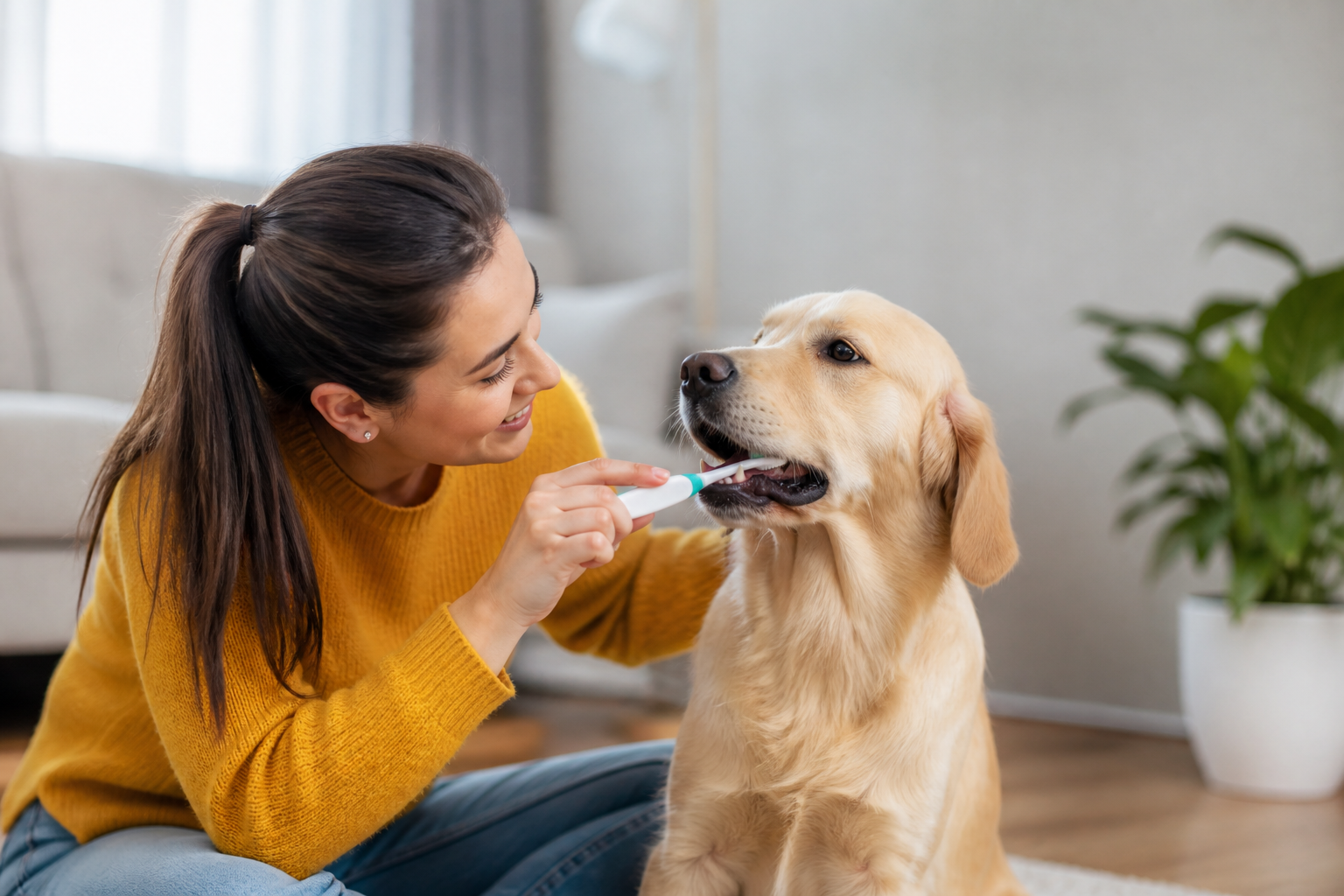
Daily brushing remains the most effective way to maintain oral health. It is the only method that provides the mechanical friction necessary to disrupt plaque. Plaque is a sticky film of bacteria that forms on the teeth after eating. If it is not removed within 24 to 48 hours, it begins to mineralize into tartar. Once tartar forms, it cannot be brushed away at home.
You must use a toothpaste formulated specifically for dogs. Human toothpaste often contains xylitol, which is highly toxic to dogs. It also contains foaming agents that dogs should not swallow. Dog toothpastes come in flavors like poultry or beef to make the experience more enjoyable for your pet.
Choosing the Right Tools
The type of brush you use depends on your dog's size and comfort level. Finger brushes are excellent for small dogs or beginners. They allow you to feel exactly where the bristles are touching. For larger dogs, a long handled toothbrush helps you reach the back molars.
For additional guidance on building a routine, read our pet dental care tips.
How to Introduce Brushing
Most dogs do not naturally enjoy having their mouths handled. You should start the process slowly to build trust. Let your dog lick a small amount of toothpaste off your finger first. Gradually move to rubbing their gums with your finger. Once they are comfortable, introduce the brush for a few seconds at a time.
Step 1: Let your dog taste the toothpaste. / Do this for several days until they see the tube as a treat.
Step 2: Rub your finger along their gums. / Use a lifting motion with the lips to get them used to the sensation.
Step 3: Introduce the toothbrush. / Aim for a 45 degree angle toward the gum line.
Step 4: Focus on the outsides of the teeth. / This is where the most plaque accumulates near the cheeks.
Key Takeaway: Consistency is more important than duration. Even thirty seconds of brushing every day is better than a long session once a month.
Dental Chews and Treats
Dental chews are a popular choice because dogs enjoy them. These products work through mechanical abrasion as the dog chews. Some also contain active ingredients that help prevent plaque from sticking to the enamel. Brands like Greenies are designed with specific textures to scrub the teeth down to the gum line.
When choosing a dental chew, look for the Veterinary Oral Health Council (VOHC) Seal of Acceptance. This seal indicates that the product has met rigorous standards for reducing plaque or tartar. We carry several VOHC-approved options in our dental food and treats collection to ensure you are getting products that actually work.
The Hardness Test
Not all chews are safe for every dog. Items that are too hard can cause tooth fractures. This is especially true for aggressive chewers. A good rule of thumb is the fingernail test. If you cannot make a small dent in the chew with your fingernail, it might be too hard. Avoid feeding natural bones, antlers, or nylon chews that have no "give" to them.
For more ideas, explore our guide to dental chews for dogs.
Managing Calories
Dental treats are a useful tool, but they do contain calories. If you give your dog a dental chew every day, you may need to adjust their meal portions. Obesity can lead to other health issues that complicate dental care. Always supervise your dog when they are enjoying a chew to prevent choking or swallowing large pieces.
Vet Tip: If your dog has existing loose teeth or heavy tartar, consult your veterinarian before starting a dental chew routine. Hard chews can cause pain or further damage to compromised teeth.
Water Additives and Dental Sprays
Water additives and sprays are excellent for dogs that absolutely refuse brushing. You simply add a measured amount of the liquid to your dog's water bowl. These products often contain enzymes or antimicrobial agents like chlorhexidine. These ingredients work to kill the bacteria that cause bad breath and plaque.
You can find additional options in our dog dental and breath care category.
How Additives Work
Additives work by altering the chemistry of the saliva. As your dog licks and swallows, the active ingredients move throughout the mouth. This helps to reach areas that might be missed by a brush or a chew. They are particularly helpful for cleaning the inner surfaces of the teeth.
Choosing a Safe Product
Just like toothpaste, you must check the ingredient list on additives. Avoid any products containing xylitol. Some additives also include peppermint or green tea extract to freshen breath instantly. While these are not a replacement for mechanical cleaning, they are a valuable secondary defense.
Bottom line: Additives and sprays are best used as a supplement to brushing, not a total replacement for it.
The Role of Diet in Dental Health
There is a common belief that dry kibble cleans teeth better than wet food. While kibble does provide some scraping action, most standard kibble pieces are too small to do much. Many dogs swallow their kibble whole or it shatters instantly upon contact.
Dental Specific Diets
Specific dental diets are different from standard kibble. These pieces are larger and have a fibrous texture. They are designed to stay in contact with the tooth for longer. Some of these diets also include minerals that bind to calcium in the saliva. This prevents the calcium from turning plaque into hard tartar.
Fresh Foods for Chewing
Certain fresh vegetables can help with mild cleaning. Raw carrots or apple slices (without seeds) require significant chewing. This can help scrape away some surface debris. However, these do not contain the targeted enzymes found in professional dental products. They should be viewed as healthy snacks rather than dental treatments.
Key Takeaway: If your dog has chronic dental issues, a prescription dental diet may be necessary. Our pharmacy carries FDA-approved prescription pet foods through our partnership with Pet's Choice.
Veterinary Dental Cleanings
Even with the best home care, most dogs will eventually need a professional cleaning. A veterinarian can clean beneath the gum line where home tools cannot reach. This is where the most dangerous bacteria reside. These bacteria can eventually enter the bloodstream and affect the heart, liver, and kidneys.
The Importance of Anesthesia
A proper dental exam and cleaning must be performed under general anesthesia. This allows the vet to take X-rays and check for pockets of infection. It also ensures your dog remains still and pain-free during the procedure. Anesthesia-free cleanings are often discouraged by experts. They only address the visible tartar and leave the hidden disease under the gums untouched.
For information about warning signs that may require veterinary attention, read how to recognize bad teeth in dogs.
Signs of Dental Disease
You should monitor your dog's mouth regularly. If you notice any of the following signs, it is time to schedule a veterinary visit. Dental pain can be subtle. Dogs often continue to eat even when they have severe toothaches.
- Extreme bad breath (halitosis)
- Red, swollen, or bleeding gums
- Yellow or brown buildup on the teeth
- Loose or missing teeth
- Difficulty picking up food or dropping food
- Pawing at the mouth or face
Vet Tip: Regular blood work before a dental procedure is vital. This helps your veterinarian ensure your dog's organs are healthy enough to process the anesthesia safely.
Step-by-Step Home Care Routine
Starting a routine can feel overwhelming. It is easiest to build the habit by attaching it to an existing daily activity. For example, you might brush your dog's teeth right after you brush your own at night.
Step 1: Inspect the mouth. / Briefly check for any new redness or broken teeth.
Step 2: Brush for one minute. / Use a circular motion on the upper and lower molars.
Step 3: Provide a dental chew. / Give this as a reward for the brushing session.
Step 4: Refresh the water additive. / Change the water daily to keep the additive effective.
| Method | Effectiveness | Ease of Use | Cost |
|---|---|---|---|
| Brushing | Very High | Medium | Low |
| Dental Chews | Medium | Very High | Medium |
| Additives | Low to Medium | Very High | Medium |
| Pro Cleaning | Maximum | Low (Requires Vet) | High |
Advanced Support and Pharmacy Access
Some dogs require more than just a toothbrush. If your dog suffers from chronic gingivitis or recurring infections, your vet may prescribe specific medications. This might include oral gels or even antibiotics for a short period.
The our pet pharmacy provides access to these essential health products. Through our partnership with Pet's Choice, we offer a range of prescription medications and specialized diets. These products are formulated to manage the underlying causes of dental decline. Having a reliable source for these medications makes it easier to stay on top of your dog's health requirements.
Senior Dog Considerations
Older dogs often have more complex dental needs. They may have thinning enamel or receding gums. For these dogs, a softer brush or a specialized oral rinse might be more appropriate. It is also important to maintain regular checkups, as senior dogs are more prone to systemic issues caused by mouth bacteria.
Common Mistakes to Avoid
Many owners start a dental routine but stop when it becomes difficult. One of the biggest mistakes is waiting too long to start. Puppies are much easier to train than adults. Another mistake is using the wrong tools. Never use a hard-bristled human brush, as it can cause painful micro-tears in a dog's delicate gum tissue.
Do not rely solely on treats. While a Greenies chew is helpful, it cannot reach every crevice of the mouth. A combination approach is always the most successful. Finally, do not ignore bad breath. It is not just "dog breath." It is almost always a sign of bacterial overgrowth that needs attention.
- Avoid human toothpaste and mouthwash.
- Do not force the mouth open aggressively.
- Stop if the dog shows signs of extreme stress or aggression.
- Never skip the back molars, where most tartar builds up.
Conclusion
Cleaning your dog's teeth is an essential responsibility of pet ownership. While brushing is the best thing you can do, a mix of chews, additives, and professional care provides the best defense. Staying proactive helps you avoid expensive extractions and keeps your dog's heart and kidneys healthy. We are committed to helping you find the right supplies for your routine at BaxterBoo. Whether you need a new brush, a bag of VOHC-approved treats, or a prescription diet from our pet pharmacy, we have you covered.
- Brush daily with dog-safe paste.
- Use VOHC-approved dental chews for mechanical cleaning.
- Monitor for signs of gum disease regularly.
- Schedule annual veterinary dental exams.
Bottom line: A healthy mouth leads to a longer, happier life for your dog. Start a simple routine today to protect their smile for years to come.
FAQ
How often should I really brush my dog's teeth?
Ideally, you should brush your dog's teeth every day. Plaque can turn into hard tartar in as little as 24 to 48 hours. If daily brushing is not possible, aim for at least three times a week to see a significant benefit.
Can I use baking soda to clean my dog's teeth?
It is not recommended to use baking soda regularly. While it can help scrub away stains, it has a high alkaline content that can upset a dog's stomach if swallowed. It also has a taste that most dogs find unpleasant, which may make them resist future brushing.
Are dental chews enough to keep teeth clean?
Dental chews are a great supplement, but they are rarely enough on their own. They mostly clean the chewing surfaces of the teeth and may miss the gum line. For the best results, use chews in combination with manual brushing and professional vet cleanings.
My dog's gums bleed when I brush. Should I stop?
Minor bleeding can be a sign of early gingivitis, similar to when humans start flossing after a long break. You should continue to brush gently, but if the bleeding is heavy or persistent, you must see a veterinarian. This could indicate more advanced periodontal disease that requires professional treatment.






