
 Save 15% on your 1st Autoship learn more

 Email us
 Live Chat
 FAQs
FAQs





Introduction
You are sitting on the sofa after a long day when your dog hops up to give you a lick, only for you to be hit by a wave of breath that smells like a swamp. Most of us have been there. While we often joke about "dog breath," a foul odor from a dog's mouth is usually a sign of bacteria buildup that needs attention. Since 2006, BaxterBoo has helped pet owners navigate the essentials of hygiene, and dental health is at the top of that list. Maintaining a clean mouth is about more than just fresh kisses. It is a fundamental part of preventing systemic health issues like heart or kidney disease. This post covers the most effective ways to scrub away plaque, the tools you actually need, and how to tell when it is time to call in a professional. The best way to clean your dog's teeth is a multi-pronged approach that combines daily home care with high-quality products and veterinary oversight.
Quick Answer: The best way to clean your dog's teeth is daily brushing with enzymatic toothpaste specifically formulated for pets. This should be supplemented with dental chews, water additives, and regular professional veterinary cleanings to manage plaque and prevent tartar buildup.
Why Dog Dental Health Cannot Be Ignored
Many pet owners assume that a dog's mouth is naturally clean or that chewing on a dry biscuit is enough to keep teeth white. Unfortunately, that is a myth. Without intervention, plaque forms on the teeth within hours of eating. If it is not brushed away, it combines with minerals in the saliva to harden into tartar, also known as calculus, in as little as 48 hours. Once tartar forms, it is like concrete. You cannot brush it off at home.
When tartar builds up under the gumline, it creates a playground for bacteria. This leads to gingivitis and eventually periodontal disease. This is painful for your dog and can lead to tooth loss. Even worse, the bacteria in the mouth can enter the bloodstream, potentially damaging the heart, liver, and kidneys. This is why we focus so much on preventative care.
Key Takeaway: Dental disease is the most common health issue in adult dogs. Preventing plaque from hardening into tartar is the only way to avoid invasive and expensive dental surgeries later in life.
Brushing Your Dog's Teeth: The Gold Standard
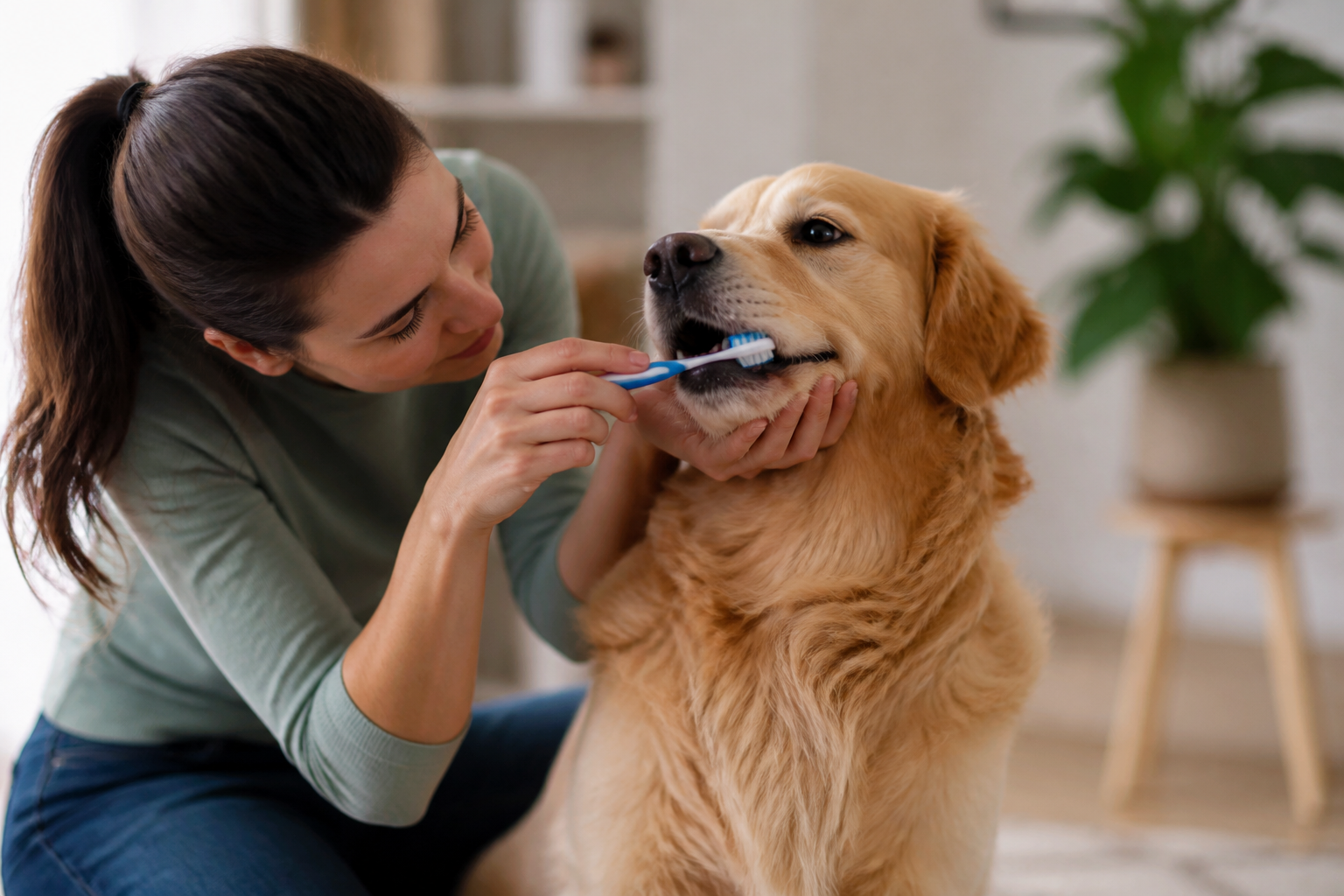
If you ask any veterinarian for the single most effective way to keep a dog’s mouth healthy, they will tell you to brush. It is the only method that provides the physical agitation necessary to break up the biofilm on the tooth surface and along the gumline.
Choosing the Right Supplies
Never use human toothpaste on a dog. Human formulas often contain xylitol, an artificial sweetener that is highly toxic to dogs, or fluoride, which can cause stomach upset or worse. Dog-specific toothpastes are enzymatic. This means they contain enzymes that help break down organic matter even if you do not get a perfect scrub. They also come in flavors dogs actually enjoy, such as poultry, beef, or peanut butter. For a pet-specific option, consider Virbac C.E.T. Enzymatic Pet Toothpaste for Dogs and Cats - Poultry.
For the brush itself, you have options:
- Standard Pet Toothbrushes: These have long, angled handles to reach the back molars.
- Finger Brushes: These are small silicone caps that fit over your pointer finger. They are excellent for puppies or dogs who are nervous about a long plastic stick in their mouth.
- Child-Sized Soft Brushes: If you are in a pinch, a very soft human toothbrush designed for infants can work for small breeds.
A Step-by-Step Guide to Brushing
Do not expect to do a full cleaning on the first day. It takes time to build trust.
Step 1: Let them taste the paste. / Put a small dab of pet toothpaste on your finger and let your dog lick it off. You want them to associate the flavor with a positive experience.
Step 2: Get used to the touch. / Gently lift your dog's lip and rub your finger along their teeth and gums. Do this for a few days until they are comfortable with you touching their mouth.
Step 3: Introduce the brush. / Put toothpaste on the brush and let them lick it. Gradually move the brush in small circles against the front teeth.
Step 4: Target the back molars. / Once they accept the front, work your way toward the back. This is where the most significant tartar buildup occurs near the salivary glands.
Step 5: Reward the effort. / Always end the session with praise or a small dental-friendly treat.
Vet Tip: Focus your brushing efforts on the outside of the teeth, the side facing the cheeks. Most dogs use their tongues to keep the inside surfaces relatively clean, but the outside is where plaque thrives. If your dog shows signs of pain or bleeding gums during brushing, stop and consult your veterinarian.
For additional guidance on building a routine, read these pet dental care tips.
The Role of Dental Chews and Treats
Not every dog is a willing participant in a daily brushing routine. If your dog treats the toothbrush like an enemy, dental chews are a helpful secondary defense. These treats work through mechanical action. As the dog chews, the texture of the treat scrapes against the tooth surface like a squeegee.
When choosing a chew, look for the Veterinary Oral Health Council (VOHC) seal. This seal indicates that the product has undergone rigorous testing and is proven to reduce plaque or tartar by a certain percentage. Brands like Greenies or certain RedBarn products are designed with specific ridges and textures to reach the crevices between teeth. You can browse our dental treats for dogs to compare options.
However, you must be careful about the hardness of the chew. We see many dental fractures caused by items that are too hard, such as natural antlers, dried hooves, or large marrow bones. A good rule of thumb is the "fingernail test." If you cannot make a small dent in the chew with your fingernail, it is likely hard enough to crack a tooth.
Bottom line: Dental chews are a supplement to cleaning, not a total replacement for brushing.
For more ideas, explore this guide to the best dental chews for dogs.
Using Water Additives and Oral Sprays
Water additives and dental sprays are the "mouthwash" of the dog world. These are ideal for senior dogs, pets with sensitive mouths, or owners who have a hard time with physical cleaning. Most water additives are tasteless and odorless. You simply add a capful to your dog's fresh water bowl each day. One option is OxyFresh Pet Dental Water Additive.
These products often contain ingredients like chlorhexidine or stabilized chlorine dioxide. These compounds work to kill the bacteria that cause bad breath and help loosen the bond that plaque has on the enamel. While they do not provide the physical scrubbing of a brush, they significantly reduce the bacterial load in the mouth.
Our pharmacy at BaxterBoo carries various oral health supports. Through our partnership with Pet's Choice, we provide access to professional-grade dental rinses and medications that may be necessary if your dog is already struggling with a minor infection or significant gum inflammation. Browse our pet pharmacy for available prescription products.
Diet and Dental Health
There is a common belief that feeding dry kibble is all you need to keep teeth clean. While some kibble is better than soft wet food because it does not stick to the teeth, standard kibble usually shatters as soon as a dog bites it. This means it provides very little cleaning action.
However, there are specific prescription dental diets. These kibbles are larger and have a fibrous matrix that does not crumble immediately. Instead, the tooth sinks into the kibble, and the fibers scrub the tooth as the dog bites down. If your dog is prone to rapid tartar buildup, ask your vet about a prescription diet.
Key Takeaway: If your vet prescribes a specific dental diet like Royal Canin or Farmina Vet Life, you can often fulfill those needs through the BaxterBoo pharmacy system.
Choosing the Right Toys for Teeth Cleaning
Your dog's toy box can be a secret weapon for oral hygiene. Certain toys are designed to clean as the dog plays.
- Rubber Toys with Nubs: Toys from brands like Kong often have ridges or nubs. When a dog chews these, the rubber massages the gums and helps dislodge food particles.
- Rope Toys: These act like dental floss. As the dog's teeth sink into the cotton fibers, the rope rubs against the sides of the teeth.
- Stuffable Toys: Putting a bit of enzymatic toothpaste inside a hollow rubber toy can encourage your dog to "brush" their own teeth while they try to get to the treat inside.
Always supervise your dog during toy time. If a toy becomes frayed or starts to break apart, replace it immediately to prevent your dog from swallowing pieces that could cause an intestinal blockage.
Professional Veterinary Dental Cleanings
Even with perfect home care, most dogs will eventually need a professional cleaning. This is similar to why humans go to the dentist every six months despite brushing and flossing. A veterinarian can reach the areas under the gumline that a toothbrush simply cannot touch.
Why Anesthesia Is Necessary
You may see advertisements for "anesthesia-free" dental cleanings. While these might make the teeth look white, they are largely cosmetic. A dog will not sit still for a vet to scrape under the sensitive gum tissue or take dental X-rays while awake. Anesthesia allows the vet to:
- Perform a full 360-degree exam of every tooth.
- Take X-rays to check for abscesses or bone loss below the visible surface.
- Use ultrasonic scalers to remove hardened tartar safely.
- Polish the teeth to smooth out microscopic scratches where bacteria like to hide.
Most dogs benefit from a professional exam once a year. Smaller breeds, such as Pugs, Yorkies, or Chihuahuas, often need more frequent attention because their teeth are crowded together, which traps bacteria much faster than in larger breeds.
Vet Tip: Always request dental X-rays during a professional cleaning. Up to 60 percent of dental disease in dogs happens below the gumline where it is invisible to the naked eye.
Recognizing the Signs of Dental Disease
As a pet owner, you are the first line of defense. You should perform a "flip the lip" check once a week to look for changes in your dog's mouth. Knowing what to look for can help you catch problems before they become painful. For a closer look at warning signs, read how to recognize bad teeth in dogs.
Check for these symptoms:
- Persistent Bad Breath: This is the most common early warning sign.
- Discolored Teeth: Yellow or brown crusting near the gumline is tartar.
- Red or Bleeding Gums: Healthy gums should be a light pink. Redness indicates inflammation.
- Dropping Food: If your dog is a "messy eater" all of a sudden, they may be experiencing mouth pain.
- Pawing at the Face: This often indicates a toothache or a stuck object.
- Swelling: Any lumps or bumps under the eyes or along the jawline require an immediate vet visit.
If you notice these signs, do not try to scrape the tartar off yourself. Using metal tools at home can scratch the enamel, making the problem worse, or you could accidentally cut the delicate gum tissue.
Creating a Sustainable Routine
The best way to clean your dog's teeth is the routine you can actually stick to. If daily brushing is too much, aim for three times a week. Supplement the off-days with a high-quality dental chew and a water additive.
Consistency is more important than perfection. At BaxterBoo, we recommend setting a specific time for dental care, such as right before bed or after the evening walk. This helps your dog know what to expect. You can make the process easier by using our Autoship programme for your toothpaste, brushes, and chews. This ensures you never run out of supplies, and you save money on every order.
Summary of Effective Methods
| Method | Effectiveness | Ease of Use | Best For |
|---|---|---|---|
| Brushing | Highest | Moderate | All dogs, preventative care |
| Dental Chews | Moderate | Very Easy | Daily maintenance, reluctant brushers |
| Water Additives | Low-Moderate | Very Easy | Managing bacteria and breath odor |
| Dental Toys | Low | Easy | Enrichment and minor plaque removal |
| Professional Cleaning | Essential | Low (Requires Vet) | Tartar removal and deep cleaning |
Bottom line: A combination of physical brushing and chemical support through additives or enzymatic pastes is the most effective way to keep your dog's mouth healthy for life.
Conclusion
Cleaning your dog's teeth does not have to be a stressful battle. By starting slow, using the right tools, and staying consistent, you can significantly improve your pet's quality of life. Remember that dental health is a lifelong commitment. The steps you take today to brush away plaque will prevent the need for painful extractions and expensive surgeries in the future.
- Brush at least three times a week with enzymatic pet toothpaste.
- Use VOHC-approved dental chews for mechanical cleaning.
- Monitor your dog's mouth weekly for redness or tartar.
- Schedule an annual veterinary dental exam.
Whether you need to stock up on enzymatic toothpaste, find the perfect textured chew toy, or fulfill a prescription for dental health through our pharmacy, we are here to help. Check out our dog dental care collection to keep that puppy breath fresh and your dog's smile bright.
FAQ
Can I use baking soda to clean my dog's teeth?
No, you should avoid using baking soda. It has a high alkaline content that can upset your dog's stomach and digestive tract if swallowed in significant amounts. Additionally, it lacks the enzymes found in pet-specific toothpastes that help break down plaque. It also tastes very bitter to dogs, which can make them fight you during the cleaning process.
How often should I realistically brush my dog's teeth?
Ideally, you should brush your dog's teeth every day to prevent plaque from hardening into tartar. However, if that is not possible, aiming for three to four times a week can still provide significant health benefits. Consistency is key because plaque begins to mineralize into tartar within 48 hours, so skipping more than two days in a row allows tartar to build up.
Are there any human foods that help clean dog teeth?
Crunchy vegetables like raw carrots or sliced apples can provide a very minor amount of mechanical scrubbing as your dog chews. However, these are not a substitute for brushing or professional dental products. Be sure to remove all seeds and the core from apples, and remember that these foods contain natural sugars and calories that should be accounted for in your dog's daily diet.
My dog’s breath is terrible even though I brush. What should I do?
If your dog has severe "halitosis" despite regular brushing, it is likely that there is underlying dental disease or tartar buildup beneath the gumline that you cannot see. It could also indicate an internal health issue or a persistent infection. You should schedule a visit with your veterinarian for a professional exam to rule out periodontal disease or other medical conditions.






