
 Save 15% on your 1st Autoship learn more

 Email us
 Live Chat
 FAQs
FAQs





Introduction
When you lean in for a puppy kiss and get a whiff of something that smells like a damp basement, it is a clear sign that dental care has moved to the top of your to-do list. Many pet owners ignore oral hygiene until a dog starts pawing at their mouth or refusing dry kibble. Here at BaxterBoo, we know that keeping those pearly whites clean is about more than just fresh breath. It is a fundamental part of keeping your dog healthy for years to come. This post covers the most effective methods for cleaning teeth at home, from the gold standard of brushing to the use of dental chews and water additives. The best way to clean your dog’s teeth is a multi-layered approach that combines daily habits with professional veterinary oversight.
Quick Answer: The most effective way to clean a dog's teeth is daily brushing with dog-specific enzymatic toothpaste. This should be supported by VOHC-approved dental chews, water additives, and regular professional veterinary cleanings to address tartar below the gumline.
Why Dental Care Cannot Be Ignored
Oral health affects the entire body of a dog. When bacteria build up on the teeth, they form a sticky film called plaque. If this plaque is not removed, it hardens into tartar within about 48 hours. Tartar is much harder to remove at home and often requires professional tools.
If left untreated, these bacteria can enter the bloodstream. This can lead to serious issues with the heart, liver, and kidneys. It also causes painful gum disease and tooth loss. Most dogs show some sign of dental disease by age three. Starting a routine early is the best way to prevent these painful conditions.
Key Takeaway: Dental disease is progressive and can impact major organs, making a proactive home routine essential for long-term wellness.
The Gold Standard: Brushing Your Dog’s Teeth
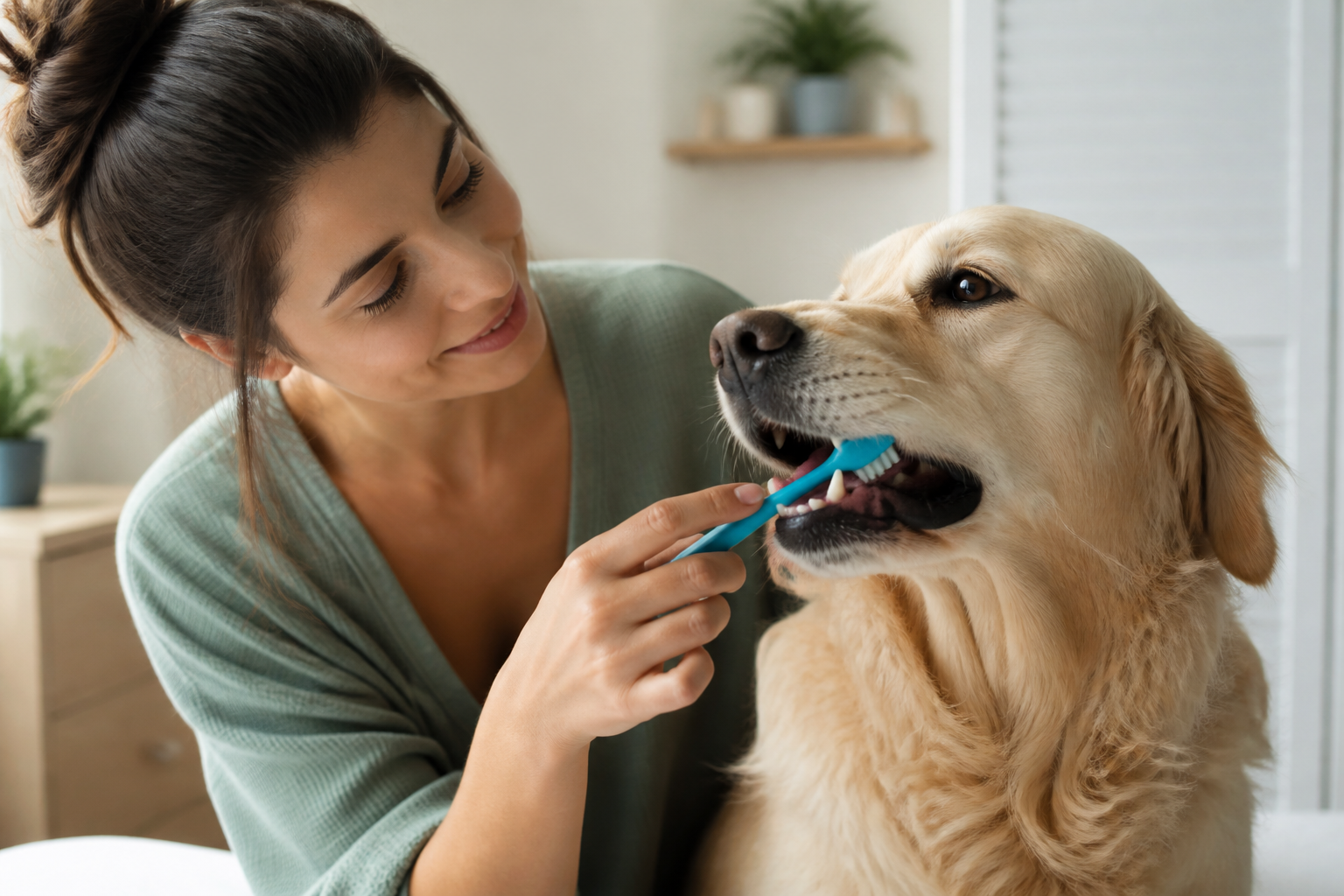
Brushing is the single most effective way to remove plaque before it turns into tartar. While it might seem daunting, most dogs can learn to accept it with patience and the right tools. You should never use human toothpaste for your dog. Human formulas often contain xylitol, which is toxic to dogs. They also contain foaming agents that can upset a dog’s stomach.
Choosing the Right Tools
You need a brush specifically designed for a dog's mouth. These often have angled heads to reach the back molars. Some owners prefer a finger brush, which fits over your fingertip. This can provide more control if your dog is wiggly. Enzymatic toothpastes are best because they continue to break down plaque even after you stop brushing. Explore our dog dental care selection for toothpaste, brushes, wipes, and other oral care supplies.
Step-by-Step Brushing Guide
Step 1: Introduce the taste.
Put a small amount of dog toothpaste on your finger. Let your dog lick it off so they associate the flavor with a reward.
Step 2: Touch the teeth and gums.
Gently lift your dog's lip. Rub your finger along their gums and teeth. Do this for a few days until they are comfortable with the touch.
Step 3: Introduce the brush.
Apply toothpaste to the brush. Let your dog lick it. Gently brush the front teeth in a circular motion.
Step 4: Reach the back.
Slowly work your way toward the large molars in the back. This is where most tartar builds up. You only need to brush the outside of the teeth. A dog's tongue usually keeps the inside surfaces clean enough.
Step 5: Reward and repeat.
Give your dog plenty of praise or a small dental treat afterward. Aim for a daily routine, but three times a week is a good starting goal.
Vet Tip: If your dog has red, swollen, or bleeding gums, consult your veterinarian before starting a brushing routine. Brushing inflamed gums can be very painful and might require medical treatment first.
For additional brushing guidance, read these pet dental care tips.
The Role of Dental Chews and Toys
Not every dog will sit still for a toothbrush. Dental chews and toys are a great secondary defense. These products work through mechanical action. As the dog chews, the texture of the treat scrapes against the tooth surface. This helps wipe away soft plaque. You can browse our dental food and treat options for chews and treats designed for oral care.
When shopping at BaxterBoo, look for products with the Veterinary Oral Health Council (VOHC) seal. This seal means the product has been tested and proven to reduce plaque or tartar. However, you must be careful about the hardness of the chew.
The Fingernail Test
A good rule of thumb is the fingernail test. If you cannot make a small dent in the chew with your fingernail, it might be too hard. Antlers, dried hooves, and large nylon bones are common culprits for fractured teeth. If a chew is harder than the tooth itself, the tooth is likely to break during an enthusiastic chewing session.
Effective Chew Options
- Rubber dental toys: Look for toys with nubs or ridges. These massage the gums and reach between teeth.
- Rope toys: The fibers of a cotton rope can act like dental floss as a dog chews.
- Raw carrots: These provide a healthy, low-calorie crunch that helps scrape teeth, though they are less effective than dedicated dental treats.
Bottom line: Dental chews are a helpful supplement to brushing, but they should be soft enough to indent and carry the VOHC seal for reliable support.
For more ideas between brushing sessions, see these dental chews for dogs.
Water Additives and Oral Sprays
For dogs that are particularly difficult to handle, water additives and dental sprays offer a hands-off solution. These products usually contain enzymes or minerals that help kill bacteria in the mouth. You simply add a capful to the water bowl or spray it directly onto the teeth. Our dental supplements and water additives offer convenient options for supporting a regular oral care routine.
While these are not a replacement for brushing, they are excellent for freshening breath and slowing down tartar formation. They are especially useful for senior dogs who may have sensitive mouths. Always ensure the additive is flavorless or has a flavor your dog enjoys. Some dogs may stop drinking water if the taste changes suddenly.
Diet and Dental Health
There is a long-standing belief that dry kibble cleans teeth better than wet food. While the crunch of kibble provides some mechanical scraping, it is rarely enough to keep teeth clean on its own. Most kibble crumbles too quickly to provide much benefit.
Some manufacturers produce specific dental diets. These kibbles are larger and have a fibrous texture that does not shatter. Instead, the tooth sinks into the piece, allowing the fibers to scrub the surface.
Our pharmacy provides access to FDA-approved prescription pet foods through our partnership with Pet's Choice. If your dog has a history of severe dental issues, your vet might recommend a prescription dental diet. These diets are specially formulated to manage tartar buildup more aggressively than standard retail food. Learn more about our dog pharmacy when your veterinarian recommends prescription support.
Key Takeaway: Standard kibble is not a substitute for brushing, but specialized prescription dental diets can be a powerful tool for dogs prone to rapid tartar buildup.
For broader feeding considerations, read this guide to wet and dry dog food.
Professional Cleanings and Veterinary Exams
Even with the best home care, most dogs will eventually need a professional cleaning. A veterinarian can see what you cannot. They check for loose teeth, oral tumors, and signs of infection.
Anesthesia-Free vs. Professional Cleaning
You may see offers for anesthesia-free dental cleanings. While these can remove visible tartar, they are mostly cosmetic. They cannot address the area below the gumline. This is where the most dangerous bacteria live.
A professional cleaning under anesthesia allows the vet to take X-rays. X-rays are vital because a tooth can look healthy on the outside while the root is rotting away. Anesthesia also ensures the dog is not stressed or in pain during the scraping of sensitive gum tissue.
Vet Tip: Schedule a dental exam at least once a year. Small breed dogs, such as Pugs or Yorkies, may need exams every six months due to tooth crowding.
Recognizing Signs of Dental Problems
You should regularly check your dog's mouth at home. Catching a problem early can save your dog from significant pain and save you from high surgery costs. Look for the following warning signs:
- Persistent bad breath: A "doggy" smell is normal, but a foul, rotting odor is not.
- Discolored teeth: Yellow or brown crust near the gumline is tartar.
- Bleeding gums: You might notice blood on a chew toy or in the water bowl.
- Change in eating habits: Dropping food or chewing on only one side of the mouth often indicates pain.
- Pawiness: If your dog is frequently rubbing their face or mouth, they may have a toothache.
If you notice these signs, it is time for a vet visit. Our pharmacy offers medications for infections and pain management through our Pet's Choice partnership. Your vet can send a prescription to us, and we will handle the rest, ensuring your dog gets the professional-grade care they need.
For a closer look at warning signs, read what to do if your dog may be hiding bad teeth.
The BaxterBoo Approach to Oral Care
We believe that a healthy dog starts with a healthy mouth. At BaxterBoo, we curate a selection of brushes, pastes, and treats that we would use for our own pets. We have been helping pet owners navigate health and wellness since 2006, and we know that consistency is the hardest part of dental care.
Start small. Even brushing your dog's teeth once a week is better than never doing it at all. Combine that with a high-quality dental chew and an annual vet checkup. This three-pronged approach is the most reliable way to keep your dog's smile bright and their body healthy.
Bottom line: A successful dental routine combines the mechanical action of brushing, the support of dental treats, and the expertise of professional veterinary care.
Summary of Best Practices
Maintaining oral hygiene does not have to be a chore. Follow these simple steps to build a routine that works for you and your dog:
- Use only dog-safe enzymatic toothpaste.
- Aim for daily brushing, but be consistent with whatever schedule you choose.
- Provide VOHC-approved chews for days when brushing is not possible.
- Check the mouth weekly for signs of redness or tartar.
- Consult your veterinarian for an annual dental X-ray and cleaning.
By taking these steps, you are investing in your dog's comfort and longevity. If you need a refill on dental supplies or want to explore our pharmacy options for prescription diets, we are here to help. Our MVP Rewards program also lets you earn points on every dental purchase, helping you save while you care for your pet.
FAQ
Can I use a human toothbrush on my dog?
A human toothbrush can be used if it has very soft bristles, but a dog-specific brush is usually better. Dog brushes are angled to reach the unique shape of a canine's jaw and molars. For very small dogs, a soft child-sized toothbrush or a finger brush is often the most comfortable option.
How often should I realistically brush my dog's teeth?
While daily brushing is the gold standard for preventing tartar, aiming for three times a week is a realistic and effective goal for most owners. Tartar begins to harden within 48 to 72 hours, so brushing every other day helps remove plaque before it becomes permanent. Consistency is more important than perfection.
Are dental chews enough to keep teeth clean?
Dental chews are a great supplement but they are rarely enough on their own to replace brushing. They primarily clean the chewing surfaces of the back teeth and may not reach the gumline where periodontal disease starts. Think of them as a helper to your brushing routine rather than a total replacement.
Why does my dog's breath still smell after brushing?
If your dog's breath remains foul after regular brushing, there may be an underlying infection or tartar trapped beneath the gumline. Bad breath can also be a sign of internal health issues related to the kidneys or digestive system. In these cases, you should schedule a veterinary exam to rule out serious conditions.






