
 Save 15% on your 1st Autoship learn more

 Email us
 Live Chat
 FAQs
FAQs





Introduction
You lean in for a happy morning nuzzle only to be met with a cloud of "dog breath" that makes you recoil. Many pet owners face this exact moment when they realize their dog's oral hygiene has slipped through the cracks. At BaxterBoo, we know that dental health is about much more than just fresh breath. It is a critical pillar of your pet's long-term wellness. This guide explains the most effective methods for maintaining your dog's oral hygiene at home. We will cover everything from the gold standard of brushing to modern water additives and specialized diets. By combining daily habits with professional guidance, you can protect your dog from the pain and health risks of dental disease.
Quick Answer: Daily brushing with dog-safe toothpaste is the most effective way to keep your dog's teeth clean. Supplementing this with VOHC-approved dental chews, water additives, and professional veterinary cleanings provides a complete defense against plaque and tartar.
Why Dental Hygiene is Critical for Dogs
Dental health affects much more than just your dog's mouth. When bacteria build up on the teeth, they form a sticky film called plaque. If this is not removed, it hardens into tartar, also known as calculus. Tartar provides a porous surface where even more bacteria can thrive. Eventually, these bacteria can enter the bloodstream through the gums.
Once in the blood, bacteria can travel to major organs. This often leads to issues in the heart, liver, and kidneys. Periodontal disease is one of the most common conditions we see in adult dogs. It causes chronic pain that dogs are experts at hiding. By the time a dog stops eating due to mouth pain, the disease is often very advanced.
The Connection to Systemic Health
Research shows that dogs with significant dental disease are more likely to develop heart disease. The constant inflammation in the mouth puts a strain on the immune system. Keeping the teeth clean is not just about a nice smile. It is a way to extend your dog's lifespan and improve their daily comfort.
For additional guidance on warning signs, read our article about recognizing signs of dental disease in dogs.
The Gold Standard: Brushing Your Dog's Teeth
Brushing is the most effective way to remove plaque before it turns into tartar. While it might seem daunting, most dogs can learn to accept or even enjoy the process. You must use a toothpaste specifically formulated for dogs. Human toothpaste contains ingredients like xylitol or fluoride that are toxic to pets.
Dog toothpastes come in flavors like poultry, beef, and peanut butter. These flavors make the experience feel like a treat rather than a chore. You can use a standard dog toothbrush with a long handle to reach the back molars. For smaller dogs or those new to the process, a silicone finger brush is often easier to manage.
Our selection of dog dental brushes and pet toothpaste can help you build a practical brushing routine.
Step-by-Step Brushing Guide
Step 1: Introduce the paste. / Let your dog lick a small amount of flavored toothpaste off your finger to build a positive association.
Step 2: Touch the teeth. / Gently lift the lip and touch your dog's teeth with your finger to get them used to the sensation.
Step 3: Introduce the brush. / Apply a small amount of paste to the brush and let the dog sniff it.
Step 4: Use circular motions. / Focus on the outside of the teeth where the most plaque accumulates. You do not need to worry about the inside surface since the tongue handles much of that cleaning.
Vet Tip: If your dog is resistant to brushing, do not force it. Start with just one or two teeth per day and offer a high-value reward afterward. Consistency is more important than cleaning the entire mouth in one sitting.
For more brushing and inspection ideas, explore these pet dental care tips.
Dental Chews and Their Role
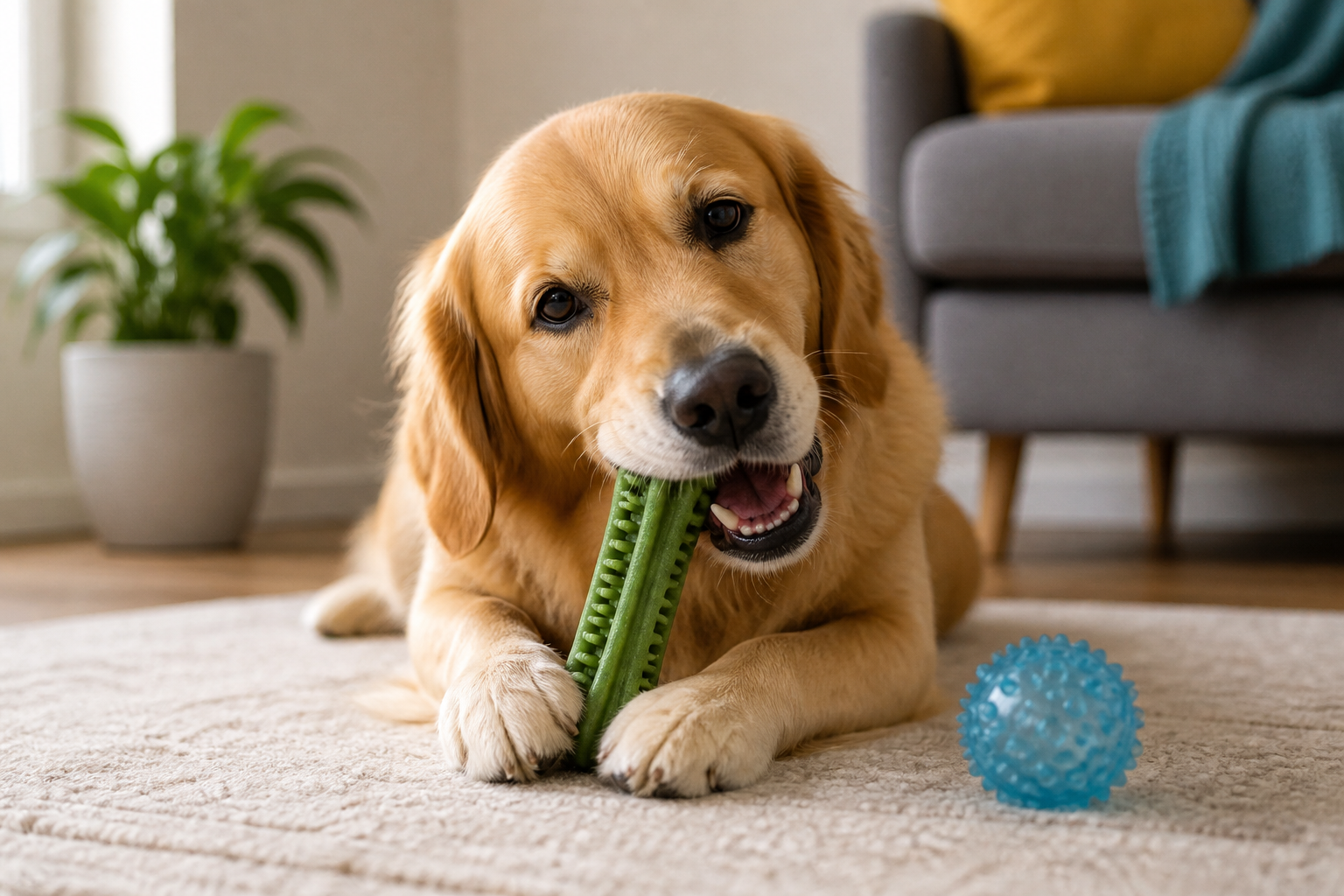
Dental chews are a popular way to support oral health because they take advantage of a dog's natural urge to chew. These treats are designed with specific textures that scrape against the tooth surface as the dog bites down. This mechanical action helps rub away soft plaque.
When choosing a chew, look for the Veterinary Oral Health Council (VOHC) seal. This seal means the product has undergone testing to prove it reduces plaque or tartar by at least 20 percent. Some chews also contain enzymes that help break down bacteria in the mouth.
Our dog dental care collection includes chews, treats, water additives, and other oral-care products.
Choosing the Right Size
It is vital to choose a dental treat that matches your dog's size. A chew that is too small can be swallowed whole, posing a choking risk and providing no dental benefit. A chew that is too large or too hard might cause a tooth fracture. Always supervise your dog while they are enjoying a chew to ensure they are actually chewing and not just gulping.
Key Takeaway: Mechanical action is the primary way chews clean teeth. If your dog swallows a dental treat in two bites, it is not helping their oral hygiene.
For a familiar option, browse Greenies dental dog chews and compare available sizes.
Specialized Dental Diets
For dogs prone to rapid tartar buildup, a prescription dental diet can be a life-saver. Unlike standard kibble that crumbles immediately, dental kibble is often larger and has a fibrous texture. The kibble does not shatter when the dog bites it. Instead, the tooth sinks into the piece, allowing the fibers to scrub the tooth surface all the way to the gum line.
These diets often contain minerals that bind to calcium in the saliva. This prevents the calcium from depositing on the teeth and turning plaque into hard tartar. Our pharmacy carries several of these specialized diets. Through our partnership with Pet's Choice, we provide FDA-approved prescription foods that your vet might recommend for advanced dental care.
If your veterinarian recommends prescription food or medication, visit our dog pharmacy to review available options.
When to Consider Prescription Food
- Small breeds with crowded teeth.
- Dogs with a history of rapid tartar formation.
- Pets that refuse to have their teeth brushed.
- Dogs that already show early signs of gingivitis.
Water Additives and Dental Powders
If brushing is impossible, water additives and food powders offer a "hands-off" approach to dental care. Water additives are essentially a drinkable mouthwash for dogs. You add a specific amount to their water bowl every day. These solutions are usually tasteless and odorless to ensure your dog continues to drink their water.
These additives work by altering the chemistry of the saliva or using enzymes to kill bacteria. Similarly, dental powders can be sprinkled over your dog's food. Some powders contain probiotics that encourage "good" bacteria to grow in the mouth, crowding out the bacteria that cause bad breath and plaque.
One available option is the Synergy Labs Dental Fresh Water Additive.
Tips for Using Additives
- Always follow the dosage instructions on the bottle.
- Change the water daily to keep the additive fresh.
- Choose products with the VOHC seal whenever possible.
- Monitor your dog to ensure they are still drinking the same amount of water.
For repeat-purchase dental supplies, consider our Autoship programme when it suits your routine.
The Importance of Dental Toys
Playtime can also be cleaning time. Certain toys are designed specifically to help with oral hygiene. Rubber toys with nubs or ridges massage the gums and scrape the teeth as the dog chews. Rope toys act like a form of dental floss. As the dog's teeth sink into the cotton or hemp fibers, the strands wipe away debris.
Saliva production is another benefit of chewing on toys. Saliva has natural antibacterial properties and helps wash away food particles. However, you must be careful with the hardness of the toys. If a toy is too hard for you to dent with your thumbnail, it might be hard enough to crack a dog's tooth. Avoid real bones and heavy antlers for "power chewers" because these frequently lead to expensive dental fractures.
Bottom line: Choose toys that are durable yet have some "give" to protect the tooth enamel while cleaning.
Identifying Signs of Dental Disease
As an owner, you should perform a "flip the lip" check once a week. This allows you to spot problems before they become severe infections. Early detection can save your dog from pain and save you from high veterinary bills.
Look for these warning signs:
- Red, swollen, or bleeding gums.
- Heavy brown or yellow buildup on the teeth.
- Persistent foul breath that does not go away.
- Loose or missing teeth.
- Dropping food or hesitating to eat hard kibble.
- Excessive drooling.
- Pawing at the face or mouth.
Vet Tip: If you notice a swelling under your dog's eye, it could be a tooth root abscess. This is a serious infection that requires immediate veterinary attention. Do not attempt to treat mouth infections with over-the-counter products.
Professional Veterinary Cleanings
Home care is wonderful, but it cannot remove tartar once it has hardened. Just like humans need a dental hygienist, dogs need professional cleanings. This process is called a dental prophylaxis. It must be performed under general anesthesia to be effective and safe.
Anesthesia allows the vet to clean below the gum line, where the most dangerous bacteria live. It also allows for a full set of dental X-rays. Many dental problems happen in the roots and bone, which are invisible during a standard exam. Without X-rays, many painful conditions go untreated.
Frequency of Cleanings
The frequency of professional cleanings depends on the breed and the effectiveness of your home routine. Small breeds often need cleanings every year because their teeth are crowded. Larger breeds might go two or three years between sessions if their teeth are brushed daily. Your vet will evaluate your dog's oral health during their annual wellness exam.
Summary of At-Home Dental Routine
To keep your dog's teeth in top shape, aim for a layered approach. No single product can do everything.
- Daily: Brush the teeth with dog-safe paste.
- Daily: Add a dental solution to the water bowl.
- 3-4 times a week: Give a VOHC-approved dental chew.
- Ongoing: Provide rubber or rope toys for enrichment and cleaning.
- Annually: Schedule a veterinary exam to check for hidden issues.
Conclusion
Maintaining your dog's oral health is one of the kindest things you can do for them. By preventing the buildup of plaque and tartar, you are protecting their heart, kidneys, and overall comfort. While brushing remains the most effective tool, we have many other options at BaxterBoo to help you succeed. Whether you use dental chews, water additives, or a specialized diet, consistency is the key.
Our MVP Rewards program can help you save on the dental supplies you need to keep those smiles bright. If your vet recommends a specific medication or a prescription dental diet, remember that our pharmacy is here to help with professional, FDA-approved options. Taking a few minutes each day to focus on your dog's teeth will pay off in years of healthy, happy companionship.
Key Takeaway: A multi-faceted approach involving brushing, chews, and regular vet visits is the only way to truly prevent advanced periodontal disease in dogs.
FAQ
Can I use a human toothbrush on my dog?
Yes, you can use a human toothbrush if it has soft bristles. For large dogs, a standard adult toothbrush works well. For small dogs, a child-sized or "baby" toothbrush is much better because the smaller head can reach the back molars without causing discomfort. Always avoid medium or hard bristles as these can damage a dog's sensitive gum tissue.
Are raw carrots good for cleaning a dog's teeth?
Raw carrots can provide some mechanical cleaning because they are crunchy and require significant chewing. This action can help rub away some soft plaque. However, carrots are not a replacement for brushing or VOHC-approved dental products. They also contain natural sugars, so they should be given in moderation as a healthy treat rather than a primary dental solution.
Why does my dog's breath still smell after brushing?
If your dog's breath remains foul after you have started a brushing routine, there may be an underlying issue. Persistent bad breath often indicates that tartar has already formed under the gum line where a brush cannot reach. It could also point to an infected tooth, an abscess, or even internal health issues like kidney disease. You should schedule a veterinary exam to rule out these more serious conditions.
Is dry food better for teeth than wet food?
Dry food is generally slightly better for dental health than wet food because it does not stick to the teeth as easily. Some hard kibbles provide a very mild abrasive effect. However, standard dry food is not a "toothbrush in a bowl." Most kibble pieces are small enough that dogs swallow them whole or they shatter instantly upon contact. For real dental benefits through food, a specific prescription dental diet with a fibrous texture is required.






