
 Save 15% on your 1st Autoship learn more

 Email us
 Live Chat
 FAQs
FAQs





Introduction
You are settling in for a cozy evening on the couch when your dog leans in for a affectionate nuzzle. Instead of a sweet moment, you are met with a wave of breath so strong it makes you recoil. This common scenario is often the first sign that a dog needs better oral hygiene. At BaxterBoo, we know that looking into a dog's mouth can feel intimidating if you are not sure what tools are safe or effective.
Maintaining your dog's dental health is about much more than fresh breath. It is a vital part of their overall wellness that affects their heart, kidneys, and comfort levels. This article covers the specific brushes, pastes, and alternative cleaners that actually work to keep plaque at bay. We will help you choose the right supplies for your dog's personality and explain when it is time to call in the professionals.
The Foundation of Dental Care: Toothbrushes and Toothpaste
The most effective way to clean a dog's teeth is regular brushing. This physical action mimics how we care for our own mouths. However, you cannot simply share your own supplies with your pet. Explore our dog dental care selection for toothbrushes, toothpastes, wipes, and oral-care products.
Why Dog-Specific Toothpaste is Mandatory
Never use human toothpaste for your dog. Our toothpaste contains ingredients like fluoride and sodium lauryl sulfate. These are fine for us because we spit them out. Dogs swallow everything you put in their mouths. Many human toothpastes also contain xylitol, an artificial sweetener that is highly toxic to dogs.
Instead, use an enzymatic toothpaste formulated for pets. These pastes contain enzymes that help break down plaque chemically even after you stop brushing. They also come in flavors dogs actually enjoy, such as poultry, beef, or peanut butter. This makes the process much more like a treat and less like a chore.
Choosing the Right Brush
The type of brush you choose depends on the size of your dog and their comfort level with having their mouth touched.
- Standard Pet Toothbrushes: These look like human brushes but usually have a curved handle. This helps you reach the back molars more easily. They often have two ends with different sized heads.
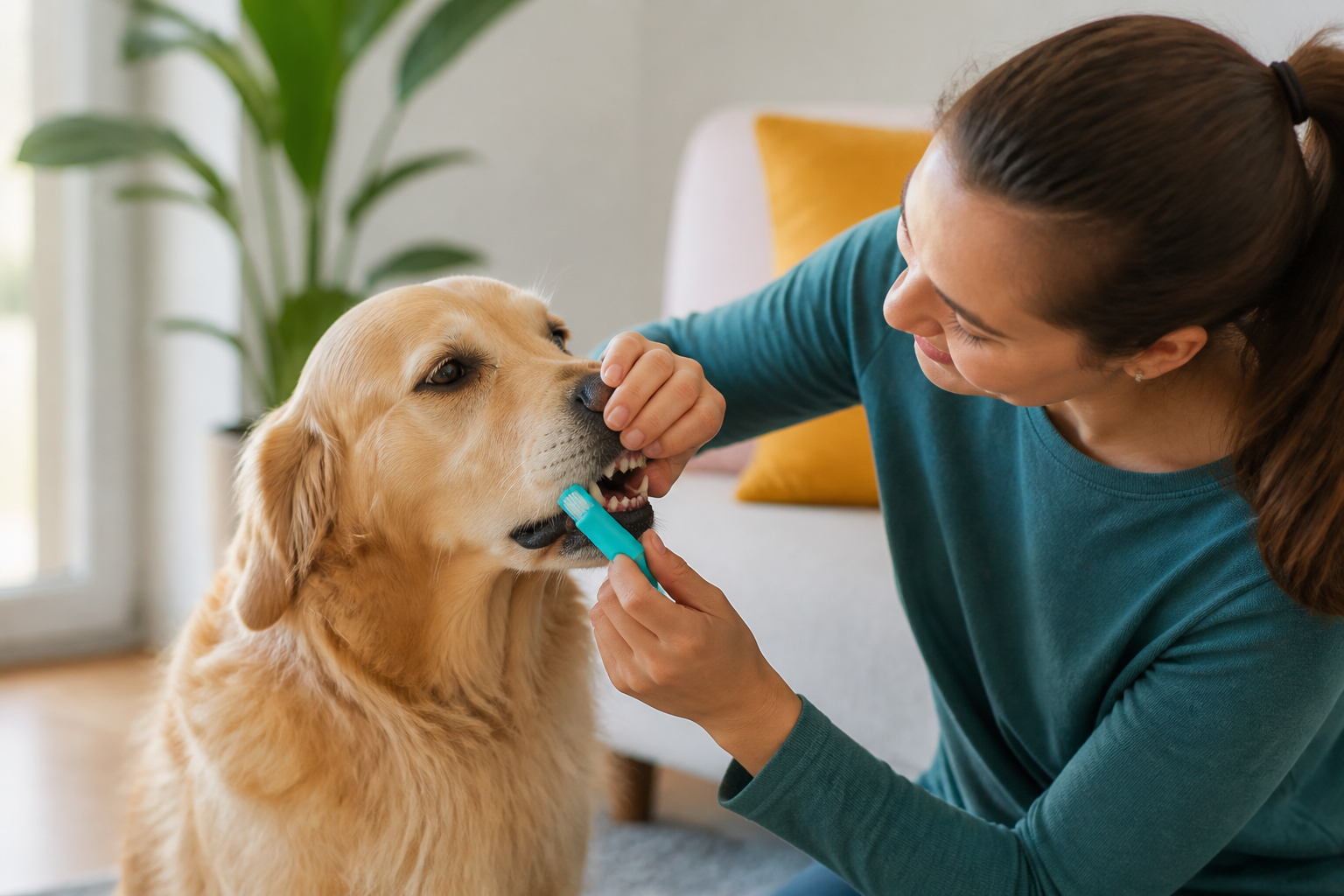
- Finger Brushes: These are small rubber or silicone caps that slip over your pointer finger. They have soft bristles on one side. They are excellent for puppies or dogs who are nervous about a long plastic object in their mouth.
- Triple-Headed Brushes: These brushes have three sets of bristles that wrap around the tooth. They clean the top, front, and back of the tooth simultaneously. This is a great time-saver for dogs who will only tolerate a few seconds of brushing.
Quick Answer: You should use a dog-specific enzymatic toothpaste and a soft-bristled pet toothbrush or finger brush. These tools are designed to safely break down plaque without the toxic ingredients found in human dental products.
Alternative Cleaning Tools for Busy Owners
We understand that life gets busy and daily brushing is not always possible for every family. While brushing is the gold standard, other tools can help bridge the gap.
Dental Wipes
If your dog absolutely refuses a brush, dental wipes are a solid alternative. These are textured pads pre-soaked with cleaning solution. You simply wrap a wipe around your finger and rub it over the surface of the teeth and along the gumline. They are effective at removing daily plaque film before it hardens into tartar. They do not reach the deep crevices as well as bristles do, but they are much better than no cleaning at all.
Water Additives
Water additives are the easiest option for pet owners. These are tasteless or lightly flavored liquids that you add to your dog's water bowl. They contain enzymes and zinc that help kill bacteria in the mouth. This reduces the rate of plaque buildup and freshens breath. They are particularly helpful for multi-pet households or for senior dogs who may be too sensitive for physical brushing.
Dental Sprays
Similar to water additives, dental sprays are applied directly to the teeth and gums. Most formulas require you to spray them once or twice a day. The dog's saliva then spreads the active ingredients around the mouth. These are useful for targeting specific areas where you see heavy buildup.
Key Takeaway: Wipes and water additives are effective secondary tools that support oral health, but they should be used alongside physical brushing whenever possible for the best results.
The Role of Chews and Toys in Oral Hygiene
Mechanical cleaning happens every time your dog chews on something appropriate. This friction helps scrape away soft plaque. For additional ideas, see our guide to dental chews for dogs.
Dental Chews and Treats
Not all treats are created equal. Specific dental chews, such as Greenies, are designed with a texture that allows the tooth to sink in. This cleans the tooth surface down to the gumline. Many of these treats are also formulated with ingredients that freshen breath and support healthy gums.
When choosing a chew, look for the Veterinary Oral Health Council (VOHC) seal of approval. This seal means the product has been tested and proven to reduce plaque or tartar by a certain percentage. Browse our dog dental treats when choosing options for your dog's routine.
Texture-Specific Toys
Certain toys are built specifically for dental health. Look for rubber or nylon toys with nubs, ridges, or bristles. As your dog gnaws on these, the textures act like a mild abrasive. Avoid toys that are too hard, such as real bones, antlers, or heavy nylon bones. These can actually cause tooth fractures if your dog is an aggressive chewer. A good rule of thumb is the thumbnail test: if you cannot make a small dent in the toy with your thumbnail, it might be too hard for your dog's teeth.
- Rubber toys with grooves: Great for stuffing with dog-safe toothpaste or wet food to encourage long chewing sessions.
- Rope toys: The fibers act like floss as they slide between the teeth. Just ensure your dog does not swallow the threads.
- Dental rings: These are easy for dogs to hold and provide multiple angles for cleaning different teeth.
Vet Tip: Always supervise your dog when they are using dental chews or toys to prevent choking. If you notice your dog is bleeding from the gums or avoiding their favorite chew, schedule a dental exam with your veterinarian to rule out underlying pain.
Diet and Nutrition for Dental Support
What your dog eats every day plays a role in how fast plaque accumulates. While diet alone cannot replace cleaning, it is an important piece of the puzzle. You can explore our dog food category when reviewing everyday nutrition options.
Dry Kibble vs. Wet Food
There is a common belief that dry kibble is better for teeth because it is crunchy. While some standard kibbles provide a tiny bit of scraping action, most dogs simply shatter the kibble or swallow it whole.
However, specific dental diets are formulated differently. Brands like Royal Canin or Hill's Science Diet produce dental-specific kibbles that are much larger and have a fibrous texture. These do not shatter instantly. Instead, the tooth sinks into the kibble, providing a cleaning effect. Our warehouse at BaxterBoo stocks a variety of premium foods that focus on whole-body health, which includes supporting the oral microbiome.
Prescription Dental Diets
For dogs prone to heavy tartar or those with a history of gum disease, a prescription diet may be necessary. These diets are specifically engineered to provide maximum mechanical cleaning and often contain minerals that bind calcium in the saliva. This prevents the calcium from hardening plaque into tartar.
Bottom line: Specially formulated dental kibble provides significantly more cleaning benefit than standard dry dog food.
When to Use the BaxterBoo Pharmacy
Sometimes home care is not enough to manage a dog's dental needs. If your dog has persistent bad breath, red gums, or visible brown buildup, they may need medical intervention. Visit our dog pharmacy for prescription products that may be recommended by your veterinarian.
Our pharmacy carries a variety of FDA-approved products to support your dog's health through our partnership with Pet's Choice. This includes prescription dental diets and medications that your vet might prescribe after a professional cleaning. If your vet discovers an infection or advanced periodontal disease, they may prescribe antibiotics or pain relief. Having access to these through our pharmacy makes it easy to keep up with your dog's recovery and long-term maintenance.
We also offer a wide range of supplements like Cosequin or Zesty Paws. While these are often known for joints, overall wellness supplements help support a healthy immune system. A strong immune system is better at fighting off the bacteria that cause gum inflammation.
Step-by-Step: How to Start a Brushing Routine
If your dog is not used to having their teeth cleaned, you cannot jump straight into a full brushing. You must build trust slowly. For more guidance, read these pet dental care tips.
Step 1: Introduce the flavor.
Put a small dab of enzymatic toothpaste on your finger and let your dog lick it off. Do this for a few days until they get excited when they see the tube.
Step 2: Touch the teeth.
While your dog is licking the paste, gently rub your finger along their gums and teeth. This gets them used to the sensation of someone touching their mouth.
Step 3: Introduce the brush.
Put toothpaste on your chosen brush or finger cap. Let the dog lick the paste off the bristles. Move the brush around slightly so they feel the texture on their tongue and lips.
Step 4: Start brushing.
Gently lift the lip and brush the large canine teeth in the front using a circular motion. Focus on the outside of the teeth, as this is where the most plaque forms. Most dogs do not like the inside surfaces cleaned, and their tongue usually does a decent job of cleaning those areas anyway.
Step 5: Reward and repeat.
Keep the first few sessions under 30 seconds. Always end with praise or a small treat. Gradually increase the time until you can brush the back molars.
Comparing Dental Cleaning Methods
| Method | Best For | Effectiveness | Ease of Use |
|---|---|---|---|
| Toothbrushing | All dogs | Highest | Medium (requires training) |
| Dental Wipes | Sensitive or fussy dogs | High | Easy |
| Water Additives | Busy owners, senior dogs | Moderate | Very Easy |
| Dental Chews | Daily maintenance | Moderate | Very Easy |
| Professional Cleaning | Removing hardened tartar | Total | Requires Vet Visit |
Recognizing Signs of Dental Disease
Even with the best home routine, you must stay vigilant for signs that your dog needs professional help. Dental disease is progressive. It starts with a film of bacteria called plaque. If not removed, plaque mixes with minerals in the saliva and hardens into tartar in as little as 48 hours. Tartar can only be removed by a veterinarian using professional scaling tools. Learn more about warning signs of dental problems in dogs.
Watch for these warning signs:
- Foul breath that does not go away after brushing
- Red, swollen, or bleeding gums
- Yellow or brown crust near the gumline
- Drooling more than usual
- Paw at the mouth or face
- Difficulty chewing or dropping food
- Loose or missing teeth
If you notice any of these symptoms, your first step should be a visit to your veterinarian. They will likely recommend a professional cleaning under anesthesia. This is the only way to safely clean under the gumline where the most damage occurs.
Vet Tip: Do not attempt to use metal scrapers or "human" dental tools on your dog's teeth at home. You can easily scratch the enamel, which creates even more surface area for bacteria to grow. You also risk cutting the gums if the dog moves suddenly.
Summary of At-Home Dental Tools
Maintaining your dog's teeth is an investment in their longevity. By choosing the right tools, you make the process easier for both you and your pet.
- Use enzymatic toothpaste in a flavor your dog loves.
- Select a brush size that fits comfortably in their mouth.
- Supplement with VOHC-approved chews and water additives.
- Avoid hard toys that could crack teeth.
- Check the gums weekly for redness or irritation.
Our MVP Rewards program is a great way to save on these recurring essentials. Since dental care is a lifelong commitment, earning points on every purchase of toothpaste, wipes, and treats helps keep your budget in check while keeping your dog healthy.
Conclusion
Cleaning your dog's teeth does not have to be a struggle. When you use the right tools, like enzymatic paste and soft brushes, you can prevent many common dental issues before they start. Remember that consistency is more important than perfection. Even brushing a few times a week is significantly better for your dog than ignoring their oral health entirely.
Keep a close eye on your dog's mouth and talk to your vet if you see any changes. For those managing chronic oral health issues, our pharmacy and Pet's Choice partnership offer a reliable way to get the prescription diets and medications your dog needs. Visit our Dental Care category to find the brushes, wipes, and treats that will help your dog keep their smile bright for years to come.
FAQ
Can I use baking soda to clean my dog's teeth?
It is not recommended to use baking soda for your dog's dental care. Baking soda has a high alkaline content that can upset a dog's stomach if swallowed in large amounts. It also lacks the beneficial enzymes found in pet-specific toothpaste that help break down plaque effectively.
How often should I clean my dog's teeth at home?
Ideally, you should brush your dog's teeth every single day. Plaque can begin to harden into tartar within 24 to 48 hours, so daily cleaning is the best way to prevent buildup. If your schedule is too busy for daily sessions, aim for at least three times a week and supplement with dental wipes or water additives.
Do dental chews actually work as well as brushing?
Dental chews are a helpful supplement, but they are not a replacement for brushing. While they provide mechanical scraping on the chewing surfaces, they often miss the areas right at the gumline where periodontal disease begins. Think of dental chews as a helpful addition to a routine that includes physical brushing.
Why does my dog's breath still smell bad after I brush their teeth?
If your dog's breath remains foul after cleaning, it could indicate an underlying issue like a tooth infection, gum disease, or even internal health problems involving the liver or kidneys. Persistent bad breath is often a sign that tartar has built up under the gumline where a toothbrush cannot reach. You should consult your veterinarian for a full oral examination.






