
 Save 15% on your 1st Autoship learn more

 Email us
 Live Chat
 FAQs
FAQs





Introduction
You know that moment when your dog leans in for a friendly lick, and the smell nearly knocks you over. Bad breath is often the first sign that a dog's dental hygiene needs attention. While many owners think "dog breath" is just a fact of life, it is actually a sign of plaque and bacteria buildup. At BaxterBoo, we see thousands of pet parents looking for the right tools to keep those pearly whites shining without the stress.
This post covers the safest and most effective tools for cleaning your dog's teeth at home. We will look at brushes, pastes, chews, and even water additives that make the job easier. Keeping your dog’s mouth clean is about more than just fresh breath. It is a vital part of their overall health and longevity.
Why Dental Hygiene Matters for Your Dog
Dental health is one of the most overlooked aspects of pet care. By the age of three, most dogs show some signs of periodontal disease. This begins when bacteria and food particles form plaque on the teeth. If it is not removed, it hardens into tartar. Tartar is much harder to get off and usually requires a professional cleaning from a veterinarian.
Left untreated, dental disease causes pain and tooth loss. It can also lead to more serious systemic issues. Bacteria from the mouth can enter the bloodstream. This may eventually impact the heart, liver, and kidneys. Maintaining a routine at home is the best way to prevent these expensive and painful complications. For additional guidance, read these dog dental care tips.
Quick Answer: Brushing with dog-specific enzymatic toothpaste is the most effective way to clean a dog's teeth. You can also use dental chews, water additives, and rubber chew toys to help reduce plaque between brushings.
The Best Brushes and Pastes for Dogs
When you are deciding what to clean dog's teeth with, a toothbrush and toothpaste are the gold standard. However, you cannot just grab your own supplies from the bathroom. Human toothpaste often contains xylitol, which is a sweetener that is highly toxic to dogs. It also contains foaming agents that are meant to be spit out, not swallowed. You can find suitable tools in our dog grooming supplies.
Choosing a Dog Toothpaste
Dog-specific toothpaste is formulated to be swallowed safely. Most options use enzymes that work to break down food particles and plaque even after you stop brushing. These pastes also come in flavors dogs actually enjoy. You can find options that taste like poultry, beef, or peanut butter. This makes the experience much more rewarding for your dog.
Selecting the Right Toothbrush
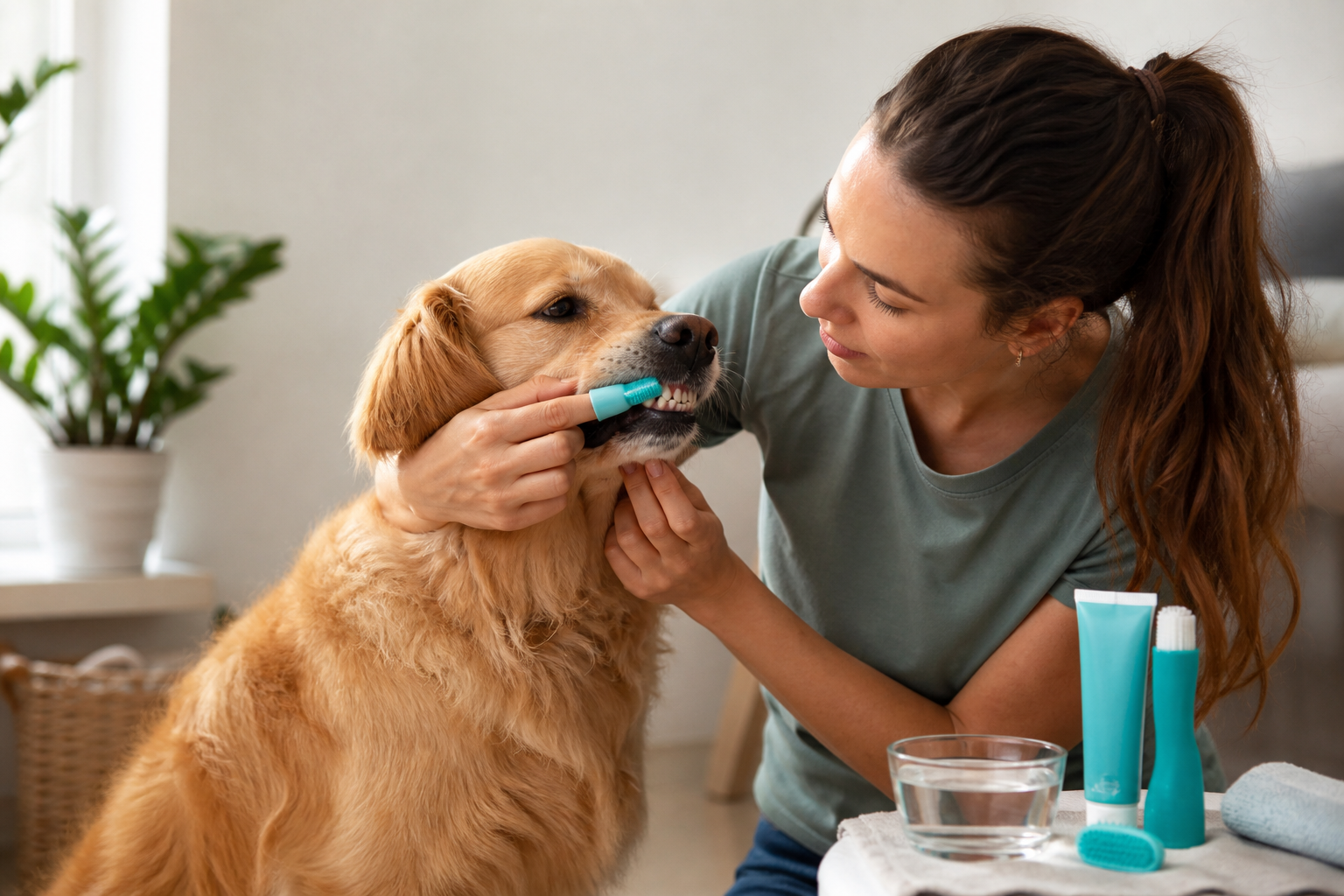
The type of brush you choose depends on your dog's size and comfort level. Standard dog toothbrushes have long handles and angled heads. These help you reach the molars at the very back of the mouth. If your dog is small or nervous, a finger brush might be better. These are small silicone caps with soft bristles that fit over your fingertip. They allow for more control and a gentler touch. For a specific option, consider the Pure and Natural Pet CanineTooth Gel with Bamboo Dog Toothbrush.
Vet Tip: If your dog has red, bleeding gums or loose teeth, do not start a brushing routine yet. Consult your veterinarian first to ensure there are no underlying infections that could make brushing painful.
Using Dental Chews and Treats Effectively
Not every dog is a fan of the toothbrush. If your dog struggles during grooming sessions, dental chews are a fantastic supplement. These treats are designed with specific textures that scrape away plaque as the dog chews. They also encourage saliva production, which contains natural enzymes that help clean the mouth. Browse our dog dental treats for options suited to different chewing preferences.
What to Look for in a Chew
When shopping for chews at BaxterBoo, look for the VOHC seal of approval. The Veterinary Oral Health Council only gives this seal to products that have been proven to reduce plaque and tartar. We carry several brands like Greenies that meet these high standards.
Check the hardness of the chew before giving it to your dog. A good rule of thumb is the "fingernail test." If you can leave a small dent in the chew with your fingernail, it is likely safe. Anything harder, like elk antlers or thick bones, can actually fracture a dog's teeth.
Tips for Giving Dental Chews
- Choose the correct size for your dog's weight to prevent choking.
- Supervise your dog whenever they are enjoying a chew.
- Factor the calories from dental treats into your dog's daily food intake.
- Look for "Z" shaped or ridged designs that get into the gaps between teeth.
For more ideas, explore this guide to the best dental chews for dogs.
Water Additives and Oral Gels
If you need a "hands-off" approach, water additives are a great tool. These are liquid solutions that you pour directly into your dog's water bowl. They work by altering the pH of the saliva and killing the bacteria that cause plaque. They are usually tasteless and odorless, so most dogs do not even notice they are there.
Oral gels are another option for dogs that do not like brushing. You simply apply a small amount of the gel to the gum line. The dog’s tongue then spreads it around the mouth as they lick. These gels often contain natural ingredients like green tea extract or zinc to fight bad breath and bacteria. You can also review this article about warning signs of dental problems in dogs.
Safe Chew Toys for Dental Health
Chewing is a natural instinct for dogs. You can use this to your advantage by providing toys that clean their teeth while they play. Rubber toys with nubs or ridges are excellent for massaging the gums and scraping the surface of the teeth. Shop our dog chew toys to find options for active chewers.
KONG toys are a staple for many of our customers. When filled with a healthy snack, they keep a dog chewing for long periods. This mechanical action is very effective at preventing tartar buildup. Rope toys can also act like dental floss, though you must monitor them for fraying. If a dog swallows long strands of rope, it can cause a dangerous intestinal blockage.
Key Takeaway: Home dental care is most effective when you use a combination of methods. Brushing three times a week plus daily dental chews provides the best protection against tartar.
Natural Cleaning Helpers: Carrots and Apples
Believe it or not, some items in your refrigerator can help clean your dog's teeth. Raw carrots are a healthy, low-calorie treat that requires a lot of chewing. The fibrous texture of the carrot acts as a mild abrasive on the teeth. This can help scrub away loose plaque.
Slices of apple can also be beneficial. They contain malic acid, which helps keep the mouth clean. However, never give your dog the apple core or seeds, as the seeds contain small amounts of cyanide. While these snacks are helpful, they are not a substitute for professional dental products or regular brushing.
Special Considerations for Specific Breeds
Some dogs are more prone to dental issues than others. Small breeds and flat-faced dogs like Pugs, Bulldogs, and Chihuahuas often have crowded teeth. Their jaws are smaller, but they still have many of the same teeth as larger dogs. This crowding creates tiny pockets where food and bacteria get trapped easily.
If you own a brachycephalic (flat-faced) breed, you need to be extra vigilant. These dogs often require daily brushing to stay ahead of decay. They may also need more frequent professional cleanings from your vet.
Step 1: Check your dog's mouth./ Look for redness or yellow buildup once a week.
Step 2: Introduce the brush./ Let your dog lick some toothpaste off your finger first.
Step 3: Brush the outside surfaces./ Focus on the side of the teeth that touches the cheek.
Step 4: Reward your pet./ Give them a dental chew or praise immediately after you finish.
Professional Care and Prescription Diets
Sometimes home care is not enough to keep a dog's mouth healthy. This is especially true for senior pets or those with a history of dental disease. In these cases, your veterinarian might recommend a prescription dental diet. These foods are formulated with a specific kibble size and shape that scrubs the tooth as the dog bites down.
Our pharmacy carries FDA-approved medications and prescription pet foods through our partnership with Pet's Choice. If your vet prescribes a specific diet like Farmina Vet Life for dental health or weight management, we can help fulfill that order. Prescription diets often contain minerals that bind to calcium in the saliva. This prevents the calcium from turning into hard tartar.
Bottom line: Prescription dental diets and professional cleanings are necessary for dogs with advanced plaque or specific health needs.
When to Call the Veterinarian
Even with the best at-home routine, you should still have your dog's teeth checked by a professional at least once a year. Your vet can see things that you might miss, especially below the gum line. If your dog shows any of the following signs, schedule an appointment sooner:
- Excessive drooling or dropping food while eating.
- A change in chewing habits or favor toward one side of the mouth.
- Gums that are very red, swollen, or bleeding.
- Noticeable brown or grey buildup on the teeth.
- Pus or discharge around the gum line.
- A sudden change in breath that smells sweet, like ammonia, or extremely foul.
Professional cleanings are performed under anesthesia. This allows the vet to take X-rays and clean deep under the gums where most disease hides. While some places offer "anesthesia-free" cleanings, these are mostly cosmetic. They cannot address the health issues lurking beneath the surface.
Summary of Dental Care Tools
| Tool Type | Best For | Pros |
|---|---|---|
| Toothbrush & Paste | Everyone | Most effective method; targets plaque directly. |
| Dental Chews | Busy owners | Easy to give; dogs love the taste. |
| Water Additives | Resistant dogs | Zero effort; works through the water bowl. |
| Rubber Toys | Active chewers | Cleans while playing; reduces boredom. |
| Prescription Diet | High-risk breeds | Works at every meal; prevents tartar formation. |
Conclusion
Keeping your dog's mouth healthy is a lifelong commitment. While brushing is the best way to clean dog's teeth, you have many other tools at your disposal. From VOHC-approved chews to water additives and specialized toys, you can find a routine that fits your lifestyle. We carry a wide selection of these supplies at BaxterBoo to help you stay on track.
Consistency is more important than perfection. Even if you can only brush twice a week, it is much better than not brushing at all. Combine your home efforts with regular veterinary checkups to ensure your dog stays happy and pain-free. For those who need more specialized help, remember our pharmacy is here to provide prescription diets and health support.
Next Step: Start by checking out our dog dental health category to find the right brush and paste for your dog. If you have a recurring need for dental chews, consider our Autoship program to save on every order.
FAQ
Can I use human toothpaste on my dog?
No, you should never use human toothpaste for your dog. Most human brands contain xylitol, which is a sweetener that is lethal to dogs even in small amounts. They also contain foaming agents like sodium lauryl sulfate that cause stomach upset when swallowed. Always use an enzymatic paste made specifically for pets.
How often do I really need to brush my dog's teeth?
Ideally, you should brush your dog's teeth every single day. Plaque can turn into hard tartar in as little as 24 to 48 hours. If daily brushing is not possible, aim for at least three times per week. Combining brushing with daily dental chews can help fill the gaps on days you skip.
Are dental chews as good as brushing?
Dental chews are a great supplement, but they are not as effective as manual brushing. Brushing allows you to target the gum line and the back molars where plaque builds up the most. Chews are better than doing nothing, but they work best when used alongside a toothbrush. Look for chews with the VOHC seal for the best results.
Does dry food really keep teeth cleaner than wet food?
While dry kibble provides some mechanical scraping, it is not a cure-all for dental health. Most dogs swallow kibble whole or break it into only a few pieces. This means the cleaning effect is very limited. Regardless of whether you feed wet or dry food, you still need to maintain a regular dental hygiene routine.






