
 Save 15% on your 1st Autoship learn more

 Email us
 Live Chat
 FAQs
FAQs





Introduction
You lean in for a happy morning nuzzle only to be met with a puff of breath that smells like a swamp. Most dog owners have had this experience. We often notice the smell before we notice the yellowing tartar or red gums. At BaxterBoo, we talk to pet parents every day who want to help their dogs but do not know which tools are actually effective. Cleaning a dog's teeth is not just about fresh breath. It is a vital part of preventing painful infections and long-term health issues. This guide covers the specific toothbrushes, pastes, and alternative cleaners that work best for different types of dogs. You will learn how to choose the right supplies to keep your dog's mouth healthy and their smile bright.
Quick Answer: The most effective tool for cleaning a dog’s teeth is a soft-bristled toothbrush paired with dog-specific enzymatic toothpaste. If your dog resists brushing, you can use dental wipes, water additives, or VOHC-approved dental chews to help reduce plaque and tartar buildup.
The Best Tools for Brushing
Brushing remains the most effective way to remove plaque before it hardens into tartar. You need the right gear to make this process safe and efficient. Using the wrong tools can cause discomfort or even toxicity.
Dog-Specific Toothbrushes
You have several options when it comes to the brush itself. A standard dog toothbrush usually has a long handle and an angled head. This design helps you reach the back molars without putting your hand too deep into the dog’s mouth. Some of these brushes have two heads of different sizes. This is helpful if you have multiple dogs or a breed with varying tooth sizes.
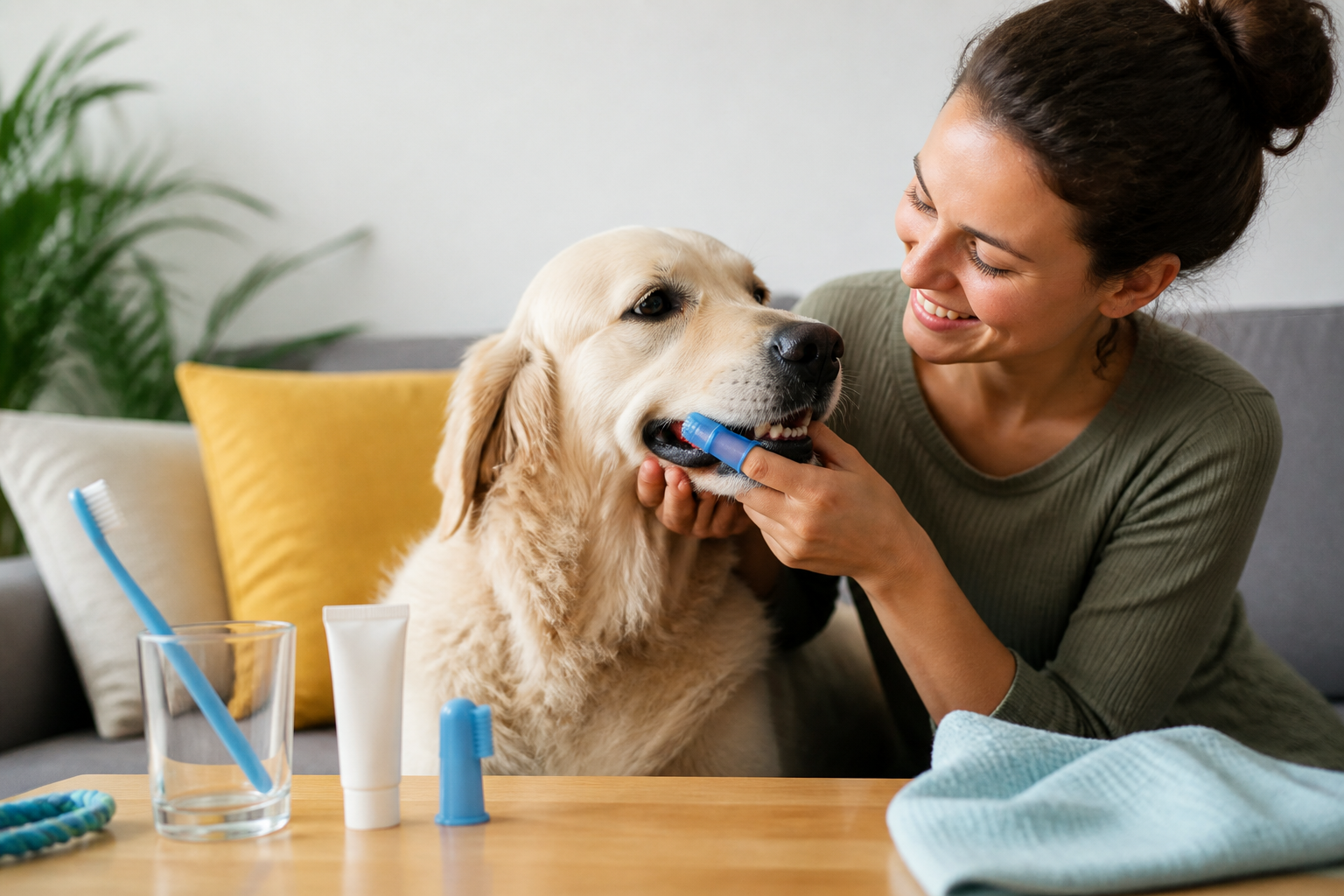
Finger brushes are another popular choice. These are small silicone or rubber caps that slip over your pointer finger. They have tiny bristles on the tip. Many owners find these easier to control because you can feel exactly where the brush is touching. They are often less intimidating for puppies or small dogs. For smaller mouths, consider a Virbac C.E.T. single-ended toothbrush.
Enzymatic Toothpaste for Dogs
Never use human toothpaste on your dog. Most human pastes contain fluoride and foaming agents like sodium lauryl sulfate. These can cause upset stomachs. More importantly, many human toothpastes contain Xylitol. This is an artificial sweetener that is highly toxic to dogs even in small amounts.
Dog-specific toothpaste is designed to be swallowed. It uses enzymes to help break down food particles and bacteria. These pastes come in flavors dogs actually enjoy, such as poultry, beef, or peanut butter. This makes the experience more like a treat than a chore. A dog-specific enzymatic toothpaste can help make brushing more appealing.
Key Takeaway: Proper dental care requires a brush designed for a dog's mouth and toothpaste that is safe for them to swallow.
Alternatives to Traditional Brushing
Not every dog will sit still for a toothbrush. If your dog is head-shy or has a very small mouth, you might need to try different methods. These alternatives are better than doing nothing at all. You can explore our dog dental care collection for additional options.
Dental Wipes
Dental wipes are textured pads that you wrap around your finger. They are pre-moistened with cleaning solutions that help kill bacteria. You simply rub the wipe over the surface of the teeth and along the gum line. While they do not get into the deep crevices like bristles do, they are excellent for removing the daily film of plaque. They are a great starting point for dogs that are not used to having their mouths handled.
Water Additives
Dental water additives are a "set it and forget it" solution. You add a small amount of the liquid to your dog’s water bowl each time you refill it. These formulas contain ingredients that help break down plaque and freshen breath as the dog drinks. Look for products that have the Veterinary Oral Health Council (VOHC) seal. This seal ensures the product has met specific standards for reducing plaque or tartar.
Dental Powders and Supplements
Some supplements come in a powder form that you sprinkle over your dog’s food. These often contain sea kelp or specific probiotics that change the chemistry of the saliva. This makes it harder for plaque to stick to the teeth. Brands like Zesty Paws offer various wellness supplements that support overall health, including oral hygiene. You can browse our selection of Zesty Paws products.
Vet Tip: If your dog has red, bleeding gums or loose teeth, stop brushing and schedule a veterinary exam immediately. Brushing over an active infection can be very painful and may spread bacteria into the bloodstream.
Choosing Effective Dental Chews
Dental treats are a favorite for many owners because the dog does the work. However, not all chews are created equal. The goal is to provide mechanical scrubbing through chewing.
- VOHC Seal: Always check for the Veterinary Oral Health Council seal on the packaging.
- Size Matters: Choose a chew that matches your dog’s weight. A treat that is too small can be swallowed whole, posing a choking risk.
- Hardness Test: If you cannot dent the chew with your fingernail, it might be too hard. Extremely hard chews like antlers or heavy bones can actually fracture a dog’s teeth.
- Calorie Count: Remember that dental chews contain calories. Adjust your dog’s daily food intake to account for these treats.
We carry several trusted brands like Greenies and Kong that offer durable options for different chewers. Kong toys can also be smeared with dog toothpaste or dental gels to encourage your dog to "brush" while they play.
Bottom line: Dental chews are a helpful supplement to brushing, but they should be VOHC-approved and appropriately sized for your dog's safety.
The Role of Diet in Dental Health
What your dog eats every day impacts how fast plaque accumulates. There is a common myth that all dry kibble cleans teeth. While some crunching helps, most standard kibble shatters too quickly to provide real cleaning.
Prescription Dental Diets
If your dog is prone to heavy tartar, your veterinarian might recommend a prescription dental diet. These kibbles are much larger and have a specific fiber matrix. Instead of crumbling, the tooth sinks into the kibble. This allows the fibers to scrub the tooth surface all the way to the gum line.
Our pharmacy provides access to FDA-approved medications and prescription diets through our partnership with Pet's Choice. If your vet prescribes a specific food like Royal Canin Dental or Farmina Vet Life, you can fulfill those needs through our pet pharmacy.
Natural Cleaning Foods
Some fresh foods can act as mild abrasives. Raw carrots and apple slices (without seeds or the core) require significant chewing. This can help rub away some surface debris. However, these should be viewed as healthy snacks rather than a primary dental cleaning method. They do not contain the enzymes found in toothpaste that kill harmful bacteria.
Establishing a Cleaning Routine
Consistency is more important than the length of the cleaning session. Brushing for thirty seconds every day is better than brushing for five minutes once a month. For additional guidance, read our pet dental care tips.
Step 1: Get them comfortable.
Let your dog lick a little toothpaste off your finger. Do this for a few days without trying to touch their teeth. You want them to associate the flavor with a positive experience.
Step 2: Touch the teeth.
While they lick the paste, gently lift their lip and touch their teeth with your bare finger. This gets them used to the sensation of someone feeling around their mouth.
Step 3: Introduce the brush.
Put a small amount of paste on the brush. Let them lick it off. Slowly transition to a few gentle circular strokes on the front canines.
Step 4: Target the back.
Gradually work your way toward the back molars. This is where most tartar builds up because the cheek holds food against the teeth.
Step 5: Reward.
Always end the session with praise or a small dental treat. This reinforces that dental time is a good time.
When to Seek Professional Care
Home cleaning is preventive. It cannot remove tartar that has already hardened into "calculus." If you see thick, brown, or orange deposits on the teeth, your dog likely needs a professional cleaning. For more warning signs, review how to recognize bad teeth in dogs.
Professional cleanings are performed under general anesthesia by a veterinarian. This allows the vet to clean under the gum line where the most damage occurs. They can also take X-rays to check for abscesses or bone loss that is not visible to the naked eye. Regular checkups help catch dental disease before it leads to tooth loss or heart and kidney issues.
Our partnership with FIGO Pet Insurance can help pet owners manage the costs of unexpected dental injuries or illnesses. Keeping up with home care reduces the frequency of professional cleanings, but it does not replace the need for an annual vet exam.
Key Takeaway: Professional veterinary cleanings are necessary for removing hardened tartar and addressing issues beneath the gum line that home brushing cannot reach.
Summary of Cleaning Options
| Method | Best For | Pros | Cons |
|---|---|---|---|
| Brushing | Most dogs | Most effective; removes plaque | Can be difficult to start |
| Dental Wipes | Puppies; sensitive dogs | Easy to use; portable | Does not reach deep gaps |
| Water Additives | Busy owners | No effort required | Does not remove stuck food |
| Dental Chews | Aggressive chewers | Provides enrichment | Adds daily calories |
| Prescription Diet | Tartar-prone dogs | Cleans while eating | Requires vet prescription |
Conclusion
Keeping your dog's mouth clean is a fundamental part of being a responsible pet owner. Whether you use a traditional toothbrush, dental wipes, or water additives, the key is to start as early as possible. We have seen firsthand how much better dogs feel when their mouths are free of pain and infection. By using tools like enzymatic toothpaste and VOHC-approved chews, you can significantly extend the time between professional cleanings.
At BaxterBoo, we are committed to providing the supplies you need to make this routine successful. If you are just starting out, consider our wide selection of dental care products or our Autoship programme to ensure you never run out of your dog’s favorite dental treats.
Bottom line: A combination of daily brushing, effective chews, and regular veterinary checkups is the best defense against canine dental disease.
FAQ
Can I use baking soda to clean my dog's teeth?
While baking soda is not toxic in tiny amounts, it has a very high alkaline content and a salty taste that most dogs dislike. It can cause an upset stomach if swallowed in larger quantities. It also lacks the enzymes found in commercial dog toothpaste that are designed to kill oral bacteria effectively.
How often should I clean my dog's teeth?
Ideally, you should brush your dog's teeth every day. Plaque can turn into hardened tartar in as little as 24 to 48 hours. If daily brushing is not possible, aim for at least three times a week to keep the bacterial load under control.
Why does my dog's breath still smell after brushing?
Persistent bad breath can be a sign of underlying issues like gum disease, a rotting tooth, or even internal problems with the kidneys or digestive tract. If brushing does not improve the odor, you should consult your veterinarian for a professional oral exam.
At what age should I start cleaning my dog's teeth?
You should start as soon as you bring your puppy home. Even though they will lose their baby teeth, getting them used to the sensation of brushing early in life makes it much easier to maintain the habit as they grow into adults. Always be very gentle with a puppy's sensitive mouth.






