Save 15% on your 1st Autoship learn more

 Email us
 Live Chat
 FAQs
FAQs





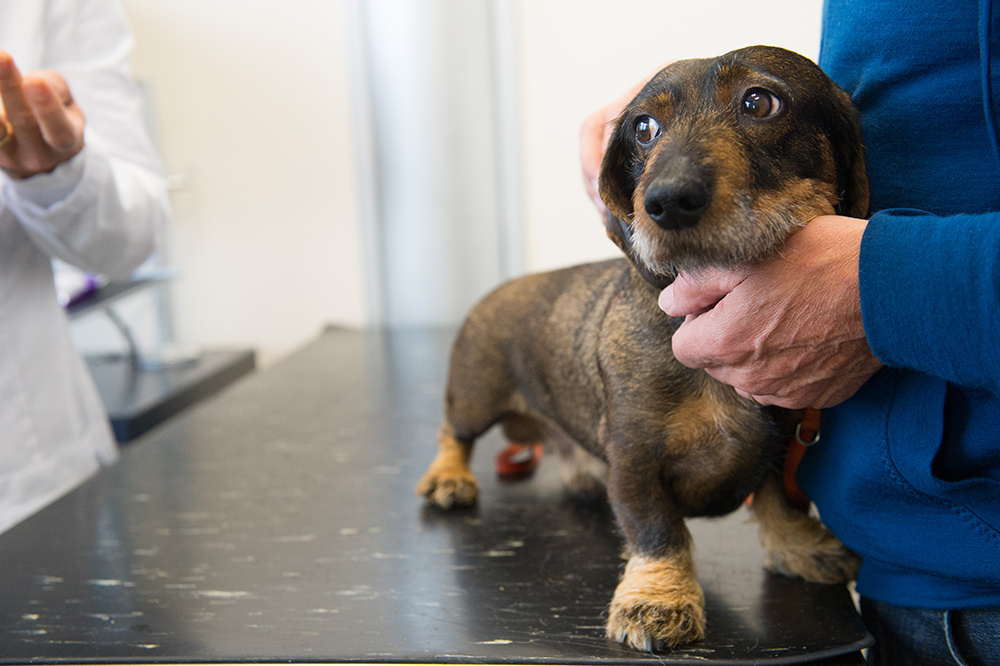
A veterinarian is the best friend that you and your pet can have. Not only does your vet help keep your pet healthy, but he or she is also a source of valuable information and support. Nevertheless, many doggies and kitties don't realize what a good friend the vet is and are scared to go to the clinic.
A scared pet can act out in unpredictable ways, making the vet visit stressful for everyone involved. Nevertheless, there are things you can do to make it less frightening. Your pet may never love going to the vet, but he may learn to tolerate it a lot better.
Why Are Pets Scared To Go to the Vet?
There are many reasons why going to the vet tends to be a frightening experience for dogs and cats. For one thing, it takes them out of a setting that is comfortable and familiar and puts them in a strange place. Cats and dogs are creatures of habit. Routine is comfortable to them. When you take them to a strange place, full of unfamiliar smells, they don't know what dangers might be lurking nearby, and it puts them on edge.
The memory of a bad experience at the vet's office in the past may also make a pet nervous. Your pet may have visited the vet once when she was sick or hurt, and she may associate it with that bad feeling. Even a check-up involves handling that is unfamiliar to your pet. Veterinarians and techs try to be as gentle as possible with your pet, but an examination still involves poking and prodding that may be uncomfortable for her. A pet doesn't understand that a vet visit is for her own good. All she knows is that she is being handled in an unusual way by strangers in an odd-smelling, unfamiliar place. It's understandable that the whole experience might make her nervous or scared, and that she might try to avoid it in the future.
Your pet may also be reacting to other animals in the vet's office. Pheromones are chemicals secreted by the body that influence the behavior of other animals, as long as they are part of the same species. If you take your dog or cat to the vet and there are other pets in the waiting room that are scared, they may be giving off fear pheromones. Your pet may react to the pheromones and become scared without anything overtly frightening happening. Pheromones are a valuable tool for animals in the wild to warn others of danger, but they can be inconvenient when it comes to keeping your pet calm at the vet.
What Should You Do To Calm Your Pet Before Vet Visits?
It is possible to keep your pet calm for a vet visit, but it starts well before your appointment time. If your cat only sees his carrier when he's going to the vet, he can learn to hate the sight of the thing. Therefore, you should keep the carrier visible at all times, even when you're not using it. Create experiences by which the kitty learns to associate it with good things, such as feeding him inside the carrier.
Similarly, your dog or cat can learn to fear rides in the car if an unsettling experience like a vet visit is all that ever happens at the end. Start taking short rides with your pet in the car around the block. When it is over, give her a treat or let her play with her favorite toy. Gradually increase the length of your drives so your pet knows that car rides don't have to be scary.
Put your pet on a leash — with a harness, if necessary — and make a social visit to the vet's office before your appointment. This gives her a chance to investigate the new smells and meet the vet and support staff before the stress of the actual appointment. Hopefully, she will conclude that the vet's office is not a scary place and feel calmer when it comes time for the actual examination.
While fear pheromones can have a powerful effect on your pet, there are products you can use to counteract them. Feliway is a synthetic chemical that mimics the pheromones that a mother cat releases when nursing kittens. Adult cats still respond to this pheromone, becoming calm and happy in response. Feliway is available as a spray or as wipes that you can use on the inside of the cat carrier to help your pet feel more content.
There is a canine equivalent of Feliway called Adaptil that mimics mother-dog pheromones when you spray it inside your car.
During a vet visit, it is often necessary to restrain a pet's body or one of its limbs. This can be upsetting to a dog or cat, especially if it is a new experience. Work on getting your pet used to restraint at home by introducing the concept slowly: First a short hug, then a longer hug, then gently lifting one of the legs, etc. When your pet behaves as you want him to, be sure to praise and reward him.
Choosing the right vet makes a big difference, so consider this decision carefully. If your pet has special needs, ask the vet if he or she is experienced in treating them. All vets receive training on treating both dogs and cats, but some are more comfortable treating one species than the other. Choose a vet who is patient, whose presence is calming, and whom you feel comfortable asking questions. If you enjoy interacting socially with your vet, it may have a positive effect on your pet as well.