
 Save 15% on your 1st Autoship learn more

 Email us
 Live Chat
 FAQs





Introduction
You are relaxing on the sofa with your cat when you notice a dusting of white specks across their glossy coat. You might first wonder if they bumped into a dusty corner. Then you realize these white flakes are coming from their skin. Seeing cat dandruff can be a bit startling for any pet owner. At BaxterBoo, we know that your cat's coat is a direct reflection of their internal health. This article covers the common causes of feline flakes and provides practical steps to restore a healthy shine. We will look at grooming habits, nutritional needs, and environmental changes. Most cases of mild dandruff are manageable at home. However, some flakes indicate underlying health concerns that require a professional eye. This post serves as your starting point for getting your cat's skin back in top shape.
Quick Answer: Cat dandruff is often caused by low humidity, poor grooming, or a lack of essential fatty acids in the diet. You can manage most cases by increasing hydration, using a humidifier, and brushing your cat daily to distribute natural oils.
Understanding the Difference Between Dandruff and Dander
It is important to distinguish between dandruff and dander. Many people use these terms interchangeably, but they are quite different. Dander consists of microscopic skin cells that all cats shed naturally. You cannot see dander with the naked eye. It is a normal part of a cat's biology and is the primary source of allergens for humans.
Dandruff refers to visible flakes of dead skin that have clumped together. These flakes are large enough to be seen on the fur, especially on cats with darker coats. While dander is healthy and normal, dandruff is a symptom that something is slightly off with the skin's balance. It often indicates that the skin is too dry or, in some cases, too oily.
Key Takeaway: Dander is a microscopic and normal part of feline health. Dandruff consists of visible flakes and serves as a signal that your cat's skin needs extra attention.
Cat Skin & Coat Care













Environmental Triggers for Flaky Skin
The air inside your home plays a significant role in your cat's skin health. During the winter months, indoor heating systems strip moisture from the air. This low humidity environment causes the skin to lose its natural hydration. When the skin becomes parched, it begins to flake off in visible pieces.
You might notice that the dandruff worsens during the peak of summer or the dead of winter. This is usually due to air conditioning or heavy furnace use. If the air feels dry to you, it feels even drier to your cat. Their skin relies on ambient moisture to stay supple.
Using a Humidifier
Adding a humidifier to your home is one of the easiest ways to help your cat. Place the unit in the room where your cat spends the most time. This adds consistent moisture back into the environment. It helps both the cat's skin and their respiratory system.
Temperature Control
Extreme heat can also damage the skin barrier. If your cat loves to press themselves against a radiator or a heating vent, they might be drying out their coat. Try to encourage them to use a heated pet bed instead. These beds provide warmth without the direct, dry airflow of a furnace vent.
The Role of Grooming and Physical Limitations
Cats are famous for their meticulous grooming habits. They spend a large portion of their day cleaning themselves. This process does more than just keep them smelling fresh. Their sandpaper-like tongues remove dead skin cells and distribute natural oils across the fur. When a cat stops grooming effectively, dandruff begins to build up.
Obesity and Accessibility
If a cat is overweight, they often cannot reach certain parts of their body. You will most likely see dandruff along the lower back and at the base of the tail. These are the hardest spots for a heavy cat to reach. The skin cells in these areas simply pile up because they are not being brushed away by the cat's tongue.
Arthritis and Senior Cats
Senior cats often suffer from joint pain or stiffness. Arthritis makes the twisting and turning required for grooming very uncomfortable. If your older cat has suddenly developed flakes, it might be because they can no longer reach their back. This is a common sign that they need some extra help with their daily routine. For more information about grooming challenges related to mobility, read this guide to arthritis care for cats.
Vet Tip: If your cat has stopped grooming and is also showing signs of stiffness or lethargy, consult your veterinarian. They can check for arthritis or other mobility issues and suggest pain management options that make grooming comfortable again.
Essential Grooming Tools and Techniques
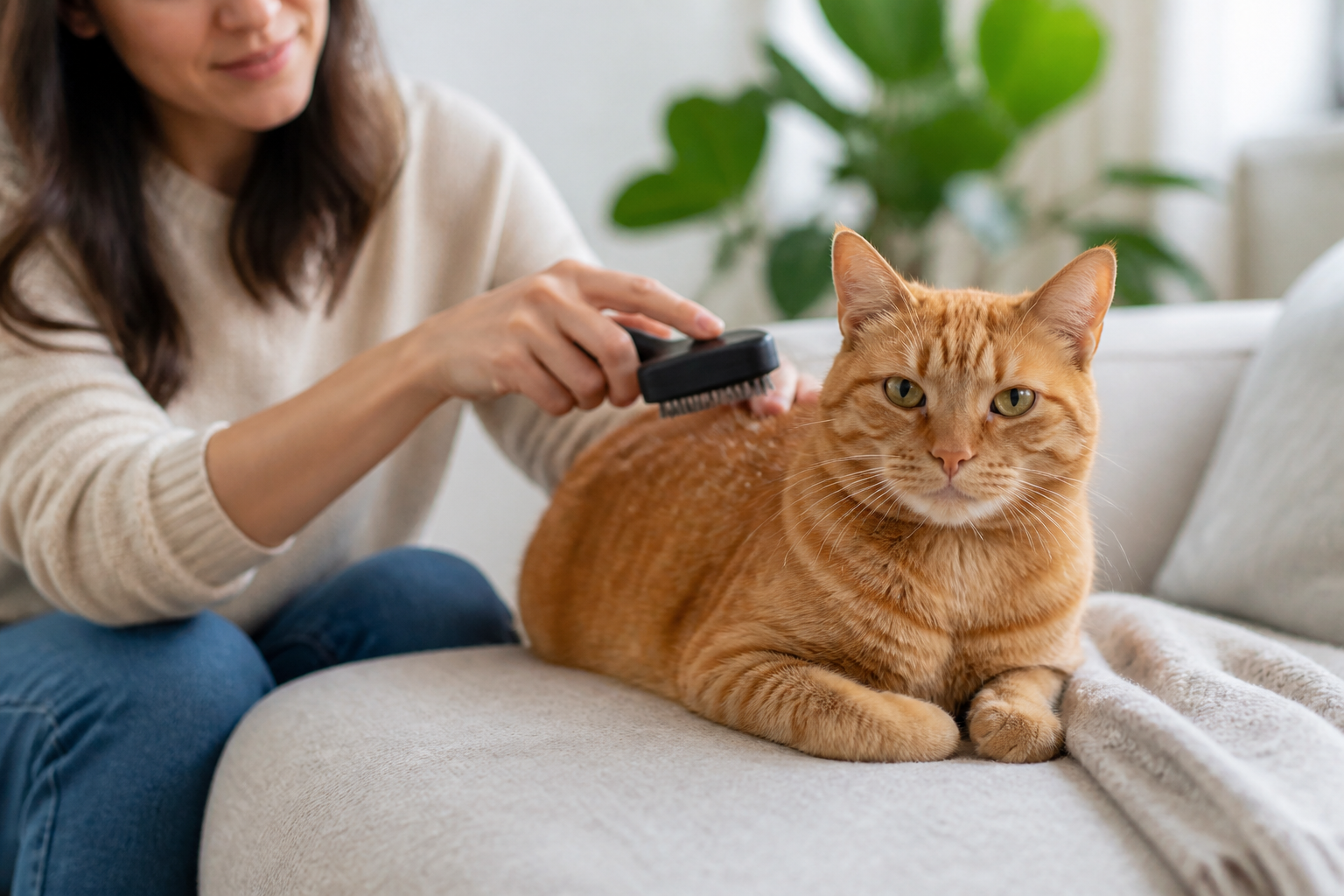
Since grooming is vital for removing flakes, you may need to step in and help. Regular brushing is the most effective way to manage dandruff at home. It mimics the action of a cat's tongue and helps move oils from the skin to the ends of the hair. Explore our cat grooming supplies for brushes, combs, and other helpful tools.
Step 1: Choose the right tool. / Use a soft bristle brush for short-haired cats. Use a stainless steel comb or a slicker brush for long-haired breeds to reach the undercoat.
Step 2: Start slowly. / Brush your cat when they are relaxed. Use gentle strokes in the direction of hair growth to avoid irritating the skin.
Step 3: Focus on problem areas. / Pay extra attention to the lower back and the base of the tail where flakes tend to accumulate.
Step 4: Reward the behavior. / Give your cat a small treat after a grooming session to create a positive association with the brush.
Our team at BaxterBoo recommends brushing at least three times a week for most cats. Long-haired cats or those with mobility issues should be brushed daily. This prevents mats and keeps the skin healthy. The U-Groom Combo Brush for Dogs and Cats is one option designed for regular at-home grooming.
Nutrition and the Importance of Hydration
What your cat eats directly impacts the quality of their skin. A diet lacking in specific nutrients can lead to a dull coat and flaky skin. The skin is the body's largest organ and it requires a lot of energy and nutrients to maintain itself. You can explore our cat food selection when reviewing your cat's regular meals.
Omega Fatty Acids
Omega-3 and Omega-6 fatty acids are crucial for skin health. These healthy fats help maintain the skin's moisture barrier. If a cat's diet is too low in these fats, their skin becomes brittle and prone to flaking. Many high-quality brands like Farmina or Stella & Chewy's include these fats in their recipes. You can also add a salmon oil supplement to their food.
The Problem with Dehydration
Cats have a naturally low thirst drive. In the wild, they get most of their moisture from their prey. If your cat eats only dry kibble, they may be living in a state of mild, chronic dehydration. This shows up on their skin first.
Ways to increase hydration include:
- Switching some or all meals to wet food.
- Adding a splash of water or unsalted bone broth to kibble.
- Using a pet water fountain to encourage more frequent drinking.
- Placing multiple water bowls in different areas of the home.
For additional nutrition guidance, explore this article about tailoring your cat's diet.
Key Takeaway: Proper hydration and a diet rich in Omega fatty acids are the foundations of flake-free skin. Wet food is often the easiest way to boost a cat's daily water intake.
External Parasites and Walking Dandruff
Sometimes, those white flakes aren't just dead skin. Certain parasites can look exactly like dandruff. The most common culprit is the Cheyletiella mite. This condition is often called walking dandruff because if you look closely, you can actually see the flakes moving.
These mites live on the surface of the skin and are highly contagious between pets. They cause intense itching and a large amount of scaling. If you see flakes that seem to move or if your cat is scratching constantly, it is likely a parasite issue rather than simple dry skin.
Flea Allergy Dermatitis
Fleas can also lead to dandruff. Many cats are allergic to flea saliva. A single bite can trigger a massive inflammatory response. This causes the skin to become red, crusty, and flaky. Regular flea prevention is essential even for cats that stay indoors.
Through the BaxterBoo pharmacy partnership with Pet's Choice, we offer a wide range of FDA-approved flea and tick preventives. If your cat's dandruff is caused by parasites, a prescription-strength treatment is often the most effective solution. Our pharmacy can help you manage these ongoing health needs once you have a prescription from your vet. You can also browse our cat flea and tick collection for preventative care options. For broader prevention information, read about flea and tick prevention products.
Vet Tip: Never use human dandruff shampoo on a cat. These products often contain ingredients like zinc or salicylic acid that are toxic to felines if ingested during grooming. Always use products specifically formulated for cats.
When to Visit the Veterinarian
While a few flakes during a dry winter might not be an emergency, dandruff can sometimes point to serious internal issues. The skin often reacts to systemic diseases before other symptoms appear. If home remedies like brushing and humidifiers do not work within two or three weeks, it is time for a professional evaluation.
You should seek veterinary advice if you notice:
- Patches of hair loss or thinning fur.
- Red, inflamed, or bloody spots on the skin.
- Constant scratching, biting, or licking of the skin.
- A foul odor coming from the coat.
- Changes in appetite, weight, or litter box habits.
Internal conditions such as hyperthyroidism, diabetes, or kidney disease can all cause changes in skin quality. A veterinarian can perform blood tests and skin scrapings to rule out these conditions. They may also recommend a prescription diet if they suspect a food allergy is the root cause.
Bottom line: Persistent or severe dandruff accompanied by itching or behavioral changes requires a veterinary exam to rule out systemic illness.
Supplements for Skin and Coat Support
If your vet confirms that your cat is healthy but simply prone to dry skin, supplements can make a significant difference. Most skin supplements focus on providing concentrated doses of essential fatty acids. Options for these needs are available in our cat skin and coat care collection.
Zesty Paws and Honest Paws are two brands we carry that offer excellent skin and coat support. These supplements come in oils or soft chews that most cats find palatable. It usually takes about four to six weeks of consistent use to see a change in the coat. This is because it takes time for new, healthier skin cells to reach the surface.
Choosing a Supplement
Look for products that contain EPA and DHA, which are specific types of Omega-3 fats derived from fish. These are more easily used by a cat's body than plant-based fats like flaxseed oil. Always start with a small dose to ensure the supplement does not upset your cat's stomach.
Managing Stress-Related Skin Issues
It might sound surprising, but stress can lead to cat dandruff. When a cat is stressed, their body produces cortisol. High levels of this hormone can interfere with the skin's ability to repair itself. Stress also leads to changes in grooming. Some cats over-groom when anxious, causing irritation. Others stop grooming entirely.
If you have recently moved, added a new pet, or changed your daily routine, your cat's dandruff might be a physical manifestation of anxiety. Providing a stable environment and using calming aids can help.
Creating a Calm Environment
Make sure your cat has vertical space, such as a cat tree, to feel safe. Use pheromone diffusers in the home to reduce tension. Once the cat feels more secure, their grooming habits usually return to normal, and the dandruff subsides.
Key Takeaway: A stressed cat is a cat with poor skin health. Focus on environmental enrichment and stability to support a healthy coat.
Summary Checklist for Cat Dandruff
If you are currently dealing with a flaky feline, use this checklist to manage the situation:
- Check the humidity levels in your home and use a humidifier if necessary.
- Increase the amount of wet food in your cat's diet to boost hydration.
- Brush your cat daily with a tool appropriate for their coat type.
- Inspect the skin closely for moving flakes or signs of fleas.
- Evaluate your cat's weight and mobility to see if they need help grooming.
- Consult your vet if the dandruff is persistent or if the skin looks irritated.
Conclusion
Dealing with cat dandruff is usually about finding the right balance of moisture and maintenance. By improving your cat's diet, ensuring they stay hydrated, and helping them with regular brushing, you can usually clear up those pesky flakes. Remember that the skin is a window into your pet's overall wellness. Pay attention to changes in your coat and do not hesitate to seek professional help if things do not improve. Trust BaxterBoo for the supplies you need to keep your cat's skin healthy, from premium food to grooming tools. For those managing chronic skin conditions or parasite issues, our pharmacy partnership provides a convenient way to get the medications your vet prescribes.
FAQ
Why does my cat have dandruff on her back?
The lower back and base of the tail are common spots for dandruff because they are the hardest areas for a cat to reach during grooming. If a cat is overweight or has arthritis, they often stop cleaning these spots entirely, allowing dead skin cells to accumulate. Regular brushing in these specific areas can help clear the flakes.
Can I use a wet cloth to remove cat dandruff?
Yes, using a warm, damp cloth can help remove loose flakes and soothe dry skin. However, this is only a temporary fix and does not address the underlying cause of the dryness. It is best used as a supplement to regular brushing and a high-quality diet.
Does cat dandruff mean my cat has fleas?
Not necessarily, but it can be a sign. Flea bites cause inflammation and dryness, which leads to flaking. You should also look for flea dirt, which looks like small black specks of pepper. If you are unsure, use a fine-toothed flea comb to check for actual parasites near the skin.
Is cat dandruff contagious to humans?
Regular dandruff caused by dry skin is not contagious. However, if the flakes are caused by the Cheyletiella mite, also known as walking dandruff, those mites can temporarily move to humans and cause a mild, itchy rash. If you suspect your cat has mites, keep them away from other pets and see a vet for treatment immediately.






- Site & Contents BaxterBoo.com. BaxterBoo is located in the United States.
- Privacy & Security
- Terms of Use
- Accessibility Statement
