
 Save 15% on your 1st Autoship learn more

 Email us
 Live Chat
 FAQs
FAQs





Introduction
You lean in for a morning snuggle only to be met with a puff of breath that smells like a damp basement. Most of us have been there. While "dog breath" is often laughed off as a standard part of pet ownership, it is usually the first sign that your dog needs a more robust dental routine. At BaxterBoo, we know that keeping those pearly whites clean is about much more than just fresh kisses. It is a fundamental part of preventing long term health issues like periodontal disease and systemic infections. This post will cover everything from the best dental chews and additives to the gold standard of brushing and professional care. By understanding the tools available, you can build a daily habit that keeps your dog comfortable and healthy for years to come.
Quick Answer: The most effective way to clean a dog's teeth is a combination of daily brushing with dog-safe enzymatic toothpaste and the use of VOHC-approved dental chews. Water additives and dental diets can provide additional support by reducing plaque buildup through mechanical and chemical action.
The Gold Standard: Brushing with Dog-Safe Toothpaste
Daily brushing remains the single most effective way to remove plaque before it hardens into tartar. Plaque is a sticky film of bacteria that begins to form just hours after a meal. If it is not brushed away, it reacts with minerals in your dog's saliva and turns into tartar, also known as calculus, within 24 to 48 hours. Once tartar forms, you cannot remove it with a toothbrush. It requires professional scaling by a veterinarian.
When choosing what to give your dog for brushing, never reach for your own tube of toothpaste. Human toothpaste often contains Xylitol, an artificial sweetener that is highly toxic to dogs. It also contains foaming agents like Sodium Lauryl Sulfate that are intended to be spit out, not swallowed. Since dogs cannot spit, these ingredients can cause significant stomach upset.
Instead, look for enzymatic toothpastes formulated specifically for pets. These pastes contain enzymes like glucose oxidase which help break down organic matter in the mouth even if you cannot reach every single surface. Most pet toothpastes come in flavors like poultry, beef, or peanut butter to make the experience more like a treat and less like a chore. Explore our dog dental and breath care collection for pet toothpaste, toothbrushes, gels, and other oral-care supplies.
Choosing the Right Brushing Tool
The tool you use is just as important as the paste. For many dogs, a standard long handled pet toothbrush is the best choice because it allows you to reach the back molars without putting your fingers in the "danger zone."
- Finger Brushes: These are small silicone caps with bristles that fit over your index finger. They are excellent for puppies or dogs who are nervous about long objects in their mouth.
- Double-Headed Brushes: These have bristles on both sides to clean the inner and outer surfaces of the teeth simultaneously.
- Soft-Bristled Toddler Brushes: If you are in a pinch, a soft human toothbrush designed for toddlers can work, provided you are gentle.
Vet Tip: If your dog is resistant to brushing, do not force it. Start by letting them lick the toothpaste off your finger for several days. Gradually transition to rubbing their gums with your finger before finally introducing the brush.
For additional guidance on introducing brushing, read these pet dental care tips.
Dental Chews and Edible Treats
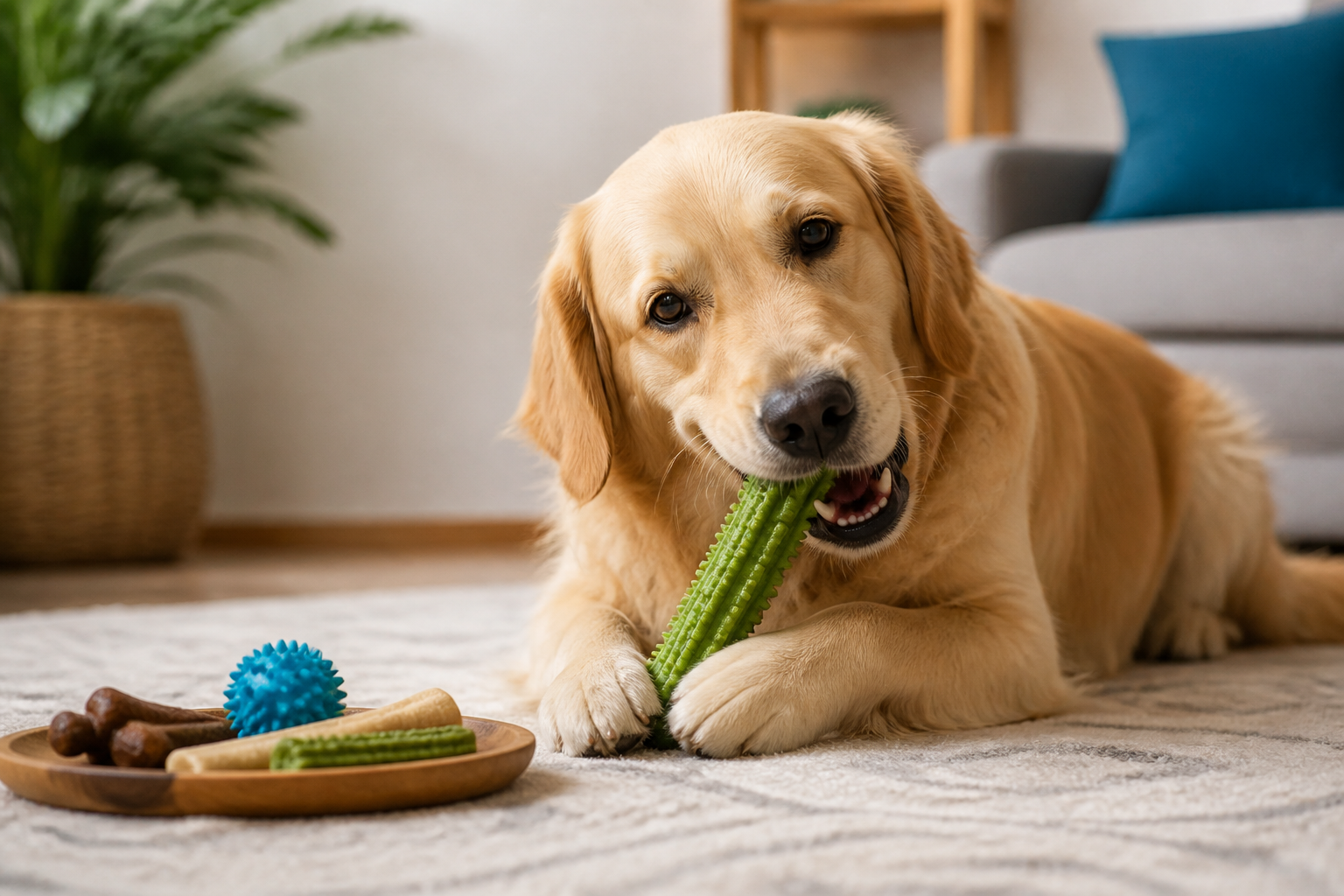
For many owners, brushing every single day is a challenge. This is where dental chews become a valuable part of the routine. These treats are engineered with specific textures that encourage a dog to chew longer. As the dog’s teeth sink into the treat, the material scrapes against the tooth surface to mechanically remove plaque.
When shopping for chews, look for the Veterinary Oral Health Council (VOHC) seal of approval. This seal indicates that the product has undergone rigorous testing to prove it actually reduces plaque or tartar by at least 10 to 20 percent. We carry several trusted brands at BaxterBoo, such as Greenies dental chews and Zesty Paws, which focus on both mechanical cleaning and breath freshening.
Safety Considerations for Chews
Size matters when it comes to dental treats. If a chew is too small, a dog might gulp it down whole, creating a choking hazard or a potential intestinal blockage. If it is too hard, it can lead to fractured teeth.
- The Fingernail Test: If you cannot make a small dent in the chew with your thumbnail, it is likely too hard for your dog’s teeth.
- The Knee Test: If it would hurt to hit your knee with the object, it is too hard.
- Calorie Counting: Dental treats are still treats. They can be calorie-dense, so ensure you adjust your dog's daily meal portions to account for the extra calories.
Key Takeaway: Dental chews are a fantastic supplement to brushing because they utilize a dog's natural chewing instinct to scrape away plaque from hard-to-reach molars.
For more ideas, browse dental chews for dogs.
Water Additives and Oral Rinses
If you have a dog that absolutely refuses to have their mouth handled, water additives are a low-stress option. These are liquid solutions that you mix into your dog's daily water bowl. They typically contain enzymes or ingredients like stabilized chlorine dioxide or zinc gluconate.
These ingredients work by altering the chemistry of the saliva or by killing the bacteria that lead to plaque formation. While they are not a replacement for the mechanical scrubbing of a brush or a chew, they provide a constant "rinse" throughout the day. This can be especially helpful for senior dogs or pets with crowded teeth where plaque accumulates quickly.
Using Additives Correctly
Consistency is the most important factor when using water additives. You must add the solution every time you refill the water bowl. Most additives are odorless and tasteless, so they should not discourage your dog from drinking. However, if you notice your dog is drinking less water after you introduce an additive, stop using it immediately and consult your vet to ensure they stay hydrated.
Bottom line: Water additives provide a passive way to fight bacteria and freshen breath, making them a great addition to a multi-tiered dental care plan.
Raw Vegetables and Fruit as Natural Cleaners
Many owners prefer to use fresh, whole-food options to help keep teeth clean. While these are not as effective as specially formulated dental products, they can provide a healthy "crunch" that helps with mechanical cleaning.
Carrots and Apples
Raw carrots are a popular choice. They are high in fiber and require a lot of chewing, which can help scrub the surface of the teeth. They are also low in calories, making them a safe snack for dogs watching their weight. Similarly, sliced apples (without the seeds or core) can help freshen breath and provide a satisfying crunch.
The Limits of Natural Options
It is important to remember that vegetables and fruits contain natural sugars and starches. If left on the teeth, these can actually contribute to plaque over time. Always treat these as occasional snacks rather than a primary dental solution.
Step 1: Wash the vegetable or fruit thoroughly to remove any pesticides.
Step 2: Cut the item into appropriately sized pieces for your dog's breed to prevent choking.
Step 3: Supervise your dog while they chew to ensure they do not try to swallow large chunks.
Dietary Choices: Dry Kibble vs. Wet Food
There is a long-standing debate about whether dry food cleans teeth better than wet food. The general idea is that the crunch of kibble scrapes the teeth. However, most standard kibbles are small and brittle. They shatter almost immediately upon contact with the tooth, providing very little cleaning action.
Prescription Dental Diets
If your dog is prone to heavy tartar buildup, your veterinarian might recommend a prescription dental diet. These are different from standard over-the-counter kibble. The individual pieces of kibble are much larger and are held together by a specific fiber matrix.
Instead of shattering, the tooth sinks into the kibble, allowing the fibers to scrub the tooth all the way to the gumline. Our dog pharmacy offers FDA-approved medications and prescription pet foods through our partnership with Pet's Choice for dogs needing these specialized dental diets. If your vet provides a prescription for a dental food like Royal Canin Dental or Farmina Vet Life, you can fulfill that need through our pharmacy services.
The Role of Chew Toys
Not everything your dog "gives" their teeth needs to be edible. Many rubber or nylon chew toys are designed with nubs, ridges, and grooves specifically intended to massage the gums and scrape the teeth.
Brands like Kong produce durable rubber toys that can be stuffed with dog-safe toothpaste or a bit of peanut butter. This encourages the dog to spend a long time licking and chewing, which stimulates saliva production. Saliva contains natural antibacterial properties that help protect the mouth.
Avoiding Dangerous Materials
While chewing is good, some popular items can be very damaging to a dog's teeth:
- Tennis Balls: The fuzz on a tennis ball is surprisingly abrasive. Over time, it can actually wear down the enamel on a dog’s teeth, a condition known as "blunting."
- Cooked Bones: Never give a dog cooked bones. They become brittle and can splinter, causing lacerations in the mouth or perforations in the digestive tract.
- Dried Cow Hooves and Antlers: These are often harder than the tooth enamel itself and are a leading cause of slab fractures in the large premolars.
Professional Cleanings and Veterinary Exams
No matter how diligent you are at home, most dogs will eventually need a professional dental cleaning. This is similar to the cleaning you receive at the dentist, but for dogs, it must be performed under general anesthesia.
Anesthesia is necessary because it allows the veterinarian to scale beneath the gumline, where the most damaging bacteria live. It also allows for a full set of dental X-rays. Many dental issues, such as root abscesses or bone loss, are invisible to the naked eye and can only be caught with imaging.
Signs Your Dog Needs a Professional Visit
If you notice any of the following, a home cleaning routine is no longer enough and a vet visit is required:
- Persistent bad breath that does not improve with brushing.
- Red, swollen, or bleeding gums (gingivitis).
- Visible brown or yellow crust (tartar) on the teeth.
- Dropping food while eating or favoring one side of the mouth.
- Pawing at the face or mouth.
Vet Tip: Schedule a dental checkup at least once a year. Catching dental disease in the early stages of gingivitis can prevent the need for expensive tooth extractions later in your dog's life.
If you are concerned about warning signs, review what to know about hidden dental problems in dogs.
Building a Sustainable Dental Routine
The key to success is not doing everything at once, but doing a few things consistently. A dog that receives a dental chew every other day and a brushing twice a week is much better off than a dog that gets one "deep clean" a year.
A Sample Weekly Schedule
- Monday, Wednesday, Friday: Brush with enzymatic toothpaste.
- Tuesday, Thursday, Saturday: Provide a VOHC-approved dental chew or a stuffed rubber toy.
- Daily: Add a dental solution to the water bowl and perform a quick "lip flip" to check for any new redness or broken teeth.
At BaxterBoo, we have been helping pet owners navigate these routines since 2006. Our team in Vernon Hills, Illinois, curates our selection to ensure you have access to the highest quality dental supplies, from simple finger brushes to advanced supplements. For repeat purchases, our Autoship programme can help you maintain a consistent supply.
Conclusion
Cleaning your dog's teeth does not have to be a stressful battle. By combining mechanical tools like brushes and chews with supportive options like water additives and professional diets, you can significantly improve your dog's quality of life. Remember that dental health is a marathon, not a sprint. Small, daily efforts are what prevent the pain and expense of advanced periodontal disease. For dogs with existing dental concerns or those requiring a specialized diet, our pharmacy is a ready resource to help you follow your veterinarian's treatment plan.
- Brush at least three times a week with dog-specific paste.
- Use VOHC-certified chews for mechanical plaque removal.
- Monitor for red gums or foul odors.
- Maintain annual veterinary dental exams.
Check out our full collection of dental care products to find the right fit for your dog's size and chewing style.
FAQ
Is it too late to start cleaning my senior dog's teeth?
It is never too late to start, but you must be more cautious with a senior dog. Older dogs are more likely to have existing dental pain or loose teeth that could be hurt by vigorous brushing. Start with a veterinary exam to ensure their mouth is healthy enough for a home routine, then proceed very gently with soft brushes or water additives.
Why does my dog's breath still smell after brushing?
If your dog's breath remains foul after consistent brushing, the problem may be lurking beneath the gumline where a toothbrush cannot reach. It could also indicate an underlying health issue like kidney disease or a digestive problem. If the "bad breath" persists, it is time to schedule a professional dental exam with your veterinarian.
How many dental chews can I give my dog each day?
Most manufacturers recommend no more than one dental chew per day. These treats are designed to be effective in single doses and contain calories that can contribute to weight gain if overfed. Always check the packaging for specific feeding guidelines based on your dog's weight and consult your vet if your dog is on a restricted calorie diet.
Can I use baking soda to clean my dog's teeth?
While baking soda is not technically toxic, it is not recommended for dogs. It has a high alkaline content that can upset a dog's stomach if swallowed in large amounts. Additionally, most dogs find the taste unpleasant, which can make them fight the brushing process. A flavored enzymatic toothpaste is a much better choice for creating a positive experience.






