
 Save 15% on your 1st Autoship learn more

 Email us
 Live Chat
 FAQs
FAQs





Introduction
You are relaxing on the couch when your dog decides it is time for a face-to-face snuggle. As they lean in for a happy lick, the odor is enough to make you turn away. Most pet owners recognize that distinct, funky smell, but it is often more than just a minor nuisance. Bad breath is a common sign of plaque and tartar buildup that can lead to serious health issues. At BaxterBoo, we have helped pet owners navigate these challenges since 2006 from our warehouse in Vernon Hills. This post explains exactly what tools and products you need to keep your dog's mouth healthy without a struggle. We will cover everything from specialized brushes to dental treats and prescription options. Proper at-home care is the best way to ensure your dog stays comfortable and avoids painful dental conditions.
Quick Answer: The best way to clean your dog’s teeth at home is a combination of daily brushing with pet-specific enzymatic toothpaste and the use of VOHC-approved dental chews. You can also use water additives and dental toys to help reduce plaque buildup between professional cleanings.
The Importance of Routine Oral Care
Many owners do not realize that dental health affects the whole body. When bacteria grow in the mouth, they do not just stay on the teeth. These bacteria can enter the bloodstream through the gums. This process can potentially cause damage to the heart, liver, and kidneys over time. Regular cleaning at home prevents these bacteria from taking hold.
Plaque is a soft film that forms on the teeth shortly after eating. If you do not remove it, it hardens into tartar within a few days. Tartar is much harder to remove and usually requires a professional cleaning under anesthesia. By using the right products at home, you can significantly slow down this process. This keeps your dog's breath fresher and their mouth pain-free. For additional guidance, read about warning signs of dental disease in dogs.
Key Takeaway: Consistent at-home dental care reduces the risk of systemic health issues and minimizes the need for expensive, invasive professional cleanings.
Essential Tools for Brushing at Home
Brushing is the gold standard for dog dental care. To do it correctly, you need tools designed specifically for a dog's mouth. Human products are not a safe substitute and can actually cause harm to your pet. You can find brushes, wipes, and other supplies in our dog dental health collection.
Choosing the Right Toothbrush
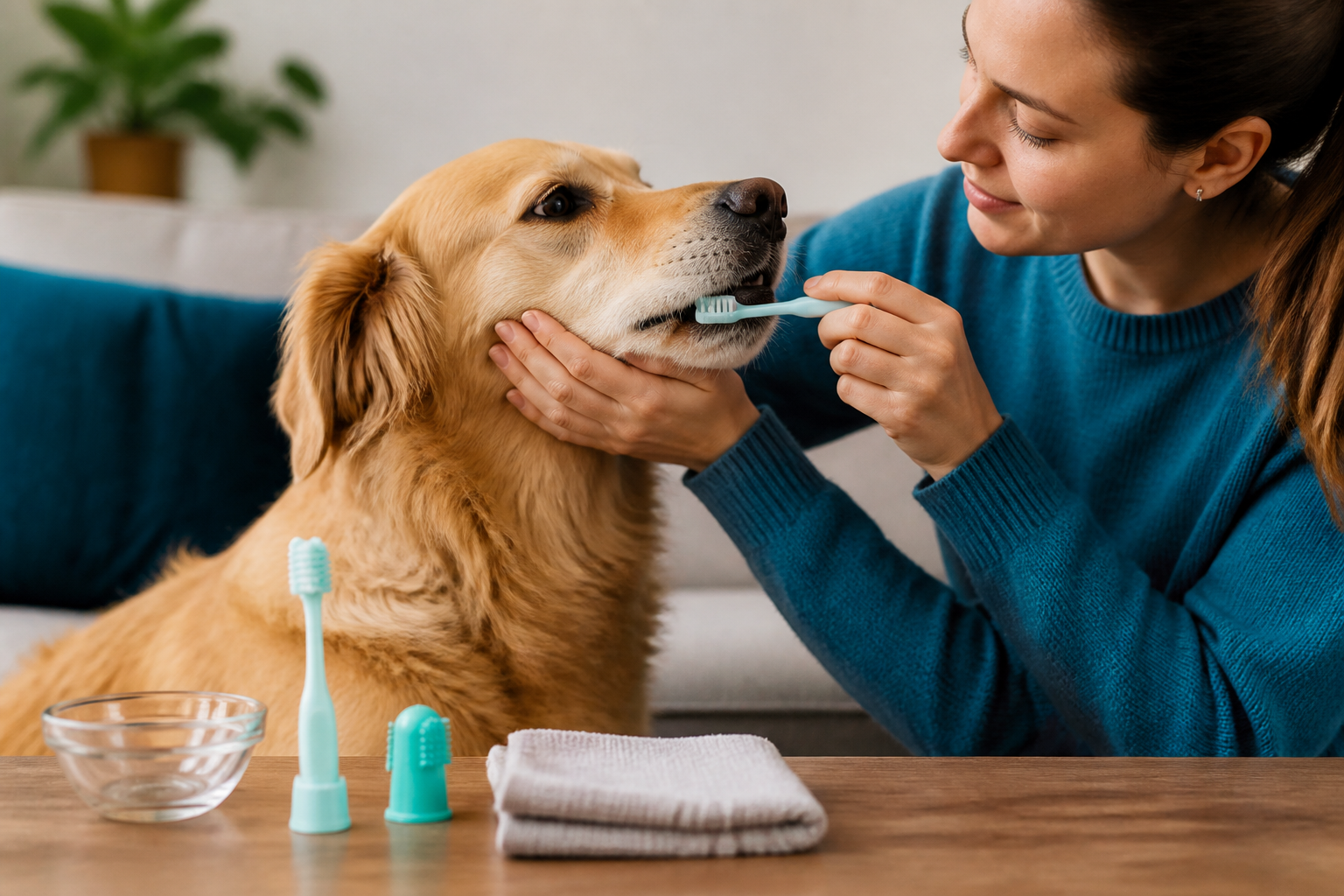
You have several options when it comes to brushes. A standard dog toothbrush has a long handle and angled heads to reach the back molars. These are excellent for larger dogs. For smaller dogs or those who are nervous about long objects in their mouth, a finger brush is a great choice. These slip over your fingertip and allow you to feel exactly where you are cleaning.
If your dog has sensitive gums, look for extra-soft bristles. Some companies even make 360-degree brushes that clean the top, front, and back of the tooth at the same time. This can make the process much faster for wiggly pets.
Why You Must Use Pet-Specific Toothpaste
Never use human toothpaste on your dog. Most human brands contain fluoride and foaming agents like sodium lauryl sulfate. These are not meant to be swallowed and can cause stomach upset. Many human toothpastes also contain xylitol, which is a sweetener that is highly toxic to dogs.
Dog toothpaste is formulated to be swallowed safely. It also comes in flavors that dogs actually enjoy, such as poultry, beef, or peanut butter. Most dog pastes are enzymatic. This means they contain enzymes that help break down plaque chemically even after you stop brushing. For more ideas, explore these pet dental care tips.
Brushing Supplies Checklist
- A toothbrush sized for your dog's mouth
- Enzymatic, pet-safe toothpaste
- Clean water for rinsing the brush
- Soft gauze pads for pets that dislike brushes
- Small, high-value treats for rewards
Dental Chews and Treats
Not every dog will tolerate a toothbrush right away. While you work on training them, dental chews can be a helpful supplement. These treats are designed to be hard enough to scrape away plaque as the dog chews. Browse our dental treats for dogs for options suited to different sizes and preferences.
Looking for the VOHC Seal
When shopping for dental treats, look for the Veterinary Oral Health Council (VOHC) seal. This seal means the product has been tested and proven to reduce plaque or tartar by a certain percentage. We carry several VOHC-approved brands at BaxterBoo, including our selection of Greenies products and certain RedBarn products.
How Chews Work
The mechanical action of chewing is what does the work. As the dog's teeth sink into the treat, the texture acts like a mild abrasive. This helps rub off the soft plaque before it hardens. Some treats also contain ingredients like sodium hexametaphosphate, which helps prevent minerals in saliva from turning plaque into tartar. You can also review these dental chew options for dogs.
Vet Tip: Always supervise your dog while they are enjoying a dental chew. If they gulp large pieces without chewing, the treat will not help their teeth and could become a choking hazard. Consult your vet if you notice your dog is reluctant to chew, as this may indicate an existing painful tooth.
Water Additives and Oral Sprays
Water additives are a popular choice for busy owners. These products are often called drinkable mouthwash for pets. You simply add a small amount to your dog's water bowl each time you refill it.
Benefits of Additives
Additives work by changing the chemistry of the mouth. They often contain enzymes or zinc gluconate to kill bacteria that cause bad breath. This is an easy way to reach every part of the mouth without any manual scrubbing. It is particularly helpful for dogs that are very protective of their mouths.
Oral Sprays for Fresh Breath
Oral sprays work similarly but are applied directly to the teeth and gums. You just lift the lip and spray the solution onto the side of the mouth. The dog's saliva will distribute the ingredients across all the teeth. Sprays are a good middle ground between brushing and water additives. They are more concentrated than additives and provide a more direct hit to problem areas.
Interactive Dental Toys
Playtime can also serve as a cleaning session if you use the right toys. Many rubber and nylon toys are designed with ridges, nubs, or grooves. As your dog chews and carries the toy, these textures massage the gums and scrape the teeth. Explore our dental dog toys for chew-friendly playtime options.
Selecting Safe Toys
Brands like Kong make specific dental lines with deep grooves. You can even smear a little bit of dog-safe toothpaste into these grooves to increase the cleaning power. Rope toys can also be effective as the cotton fibers act like floss between the teeth. However, you must monitor rope toys for fraying. If a dog swallows long strings, it can lead to dangerous intestinal blockages.
Avoid Hard Objects
Stay away from items that are harder than your dog's teeth. Real bones, heavy nylon bones, and antlers are common causes of slab fractures. A slab fracture happens when a piece of the tooth breaks off because the object being chewed was too hard. If you cannot indent the toy with your thumbnail, it might be too hard for safe chewing.
Bottom line: Use textured rubber toys to encourage natural cleaning through play, but avoid extremely hard objects that could crack teeth.
The Role of Diet in Dental Health
What your dog eats every day has a major impact on their oral hygiene. Some owners believe that all dry kibble cleans teeth, but this is a myth. Most standard kibble is small and brittle, so it shatters as soon as the tooth hits it. This provides very little cleaning action.
Specialized Dental Diets
There are specific dental diets designed to be larger and have a more fibrous texture. Instead of shattering, the tooth sinks into the kibble. This allows the food to wipe the tooth surface clean. These diets are often more effective than standard food for managing plaque.
Prescription Options and the Pharmacy
For dogs with existing dental issues or a high genetic tendency toward gum disease, a prescription diet may be necessary. We offer a variety of these specialized foods through our pharmacy partnership with Pet's Choice. Brands like Farmina Vet Life offer targeted nutrition for specific health needs. These diets require a prescription from your veterinarian to ensure they are the right fit for your dog's overall health. You can browse our pet pharmacy for prescription products.
Step-by-Step: How to Introduce Brushing
If your dog is not used to having their teeth touched, you need to go slow. Forcing the brush into their mouth will only create a negative association.
Step 1: Get them used to the taste.
Put a small amount of flavored toothpaste on your finger. Let your dog lick it off. Do this for a few days until they get excited when they see the tube.
Step 2: Touch the teeth and gums.
While they lick the paste, gently rub your finger along their gums and teeth. This gets them used to the sensation of someone touching their mouth.
Step 3: Introduce the brush.
Put some toothpaste on the brush and let them lick it off. Do not try to brush yet. Just let them get comfortable with the tool being near their face.
Step 4: Start with the front teeth.
Gently lift the lip and brush the front teeth in a circular motion. Keep the session very short, maybe 10 or 15 seconds. Give them a treat and lots of praise immediately after.
Step 5: Work toward the back.
Gradually move toward the back molars over several weeks. These are the teeth that usually have the most buildup. Your goal is to eventually brush for about two minutes total.
When to Seek Professional Help
At-home cleaning is a preventive measure, not a cure for existing disease. If your dog already has significant tartar or gum inflammation, a brush will not fix it. In fact, brushing a mouth that is already sore can be very painful for your dog.
Recognizing Dental Disease
You should check your dog's mouth once a week for signs of trouble. Look for the following symptoms:
- Gums that are bright red, swollen, or bleeding
- Heavy brown or yellow crust on the teeth
- Loose or missing teeth
- Difficulty eating or dropping food
- Pawing at the face or rubbing the mouth on the floor
- Extreme bad breath that does not go away after brushing
The Importance of Veterinary Exams
If you see any of these signs, it is time to visit the vet. They may recommend a professional dental cleaning. This is done under general anesthesia so the vet can clean beneath the gumline and take X-rays to check for bone loss. After the professional cleaning, you can start your at-home routine again to keep the teeth sparkling.
Vet Tip: Small breeds, like Chihuahuas and Pugs, are much more prone to dental disease because their teeth are crowded. If you own a small dog, you should be extra diligent with daily brushing and regular veterinary checkups.
Final Thoughts on Dog Dental Care
Taking care of your dog's teeth at home does not have to be a chore. By finding the right combination of brushes, treats, and additives, you can make oral hygiene a natural part of your daily routine. Remember that consistency is more important than perfection. Even brushing a few times a week is much better than not brushing at all.
- Use pet-safe enzymatic toothpaste and never use human brands.
- Incorporate VOHC-approved chews for mechanical cleaning.
- Add a water additive to help control bacteria.
- Monitor for red gums or loose teeth and consult a vet if they appear.
- Reward your dog after every session to keep it a positive experience.
Your next step is to ensure you have the right supplies on hand. You can explore our full selection of dental care products or visit our pharmacy for prescription-strength support. If you want to save on your regular dental supplies, consider signing up for our Autoship programme. This ensures you never run out of toothpaste or treats and gives you a discount on your recurring orders.
FAQ
Can I use baking soda to clean my dog's teeth?
You should avoid using baking soda as a regular tooth cleaner for dogs. While it is not strictly toxic in tiny amounts, it has a high alkaline content that can upset a dog's stomach if swallowed. Most dogs also dislike the salty taste, which can make them resist future brushing attempts. It is much better to use a flavored enzymatic toothpaste designed specifically for pets.
How often should I clean my dog's teeth at home?
Ideally, you should brush your dog's teeth every single day to prevent plaque from hardening into tartar. If daily brushing is not possible, aim for at least three times a week to see a significant benefit. Supplementing with dental chews or water additives on the days you do not brush can also help maintain oral hygiene. Consistency is the most important factor in preventing long-term dental disease.
Are bones a good way to clean a dog's teeth?
While some people use raw bones for dental cleaning, they come with significant risks. Hard bones can cause painful tooth fractures or even break a dog's jaw if they chew too aggressively. Cooked bones are even more dangerous because they can splinter and cause internal injuries. If you choose to use bones, always supervise your pet and consult your veterinarian about the safest options for your specific dog.
My dog's gums bleed when I brush them. Is this normal?
Minor bleeding can happen when you first start a brushing routine if your dog has mild gingivitis. However, if the bleeding is heavy or the gums look very red and swollen, you should stop brushing and see a veterinarian. This usually indicates more advanced periodontal disease that needs professional treatment. Brushing inflamed gums can be very painful for your dog and may cause them to become fearful of oral care.






