
 Save 15% on your 1st Autoship learn more

 Email us
 Live Chat
 FAQs
FAQs





Introduction
You lean in for a morning snuggle and realize that your dog's breath has taken a turn for the worse. Or perhaps during a play session, you noticed a thick layer of yellow-brown buildup along their back molars. These moments are often the first sign that a dog's dental hygiene needs attention. Keeping a dog's mouth clean is about much more than just fresh breath. It is a vital part of protecting them from pain, tooth loss, and systemic health issues.
At BaxterBoo, we know that every dog reacts differently to mouth care. Some pups sit perfectly for a toothbrush, while others act like you are brandishing a vacuum cleaner. This post covers the most effective tools available, from enzymatic toothpastes to dental chews and water additives. We will help you build a routine that fits your lifestyle and your dog's personality. A proactive approach today can prevent the need for complex veterinary procedures later.
Quick Answer: The most effective way to clean a dog's teeth is daily brushing with dog-specific enzymatic toothpaste and a soft-bristled brush. For dogs that resist brushing, a combination of VOHC-approved dental chews, water additives, and dental wipes provides a helpful secondary layer of protection against plaque.
The Gold Standard: Brushing Your Dog’s Teeth
Brushing is the single most effective thing you can do for your dog's oral health at home. It is the only method that provides the mechanical scrubbing necessary to remove soft plaque before it hardens into tartar. Once plaque mineralizes into tartar, or calculus, it cannot be brushed away. At that point, only a professional veterinary cleaning can remove it.
Choosing the Right Toothpaste
You must never use human toothpaste for your dog. Our toothpastes often contain fluoride and foaming agents like sodium lauryl sulfate, which can upset a dog's stomach. Many human toothpastes also contain xylitol, an artificial sweetener that is highly toxic to dogs.
Dog-specific toothpastes are usually enzymatic. These enzymes work to break down the proteins that allow plaque to stick to the teeth. They also come in flavors dogs actually enjoy, such as poultry, beef, or peanut butter. This makes the experience feel more like a treat than a chore. For a dog-specific option, consider Virbac C.E.T. Enzymatic Pet Toothpaste for Dogs and Cats.
Selecting a Toothbrush
The type of brush you choose depends on your dog's size and comfort level.
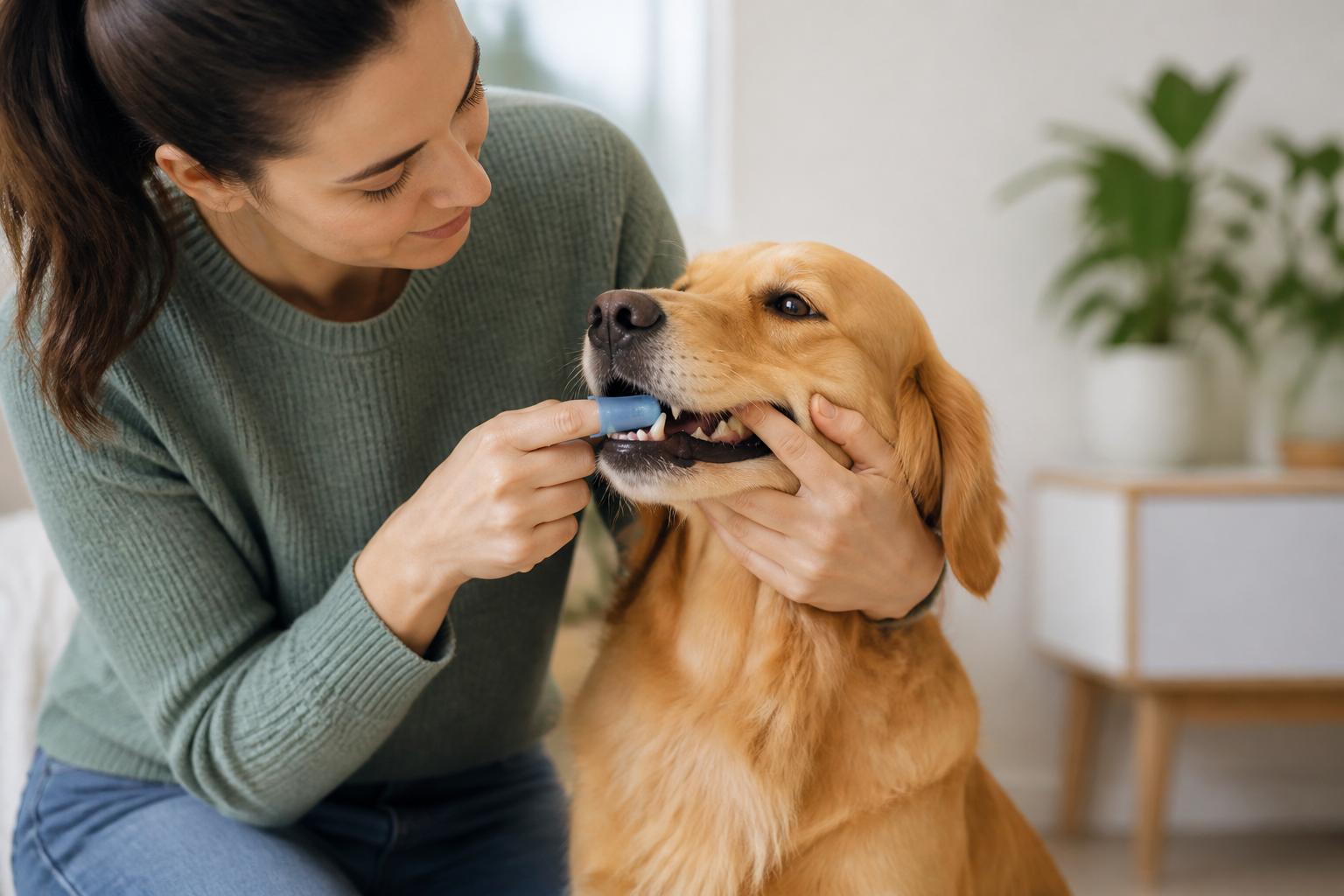
- Finger brushes: These are small rubber caps that fit over your fingertip. They are excellent for puppies or dogs who are nervous about having objects in their mouth. They give you a high level of control and tactile feedback.
- Dual-ended brushes: These have a long handle with a large brush head on one end and a smaller one on the other. This design helps you reach the tiny incisors in the front and the large molars in the back.
- Electric brushes: Some dogs tolerate the vibration of an electric toothbrush, which can provide a more thorough clean in a shorter amount of time.
You can compare brushes and other oral-care tools in our dog grooming tools collection.
Key Takeaway: Enzymatic toothpaste is the secret to success. The enzymes continue working even after you stop brushing, helping to dissolve plaque throughout the day.
For additional guidance, read our tips for introducing pets to tooth brushing.
Dental Chews and Treats
For many owners, dental chews are the go-to solution because dogs love them. These products work through a combination of mechanical scrubbing and chemical action. As your dog chews, the texture of the treat scrapes against the tooth surface. Many also contain ingredients that help prevent tartar from bonding to the enamel.
You can explore our dog dental care collection for chews, toothpaste, wipes, and water additives.
Look for the VOHC Seal
When you are shopping for chews, look for the Veterinary Oral Health Council (VOHC) seal on the packaging. This seal indicates that the product has undergone rigorous testing and has been proven to reduce plaque or tartar by a specific percentage. Brands like Greenies and certain formulations from Royal Canin often carry this seal.
The Hardness Test
A common mistake is giving dogs chews that are too hard, such as elk antlers or natural bones. These can lead to slab fractures, where a piece of the tooth breaks off, exposing the sensitive nerve. A good rule of thumb is the fingernail test. If you cannot make a small dent in the chew with your fingernail, it is likely too hard for your dog's teeth.
For more information about warning signs, read how to recognize hidden dental problems in dogs.
Calorie Management
Dental treats are still treats. Some can be surprisingly high in calories. If you give your dog a daily dental chew, you may need to slightly reduce their main meal portions to prevent weight gain. We carry a wide variety of low-calorie dental options in our dog treats category that allow you to maintain their oral health without compromising their waistline.
Water Additives and Oral Sprays
If your dog absolutely refuses to let you touch their mouth, water additives and sprays are excellent supplemental tools. These are often referred to as "liquid toothbrushes."
How Water Additives Work
You simply add a capful of the solution to your dog’s water bowl. The ingredients are designed to change the chemistry of the saliva, making it harder for plaque-forming bacteria to survive. They also help to freshen breath instantly. This is a passive way to improve hygiene, but it should not be the only method you use. It works best when combined with some form of mechanical cleaning, like a chew or a toy.
Oral Sprays and Gels
Dental sprays and gels are applied directly to the teeth and gums. They are often more concentrated than water additives. If your dog allows it, you can lift their lip and spray the solution onto the gum line. The dog will naturally lick the area, spreading the enzymes around their mouth. This is a great middle ground for dogs who hate the sensation of a brush but don't mind a quick spray.
Vet Tip: Always introduce new additives slowly. Some dogs are sensitive to changes in the taste of their water. Start with a smaller dose than recommended and gradually increase it over a week to ensure your dog stays hydrated.
Dental Wipes for Sensitive Mouths
Dental wipes are pre-moistened pads that you wrap around your finger. They are impregnated with cleaning agents and are often textured to help scrub away surface debris.
Wipes are an excellent alternative for senior dogs with sensitive gums or dogs who find the bristles of a brush too abrasive. While they cannot reach the deep crevices between teeth as well as a brush can, they are highly effective at cleaning the flat surfaces of the teeth and the gum line.
How to Use Wipes Successfully
Step 1: Get your dog comfortable. Let them sniff the wipe and realize it has a pleasant scent or flavor.
Step 2: Wipe the exterior surfaces. Lift the lip and rub the wipe in a circular motion over the teeth, focusing on where the tooth meets the gum.
Step 3: Reward. Give them a small piece of kibble or praise immediately after you finish to build a positive association.
Natural Cleaning Options: Carrots, Apples, and Bones
Many owners prefer to use natural items to help keep their dog's mouth clean. While these can be helpful, they have limitations.
Fruits and Vegetables
Crunchy vegetables like raw carrots or apple slices without seeds can act as natural abrasives. As the dog crunches through the fiber, it provides a very mild scrubbing action. Carrots are particularly popular because they are low in fat and high in vitamins. However, they contain natural sugars, so they should not be the primary cleaning method for a dog with existing dental issues.
The Bone Debate
Raw, meaty bones are often cited as a natural way for dogs to clean their teeth. In the wild, canines use bones to scrape their teeth. However, domestic dogs often chew with more force than their wild ancestors, leading to broken teeth.
- Raw bones: These are softer than cooked bones and are less likely to splinter. They can provide significant mechanical cleaning.
- Cooked bones: Never give your dog cooked bones. The cooking process makes them brittle, causing them to splinter and potentially puncture the digestive tract.
If you choose to use bones for dental health, always supervise your dog and remove the bone once it is small enough to be swallowed.
The Role of Diet in Dental Health
There is a long-standing debate about whether dry kibble cleans teeth better than wet food. While some standard kibble provides a small amount of abrasion, most dogs swallow their kibble whole or break it into only a few pieces. This means the contact time is too short to provide a real cleaning benefit.
Prescription Dental Diets
If your dog is prone to heavy tartar buildup, your veterinarian might recommend a prescription dental diet. These are not your average bags of kibble. The individual pieces are much larger and have a specific fibrous matrix. Instead of crumbling immediately when bitten, the tooth sinks into the kibble, allowing the fibers to scrub the tooth all the way to the gum line.
Our pet pharmacy for dogs offers a variety of specialized foods through our partnership with Pet's Choice. We carry options like Farmina Vet Life and Royal Canin Dental diets that are formulated specifically for managing oral health. These require a prescription from your vet, but they can be a literal lifesaver for dogs with chronic dental problems.
Bottom line: While diet is a factor, most dogs need more than just dry food to keep their teeth healthy; consider a prescription diet if your vet identifies high risk for dental disease.
Comparing Dental Cleaning Methods
| Method | Effort Level | Primary Benefit | Best For |
|---|---|---|---|
| Brushing | High | Removes plaque before it hardens | Total prevention |
| Dental Chews | Low | Mechanical scrubbing of molars | Daily maintenance |
| Water Additives | Very Low | Inhibits bacteria growth | Busy owners |
| Dental Wipes | Medium | Gentle cleaning of gum line | Seniors or sensitive dogs |
| Prescription Diet | Low | Scrubbing during every meal | Dogs with chronic buildup |
Professional Veterinary Care
Home care is essential, but it is not a replacement for professional veterinary exams. At least once a year, your vet should perform a thorough inspection of your dog's mouth. They can see things you might miss, such as small growths, recessed gums, or cracked teeth.
Professional Cleanings
A professional dental cleaning at a clinic involves scaling, removing tartar, and polishing. This is done under general anesthesia. Many owners feel nervous about anesthesia, but it is the only way to safely clean under the gum line where the most damaging bacteria live. It also allows the vet to take dental X-rays to check the health of the roots.
When to See the Vet Immediately
If you notice any of the following, do not wait for your annual exam:
- Red, swollen, or bleeding gums.
- Loose or missing teeth.
- Excessive drooling or dropping food while eating.
- A "rotten" smell that persists even after brushing.
- Pawing at the face or mouth.
Key Takeaway: Oral health is a window into your dog's internal health. Bacteria from infected gums can enter the bloodstream and cause damage to the heart, kidneys, and liver.
Building a Success Routine
The best way to clean your dog's teeth is to use a multi-pronged approach. You do not have to do everything every day, but consistency is key.
- Brush 3–5 times a week: This is the core of your routine.
- Daily dental chew: Use this as a reward for a good brushing session or as a mid-day snack.
- Constant water additive: This provides 24/7 protection with zero effort.
- Annual vet exam: Ensure everything looks good under the surface.
If your dog is already showing signs of dental disease, such as heavy tartar or inflamed gums, we recommend consulting your veterinarian before starting a new brushing routine. Brushing inflamed gums can be painful and may cause your dog to become fearful of the process. Your vet can help you get their mouth back to a healthy baseline first.
Managing Dental Health Costs
Dental care can become expensive if left until it is an emergency. This is where programs like our MVP Rewards programme can help. By earning points on your regular purchases of food and treats, you can save on the supplies you need to keep your dog's mouth healthy. We also offer our Autoship programme, which ensures you never run out of toothpaste or dental chews while providing a discount on your orders.
If you are concerned about the long-term costs of dental surgeries, we partner with FIGO Pet Insurance. Having a solid insurance plan can help cover the costs of professional cleanings and extractions if they become necessary as your dog ages.
Recognizing the Signs of Success
How do you know if what you are using is actually working?
- The Breath Test: While "puppy breath" is a thing of the past for adult dogs, their breath should not be offensive. If the smell improves, your routine is working.
- The Color Test: Gums should be a healthy bubblegum pink, unless your dog has natural black pigmentation. Teeth should look white or off-white, not yellow or brown.
- The Behavior Test: A dog with a healthy mouth is a happy eater. If they are chewing their toys and eating their meals with enthusiasm, they are likely pain-free.
Keeping your dog's teeth clean is a labor of love, but it pays off in more years of healthy snuggles. Whether you are looking for a simple water additive or a specialized prescription diet from our pet pharmacy, we are here to support you in every step of your pet's wellness journey.
Summary of Dental Tools
- Enzymatic Toothpaste: Breaks down plaque chemically.
- Dual-Ended Brush: Reaches all areas of the mouth efficiently.
- VOHC Chews: Provide proven mechanical cleaning.
- Additives: Easy, passive protection for the water bowl.
- Wipes: Great for gentle cleaning of the front teeth and gums.
- Prescription Diets: Best for dogs who need extra help during mealtime.
Bottom line: A combination of mechanical brushing and chemical additives is the most reliable way to prevent dental disease and keep your dog's mouth healthy for life.
FAQ
Can I use baking soda to clean my dog’s teeth?
While baking soda is not toxic in very small amounts, it has a taste that most dogs find unpleasant. It is also quite abrasive and can damage the enamel if used too frequently. It is much better to use a flavored enzymatic toothpaste that is formulated specifically for the pH balance of a dog's mouth.
How often should I realistically clean my dog’s teeth?
Ideally, you should brush your dog's teeth every single day to prevent plaque from hardening. However, we know that life is busy. Aiming for at least three times a week is usually enough to maintain good oral health for most dogs, especially if you supplement with dental chews and water additives on the off days.
My dog’s gums bleed a little when I brush. Should I stop?
A small amount of bleeding can happen if you are just starting a routine and your dog has mild gingivitis. However, if the bleeding is heavy or the gums look very red and swollen, you should stop and consult your veterinarian. This could be a sign of advanced periodontal disease that requires professional treatment before you can continue home care.
Are dental toys as good as brushing?
Dental toys are a great supplement because they encourage chewing and provide some mechanical scraping. However, they are not a replacement for brushing. Toys usually only clean the tips of the teeth and cannot reach the gum line where bacteria congregate and cause the most damage. Use toys as one part of a larger dental care strategy.






