
 Save 15% on your 1st Autoship learn more

 Email us
 Live Chat
 FAQs
FAQs





Introduction
You lean in for a happy morning lick from your dog and get a face full of "dog breath" that smells more like a swamp than a puppy. Most owners have been there. We often focus on the best food or the toughest toys but forget that oral health is a pillar of overall wellness. At BaxterBoo, we see thousands of pets every year and understand that dental care can feel like a chore. This guide explores the most effective tools to keep those pearly whites shining. We will cover everything from the gold standard of brushing to easy water additives. Our goal is to help you build a routine that keeps your dog healthy and your nose happy.
Quick Answer: The single most effective thing to clean a dog's teeth is daily brushing with enzymatic toothpaste. For dogs that resist brushing, a combination of VOHC-approved dental chews and water additives provides the next best level of protection.
Why Dog Dental Health Cannot Wait
Dental disease is the most common health issue in adult dogs. By age three, most dogs show some signs of periodontal disease. This starts with a thin film of plaque. If you do not remove it, plaque hardens into tartar within days. Tartar is like concrete. Once it forms, a simple toothbrush cannot scrub it away. It requires a professional cleaning from a veterinarian.
Ignoring dental health leads to more than just bad breath. Bacteria from the mouth can enter the bloodstream. This can eventually cause damage to the heart, kidneys, and liver. Small breeds are especially prone to crowded teeth and rapid buildup. Large breeds often suffer from fractured teeth due to aggressive chewing. Every dog needs a plan to keep their mouth clean. You can begin by exploring our dog dental care category.
The Gold Standard: Tooth Brushing
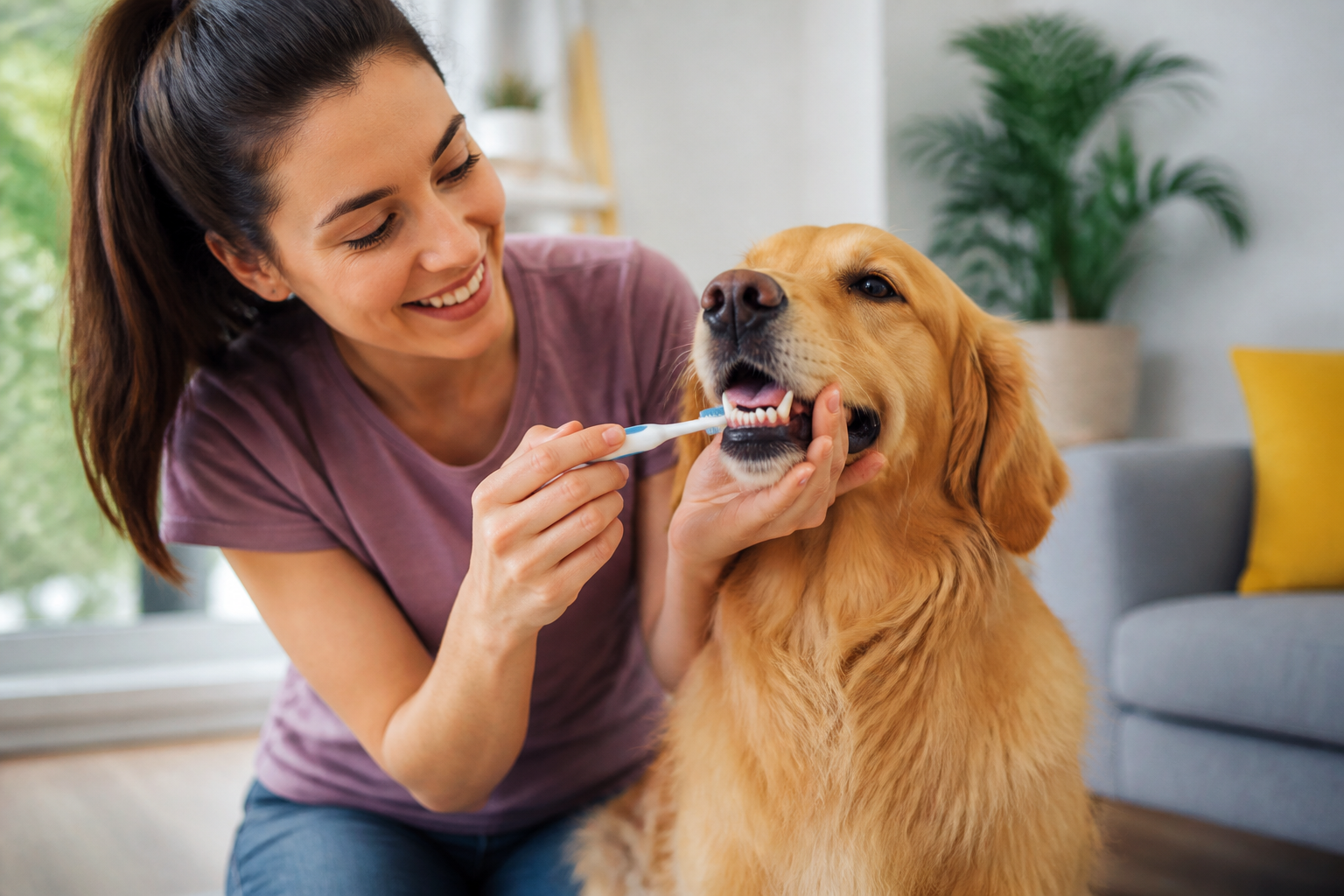
If you ask any veterinarian, they will tell you that brushing is the number one way to clean a dog's teeth. It provides a mechanical scrub that breaks up plaque before it hardens. You do not need to spend twenty minutes on it. Even sixty seconds a day makes a massive difference.
Choosing the Right Paste
Never use human toothpaste on your dog. Most human brands contain xylitol, which is a sugar substitute that is highly toxic to dogs. Human paste also contains foaming agents that can upset a dog's stomach. Instead, look for enzymatic dog toothpaste. These formulas contain enzymes that break down food particles and bacteria even after you stop brushing. Brands like Virbac C.E.T. are favorites because they come in flavors like poultry and beef. A specific option is Virbac C.E.T. Enzymatic Pet Toothpaste.
The Best Brushes for the Job
You have options when it comes to the tool itself. A standard dog toothbrush has a long handle and an angled head. This helps you reach the back molars where most tartar hides. If your dog is nervous, a finger brush might work better. These are small rubber caps that fit over your pointer finger. They give you more control and feel more natural to the dog. For a ready-to-use option, consider the Virbac C.E.T. oral hygiene kit.
Step-by-Step Brushing Guide
Step 1: Let them taste the paste. / Put a small amount of enzymatic paste on your finger and let your dog lick it off.
Step 2: Rub the gums. / Gently lift the lip and rub your finger along the teeth and gums to get them used to the sensation.
Step 3: Introduce the brush. / Add paste to the brush and focus only on the outside surfaces of the teeth.
Step 4: Focus on the molars. / Pay extra attention to the upper back teeth, as these are the most common spots for heavy buildup.
Key Takeaway: Brushing even three times a week can significantly reduce the risk of gum disease, but daily care is the ultimate goal for a healthy mouth.
The Power of Dental Chews
Not every dog is a fan of the toothbrush. If your dog treats a tooth brushing session like a wrestling match, dental chews are your best friend. These treats are designed with specific textures that scrape the teeth as the dog chews. Virbac C.E.T. Enzymatic Oral Hygiene Chews are one option for days when brushing is not possible.
Look for the VOHC Seal
When shopping for chews, look for the Veterinary Oral Health Council (VOHC) seal. This seal means the product has undergone clinical testing. It proves the chew actually reduces plaque or tartar buildup. Brands like Greenies and NutriSource offer options that meet these high standards.
The Texture Matters
A good dental chew should be firm but flexible. If a chew is as hard as a rock, it can actually fracture a dog's teeth. Avoid things like dried antlers or heavy cow bones if your dog is a "power chewer." You should be able to make a small dent in the chew with your fingernail. This ensures the tooth sinks into the material, allowing the chew to scrub the entire surface area.
Calorie Considerations
Dental chews are treats. They contain calories that can add up quickly. If you give your dog a daily dental chew, you may need to slightly reduce their meal portions. Keeping your dog at a healthy weight is just as important for their longevity as clean teeth.
Water Additives and Oral Sprays
For the busiest pet parents, water additives are an excellent "set it and forget it" option. You simply add a capful of the solution to your dog's water bowl each time you refill it. Virbac C.E.T. Aquadent FR3SH Dental Solution is designed to be added to drinking water.
How Additives Work
These products usually contain enzymes or minerals that neutralize mouth bacteria. They help soften existing plaque and prevent new plaque from sticking. TropiClean Fresh Breath is a popular choice that also freshens breath instantly. While these are not as effective as brushing, they are a great supplemental tool.
Oral Sprays for Direct Action
Oral sprays work similarly but are applied directly to the teeth and gums. They are useful for dogs that do not drink much water or for multi-pet households where you want to target one specific dog. Most sprays require you to keep the dog away from food and water for thirty minutes after application. This gives the ingredients time to work.
Vet Tip: If your dog has red, bleeding gums or a sudden change in eating habits, skip the additives and call your vet. These can be signs of advanced infection that requires medical intervention.
The Role of Diet in Dental Health
What your dog eats every day affects their oral health. There is a common myth that all dry kibble cleans teeth. This is not strictly true. Most standard kibble crumbles too easily to provide any real scrubbing action. For broader feeding guidance, you can also explore our dog food selection.
Prescription Dental Diets
If your dog is prone to rapid tartar buildup, your vet might suggest a prescription dental diet. We carry these specialized foods through our pharmacy partnership with Pet's Choice. Foods like Royal Canin Dental or Farmina Vet Life are formulated with a specific fiber matrix. The kibble does not shatter when the dog bites into it. Instead, the tooth sinks in, and the fibers scrub the tooth surface.
Fresh Foods That Help
Some fresh snacks can act as natural toothbrushes. Raw carrots and apple slices are crunchy and help stimulate saliva. Saliva is a natural defense mechanism against mouth bacteria. Just make sure to remove apple seeds and cores before serving.
Professional Care and the BaxterBoo Pharmacy
Even with perfect home care, most dogs will eventually need a professional cleaning. A veterinarian can clean under the gumline where a toothbrush cannot reach. This is where the most dangerous bacteria live. Our dog pharmacy can help with prescription-related needs when your veterinarian recommends them.
Medications and Prescription Care
Sometimes, dental health requires more than just a brush. If your dog has a mouth infection or needs a prescription-strength oral rinse, we can help. Our pharmacy offers FDA-approved medications and prescription diets through our partnership with Pet's Choice. Whether it is a specialized dental kibble or an antibiotic for a gum infection, you can have it delivered right to your door.
The Importance of Vet Exams
During your dog's annual checkup, the vet will grade their teeth on a scale of one to four. Level one is mild plaque, while level four is severe disease with bone loss. Catching issues at level one or two can save your dog from pain and save you from expensive surgery later. For more guidance, read warning signs of hidden dental problems in dogs.
Bottom line: Home care is about prevention, while professional care is about treatment: you need both for a happy dog.
Natural Solutions and At-Home Tips
Many owners prefer natural alternatives for pet care. While these should not replace medical advice, they can be helpful additions to your routine.
- Coconut Oil: It has natural antimicrobial properties. You can use it as a base for homemade dog "toothpaste" or let them lick a small amount.
- Kelp Supplements: Certain types of brown kelp have been shown to change the chemistry of a dog's saliva. This helps prevent plaque from sticking to the teeth.
- Cotton Rope Toys: As a dog plays with a rope toy, the fibers act like floss. Just ensure the rope is clean and replace it if it starts to shred.
Avoiding Common Mistakes
One big mistake is giving dogs "real" bones from the butcher. While they seem natural, cooked bones are dangerous because they splinter. Raw bones are better but still carry a risk of bacteria and tooth fractures. Stick to toys and treats specifically designed for dental safety. Our dental dog toys provide another option for combining playtime with oral care.
Another mistake is starting too fast. If you try to scrub every tooth on the first day, your dog will hate the process. Take a week just to get them used to the taste of the paste. Patience now leads to a lifetime of easy cleaning.
Signs Your Dog Needs Immediate Dental Attention
Because dogs are stoic, they often hide mouth pain until it becomes unbearable. You should check your dog's mouth once a week for these red flags:
- Excessive drooling that is unusual for your dog.
- Dropping food while eating or chewing on only one side of the mouth.
- Blood on chew toys or in the water bowl.
- A "rotten" smell that persists even after using dental treats.
- Bumps or growths on the gums.
If you see any of these, schedule a vet visit immediately. Dental pain can cause significant stress and behavioral changes in pets.
Building Your Dog's Dental Routine
The best routine is the one you can actually stick to. You do not have to do everything every day. A balanced approach might look like this:
- Daily: Add a water additive to their bowl.
- Three times a week: A quick brushing session with enzymatic paste.
- Weekly: A VOHC-approved dental chew as a special treat.
- Annually: A full dental exam by your veterinarian.
By spreading out the tasks, you ensure your dog gets constant protection without it feeling like a burden for you. At BaxterBoo, we carry over 500 brands to help you find the perfect flavor and texture for your pet.
Conclusion
Caring for your dog's teeth is an investment in their long-term health. While brushing remains the most effective method, combining it with dental chews, additives, and a proper diet creates a strong defense against disease. Keep an eye out for signs of trouble and never skip your annual vet checkup. If your dog needs a specific prescription diet or medication, our pharmacy and Pet's Choice partnership make it easy to get exactly what they need.
- Brush with enzymatic paste whenever possible.
- Use VOHC-approved chews for mechanical cleaning.
- Monitor for bad breath and bleeding gums.
- Consult your vet for professional cleanings.
Ready to start your dog's dental journey? Check out our full collection of dental care products or sign up for our Autoship programme to ensure you never run out of your favorite dental chews. Our MVP Rewards programme also lets you earn points on every dental purchase.
FAQ
Is it too late to start cleaning my senior dog's teeth?
It is never too late to start, but you should have a vet check their mouth first. Senior dogs are more likely to have loose teeth or painful gums. Once the vet confirms their mouth is healthy, you can start a gentle brushing routine or use water additives to prevent further decay.
Can I just give my dog hard kibble instead of brushing?
Standard hard kibble is not an effective substitute for brushing. Most kibbles are small and crumble quickly, providing almost no scrubbing action on the teeth. If you want to use food to help clean teeth, look for a specific prescription dental diet with the VOHC seal.
How often should my dog get a professional dental cleaning?
Most dogs benefit from a professional cleaning once every year or two. Small breeds and certain dogs with poor genetics may need them more frequently. Your veterinarian will assess the level of tartar buildup during your annual wellness exam to give you a specific recommendation.
Are anesthesia-free dental cleanings a good idea?
Anesthesia-free cleanings only remove the tartar you can see on the surface. They cannot reach the bacteria under the gumline, which is where the real damage happens. Furthermore, the process can be very stressful for a dog and increases the risk of tooth injury or mouth trauma.






