
 Save 15% on your 1st Autoship learn more

 Email us
 Live Chat
 FAQs
FAQs





Introduction
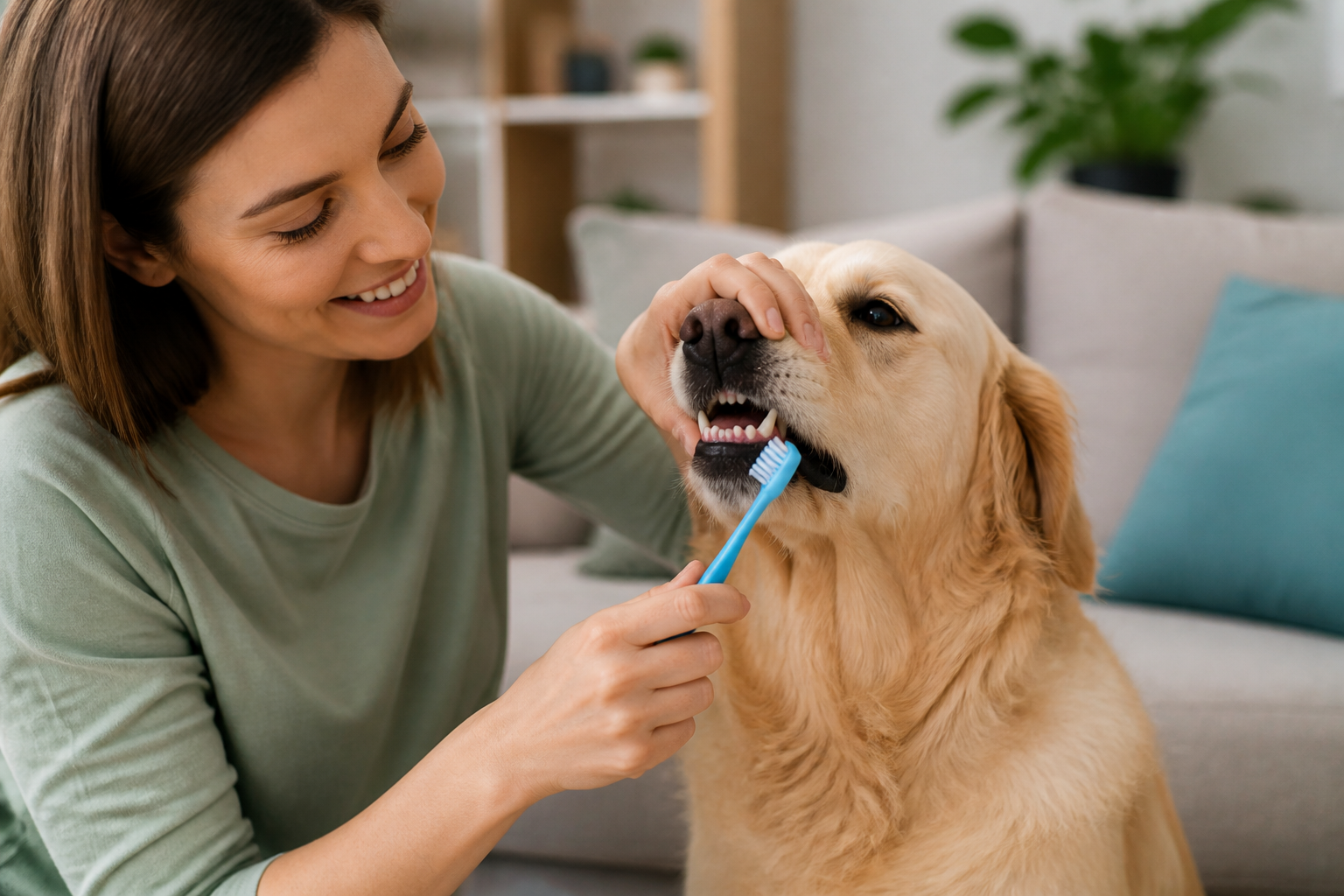
You are sitting on the couch when your dog leans in for a friendly lick. Instead of a happy moment, you are met with a wave of breath that smells like a dumpster. This common experience is often the first sign that your dog needs a better dental routine. Many pet owners feel overwhelmed by the options available for canine oral hygiene. At BaxterBoo, we know that keeping those pearly whites clean is about more than just a fresh-smelling mouth. It is about preventing long-term health issues that can affect your dog's heart, kidneys, and overall comfort.
This guide covers the most effective methods for maintaining your dog's dental health. We will look at brushing techniques, dental chews, powders, and why professional care is a non-negotiable part of the process. Our goal is to help you build a routine that works for your lifestyle and your dog's personality. A consistent approach combining daily at-home care with veterinary checkups is the best way to ensure your dog lives a long and pain-free life.
Brushing Is the Gold Standard
Veterinarians agree that manual brushing is the most effective way to remove plaque before it hardens into tartar. Plaque is a sticky film of bacteria that forms on the teeth within hours after eating. If it is not brushed away, it mineralizes into tartar within 48 hours. Once tartar forms, you cannot remove it with a toothbrush. It requires professional tools and expertise.
To get the best results, you need the right supplies. Never use human toothpaste on a dog. Human formulas contain fluoride and often xylitol, both of which are toxic to pets. Instead, choose a pet-specific enzymatic toothpaste. These come in flavors dogs actually enjoy, such as poultry, beef, or peanut butter. The enzymes in the paste help break down organic matter even if you do not get a perfect scrub on every single tooth. Explore our dog dental and breath care products to find toothpaste, brushes, gels, and other oral-care supplies.
Quick Answer: Brushing your dog's teeth daily with pet-safe enzymatic toothpaste is the single most effective way to prevent plaque. If daily brushing is not possible, aim for at least three times a week to keep bacteria under control.
Choosing the Right Brush
The tool you use depends on your dog's size and comfort level. Large dogs often do well with a standard pet toothbrush that has a long handle and angled bristles. This allows you to reach the back molars where most buildup occurs. For small breeds or dogs that are nervous about long objects in their mouths, a silicone finger brush is a better choice. These slip over your fingertip and allow you to feel exactly where you are cleaning.
The Brushing Technique
You do not need to clean the inside surfaces of the teeth near the tongue. Most plaque accumulates on the outside surfaces next to the cheeks. Lift your dog's lip and use gentle circular motions along the gum line. Do not worry if your first few sessions only last 30 seconds. The goal is to make it a positive experience so your dog cooperates long-term.
- Start by letting your dog lick the toothpaste off your finger.
- Rub your finger along the gums to get them used to the sensation.
- Introduce the brush slowly without paste first.
- Reward with a small treat after every successful session.
For additional guidance, read these pet dental care tips.
Dental Chews and Mechanical Cleaning
If your dog treats a toothbrush like an enemy, dental chews are an excellent secondary line of defense. These products work through mechanical abrasion. As your dog chews, the texture of the treat scrapes against the surface of the tooth. This action helps wipe away soft plaque.
When shopping for chews, look for the Veterinary Oral Health Council (VOHC) seal on the packaging. This seal means the product has undergone independent testing to prove it effectively reduces plaque or tartar. We carry several VOHC-approved brands that provide a reliable benefit. Popular options include Greenies, OraVet, and certain Royal Canin dental treats. Browse our dog dental health collection for chews, treats, and oral-care products.
Matching the right chew to your dog's size and chewing style is important. Our guide to dental chews for dogs can help you compare options.
Matching Size to Chewing Style
It is vital to choose the correct size chew for your dog. A treat that is too small can be swallowed whole, which creates a choking hazard and provides zero dental benefit. A treat that is too large may be too hard for a small dog to manage, potentially leading to a fractured tooth. Always supervise your dog while they are enjoying a dental chew to ensure they are actually chewing and not just gulping.
Key Takeaway: Dental chews are a helpful supplement but should not be the only tool you use. They are most effective at cleaning the premolars and molars used for heavy chewing.
Dental Powders and Water Additives
For dogs that resist all mouth handling, powders and water additives offer a hands-off approach. These products are designed to change the chemistry of the mouth or work systemically to weaken plaque.
Dental powders are typically sprinkled over your dog's food once a day. Many of these products, like ProDen PlaqueOff, use a specific type of seaweed. Once digested, the compounds are released into the saliva and help break down existing tartar over time. Others, like VetriScience Perio Support, use probiotics to encourage healthy bacteria in the mouth while fighting the bacteria that cause bad breath. You can explore our selection of ProDen products for available oral-care options.
Water additives are tasteless liquids you pour into your dog's water bowl. They usually contain enzymes or antibacterial agents that help reduce the bacterial load in the mouth every time your dog takes a drink. While these are convenient, they are generally less effective than brushing or chews. They work best as a supporting layer in a broader dental plan.
| Method | Effort Level | Effectiveness | Best For |
|---|---|---|---|
| Brushing | High | Excellent | Cooperative dogs |
| Dental Chews | Low | Good | Active chewers |
| Powders | Very Low | Moderate | Dogs that hate handling |
| Water Additives | Very Low | Low | Supplemental care |
Prescription Dental Diets
For dogs prone to rapid tartar buildup or those with a history of gum disease, a prescription dental diet may be necessary. These foods are different from standard kibble in both size and structure. Normal kibble often crumbles as soon as a tooth hits it. Prescription dental kibble is designed with a fiber matrix that does not shatter. Instead, the tooth sinks into the nugget, allowing the fibers to scrub the tooth all the way to the gum line.
Brands like Royal Canin, Hill's, and Farmina Vet Life offer specialized dental formulas. These diets often include minerals that bind to calcium in the saliva. This prevents the calcium from depositing on the teeth and turning plaque into hard tartar.
Our BaxterBoo pharmacy provides access to these prescription diets through our partnership with Pet's Choice. Because these are medical grade foods, you will need a valid prescription from your veterinarian. This ensures the diet is appropriate for your dog's specific health needs and calorie requirements.
Vet Tip: Before switching to a prescription dental diet, have your vet perform a full oral exam. These diets are excellent for prevention but cannot fix a tooth that is already infected or loose.
The Role of Professional Veterinary Cleanings
No matter how well you brush at home, most dogs will eventually need a professional cleaning. Just as humans visit a dentist for deep cleaning, dogs require a professional to reach areas beneath the gum line. This is where the most dangerous bacteria hide.
A professional dental cleaning is performed under general anesthesia. This is a point of concern for many owners, but it is necessary for a thorough job. Anesthesia allows the veterinarian to:
- Perform a full exam of every tooth and the surrounding gums.
- Take dental X-rays to check for abscesses or bone loss.
- Use ultrasonic scalers to remove hard tartar from under the gums.
- Polish the teeth to smooth out tiny scratches where bacteria like to grow.
- Extract teeth that are painful, broken, or infected.
Anesthesia-free cleanings are sometimes marketed as a safer alternative, but they are mostly cosmetic. They only remove the tartar you can see. They do not address the disease happening under the gum line. Furthermore, scraping a dog's teeth while they are awake can be stressful and may result in accidental injury to the mouth or the technician.
Bottom line: Professional cleanings under anesthesia are the only way to treat established periodontal disease and reach the bacteria hidden under the gums.
Signs of Dental Disease in Dogs
It is important to recognize when your dog's dental needs have moved beyond simple cleaning and require medical intervention. Dogs are notorious for hiding pain. A dog with a rotting tooth may still eat every meal, making it hard for owners to realize there is a problem.
Watch for these red flags:
- Extreme bad breath that does not go away after brushing.
- Red, swollen, or bleeding gums.
- Yellow or brown crust (tartar) near the gum line.
- Drooling more than usual.
- Pawing at the mouth or rubbing the face on the carpet.
- Dropping food while eating or chewing on only one side.
- Loose or missing teeth.
If you notice any of these signs, schedule a veterinary exam immediately. Persistent oral infections can lead to bacteria entering the bloodstream. This can cause damage to the heart valves and kidneys over time.
For more warning signs and next steps, read how to recognize bad teeth in dogs.
How to Start a Dental Routine
If your dog is not used to dental care, do not try to do everything at once. Introducing too many changes can cause your dog to become fearful. Follow these steps to build a habit that lasts.
Step 1: Get a baseline checkup. / Have your vet look at your dog's mouth to ensure there are no active infections or painful teeth that would make brushing hurt.
Step 2: Choose your primary method. / Decide if you will focus on brushing, chews, or a prescription diet based on your dog's personality.
Step 3: Introduce tools slowly. / Let your dog investigate the brush or powder for several days before you try to use them.
Step 4: Stay consistent. / Pick a specific time of day, such as after the evening walk, to perform your dental routine so it becomes a predictable part of the day.
Step 5: Monitor and adjust. / Check your dog's gums once a month for redness or new tartar and adjust your approach if you see decline.
Safe Toys and Natural Chews
Your dog's toys can also contribute to their dental health. Rubber toys with nubs or ridges help massage the gums and provide mild scraping as the dog plays. We recommend durable options from brands like Kong, which are designed to withstand heavy chewing without splintering. Explore our dog healthcare selection for dental toys and related products.
Be careful with very hard materials. Items like cow hooves, antlers, and synthetic bones can be harder than the tooth enamel itself. These often lead to slab fractures, where a piece of the molar breaks off. A good rule of thumb is the "knee cap test." If you would not want to be hit in the knee with the object, it is likely too hard for your dog's teeth.
Raw vegetables can be a healthy, low-calorie addition to a dental routine. Crunchy carrots or slices of apple (without seeds) provide some mechanical scrubbing. While they do not replace brushing, they are a better snack choice than soft, sugary treats that stick to the teeth.
Key Takeaway: Choose toys that have some "give" to them. If a toy is too hard to indent with your thumbnail, it poses a risk of breaking your dog's teeth.
Using the BaxterBoo Pharmacy for Dental Needs
Managing your dog's oral health often requires more than just a toothbrush. If your vet diagnoses a dental infection, they may prescribe antibiotics or pain relief medications. Our pharmacy carries a wide range of FDA-approved medications through our partnership with Pet's Choice.
We also stock prescription-strength dental rinses and gels that contain chlorhexidine. This is a powerful antiseptic that helps reduce the bacterial load in dogs with advanced gum disease. Because we offer these through a licensed pharmacy model, you get the same quality medications you would find at your local clinic with the convenience of home delivery. This is especially helpful for senior dogs who may need ongoing medication for chronic oral health issues.
Managing Costs with MVP Rewards
Dental care can be an ongoing expense, especially with daily chews and annual cleanings. Our MVP Rewards program allows you to earn up to 5% back on every purchase. This includes your toothpaste, treats, and even items from our pharmacy. For items you use every day, like dental bites or powders, our Autoship program provides additional savings and ensures you never run out of supplies.
Summary of Best Practices
The best way to clean your dog's teeth is to use a multi-pronged approach. Brushing is the foundation of good health. Supplements like chews and powders help fill the gaps when life gets busy. Finally, regular veterinary visits ensure that any problems hiding under the gum line are addressed before they become serious.
- Brush at least three times per week with enzymatic paste.
- Use VOHC-approved chews for mechanical cleaning.
- Consider dental powders or water additives for difficult pets.
- Schedule an annual veterinary dental exam.
- Watch for signs of pain or infection like bleeding gums.
Bottom line: A small investment in daily dental care can save you thousands of dollars in veterinary surgery costs and add years to your dog's life.
FAQ
Can I use baking soda to brush my dog's teeth?
While baking soda is not strictly toxic, it is not recommended for regular use. It has a very high alkaline content that can upset a dog's stomach if swallowed in large amounts. It also lacks the enzymes found in pet toothpaste that are necessary to break down plaque effectively. Stick to flavored pet toothpastes that your dog will find rewarding.
How often should my dog get a professional cleaning?
Most dogs benefit from a professional cleaning once a year starting around age three. However, smaller breeds like Chihuahuas or Yorkies often need cleanings every six months because their teeth are crowded, which traps more bacteria. Your veterinarian can give you a specific recommendation based on your dog's oral health and breed.
My dog's gums bleed when I brush. Should I stop?
Minor bleeding can be a sign of early gingivitis, similar to when humans start flossing after a long break. You should continue to brush gently, but if the bleeding is heavy or persistent, it indicates more advanced gum disease. In that case, you should stop brushing and consult your veterinarian, as your dog likely needs a professional cleaning to resolve the inflammation.
Are dental wipes as good as brushing?
Dental wipes are better than doing nothing, but they are not as effective as a brush. Wipes can remove surface plaque on the flat parts of the teeth, but they cannot reach into the crevices or the tiny gap between the tooth and the gum line. Use wipes as a starting point for puppies or as a quick touch-up on days when you cannot do a full brushing session.






