
 Save 15% on your 1st Autoship learn more

 Email us
 Live Chat
 FAQs
FAQs





Introduction
You are relaxing on the couch when your dog leans in for a friendly lick. Suddenly, you are hit with a wave of breath that smells like a dumpster in July. It is a common moment for pet owners. We often notice the smell before we notice the yellow tartar creeping up toward the gumline. While "dog breath" is a popular joke, it is actually the first sign of oral bacteria that can lead to pain, tooth loss, and even systemic health issues.
At BaxterBoo, we talk to owners every day at our Vernon Hills warehouse who are struggling to keep their dogs' mouths clean. Some dogs are easygoing. Others treat a toothbrush like a mortal enemy. This guide covers the most effective ways to manage your dog's dental hygiene at home. We will look at brushing techniques, no-brush alternatives, and when it is time to call the veterinarian.
Quick Answer: Daily brushing with dog-specific toothpaste is the most effective way to remove plaque. If your dog resists brushing, a combination of VOHC-accepted dental powders, water additives, and mechanical dental chews provides the next best level of protection.
Why Dental Care Cannot Be Ignored
Dental disease is the most common health problem in adult dogs. By the age of three, the majority of dogs show some sign of periodontal disease. It starts with plaque. This is a sticky film of bacteria that forms on the teeth within hours of eating. If you do not remove it, it reacts with minerals in the saliva. It then hardens into tartar or calculus within 48 hours.
Once tartar forms, you cannot brush it away at home. It becomes a permanent fortress for bacteria. These bacteria migrate under the gumline. They cause inflammation called gingivitis. If left alone, they destroy the bone and tissue holding the tooth in place. This process is painful, but dogs are experts at hiding oral pain. They will keep eating even with infected gums.
Poor oral health also affects the rest of the body. Bacteria from the mouth can enter the bloodstream. This puts a constant strain on the heart, liver, and kidneys. Maintaining a clean mouth is one of the best ways to extend your dog's lifespan.
The Gold Standard: Manual Brushing
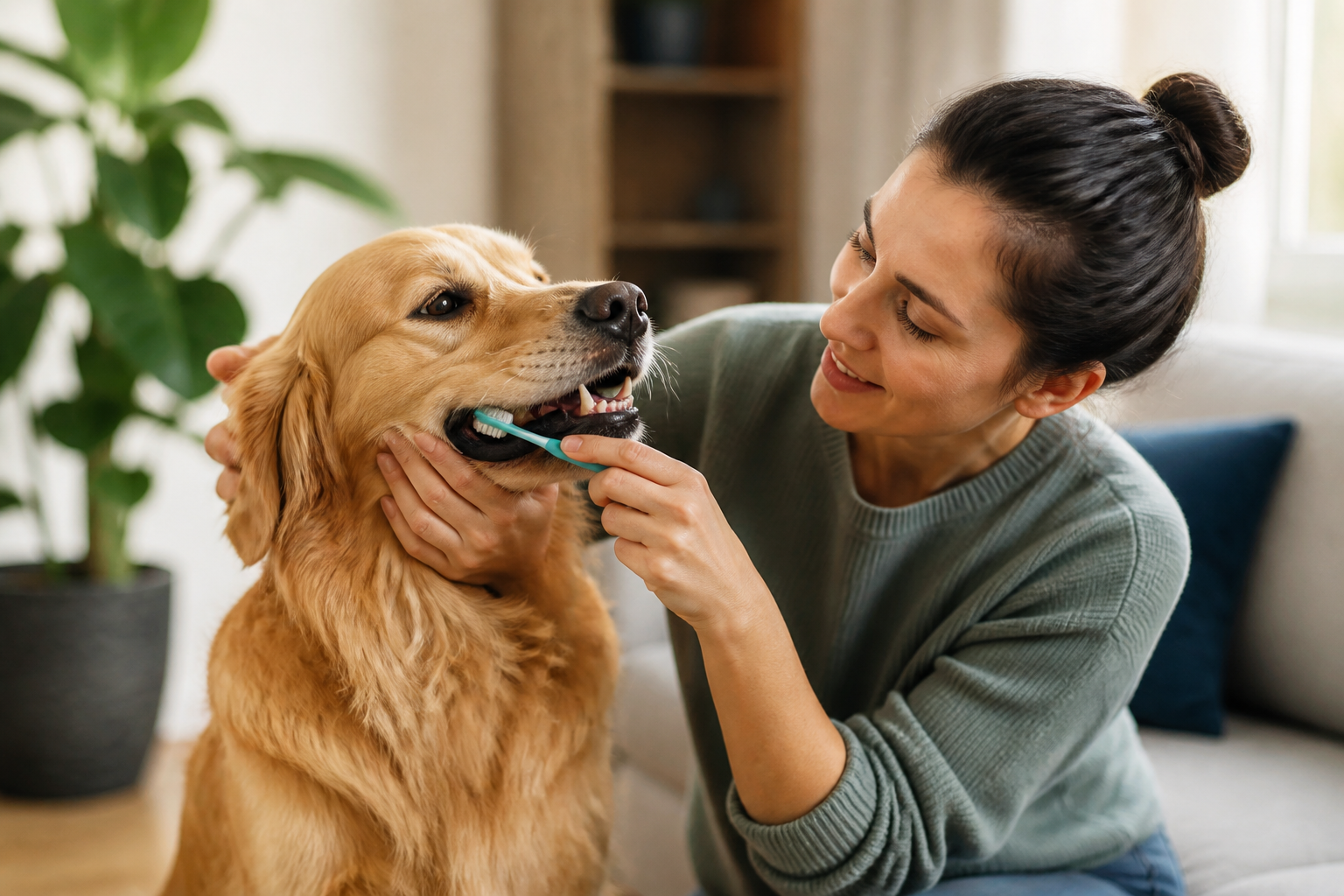
Brushing is the best way to clean your dog's teeth because it provides mechanical friction. Nothing else disrupts the plaque film as effectively as the bristles of a brush. While it seems daunting, most dogs can learn to tolerate it with patience.
Choosing the Right Tools
Never use human toothpaste for your dog. Human versions often contain xylitol, which is toxic to dogs. They also contain foaming agents meant to be spit out. Dogs swallow everything. Dog toothpaste comes in flavors like poultry, beef, or peanut butter to make the experience a treat.
You have two main brush options:
- Long-handled brushes: These have angled heads to reach the back molars. They often have a large head for big teeth and a smaller head for tiny incisors.
- Finger brushes: These are silicone or rubber caps that fit over your pointer finger. They give you more control and feel less intimidating to a nervous dog.
For toothpaste, brushes, and other supplies, explore our dog dental care collection.
Step-by-Step Brushing Guide
Step 1: Introduce the paste. / Let your dog lick a small amount of toothpaste off your finger. Do this for a few days without any brushing. You want them to associate the flavor with a positive reward.
Step 2: Touch the mouth. / While they lick the paste, gently lift their lip. Rub your finger along their gums. This gets them used to the sensation of having their mouth handled.
Step 3: Introduce the brush. / Put a dab of paste on the brush. Let them lick it off. Gradually start using small, circular motions on the front teeth.
Step 4: Focus on the outside. / Most plaque accumulates on the cheek side of the teeth. You do not need to pry the mouth open to brush the inside surfaces. The dog's tongue does a decent job of cleaning the inside. Focus your energy on the outer surfaces near the gumline.
Step 5: Reward and stop. / Keep sessions short. Even 30 seconds is a win. End every session with a high-value treat or play time.
For another perspective on building a brushing routine, read these pet dental care tips.
Vet Tip: If your dog has red or bleeding gums, stop brushing and see a vet. Brushing inflamed gums can be very painful. It may also push bacteria directly into the bloodstream through small sores.
Effective No-Brush Alternatives
Not every dog will cooperate with a toothbrush. If you have a rescue dog with mouth sensitivity or a particularly stubborn puppy, you need other options. The key is to look for products with the VOHC Seal of Acceptance. This seal is awarded by the Veterinary Oral Health Council. It means the product has been independently tested and proven to reduce plaque or tartar.
Dental Powders
Dental powders are the easiest "hands-off" method. These usually contain a specific type of seaweed called Ascophyllum nodosum. When swallowed, the active ingredients are absorbed into the bloodstream. They then come out in the saliva. These ingredients break down the sticky biofilm of plaque and prevent it from hardening. Brands like ProDen PlaqueOff are famous for this. You simply sprinkle a tiny scoop onto their food once a day.
You can compare available ProDen PlaqueOff dental products for powder and chew options.
Water Additives
These are liquid solutions you pour into your dog's water bowl. They contain enzymes or mild antiseptic agents. Every time your dog drinks, the solution rinses the mouth. This helps kill bacteria and freshen breath. It is a great supplemental tool, though it is rarely enough as a standalone treatment.
Dental Wipes
If your dog hates the bristles of a brush, they might accept a wipe. These are pre-moistened pads that you wrap around your finger. You rub them over the surface of the teeth to physically wipe away plaque. They are less invasive than a brush but still provide some mechanical cleaning.
For more ideas involving chews and other alternatives, see this guide to the best dental chews for dogs.
The Role of Diet and Chews
What your dog eats affects their dental health. While kibble is often touted as "teeth cleaning" because it is crunchy, most dogs swallow kibble whole. The bits that do break often crumble before they can scrape the teeth. However, specific dental diets exist. These have larger kibble pieces and a fiber matrix that does not crumble. It forces the tooth to sink into the kibble, scraping the surface.
Dental Chews
Dental chews are a favorite for many owners. The action of chewing provides mechanical abrasion. Good chews are designed to be flexible and durable. This ensures the dog has to gnaw on them for several minutes.
- Look for ridges: Textured chews help reach the back molars.
- Enzymatic chews: Some chews are coated with enzymes that chemically break down plaque while the dog chews.
- Avoid hard items: Rawhide can be a choking hazard. Cooked bones can splinter. Very hard items like elk antlers or nylon bones can actually fracture a dog's teeth. If you cannot indent the item with your thumbnail, it is likely too hard.
Browse our dental food and treat selection for chew-based options.
| Method | Effort Level | Effectiveness | Best For |
|---|---|---|---|
| Brushing | High | Excellent | Daily maintenance for cooperative dogs |
| Dental Powder | Very Low | Good | Dogs that refuse mouth handling |
| Dental Chews | Low | Moderate | Active chewers and supplemental care |
| Water Additives | Low | Low-Moderate | Managing bad breath and bacteria |
| Dental Wipes | Moderate | Moderate | Transitioning to brushing |
Key Takeaway: Consistency is more important than the specific method. A daily water additive and a weekly dental chew are better than a single brushing session once a month.
Recognizing the Signs of Dental Disease
Even with the best home care, problems can arise. Dogs are stoic. They will not cry out when they have a toothache. You have to be the detective. Check your dog's mouth at least once a week for these red flags:
- Persistent bad breath: A "doggy" smell is normal. A rotten or metallic smell is not.
- Discolored teeth: Yellow or brown crust near the gums is tartar.
- Red or swollen gums: Healthy gums should be a soft pink.
- Bleeding: You might see blood on a chew toy or in their water bowl.
- Change in eating habits: If your dog starts dropping food, chewing on one side, or avoiding hard treats, they may be in pain.
- Pawing at the face: This often indicates a tooth root abscess or deep gum pain.
For additional warning signs, read how to recognize hidden dental problems in dogs.
If you notice these signs, home cleaning is no longer enough. You need a professional evaluation.
Professional Dental Cleanings
A professional cleaning is not just a "deep brush." When your veterinarian performs a dental cleaning, the dog is placed under general anesthesia. This is the only way to safely and effectively clean below the gumline.
During the procedure, the vet uses ultrasonic scalers to vibrate tartar off the teeth. They also perform a full oral exam. This includes probing for "pockets" around the teeth where bone loss might be occurring. Most importantly, they take dental X-rays. Since 60% of a dog's tooth is below the gumline, you cannot see the real problems without an X-ray.
Many owners worry about anesthesia. However, the risks of untreated dental infection are often much higher. Bacteria from an infected tooth can cause heart valve infections or kidney failure. Modern anesthesia is very safe. Your vet will perform blood work beforehand to ensure your dog's organs can handle the procedure.
Vet Tip: Ask your vet for a "dental report card" after a professional cleaning. It will show you which teeth need extra attention during your home brushing routine.
When You Need the Pharmacy
Sometimes, dental issues go beyond simple cleaning. If your dog has a severe infection, your vet might prescribe antibiotics. If they have advanced periodontal disease, they may need specialized pain relief or prescription dental diets.
Our pharmacy carries a wide range of FDA-approved medications through our partnership with Pet's Choice. We provide prescription dental diets like Royal Canin Dental or Hill's t/d. We also carry medications for the chronic inflammation that often accompanies gum disease. If your vet provides a prescription for your dog's oral health, you can fulfill it through our pet pharmacy with the same convenience as your regular food orders.
Creating a Sustainable Routine
Building a dental routine is about finding what fits your lifestyle. Do not feel guilty if you cannot brush your dog's teeth twice a day. Start where you can.
- Pick a trigger: Put the dental powder next to the dog food. Add it every morning.
- Schedule the "fun" stuff: Give a dental chew every Tuesday and Thursday after your walk.
- The "Lifting the Lip" habit: Every Sunday during a belly rub, take five seconds to lift the lip and look at the molars.
- Use Autoship: We offer an Autoship programme that ensures you never run out of your favorite dental treats or powders. It also grants you a free MVP Gold membership. This makes it easy to stay consistent without having to remember to reorder.
Consistency beats perfection every time. If you can only brush once a week, do it. Supplement the other six days with additives or chews. Your dog's heart, kidneys, and breath will thank you.
Bottom line: The best way to clean your dog's teeth is the method you will actually do every single day.
FAQ
Can I use baking soda to clean my dog's teeth?
It is not recommended. While baking soda is not toxic in tiny amounts, it has a very high salt content. This can upset a dog's stomach if swallowed. It also tastes terrible to most dogs, which will make them hate the brushing process. It is much better to use a flavored, enzymatic toothpaste designed specifically for pets.
How often should my dog get a professional cleaning?
Most dogs benefit from a professional cleaning every one to three years. Small breeds and flat-faced breeds like Pugs or Bulldogs often need them more frequently. Their teeth are crowded, which traps food and bacteria more easily. Your veterinarian will check the status of their teeth during your annual wellness exam and let you know when it is time.
Are dental chews enough to replace brushing?
Dental chews are a great supplement, but they are rarely enough on their own. They usually only clean the tips of the teeth and the surfaces used for grinding. They often miss the area where the tooth meets the gumline, which is where disease starts. Think of dental chews like chewing gum for humans. It helps, but you still need to brush.
Is "anesthesia-free" cleaning a good option?
Most veterinarians advise against anesthesia-free dental cleanings. While they make the teeth look white, they only address the tartar above the gumline. They do not allow for cleaning under the gums or for taking X-rays. This can give owners a false sense of security while disease continues to rot the tooth roots underneath. It is also very stressful for a dog to have their mouth scraped while awake.






