
 Save 15% on your 1st Autoship learn more

 Email us
 Live Chat
 FAQs
FAQs





Introduction
You are leaning in for a snuggle when a wave of foul breath hits you. It is a common moment for many pet owners. We often joke about "dog breath," but persistent mouth odors usually point to a buildup of bacteria and plaque. This is more than a smell issue. Poor oral hygiene can lead to painful infections or even heart and kidney problems as bacteria enter the bloodstream.
At BaxterBoo, we see thousands of pet parents looking for the most effective ways to manage their dog's dental health. While there are many gadgets and treats on the market, some methods work significantly better than others. This post covers the most effective cleaning techniques, from daily brushing to the role of professional veterinary care. Finding a routine that works for your lifestyle is the key to a happy, healthy dog.
Quick Answer: The best way to clean your dog's teeth is daily brushing with an enzymatic, pet-safe toothpaste. While dental chews and water additives help, mechanical scrubbing with a toothbrush is the only way to effectively remove plaque before it hardens into tartar.
The Gold Standard: Daily Brushing
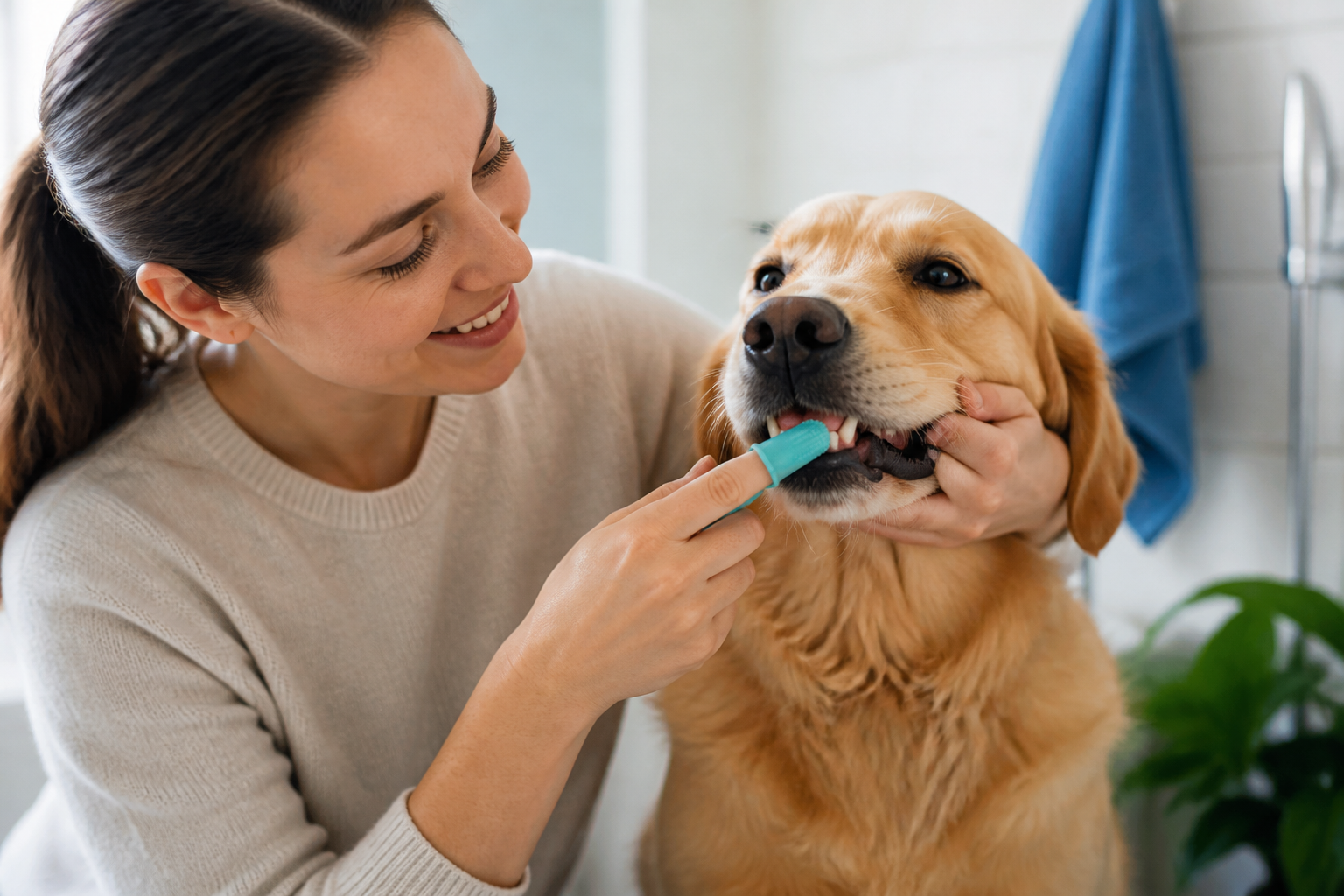
Brushing is the most effective way to keep a dog's mouth clean. It works exactly the same way it does for humans. The mechanical action of the bristles breaks up the sticky film of plaque that forms after eating. If you leave plaque alone for more than 48 hours, it begins to mineralize into tartar. Once tartar forms, it is like concrete. You cannot brush it off at home. Only a professional cleaning by a veterinarian can remove it.
You must use toothpaste made specifically for dogs. Human toothpaste often contains xylitol, which is a sugar substitute that is highly toxic to pets. Human pastes also contain foaming agents that can upset a dog's stomach since they cannot spit it out. Dog toothpastes usually come in flavors like poultry, beef, or peanut butter to make the experience more enjoyable.
Choosing the Right Tools
The type of brush you use depends on the size of your dog and their comfort level.
- Finger Brushes: These are small silicone caps with soft bristles that fit over your pointer finger. They are excellent for puppies or dogs that are wary of long objects in their mouth.
- Double-Headed Brushes: These have two sets of bristles at different angles. They allow you to clean the top and sides of the teeth at the same time.
- Soft Bristle Child Toothbrushes: If you are in a pinch, a soft child's toothbrush works well for medium to large dogs.
- Long-Handled Pet Brushes: These help you reach the very back molars where most tartar tends to hide.
You can also explore our dog dental care category for toothpaste, toothbrushes, wipes, and other oral-care supplies.
Vet Tip: If you notice bleeding gums, loose teeth, or if your dog winces when you touch their mouth, stop brushing and call your veterinarian. These are signs of active dental disease that require a professional exam rather than at-home maintenance.
How to Train Your Dog to Accept Brushing
Most dogs do not naturally enjoy having their mouths handled. You have to build trust slowly. If you rush the process, your dog might become fearful. This makes the job much harder for both of you. Consistency is more important than perfection in the beginning.
Step 1: Let them taste the paste. / Put a small amount of dog toothpaste on your finger and let your dog lick it off. Do this for a few days so they associate the flavor with a positive experience.
Step 2: Touch the teeth and gums. / While they are licking the paste, gently rub your finger along their gums. This gets them used to the feeling of their lips being lifted.
Step 3: Introduce the brush. / Put some paste on the brush and let them lick it. Do not try to scrub yet. Just let them get used to the texture of the bristles.
Step 4: Start brushing. / Gently lift the lip and brush the large canine teeth in a circular motion. Gradually move toward the back molars over several sessions.
Step 5: Reward and praise. / Always end the session with a high value treat or a favorite game. You want your dog to look forward to "tooth time."
For a product designed for this gradual approach, consider Arm & Hammer Dental Complete Care Dog Toothpaste - Chicken.
Key Takeaway: Focus your brushing efforts on the outside of the teeth near the cheeks. This is where the most plaque accumulates. A dog's tongue usually does a decent job of keeping the inner surfaces of the teeth slightly cleaner.
When Brushing Isn't Possible: Alternative Methods
We know that not every dog is a candidate for brushing. Some senior dogs may have sensitive mouths, and some rescue dogs might have past trauma that makes mouth handling impossible. If brushing is off the table, you should combine several other methods to provide the best possible care.
Dental Chews and Treats
Dental treats like Greenies or RedBarn chews are designed with specific textures to scrape teeth as the dog bites down. Some also contain ingredients that help break down plaque chemically. However, these are not a "one and done" solution. A dog can finish a treat in seconds, which does not provide enough scrubbing time.
You can compare options in our dental food and treats collection, including dental chews and treats for regular oral-care routines.
Water Additives and Oral Rinses
Water additives are tasteless liquids you pour into your dog's water bowl. They contain enzymes or antiseptic ingredients that lower the bacterial load in the mouth. These are great for freshening breath and slowing down plaque formation, but they cannot remove existing buildup.
Dental Wipes
Wipes are a middle ground between brushing and additives. You wrap the medicated wipe around your finger and rub the surface of the teeth. This is often easier for dogs to handle than a bulky brush. It provides some mechanical scrubbing, but it cannot reach into the crevices between teeth.
For additional guidance on warning signs and routine care, read Is Your Dog Hiding Bad Teeth? Warning Signs and What to Do.
Bottom line: Alternative methods are better than doing nothing, but they work best when used together as a multi-pronged approach to oral hygiene.
Comparing At-Home Dental Methods
| Method | Effectiveness | Ease of Use | Best For |
|---|---|---|---|
| Brushing | Highest | Moderate | Prevention and daily maintenance |
| Dental Chews | Moderate | High | Dogs with a strong urge to chew |
| Water Additives | Low to Moderate | Very High | Busy owners and difficult dogs |
| Dental Wipes | Moderate | Moderate | Dogs that dislike toothbrushes |
| Dental Toys | Low | High | Enrichment and mild plaque removal |
For more ideas between brushing sessions, see 10 Best Dental Chews for Dogs.
The Role of Diet in Dental Health
What your dog eats can change how quickly plaque builds up. There is a common myth that all dry kibble cleans teeth because it is crunchy. In reality, most kibble is small and shatters easily. Most dogs swallow it before it provides any real scrubbing action.
However, some brands like Farmina Vet Life offer specific dental diets. These kibbles are usually larger and have a fibrous texture. Instead of shattering, the tooth sinks into the kibble, which wipes away plaque as the dog chews. Our pharmacy at BaxterBoo carries a variety of prescription dental diets through our partnership with Pet's Choice. If your dog is prone to rapid tartar buildup, your vet might recommend a prescription food to help manage the condition.
You can browse our selection of Farmina Vet Life products when discussing diet options with your veterinarian.
Raw bones are another popular option for cleaning teeth, but they come with risks. Hard bones can cause tooth fractures, and small pieces can be a choking hazard or cause intestinal blockages. If you choose to use bones for dental health, always supervise your dog and consult your vet about which types are safest for your dog's size and chewing style.
Recognizing the Signs of Dental Disease
Even with the best at-home care, dogs can still develop dental issues. Some breeds, especially small dogs like Pugs or Chihuahuas, are more prone to crowded teeth and gum disease. You should check your dog's mouth at least once a week for any changes.
Look for these red flags:
- Red or swollen gums that bleed when touched
- Heavy brown or yellow crust on the teeth
- Persistent bad breath that does not go away after brushing
- Drooling more than usual
- Dropping food while eating or chewing on only one side of the mouth
- Pawing at the face or rubbing the mouth on the carpet
- Loose or missing teeth
If you see these signs, it is time for a professional evaluation. Dental pain is often hidden by dogs because they have a natural instinct to hide weakness. Often, an owner does not realize their dog was in pain until after a professional cleaning when the dog suddenly has a burst of "puppy-like" energy.
Vet Tip: Annual dental exams are a vital part of your dog's wellness plan. During these exams, your vet can identify problems below the gumline that you cannot see at home.
Professional Cleanings and the BaxterBoo Pharmacy
At some point, most dogs will need a professional dental cleaning. This is a medical procedure performed under general anesthesia. It allows the veterinarian to scale the teeth above and below the gumline safely. They also take X-rays to check for abscesses or bone loss.
Anesthesia-free cleanings are sometimes marketed as a safer alternative, but they are mostly cosmetic. They remove the visible tartar on the surface but do nothing for the bacteria hiding under the gums. This can leave your dog with a "pretty" smile while painful infections continue to grow underneath.
After a professional cleaning, your vet may prescribe medications to help the gums heal or prevent infection. We provide a convenient way to fill these prescriptions. Our BaxterBoo pharmacy, powered by Pet's Choice, carries FDA-approved medications for a variety of dental and health needs. Having these items delivered to your door makes it easier to stay consistent with your pet's recovery plan.
When your veterinarian prescribes medication, you can visit our pet pharmacy to explore prescription options.
Creating a Sustainable Routine
The best way to clean your dog's teeth is the method you will actually stick to. If you find brushing every day too difficult, try for three times a week. Use dental chews or water additives on the off days. Small, consistent steps are better than one long brushing session once a month.
We suggest keeping your dental supplies in a visible spot, like next to your dog's leash or food bowl. This serves as a daily reminder. If you turn the routine into a positive bonding moment, your dog will eventually come running when they see the toothbrush.
At BaxterBoo, we have been helping pet owners find the right gear since 2006. Whether you are looking for the right enzymatic toothpaste or a specific dental toy, we curate our selection to ensure quality. If you want to make sure you never run out of your dog's favorite dental treats, you can use our Autoship program. This saves you money on your orders and ensures your dog’s oral health routine never misses a beat.
Key Takeaway: Oral health is a lifelong commitment. Combining at-home brushing with high-quality treats and regular vet visits is the most effective way to ensure your dog stays pain-free well into their senior years.
FAQ
How often should I actually brush my dog's teeth?
Ideally, you should brush your dog's teeth every single day. Plaque can turn into hard tartar in as little as 36 to 48 hours. If daily brushing is not possible, aiming for at least three times a week can still make a significant difference in preventing gum disease.
Can I use a human toothbrush on my dog?
Yes, you can use a human toothbrush as long as it has soft bristles. A child-sized toothbrush is often the best fit for medium to large dogs because the head is smaller and easier to maneuver. However, you must never use human toothpaste, as it contains ingredients like xylitol that are toxic to dogs.
Does my dog really need to be under anesthesia for a cleaning?
Yes, a thorough and safe dental cleaning requires anesthesia. This allows the vet to clean deep under the gumline where the most damaging bacteria live. It also allows for X-rays and ensures the dog remains still and pain-free while sharp instruments are used near their sensitive mouth tissues.
Are dental chews enough to keep teeth clean without brushing?
Dental chews are a great supplement, but they are rarely enough on their own. They primarily clean the chewing surfaces of the back teeth and do not reach the gumline of every tooth. Think of dental chews like chewing gum for humans. It helps, but it does not replace the need for a toothbrush.






