
 Save 15% on your 1st Autoship learn more

 Email us
 Live Chat
 FAQs
FAQs





Introduction
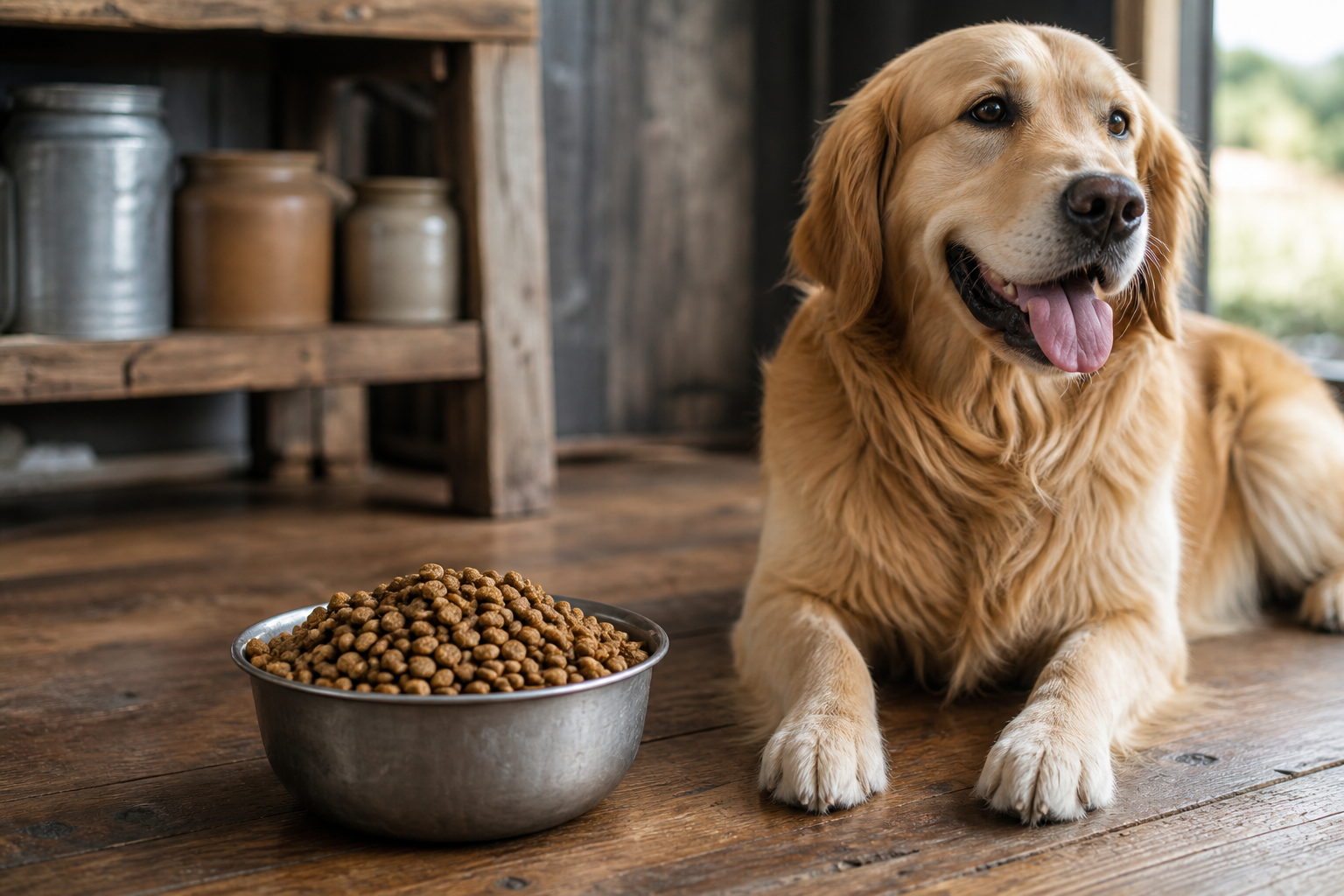
If you have ever stood in your kitchen and scooped a cup of crunchy kibble into a bowl, you might have wondered where that food actually came from. For most of us, dry dog food is just a standard part of our daily routine. It is convenient, shelf stable, and easy to store. However, for the vast majority of the time humans have lived with dogs, this kind of processed food simply did not exist. At BaxterBoo, we know that understanding the history of what your dog eats can help you make better choices for their health today. This post covers the timeline of pet food from ancient table scraps to the invention of the very first biscuit and the modern extrusion process. Dry dog food as we know it today is a relatively recent invention that grew out of wartime necessity and industrial innovation.
Life Before the Bag: Ancient and Medieval Diets
Before the mid-1800s, there was no such thing as a pet food aisle. Dogs were primarily kept for work rather than just companionship. They guarded livestock, assisted with hunts, and kept homes free of vermin. Because they were working animals, their diet usually consisted of whatever their owners could spare. This often meant a mix of raw meat scraps, bones, and human leftovers.
The historical record shows that people have been thinking about dog nutrition for thousands of years. In 37 BCE, the Roman poet Virgil suggested feeding hounds whey and bread. Later, in the 14th century, Gaston III of France wrote about caring for his greyhounds. He recommended feeding them bran bread and meat from the hunt. If a dog was sick, he suggested goat milk or bean broth. These diets were far from the uniform pellets we see today. They were based on fresh, whole ingredients available at the time.
In common households during the Middle Ages, dogs ate cabbage, potatoes, and crusts of bread. In cities, people sometimes bought horse meat from street vendors when working horses died. It was a rugged way of eating that relied on local availability. There was no scientific standard for "complete and balanced" nutrition yet.
1860: The Invention of the Commercial Dog Biscuit
The turning point for the pet food industry happened in 1860. An American electrician named James Spratt was traveling to London to sell lightning rods. While at the docks, he noticed stray dogs eating "hardtack." This was a hard, dry biscuit that sailors ate because it stayed edible for long sea voyages. Spratt realized there was a massive market for a convenient, shelf stable dog food.
He created the first commercial dog food called Spratt’s Meat Fibrine Dog Cakes. These were biscuits made from wheat meal, vegetables, beetroot, and beef blood. Spratt was a marketing genius who did not target the average worker. Instead, he sold his biscuits to English gentlemen who owned expensive sporting dogs. He used billboards and high end advertising to make his product feel like a luxury.
By 1890, Spratt’s operation expanded to the United States. This was the true beginning of the commercial pet food industry. Other companies began to follow suit, creating their own versions of hard biscuits and "dog bread." While these were dry foods, they were not yet the small, crunchy kibble we recognize today. They were large, hard cakes that often had to be broken up or soaked.
Quick Answer: Dry dog food started in 1860 when James Spratt invented the "Meat Fibrine Dog Cake" in London. This was a hard biscuit made of wheat, vegetables, and beef blood, marking the birth of the commercial pet food industry.
The Rise of Canned Food and the Impact of World War I
While biscuits were the first dry option, canned food actually dominated the market for a long time. In 1922, a brand called Ken-L Ration introduced the first canned dog food in the United States. The primary ingredient was horse meat. At the time, there was a surplus of horses because cars and tractors were replacing them on the streets and farms.
Canned food became incredibly popular because it was easy to serve and dogs loved the taste. By the 1930s, canned food held about 90 percent of the market share. People began to move away from table scraps and toward these convenient cans. This era solidified the idea that dogs should have their own special food rather than eating what the family ate.
This shift was also supported by the growing middle class. More people were bringing dogs inside the home as pets. A "civilized" pet deserved a specialized product. Brands began to use aggressive advertising to convince owners that their dogs needed these processed meals to stay healthy.
1941: Wartime Necessity and the Shift Back to Dry Food
World War II changed everything for the pet food industry. When the United States entered the war in 1941, metal and meat were rationed for the war effort. Metal was needed for ammunition and machinery, meaning the tin used for dog food cans was no longer available. Additionally, fresh meat was prioritized for soldiers.
Pet food was classified as "non-essential." Manufacturers had to innovate or go out of business. They turned to cereal by-products and grains to create a food that could be sold in bags. This led to the widespread production of dry dog food. Owners who were used to buying cans were forced to switch to dry options.
This transition was a huge win for manufacturers. Dry food was much cheaper to produce, easier to ship, and had a very long shelf life. Even after the war ended and rationing stopped, the industry did not go back to a canned-dominant market. They had discovered that dry food was highly profitable.
Key Takeaway: World War II was the primary reason dry dog food became a household staple. Metal and meat rations forced companies to stop canning and start producing shelf stable bagged food made from grains and by-products.
1956: The Birth of Modern Kibble Through Extrusion
If you look at modern kibble, every piece is the same size and shape. This is possible because of a process called extrusion. This technology was originally used to make puffed breakfast cereals like Chex. In 1956, Purina decided to apply this method to dog food.
Extrusion works by mixing wet and dry ingredients into a dough. This dough is then fed into a machine called an expander. It is cooked under extreme heat and pressure before being pushed through a die to create specific shapes. Because the heat is so high, it often kills off the natural vitamins and minerals. To make the food nutritious again, manufacturers began adding synthetic vitamins and minerals back into the mix after cooking.
To make the dry pellets more appealing to dogs, the kibble is usually sprayed with fats and flavor enhancers. This process allowed for mass production on a scale never seen before. It made dog food incredibly cheap and widely available in grocery stores. By the 1960s, the Pet Food Institute launched campaigns to convince the public that table scraps were dangerous and that commercial kibble was the only safe option for pets.
Step 1: Ingredient Mixing / Manufacturers combine grains, meat meals, fats, and minerals into a heavy dough.
Step 2: Extrusion / The dough is cooked quickly at very high temperatures and high pressure.
Step 3: Drying and Coating / The kibble is dried to remove moisture and then sprayed with fats or flavors to make it taste better.
The Evolution of Nutritional Standards
As dry dog food became the norm, scientists and regulators realized they needed standards. In 1909, the Association of American Feed Control Officials (AAFCO) was formed. Initially, they focused on livestock feed, but they eventually moved into pet food.
In the mid-1980s, the National Research Council published the first major nutritional requirements for dogs. This gave manufacturers a roadmap for what "complete and balanced" really meant. Before this, many dry foods were mostly filler and lacked the essential nutrients dogs needed to thrive.
Today, most pet foods are formulated to meet these strict standards. At BaxterBoo, we carry over 500 trusted brands that focus on these high quality nutritional profiles. Whether you are looking for grain-free options or life-stage specific formulas, the industry has come a long way from James Spratt's original beef blood biscuit.
Vet Tip: While dry kibble is convenient, it is important to remember that the high heat used in processing can change the nutritional value. If your dog has specific health needs like kidney issues or skin allergies, consult your veterinarian. They may recommend a prescription diet or specific supplements to fill any nutritional gaps.
Veterinary Diets and Specialization
In the late 1960s, the industry saw another major shift. Veterinarians started noticing that certain health conditions could be managed through diet. Jean Cathary, a French vet, developed the first "veterinary diet" to treat skin conditions. This eventually became the brand Royal Canin.
In the United States, Hill’s Science Diet followed a similar path. They began creating foods specifically for dogs with kidney failure or heart issues. This moved dog food from a general commodity to a specialized health tool. It also changed the relationship between vets and pet food companies. Vets became the primary source for nutritional advice and specialized products.
Our pet pharmacy at BaxterBoo offers access to these FDA-approved prescription pet foods through our partnership with Pet's Choice. If your dog is managing a chronic condition, a specialized diet is often the first line of defense. This evolution from general "dog bread" to targeted medical nutrition shows how much we have learned about canine biology in the last century.
The Modern Market: Grain-Free, Raw, and Fresh
In the last twenty years, the history of dog food has taken a "back to basics" turn. Many owners have become concerned about the high grain content and heavy processing of traditional kibble. This led to the rise of grain-free diets and the raw food movement.
Pioneers like Steve Brown began developing raw pet food in the late 1990s. This was a response to the 2007 melamine scandal, where contaminated ingredients from overseas caused thousands of pet deaths. This tragedy caused a massive loss of trust in big kibble brands and pushed owners toward "human-grade" and "fresh" options.
Now, you can find everything from freeze-dried dog food to gently cooked fresh meals delivered to your door. We are seeing a return to the whole-food philosophy of the pre-industrial era, but with the added benefit of modern safety testing.
- 1860: First dog biscuit invented by James Spratt.
- 1922: First canned horse meat dog food (Ken-L Ration).
- 1941: Metal rationing for WWII makes dry food the industry standard.
- 1956: First extruded kibble produced by Purina.
- 2007: Major recalls lead to a surge in high quality, limited ingredient diets.
How to Choose a Modern Dry Dog Food
With so much history behind it, dry dog food is now more diverse than ever. When you are looking at a bag today, you are seeing the result of 160 years of trial and error. To choose the best one for your pet, focus on these key factors:
Look for a named meat source (like chicken or beef) as the first ingredient. Many early dry foods relied on "meat meal" or "by-products," but modern high quality brands prioritize whole proteins. Check for the AAFCO statement on the bag. This ensures the food meets the basic requirements for "maintenance" or "growth."
Consider your dog's specific life stage. Puppy food has more calories and minerals for growth, while senior food often includes joint support like glucosamine. If your dog has a sensitive stomach, look for limited ingredient diets that avoid common allergens like corn or soy.
Many pet owners find that the most cost-effective and reliable way to handle food is through an Autoship programme. This ensures you never run out of your dog's specific formula while saving you money on every order. At BaxterBoo, we offer savings on your first Autoship order and a free MVP Gold membership to help make high quality nutrition more affordable.
Key Takeaway: The best dry dog food is one that matches your dog's specific life stage and activity level. Always look for a clear AAFCO statement and a recognizable meat source as the primary ingredient.
The Future of Dog Food
The history of dry dog food is still being written. We are currently seeing a move toward sustainable protein sources, such as insects or plant-based proteins, to reduce the environmental impact of pet food production. Additionally, personalized nutrition based on a dog's DNA or gut microbiome is becoming more common.
As we move forward, the focus remains on longevity. We no longer just want to fill a dog's stomach; we want to help them live as long as possible. This means the trend toward fresh, less-processed ingredients will likely continue to grow.
Whether you feed a traditional kibble, a prescription diet from our pharmacy, or a raw-infused dry food, you are part of a long history of humans trying to do right by their best friends. The convenience of the bag is here to stay, but the quality inside that bag continues to improve every year.
Bottom line: Dry dog food evolved from a luxury biscuit in 1860 to a global staple by the 1950s, driven by wartime metal shortages and industrial manufacturing breakthroughs.
Conclusion
Dry dog food has a fascinating history that mirrors our own industrial and cultural changes. It started as a hard biscuit for the elite, became a necessity during global conflict, and transformed into a high-tech science through extrusion. Today, we have more choices than ever before, ranging from budget-friendly staples to advanced medical diets. At BaxterBoo, we are proud to be a part of your pet's health journey by offering a curated selection of foods that meet modern safety and nutritional standards. If you are looking to simplify your routine, consider signing up for our Autoship programme to ensure your dog always has the nutrition they need delivered right to your door.
FAQ
Why was horse meat used in early dog food?
After World War I, the rise of cars and tractors meant that horses were no longer needed for transportation or farm work. This created a massive surplus of horses, providing a very cheap and abundant source of protein for the first canned dog food brands like Ken-L Ration.
When did the first grain-free dog food start?
While dogs have eaten meat-heavy diets for centuries, the modern "grain-free" marketing trend took off in the early 2000s. This was largely a response to the 2007 pet food recalls and a growing interest among pet owners in feeding diets that more closely resemble what a dog's wild ancestors might have eaten.
What is the extrusion process in dog food?
Extrusion is a manufacturing method where a dough of wet and dry ingredients is cooked at high temperatures and pressure, then pushed through a die to form kibble shapes. It was first used for dog food in 1956 and is still the most common way dry dog food is made today because it is efficient and creates a shelf stable product.
Is dry dog food better than wet food?
Neither is inherently "better," as both can provide complete and balanced nutrition. Dry food is generally more affordable, better for dental health due to the crunch, and easier to store, while wet food provides much-needed hydration and is often more palatable for picky eaters or senior dogs.






